More from Nsanda

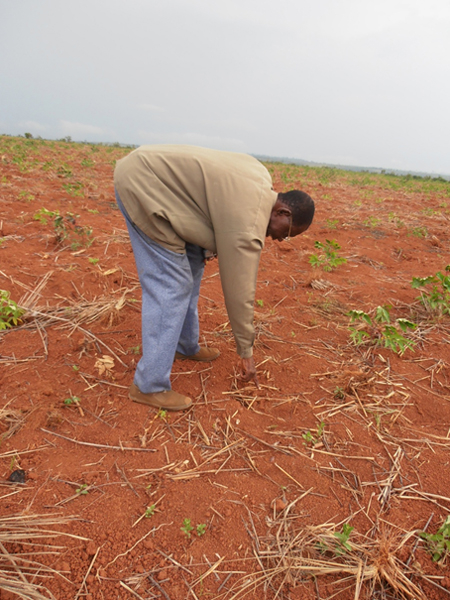
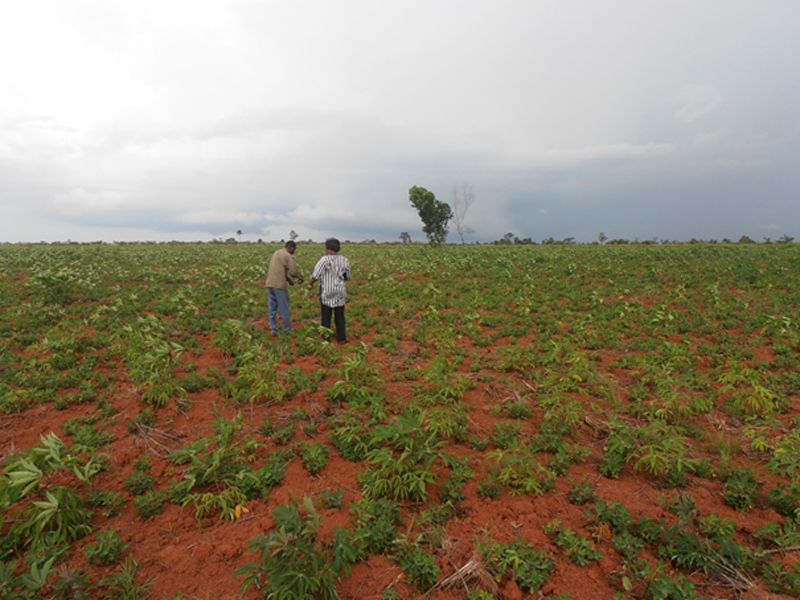
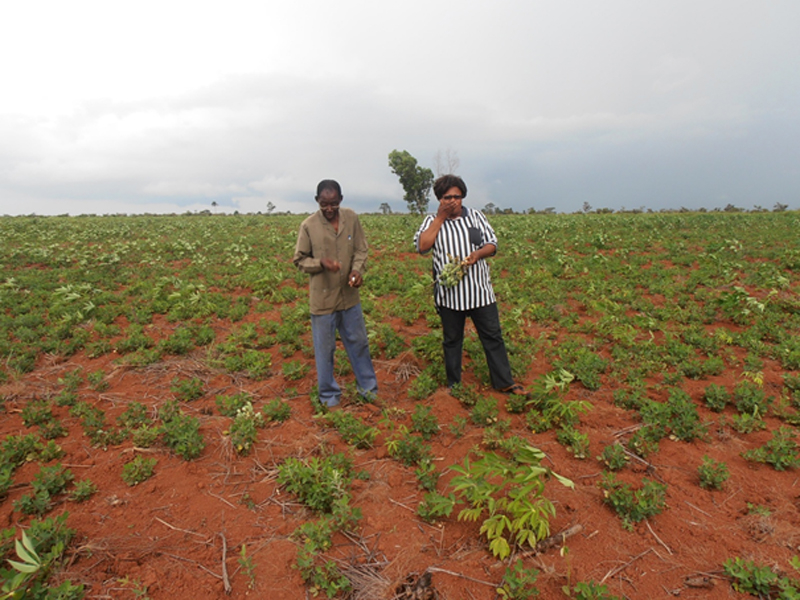
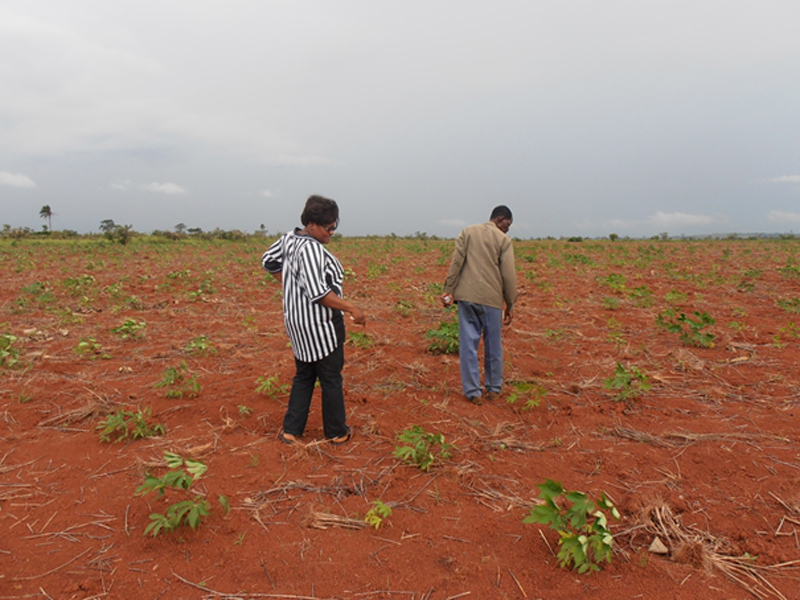
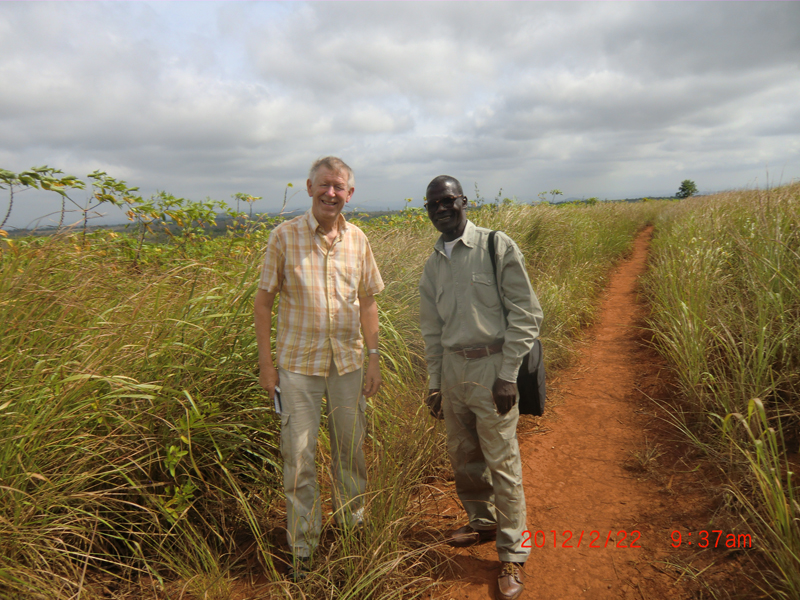
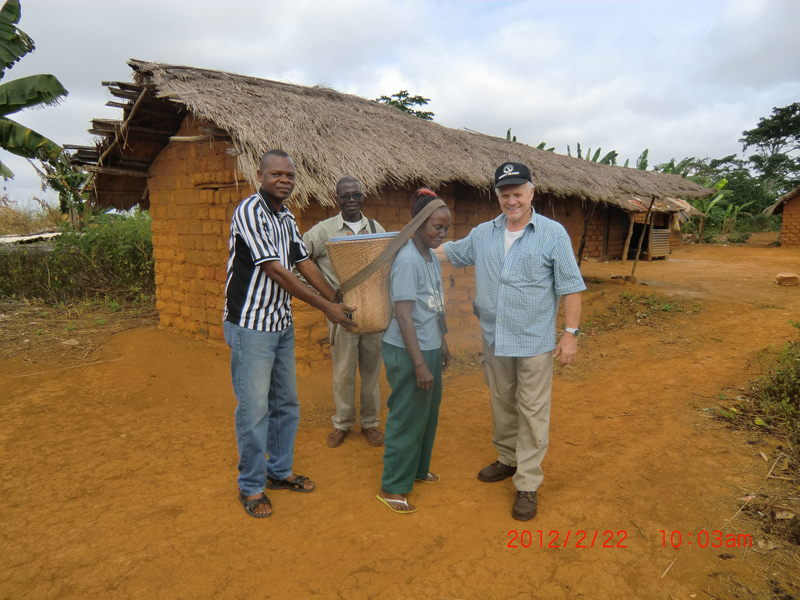
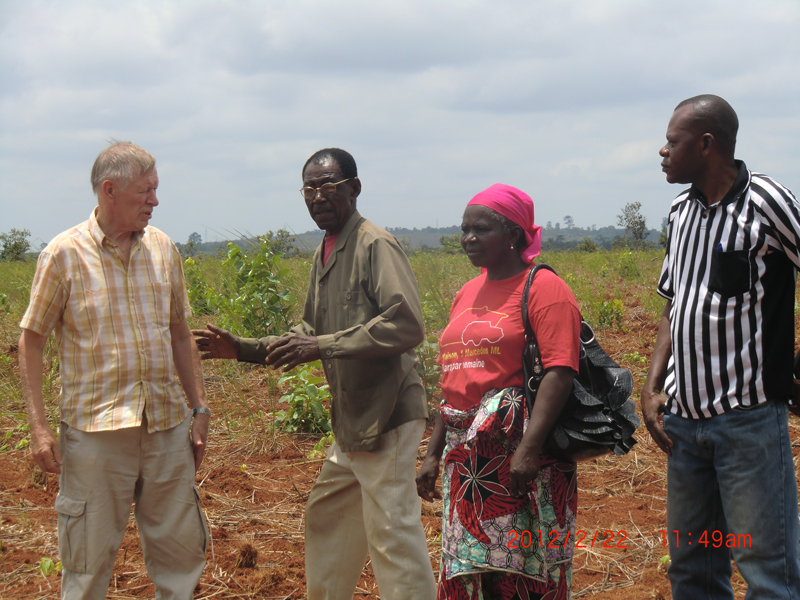
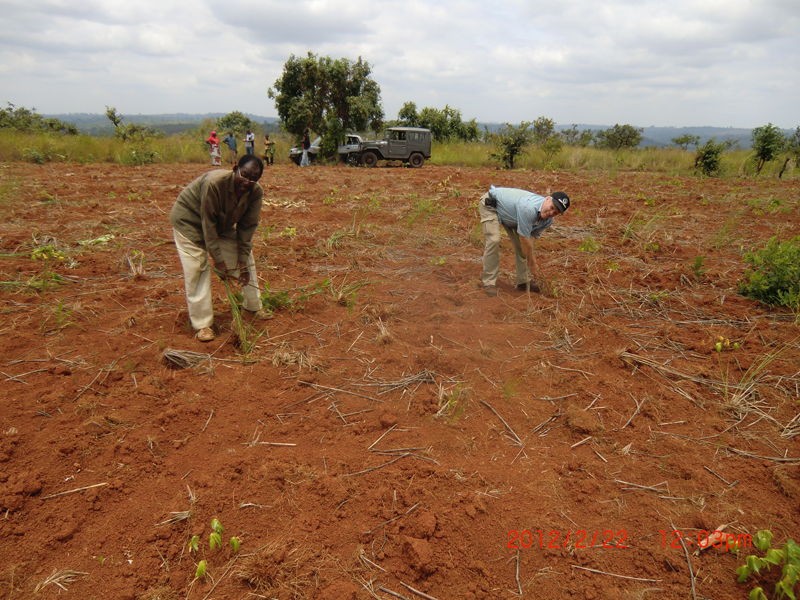
Augustine and Yapeco checking the peanuts and cassava

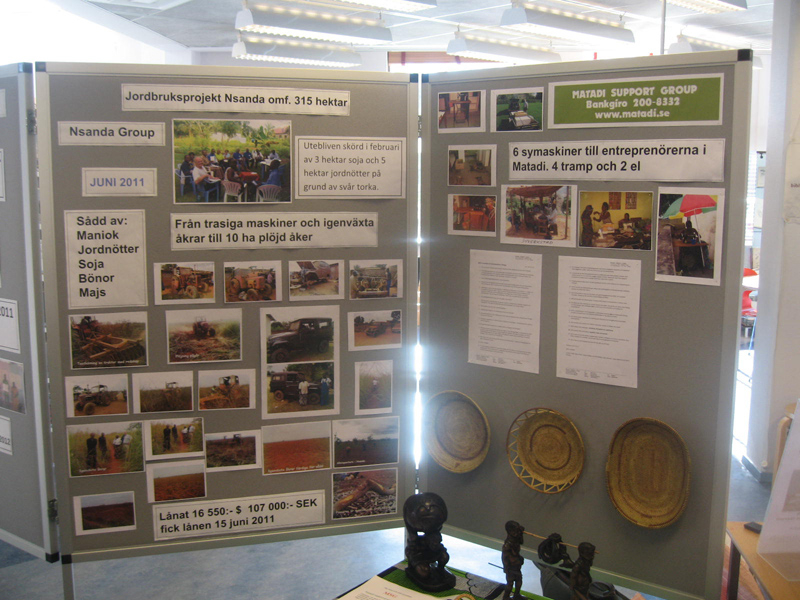
Just a greeting from a tough day on the field. The plants are doing well, it’s fun to see how peanuts and manioc grow now. Some manioc have been 80 or 90 cm high.

We have replanted 1 hectares cassava, and continue with 1.5 hectares of which was hard hit by the drought.

Next week, we are going to so beans and it can be done with piripiri. They must be sown in 3 weeks. We have some work to do here, it seems we have become people of Nsanda.

We must from next week begin with land preparation and do not have money for it. If it were possible, it would be good or else the ground is so dry for the tractor.

God bless you. Clement greets, he will celebrate Easter at Matadi. where he is invited to speak in Nzadi church.

Greetings from Julienne

Posted in MSG

Nsanda News

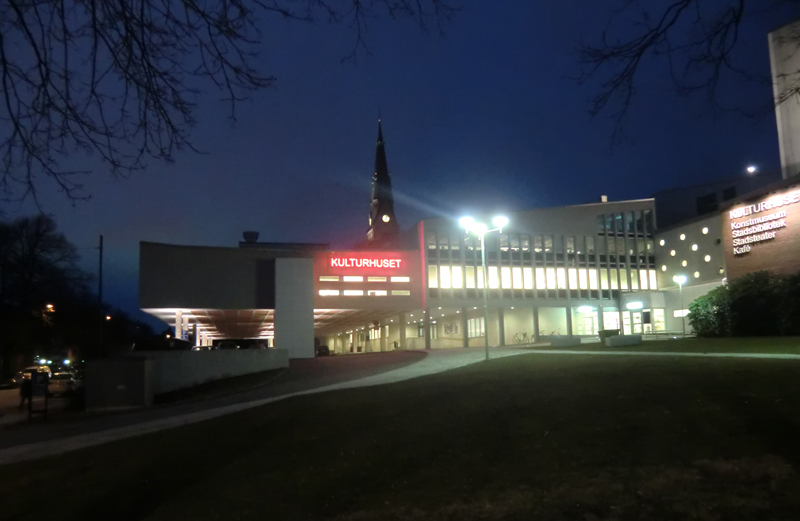
The Culture House of Borås

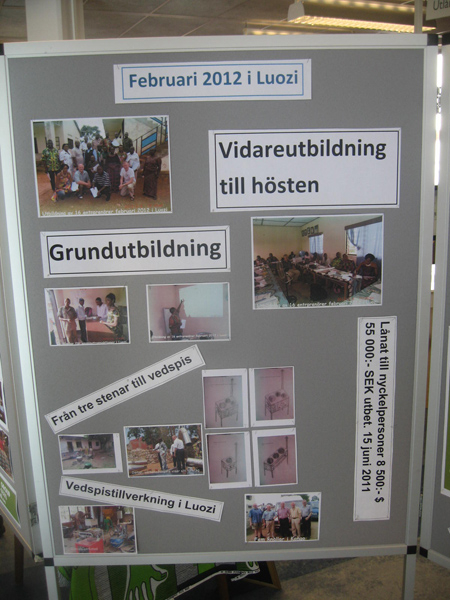
Hope all is well with you and that exhibitions of MSG in Alingsås and Borås Public Library will be good. I apologize for not having posted in awhile, I’ve been busy with other things, so I’ve been away and came home only on Sunday.

We feel good in Nsanda. Now we clean out the weeds in crops and hope we will be ready this week. Next week, we will replant where it dried up completely (manioc). Except for soybeans, which are completely destroyed by the dry weather, the other plants are good.

We are also working with other crops, piri piri, and beans. We have already prepared the ground and sowed the piri piri seed yesterday. We will wait with beans in to the beginning of April, because we are awaiting how it will rain.

We hope that all Nsanda Group members pay their contribution for we are dependent on it, if we are to continue to prepare new ground for October, the next rain season.

My modem has the same problem as Yngve had in February so it’s hard to type now in French even though I have gone to Tigo’s office twice but no solution. Unfortunately, I can not send pictures now because I did not get my camera repaired.

Take care and I salute the entire MSG family in Sweden. We have to pray for one another.

Clément greet.
Julienne Kukangisa.

Posted in MSG

The rain is coming

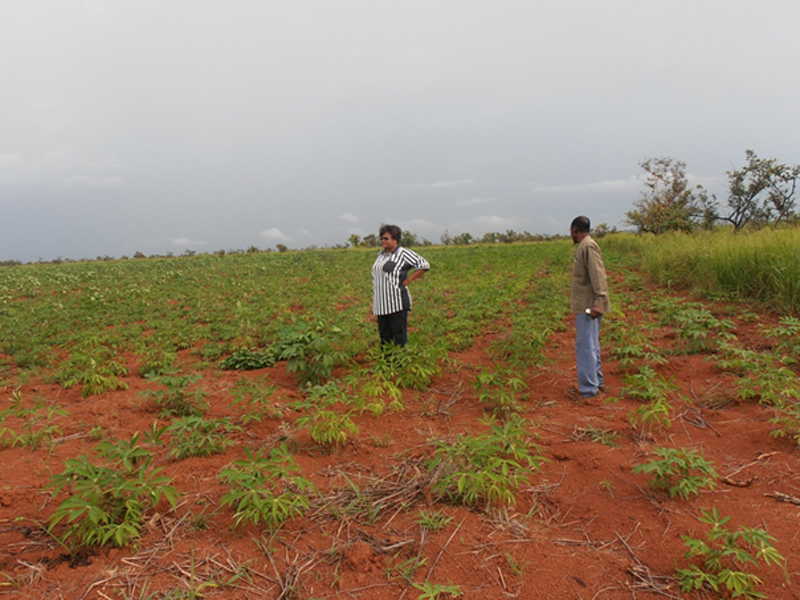
Julienne and her workers at Nsanda

Thanks for the greetings and we thank God that he was with you on the long journey in Congo, may God continue to give you strength and wisdom on the new roads to proclaim his kingdom.

It keeps raining and it’s a big difference on the farms now. The plants have got their life back. It’s enjoyable to go out into the fields now. If all goes well, maybe we will try to finish the whole field, eight hectares, this week.

We cannot find spare parts for our Huskvarna chain saw. We want to fix it as soon as possible, because we need to saw planks for a small house. If we had a house, we could reduce the number of trips and thus save money. It’s expensive to travel by car to the fields every day.

Would it be possible for you to help us get hold of spare parts for the chain saw in Sweden, and then send it to the Nyambudi family who has promised to pay for them. It would be best for us if you can send them with the first possible opportunity. Parts that we lack are the cylinder and the pot and the number of the chain saw is 3120 Huskvarna. Thank you in advance for the help!

Julienne

Posted in MSG

Together we can change the world!

February 12 Entrepreneurs

We have returned home from our fourth journey to the Democratic Republic of Congo, and in all we have spent three months in Congo. We have stayed with, had our meals together with and worked together with Congolese women and men. It has been an instructive time. For us it has been a way to get to know people of the DRC. We have received first-hand information to build our understanding on. But we have also had the advantage to meet and talk to people with extensive experience of Congo. All of this has given us a good foundation to stand on in our efforts to make an effective contribution in Congo. But we are nowhere near finished to finally determine our perception of the country. Every new day in Congo comes with new information about how to make progress and how to help our entrepreneurs to become successful. We want them to become self-sustaining and create profits from their own work that will increase the standard of living for themselves and for others. One part of this is that the loans must be repaid to the last krona, and so far it works well.

Each of the three tools of MSG, education, business loans and follow-ups are important, but we realize that education is the most important. To acquire knowledge of how to handle your economy is the alpha and omega. In the future, we will put more effort on the sharing of knowledge and make the education more thorough. The loan is like a starter motor that ignites the business, but it it the knowledge and skills of the entrepreneur who, like an engine puts the vehicle, i.e. the business in motion. This is not to say that the loan is not important. To all of you who support us financially, keep it up for anything in the world. You set the pace of the expansion of our work. The follow-ups will go on for two years, and during that time we will also provide additional training. Then, the goal is that the entrepreneurs shall be self-sustaining. For those entrepreneurs who have been proficient and wish to have more support after the two years, we will provide such in different ways.

We try to account for everything we do, both problems and progresses, as openly as possible on our web site. A reason for the openness is to revise the distorted image that many people in the Western world have of Congo. We also hope that our web site could be an opener to people who wants to make a difference there. From the amount of visitors we have on the web site, we conclude that our travelogue and what we do is appreciated. In February, we had 1654 unique visitors, who have made 5357 visits and opened 20421 pages. The visitors are spread around the world. Do keep on visiting and reading our web site. We would like it to be a information channel from Congo. A bridge between Congo and the rest of the world.

Most of you readers are still on the grandstand. We want you to come down to the ground and participate in the match against poverty in Congo. You can donate through our payment system, or in other ways transfer money to our bank account. You yourself, and your competence is possibly the greatest resource that you can contribute. We need many coworkers to the different projects we run. Contact us and tell us about yourself, and we could probably find you a project. If you use Facebook or other social media, please spread our information and good news about Congo. We want everyone who reads our web site to be involved in the match in one way or another. Together we can change the world!

Posted in MSG

I was wrong

Lunch at Centre du handicapés in Kinshasa

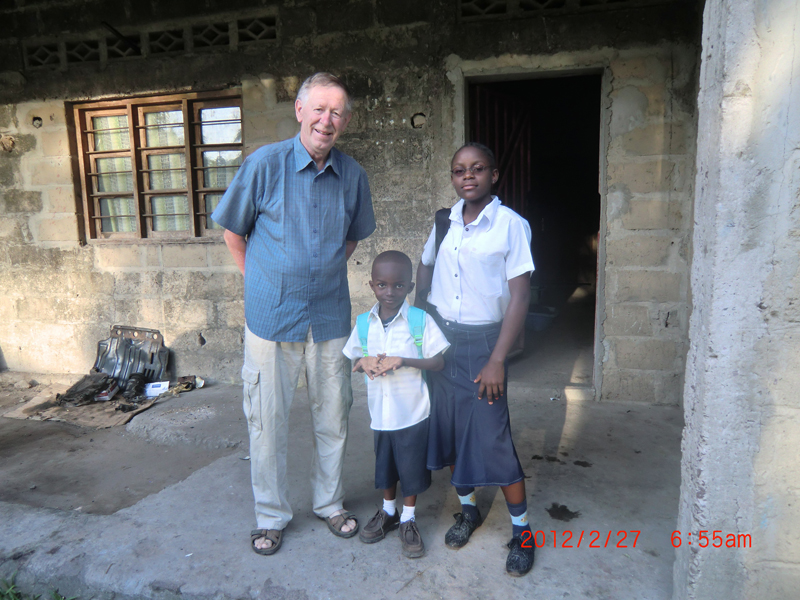
First thing today, we sent Tricya and Merje off to school. They were both very neat in their white blouse/shirt and navy blue skirt/trousers. Tricya who is 16 years old is in Secondary school. She is the cousin of Emma and Tuto. Merje, 5 years old and the son of Emma, is in preschool. Tricya´s family moved away from Kinshasa to Luozi, but Tricya didn´t want to leave her school, thus she moved in with her cousins. In Congo the concept of family is much wider than the nuclear family. It was great to see how Tricya took care of the child of her cousin. Hand in hand they first had to walk 1 km, and then go by taxi for another 2 km. Emma gave Tricya some money for the taxi. Tricya told us that the subjects on her timetable today were mathematics, English, history and philosophy.

Then we went to breakfast. And I realized that I had been completely wrong yesterday – oatmeal porridge was not an unknown phenomenon to Emma. Order was restored. Porridge on the table – wonderful!

Emma was also going to school today. She takes a course in computer science. That´s a very good investment and and something that will complement her law degree. So far, she hasn´t been able to find a job. Bernt and I met a businessman in Kinshasa whose company will invest 800 million SEK in Congo the next few years. We will forward Emma´s CV to him. He didn´t have a suitable job for her at the moment, but there might be something in the longer term. He would gladly receive her CV.

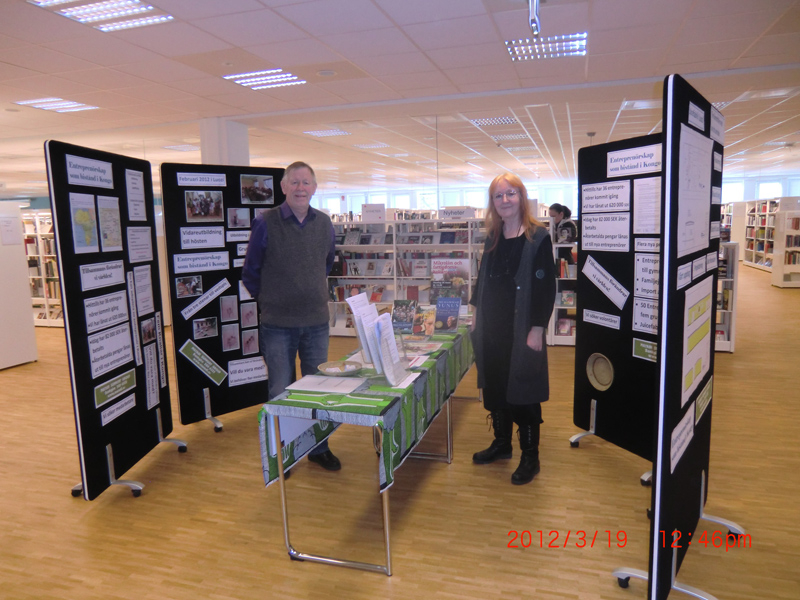
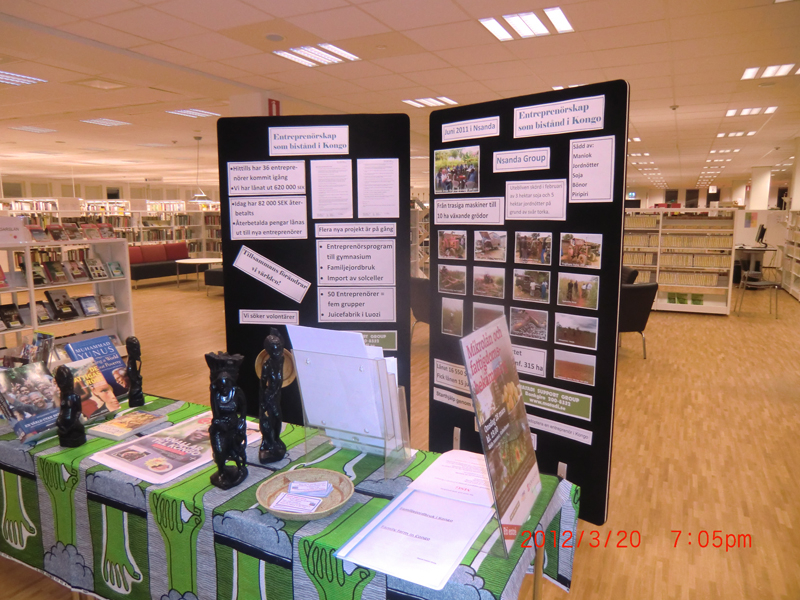
Then we went to Air Brussels office in town to check in. We got there one hour before opening time, and while we were waiting for them to open we went to a souvenir market., Tuto, Yapeco and I. There were different kinds of fantastic craft, and I bought two carved Congolese, one man and one women doing traditional work. Earlier, we have bought other wooden figures that we have planned to use in our exhibitions at the city libraries of Alingsås and Borås in March this year.

When the shopping and the checking in was done, we had two more scheduled meetings in Kinshasa. We were going to visit Procredit Bank and ask them if they were interested in taking part in our solar cell businesses. But this meeting came to nothing. The lawyer that Tuto had engaged didn´t show up, his mobile phone was switched off and he was impossible to get hold of. The other meeting was with Ngoma, about the juice factory. This meeting was not very important, but we had set aside time for it. He called when we had come to our meeting place and said that he had changed his mind. Instead of meeting us, he was going to see a person about energy issues. In that way our other meeting came to nothing too. An important lesson for the Congolese to learn is that arranged meetings and appointments must be kept to time and carried out. If you want to do business it is important to keep your word, or you will loose your credibility. Then you have lost a necessary qualification.

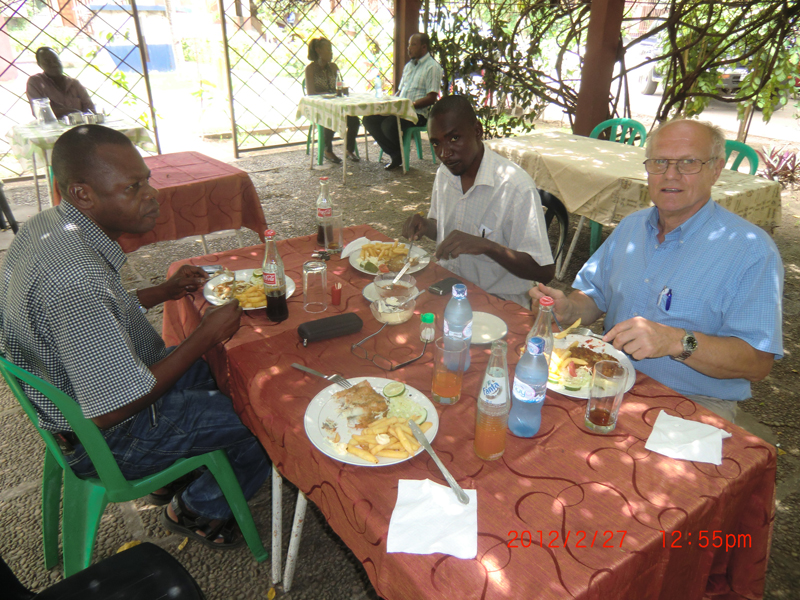
We had lunch at the Catholic church center for the disabled. “Centre du handicapés” is situated in town, and we recommend their restaurant. On the meny today was french fries and fish, very tasty. The center is an oasis in the middle of a hectic metropolis.

At 3 pm José, the chauffeur of the police superintendant, came to pick us up and he drove us the 30 km to the Airport N´djili. José is a skillful driver and we were there within one hour. He handles the police jeep with incredible precision. On one occasion he folded down the rear view mirror to get us through the eye of a needle that often arises in the chaos on the roads. We noticed that other drivers have respect for a police car, and that police cars have priority in crossings where policemen are directing the traffic. We witnessed two car crashes today, but that´s normal. But there are also indications that the culture on the roads will improve. The larger roads are getting better. And we see more and more traffic lights of the latest model hanging from arches above the roads. The traffic lights have, besides the usual stop or go, large arrows to show the direction and a digital clock that shows how long you have to wait for the green light. This seems to be a brilliant idea. Because when there is a Congolese behind the steering wheel, speed is essential.

We had to wait for a few hours at the airport. Most of that time was spent sleeping. Bert said that that would be the most innocent thing to do, thus we did just that. At 9.50 pm, the plane left Kinshasa and we left Kongo for the fourth time. We felt content about what we had accomplished these four weeks. Only the future can tell what results will come of it, but we believe in Congo. We think it is a country in progress, a conclusion we have reached after having spent a total of three months here, working and living and discussing with Congolese men and women for hours and hours.

Posted in MSG

No oatmeal porridge

Marie France, Yapeco and Yngve

This day had to be started without oatmeal porridge, an ordeal, but we survived. Instead, we had tea and baguette with some cheese and marmelade. In Kinshasa, Tuto´s sister Emma is in charge of the cooking. I suspect oatmeal porridge is an unknown phenomenon to her. After breakfast, we went to the Bandalungua Church. Marie France is a pastor in this church. Before, she was a pastor in the Kiamvu Church in Matadi, where she participated in our first group of entrepreneurs. For her, the entrepreneurial activities are a job on the side. We had several part-time entrepreneurs in the first group, but we prefer it when the enterprises are the full-time job of the entrepreneurs.

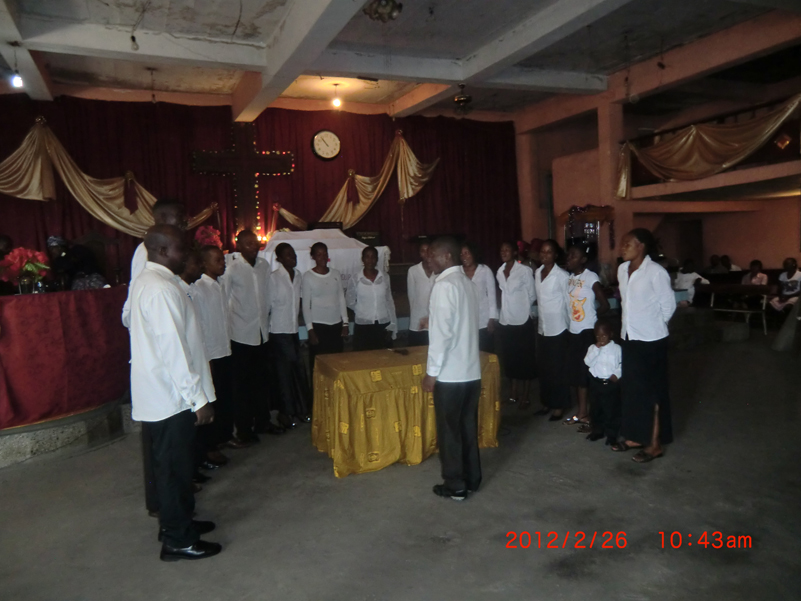
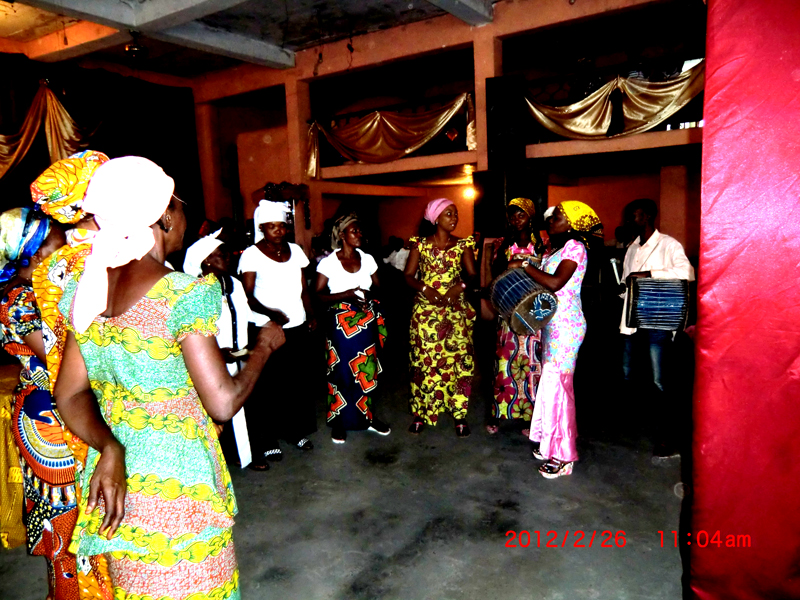
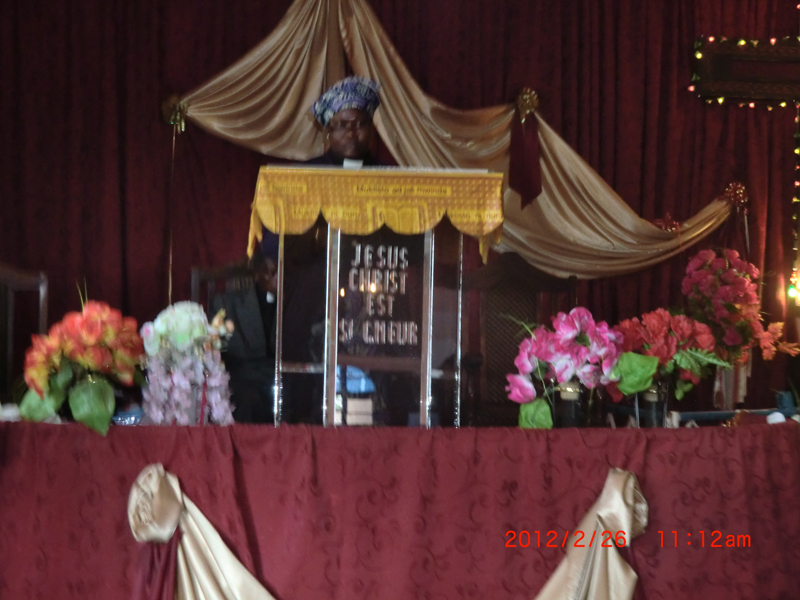
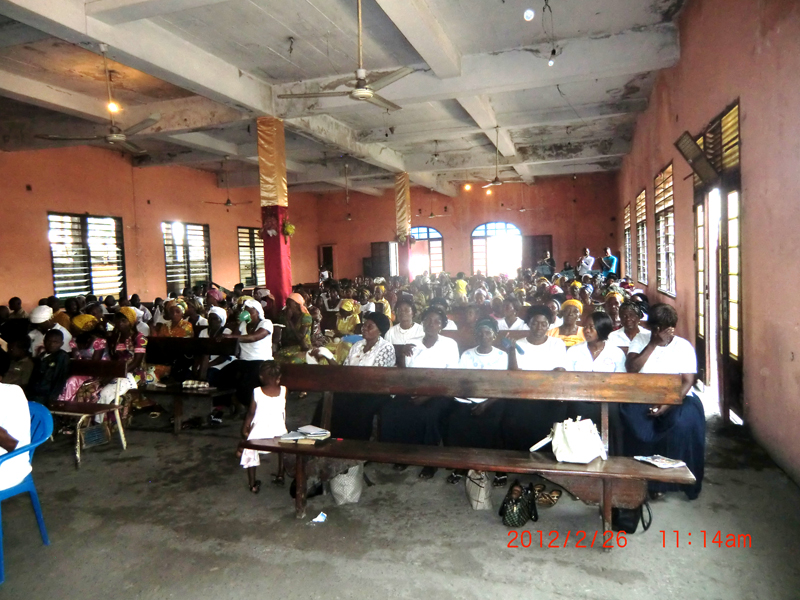
By 10 o´clock we arrived at the church and met Marie outside. Because of this, we seated among the dignitaries. We also got an special item on the program, when we were particularly welcomed, and Yapeco introduced us and MSG. The service was a traditional Congolese service. Four choirs sang and a group of flutists played. Wola Benard, a retired pastor and the preacher of the day spoke with an intense ardour. To fall asleep while he was preaching would have been impossible. He incorporated community singing in his presentation, and like many other pastors in Congo, he had a dialogue with the congregation through the sermon. The pastor asks a question, and the congregation answers and confirms the message of the sermon. Many people answer with their whole body. In a Congolese service you can´t be a passive bystander, you will want to take an active part in the spirit of community. The instruments that accompany the community singing are drums and other rythmic instruments. Many people bring their instruments to church. Today, there was also communion. Six white-robed members of the church handed out the bread and the wine to the congregation, who walked up to them singing. By 1.30 pm, the service ended.

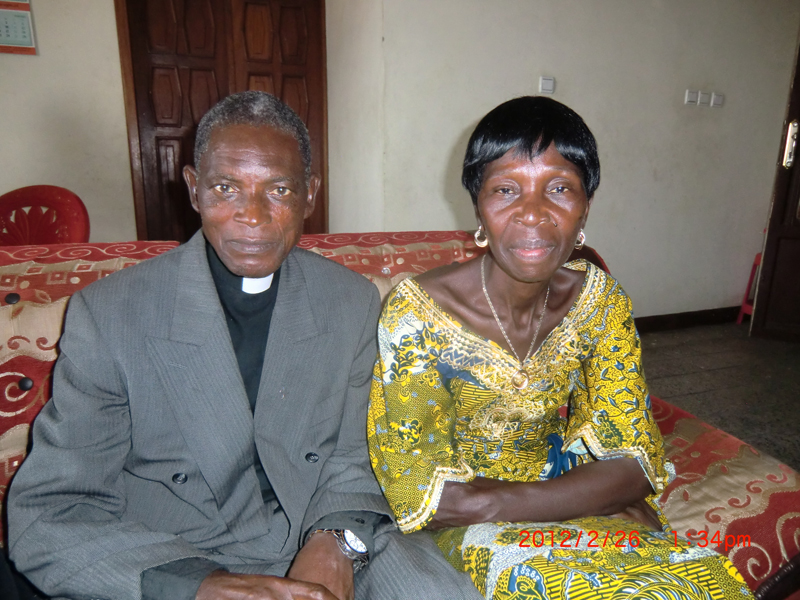
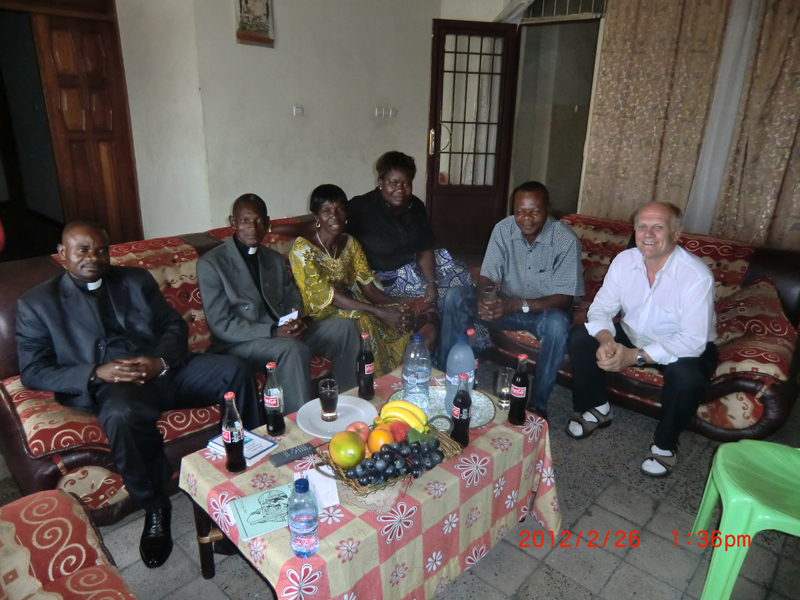
After the service, we were offered soft drinks and lunch together with the preacher and another pastor. Lunch consisted of manioc, salted and smoked fish and safou. We had a nice time with English as a common language. Pastor Wola Benard told us that he had earlier worked with Walter Persson in Sundi Lutete.

We had been asked to bring some fabrics from Congo to Sweden, and therefore we took the car to Marie France´s fabric shop. We bought fabrics for as much as 60 USD. We hope that the purchased goods will be approved by our clients in Sweden, because we didn´t discuss any right of exchange with Marie France.

We went back to Tuto´s house and continued the discussion with him about how to arrange the import of solar cell equipment to Congo. And then Emma had dinner ready. We had fish, potatoes and manioc.

In the evening, two women who had been to Sweden in March 2011 came. It was Nzuzi Mbumin and Tekabanza Lovise. They belong to the Luozi group that works for the development of a juice factory in Luozi. They had also been to my and Kerstin´s house for dinner. Tonight, they had come a long way by taxi and on foot to meet me and Bernt. We had a nice talk and Yapeco interpreted between us. As a parting gift, we got a basked with pineapple, peanuts, avocado, bananas and safou.

Posted in MSG

To Kinshasa

Yngve, Daniel and Yapeco checking drawing of wood stove

We started the day with going through Bernt´s hotel budget with Nganga. We made some adjustments, and printed it on our printer. We hope that it will be useful when he meets the bank contact we arranged for him. Nganga´s hotel will be called “Guest House Nganga”. It is located in a visible spot at the center of Kimpese. If you are travelling westward through Kimpese, the hotel is on the right side of the thoroughfare. Nganga expects the hotel to open sometime by July or August this year. Another hotel builder in Kimpese is Dr. Philippe at the IME hospital. By now, the walls of his building are erected. His hotel is located close to the hospital and quite close to the thoroughfare. It is very interesting to hear how both Nganga and Philippe want to work for the development of Kimpese. I’ve heard the same sentiments in many parts of Congo about other villages or towns. When we had finished our porridge with sliced banana, fried eggs, bread and tea, we were all set to go to Kinshasa. We said goodby to Nganga, Nsiku and Julienne and left Kimpese at 9.00 am.

Our first stop was caused by the police. They wanted money, but this time,they didn´t get any. Yapeco knows how to solve situations like this. This time, he called his good friend, the police superintendent. The policeman who had stopped us talked to his boss, and everything worked out quickly. We witnessed an interesting means of transport at the checkpoint. A teacher jumped out on the road and stopped a big trailer truck. The trailer was completely open, without flaps. Soon 30 children, about 10 years old, turned up and they all jumped up on the trailer where they sat down in a clump in the middle of the platform. We thought that they might be going to Kinshasa on a school journey, but that was not the case. This was their regular school transport. Five kilometers down the road, the truck stopped and they got off at their school. This is one way to solve school transports in Congo, practical and inexpensive.

In Bansagungu we stopped and bought some soft drinks, and in Nkisi we stopped to meet one of the entrepreneurs, Aline. We informed her about the size of her loan, and we asked her for some additional information that she will hand over to Yapeco when he goes back on Tuesday. On our continued journey, we were stopped once again by the police. This time, the athmosphere was more easy-going. When the policman saw me and Bernt, he bid us “Good morning”, shook our hands and introduced himself, his name was Emile. We wished him success and happiness, and with that he was content. We could go on to our next stop in Madimba.

In Madimba, we had a meeting with Daniel Bimpe, workshop owner from Luozi, whom we were travelling with when we got an engine failure on the road from Luozi. He has characterized himself as the optimist who never has any problems, and if there are problems, they are never big. He is building a factory for processing manioc. He showed us his works and told us about the processes. He produces all the machinery himself. Unfortunately, I didn´t understand much of this complicated operation, thus no description of it. But at least I understood one thing. Manioc is a plant that can be refined into many different products. We also discussed wood stoves, and decided that he will develop three different models until we return this autumn.

By 5.30 pm, we arrived to the Nyambudis´ house in Kinshasa. Emma and her son Mersh were at home and welcomed us. Then she made som spaghetti for us, it was tasty and easy to eat in the heat. Today has been a hot day compared to yesterday. Yesterday, we had the temperature of a delightful Swedish summer day. Today it is around 30 degrees. Right now, we don´t have any current. I am writing in the light of the solar cell lamp. There is no broadband either. The broadband I have been using belongs to Julienne. I hope Tuto will be home soon with, and bring one that I can borrow.

Something just crept over my foot. I didn´t see what it was at once, it is too dark. But now I know it was a bat out on an evening walk. After crossing my foot, it started to fly and flew into my computer bag. But the enviroment wasn´t to it´s liking, and soon it crept up on top of the bag and flew away. These low levels are probably not suitable for bats. They usually inhabit the ceilings.

Posted in MSG

Two people

Dr Roger and midwifes from Gothenburg

Yesterday, Nganga was going to arrest the infamous cock, the one that crowed loudly and incessantly and destroyed our sleep one night a few weeks ago. We overheard the objections of the cock when the owner was about to enforce the judgment last night. This morning, we understood that the long arm of the law hadn´t managed to catch the little culprit. Early in the morning, the cock was crowing again but he was somewhat subdued. Perhaps he had understood that “mondele” was visiting again, and that he´d better lower his voice. Otherwise, there could be a new arrest warrent today, since we were staying another night.

In my spare time, I have given private lessons in how to use a computer. My wife Kerstin and I give computer courses at home, and we have documented the most useful skills. They come into use here too. Actually, I swap computer lessons for lessons in how to peel peanuts, an essential and basic skill that every Congolese learn in infancy. The peeling is performed with such precision and speed that the body absorbs the energy needs of several hours ahead. When I peel peanuts, the energy consumption is equivalent to the energy supply of the peanuts, i.e. a zero-sum game. Practice makes perfekt, and I will hopefully become more efficient.

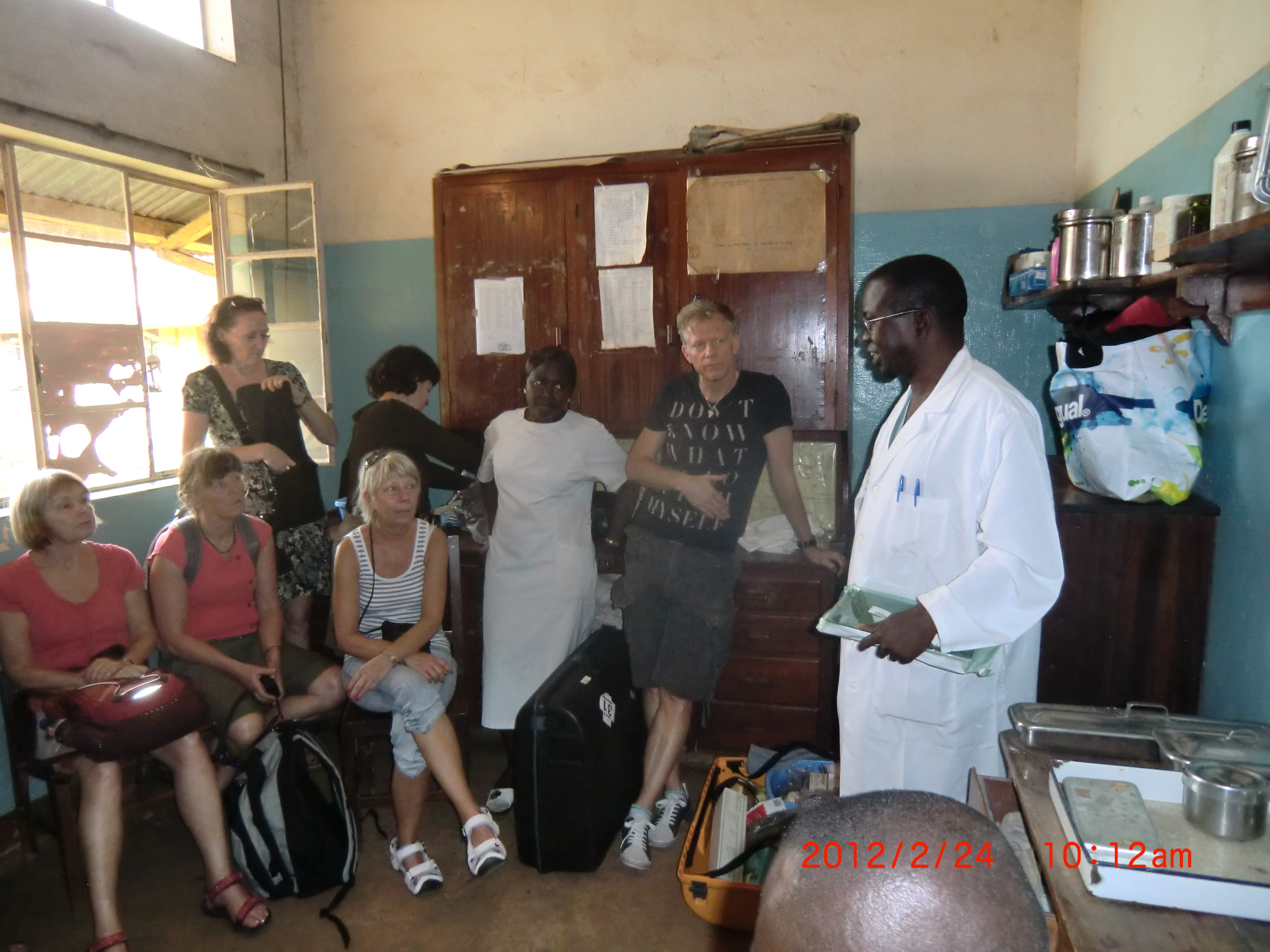
In Kimpese, there are a lot of “mondele”. We have met a group of eleven Swedes, from Mölndal and Gothenburg. We joined them for a ceremony at the IME hospital, when they presented equipment for the hospital. Dr Roger Mahema told us a little about the hospital. It has 400 beds, 275 employees of whom 18 are physicians and 5 are medical students. He himself is an ophthalmologist and also the deputy manager of the hospital.The hospital is self-financing, they get no funds from the state.

After the ceremony we had a meeting with Emy Miantezila, a man with many strings to his bow, his son David, agronomist and his sister Luzolo, English teacher. All of them speaks English. We talked about family farms, a topic we have touched on before. There are vast areas of land all over Congo that no one uses. Emy has looked into the possibility of leasing or buying land. Both options are available. You can apply for the legal ratification of the acquisition of property, and you can apply for the registration of one’s title to the legal ratification. This autumn, we plan to give an entrepreneurial course together. Primarily, the course will be directed to farmers here in Kimpese. Emy will pick out suitable candidates.

I brought up the question of the new but unusable SAME tractor we had seen yesterday in the village Kiwelo. I asked Emy how a new tractor can stand idle like that? The reason is the mentality of the owner, Emy answered. His foresight extends to a day at a time. The profit he has made from leasing the tractor to other farmers, he has spent on other things than maintenance. And when the tractor needs to be repaired, there is no money for the reparation. Charity is great, but the knowledge and the skills in running and maintaining things has been in short supply. No one on earth can know what he hasn´t learned. Knowledge transfer and follow-ups are necessary for the charity to turn into something useful.

Two people have affected me today. One of them was a women at the IME hospital. She was maybe in her 50´s, and she had two legs like most of us, but they were paralyzed. She sat outside on the the cemented walkway, and she moved herself around with the strength of her arms and hands. With her, she carried some cans and a pot. She pleaded for help, especially when she saw all us “mondele”, but none of us showed her any helpfulness. Three caretakers in rubber boots and gloves came and carried her away. This scene was strange, and very moving. The other person who made a deep impression was a young boy, maybe eight years old. He came walking into the yard outside when we were discussing family farming with Emy, David an Luzolo. When Emy saw him, he called out “Makise, Makise!”. The boy came inside, to the class room where we were sitting, he sat down at a desk and fell asleep. During the whole meeting, Makise was asleep. We asked Emy who he was, and Emy told us that he is one of the street children that goes to Emys school. His parents might be dead, or something might have happened that dissolved the home. Obviously, he does not have what every child is entitled to, a home and a family. Maybe he has never sat in the lap of his mother or father and felt their love for him, maybe he has never had anyone read him a story or say evening prayers together. Everybody, both children and grown-ups, needs love and solicitude to live and develop into well-balanced people. Makise was another person who touched me today.

Posted in MSG

To Kimpese

Bridge in Matadi

Clement Nyambudi joined us from Nsanda to Matadi yesterday. We talked about the arrangements and the developments of the Nsanda project. He went back to Nsanda today after breakfast to carry out some planned work. This morning, I printed all the contracts and the instalment plans of the January 11 group. All agreements are documented and signed.
Samuel Nkailu and Muditu came to say goodbye. We talked again about the Youth House. To Samuel, it is important that younger leaders take charge of the house and it´s activities. They also told us that they want to start their own entrepreneurial course. We think that´s a good idea and we want to support them with the course material. Samuel has translated our material to monokutuba and Yapeco is revising it right now. Muditu told us that his cultivations are doing fine. The drought hasn´t affected his fields much.

Yapeco, Julienne and Bernt went to the Ecobank to arrange the formalities concerning our newly opened account. We will have internet access to our account. That is necessary because we must have a good overview of the transactions.

At 3 pm we left Matadi for Kimpese, and three hours later we arrived at the house of Nganga and Nsiku, the retired couple we have been staying with before. They were not at home when we arrived, but they had left the key with a neighbour. She was sitting by the front door, and when we came, she opened the door and handed over the key to us. When we had made ourselves at home, our hosts arrived. We had planned for Julienne to join us to Kimpese, but she wanted to go back to Nsanda instead. Nganga and Nsiku had been worrying about cooking for us, and Nsiku had called Julienne and asked her to come too. They would have paid her return ticket to Nsanda. At the home of Nganga and Nsiku we have received great hospitality. As soon as we come to Kimpese, they want us to stay with them. In return, we assist Nganga in getting a good bank contact, which in turn will help him finish his hotel building.

When I am writing these lines, Bernt presents to Nganga a budget he has been working on about the hotel building. A budget is always handy in a project. Let us hope that Bernt have produced realistic numbers. We never miss an opportunity to emphasize that the numbers must be realistic. Let us hope that Bernt practices what he preaches.

Posted in MSG

Think outside the box

Bring one another

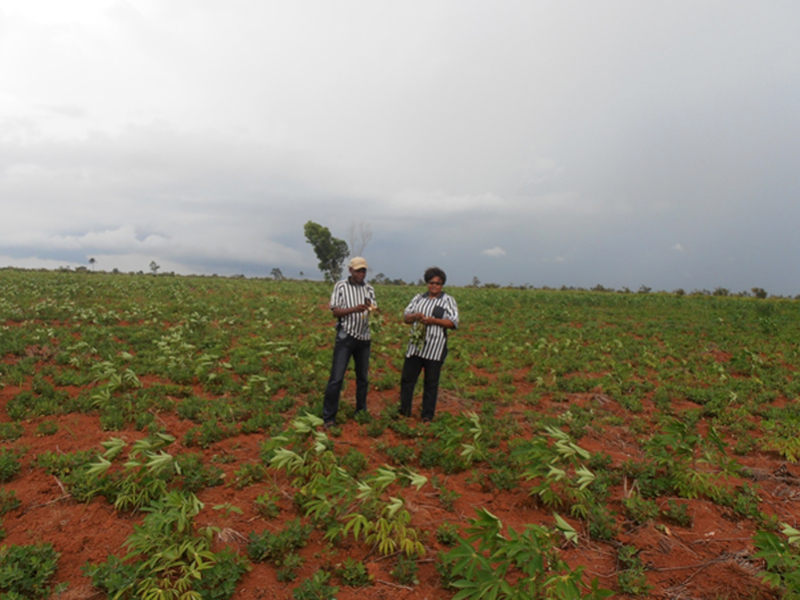
Today, something unusual took place: Bernt rose up before me in the morning. Maybe, he had been hit by the message of his own sermon of last Sunday, about leaving the old patterns and think outside the box. And maybe he will realize that “the early bird catches the worm”. For breakfast we tried a new combination of porridge and sliced avocado, that Bernt had bought yesterday from an itinerant saleswoman. It was a new taste, and it was quite good. The day was reserved for a trip to Nsanda. First, we visited the cultivations of Muditu´s and his wife Josefine´s. We also went to their nice little house in the village Kiwelo. Muditu and Josepfine has 2,5 hectars of manioc. Between the manioc plants they have peanut plants, that had been harvested last growing season. Muditu counts on a harvest of 10 tons of manioc. Furthermore, they have 1 hectar of beans, and another 1,5 hectars of peanuts. According to Muditu they have not been hurt by the drought yet. Quite surprisingly, we met a cow who had been standing behind some bushes, peering at us. Judging from her behaviour, we understood that she had never before seen a mondele. Bernt wanted to take a close-up of her, but Muditu warned him and Bernt took a more distant photo.

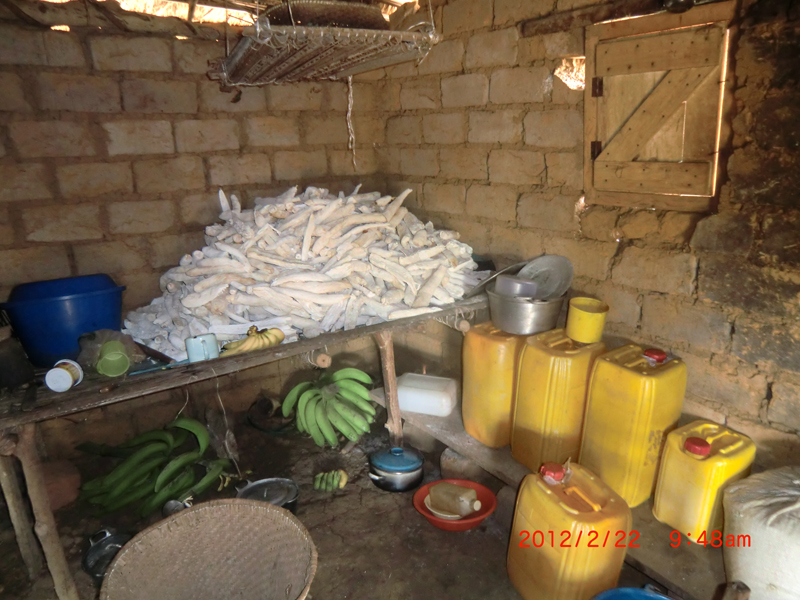
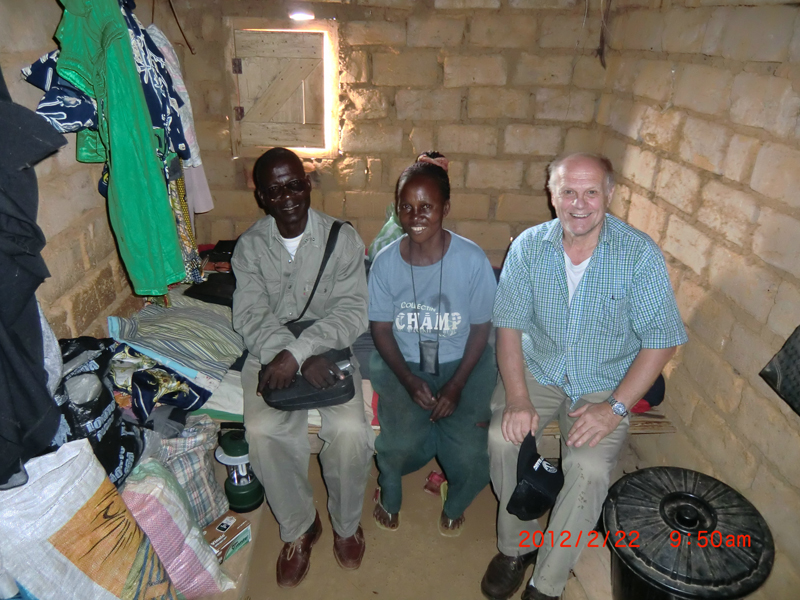
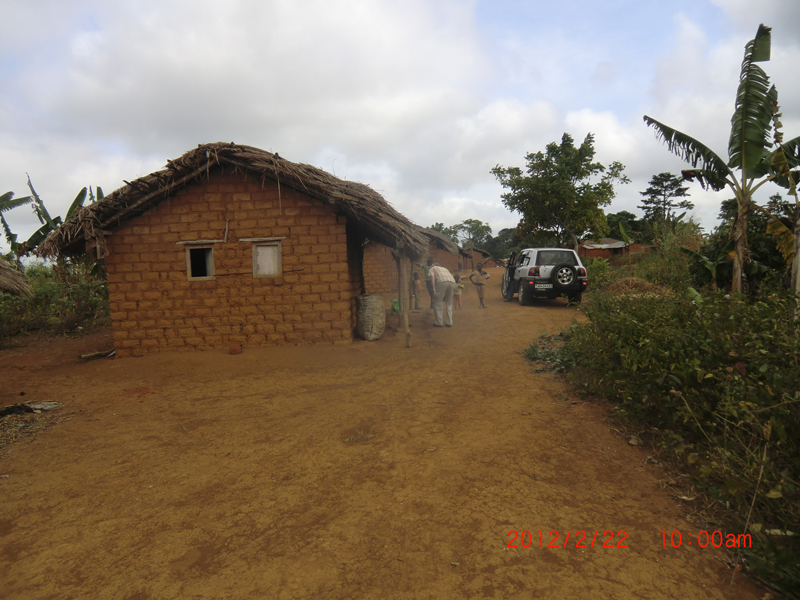
Then we went to Kiwelo, where we met Josephine. She lives there all week and takes care of the fields. The house consists of two rooms, one bedroom and one livingroom. The food is cooked on a simple fireplace outside. There are no windows, only shutters that you open when you need light, and there is no electricity. When we left her, she took a basket to go harvest peanuts, and Mudito joined us to Nsanda and then to Matadi. I think this is called division of labour in Congo. We noticed that there were two tractors in the village. One of them was an older Fordson and it seemed to work, and the other was one of the larger models of SAME. Judging from the tires, it seemed to be quite new, but it has probably just been idle for some time because one of the rear tires was flat. An expensive resource just standing still, to no use for anyone. Sometimes it is difficult to understand that the Congolese can´t see the resources they have, just around the corner. I suppose that it wouldn´t take much to get the SAME tractor to work again.

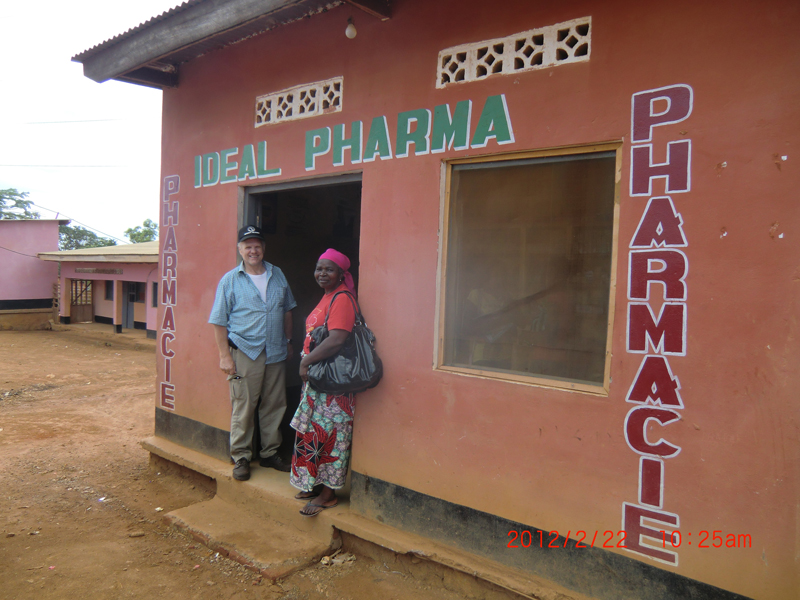
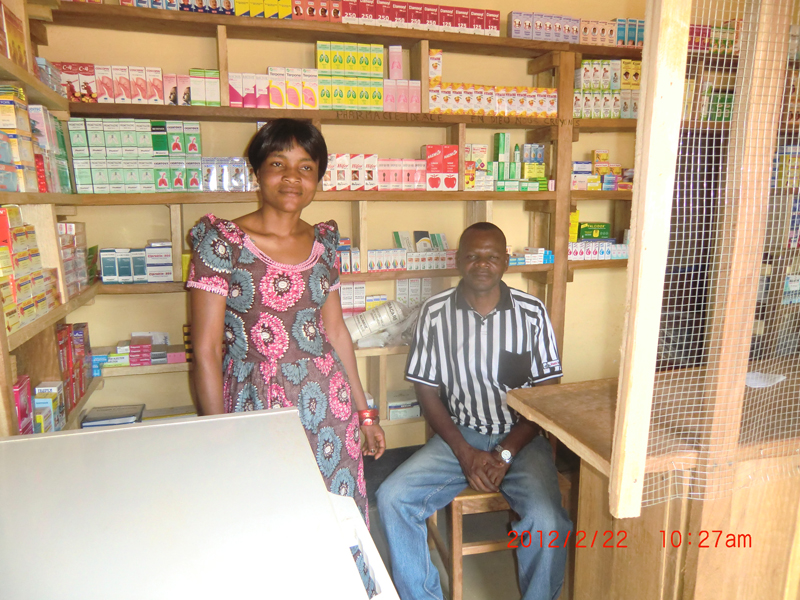
We continued our journey by visiting the pharmacy of the Nyambudi´s in Nsanda, and their employed pharmacist Angéle. Anyone can open a pharmacy in Congo, but it requires a lot of permits, and the person who man the pharmacy must be an expert. Angéle is a trained nurse, and the pharmacy is ordered, clean and tidy.

Then we went to Nyambudi´s house in Nsanda. It is a simple house where they live when they look after the Nsanda project. The house has three rooms, and electricity but no running water. The furnishing consists of one table with two chairs + the chair of a neighbour. The sleeping place is mattresses on the floor. There are no windows, only shutters. The house provides shelter, nothing else.

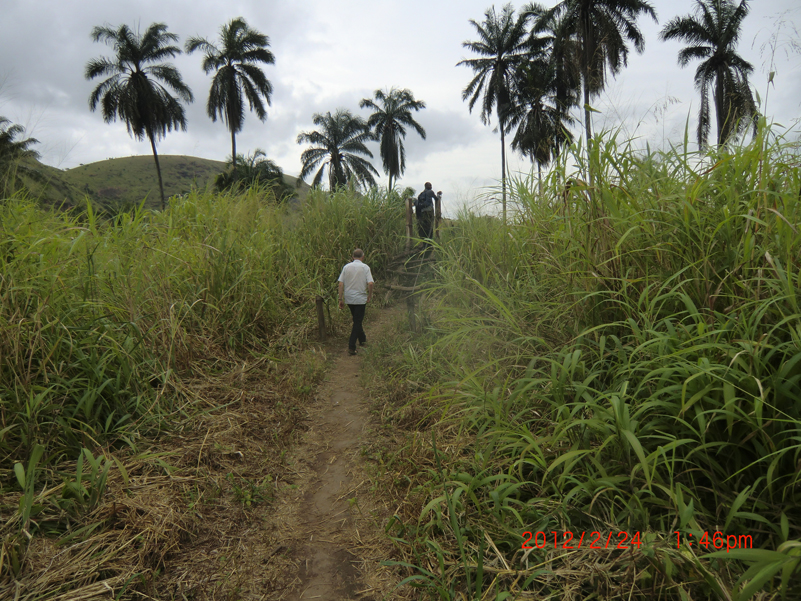
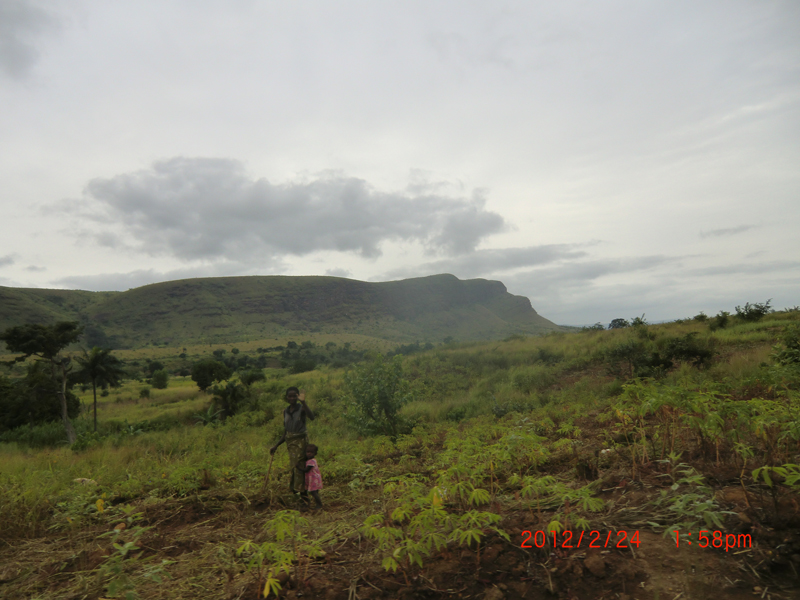
Then we were off for the Nsanda project cultivations. Clement and Jimma, the driver, Bernt and I went in the renovated Toyota jeep of the Nyambudi´s. Julienne and Yapeco went in Yapecos Toyota, a jeep of a newer model. It´s magnificent that the old jeep could be made to work again. The 17 km ride from Nsanda to the cultivations was ok. It was sad to see the fields. They really suffer from the drought. The manioc has reached halfway of it´s normal growth, but it will be alright if there is rain, and can at best be harvested at the end of the year. The peanut plants were alive, but there wasn´t anything to harvest. If there will be rain there will probably be a small harvest. When I am writing this, it is raining for the second night in a row. That´s lovely. A normal harvest of peanuts is about one ton per hectar, and the price is one USD per kg. We would have harvested 5 tons if the growing season had been typical. The soy plants were completely wasted. We sowed 3 hectares, and that would generally give a harvest of 3,5 tons. We had a contract with a factory that would have paid us 5 USD per kg. Now, we need to clear the fields from weeks. Bernt and Clement started right away.
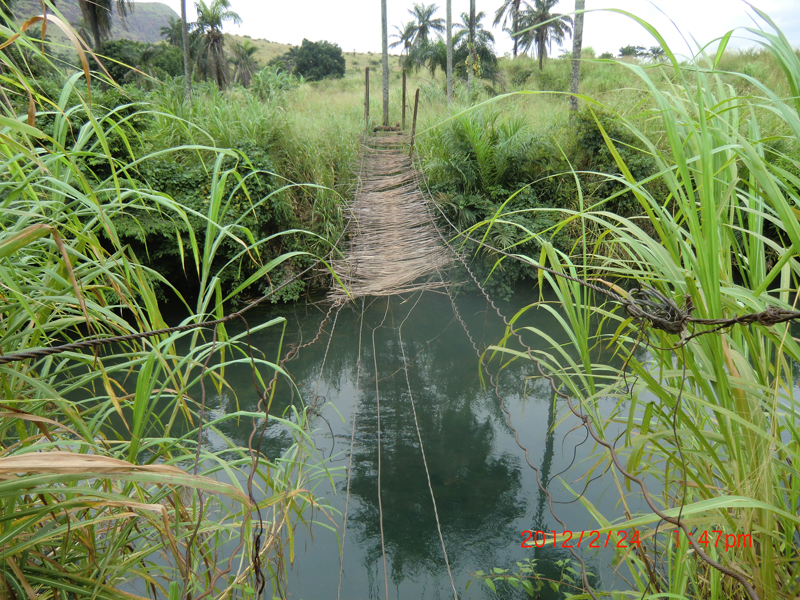
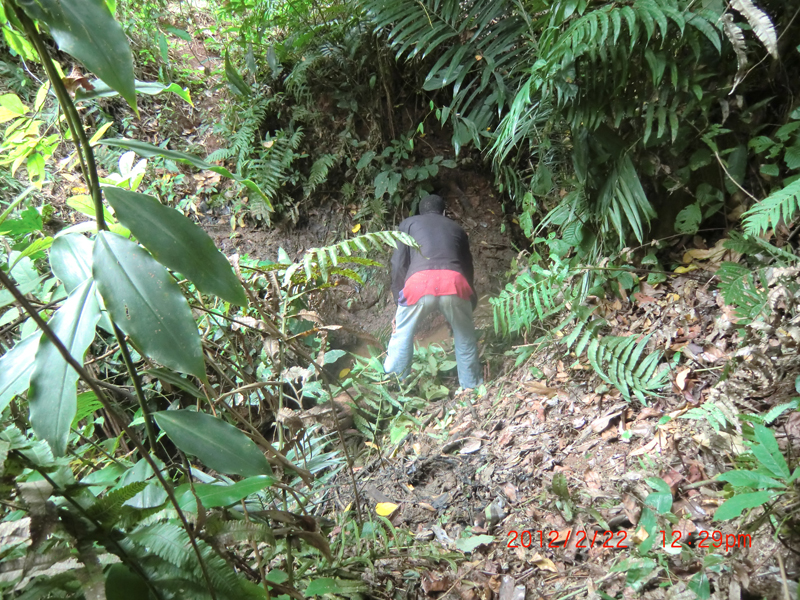
We took a walk down to a rather deep valley, where there is a water source. Our driver went ahead with his machete and cleared the way. Bernt and I walked behind. We were alright as long as we were walking downhill, but the walk back was almost fatal for us mondele. The heat was pressing and the uphill much steeper than it had seemed before. The driver was totally unaffected by the exercise, he even had a jacket on. Our plan for the water source is to construct an irrigation system for some of the fields. Right now, we plan to prepare another two hectars close to a small river, where we can arrange for irrigation right away. The crop will be piripiri and beans.
Posted in MSG