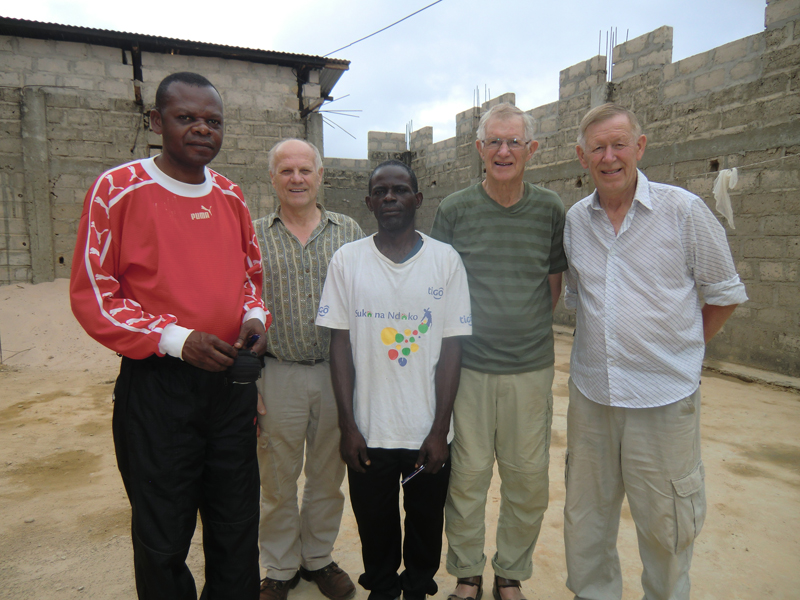
Cat visit

Dinner at Augustine och Yapeco's place

Dinner at Augustine och Yapeco’s place

The morning began with a cat visiting us. It had crept through an opening in the gauze window. He peeked out from behind the curtains in a few places with his sharp cat eyes. Both times he saw me, he looked frightened. Such a pale appearance he had probably never seen before. I must have looked dangerous. Better to flee, he thought, and quickly slipped his way out the window.

When we looked out we could conclude that it had been raining during the night. The earth and the people yearn for rain. Everybody hopes that the rainy season starts in earnest, the sooner the better. Once it starts to rain, the vegetation will start to grow very fast.

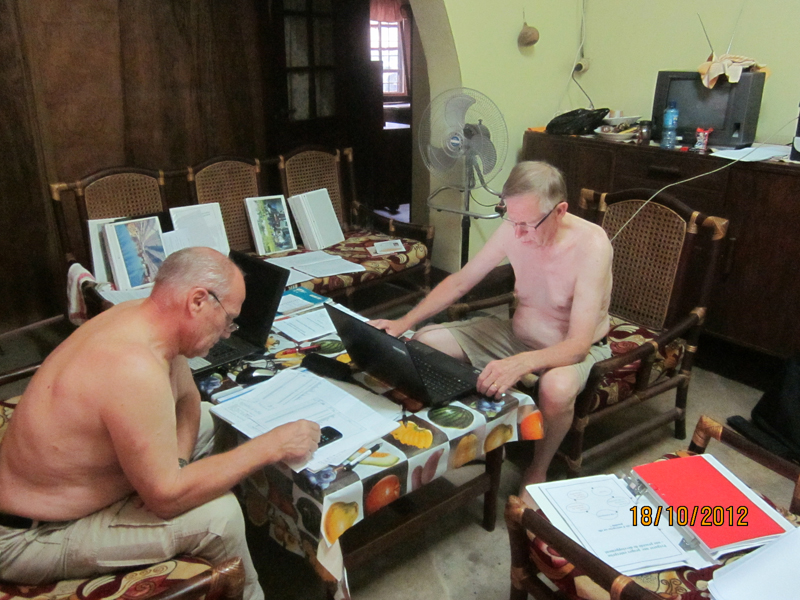
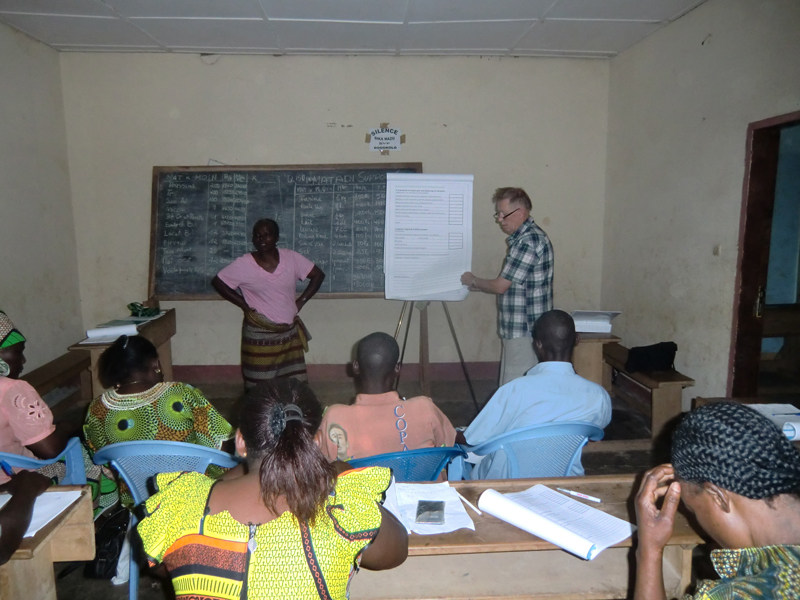
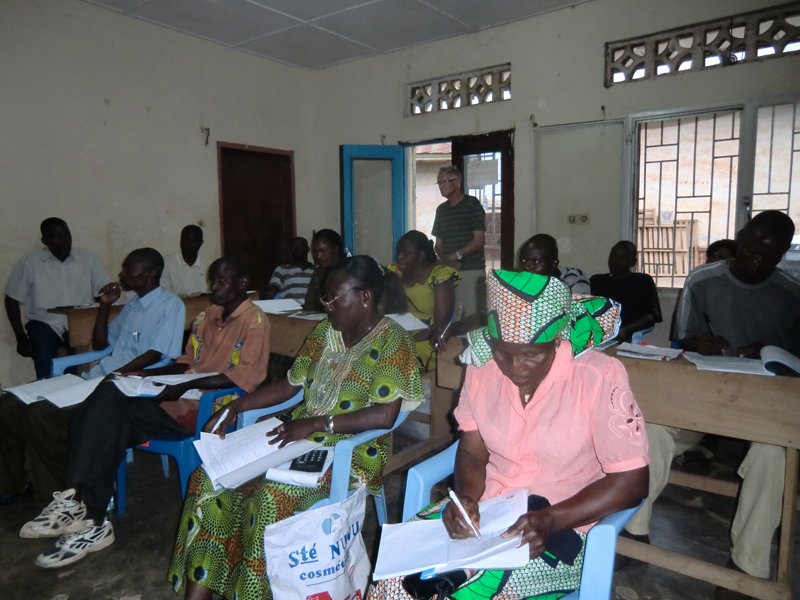
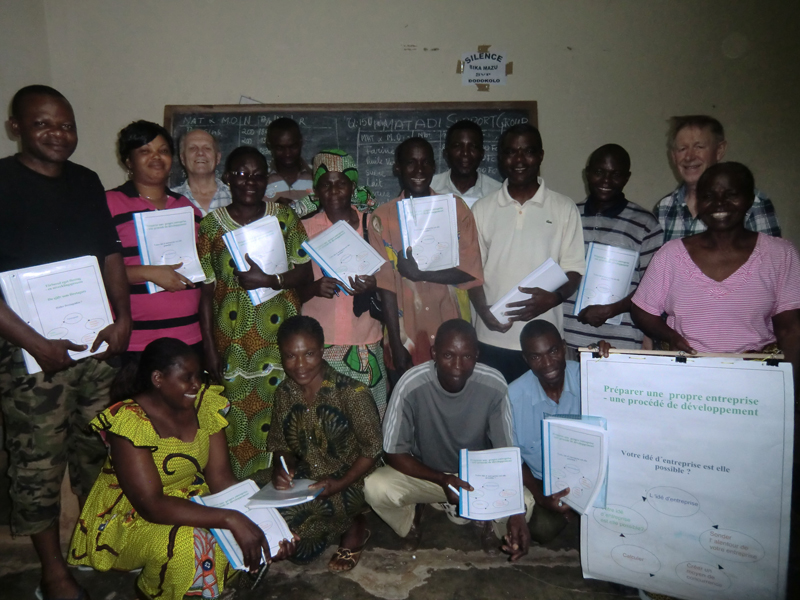
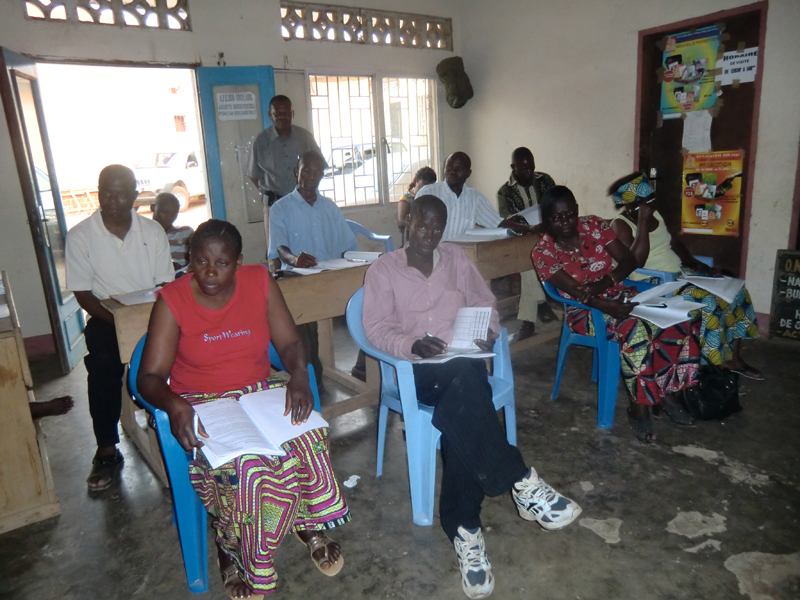
During the morning, Lennart and Lars-Ola worked with developing educational materials for this Saturday’s course with the teachers from the Baobab Church. Five prospective volunteers for MSG will also participate in the training on Saturday, and next week we will have a new round of entrepreneurs. Bernt wrote reports and evaluations.

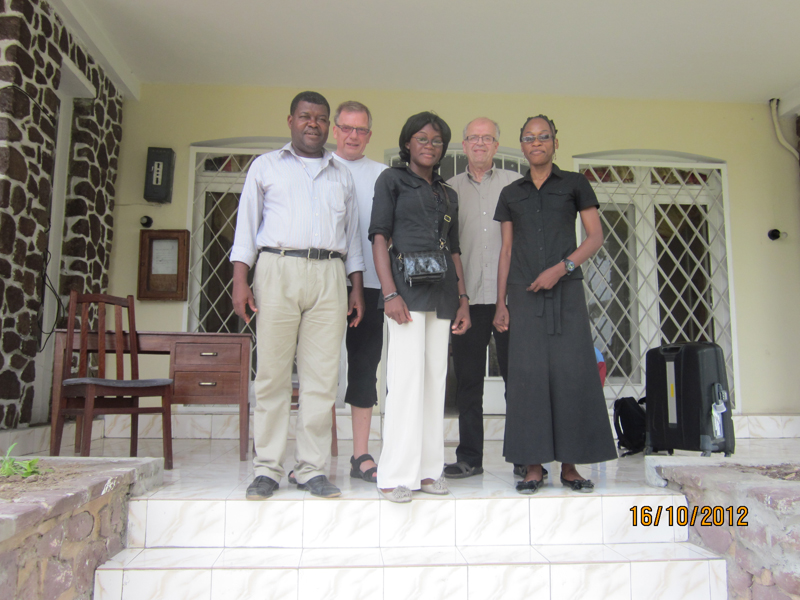
Yapeco, Julienne and I visited two banks. We are not completely satisfied with the bank we have today. We are looking for a bank that we can establish a partnership with, where we can get a satisfactory service both for MSG and for our entrepreneurs. Commercial Bank of Congo, BCDC, seems interesting. We will have further discussions with this bank and we hope to arrive at a sensible result. A good bank contact’s important for an entrepreneur.

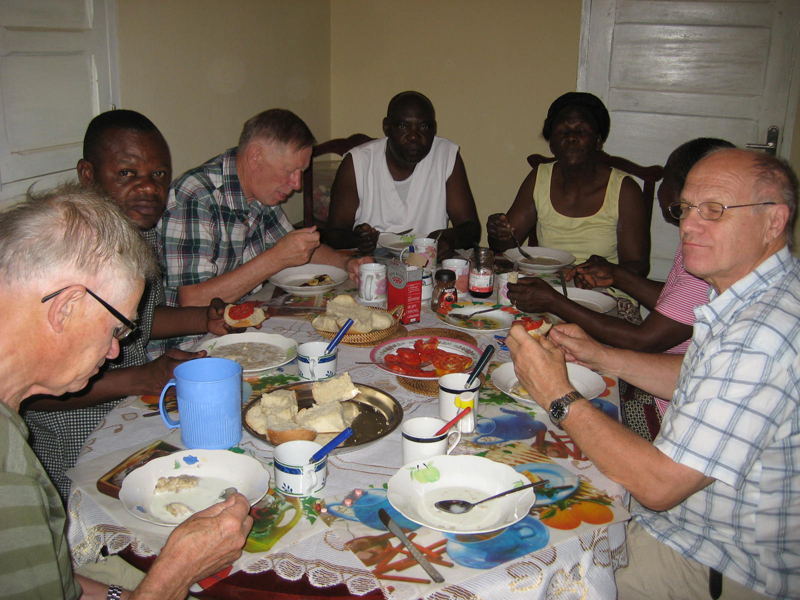
We have dinner every day at Augustine’s and Yapeco’s house. By now, we are seven dinner guests there every day. We are all very grateful to the family of Yapeco for being invited to have dinner in such a nice home. Today, Augustine served rice, boiled manioc, kwanga, cooked bananas, vegetables and fish, the dessert was fruit salad. After dinner Yapeco drove us back to Lisanga. The heat was oppressive and we were pretty tired so we took a long, good siesta.

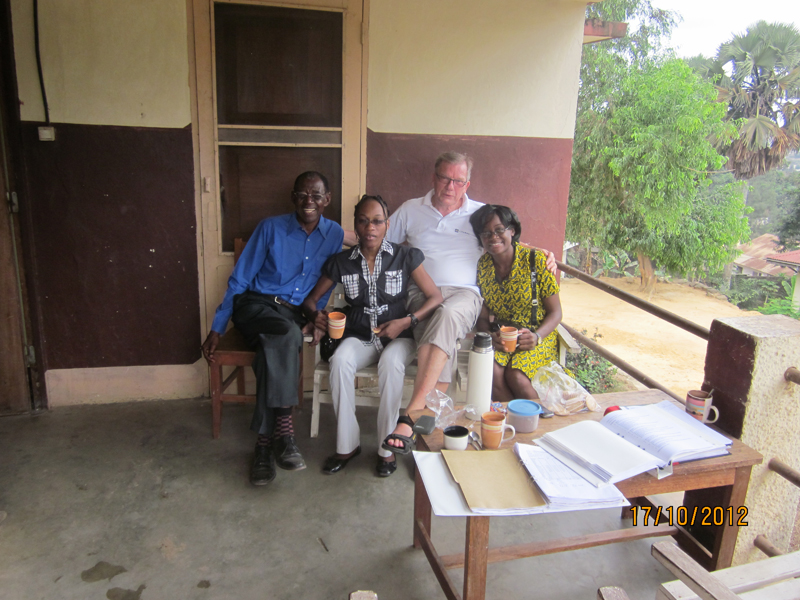
During this good rest we took a refreshing cup of coffee on the patio, darkness had fallen and there was a lovely breeze which also refreshed us. We agreed that the temperature was like the kind of lovely Swedish summer night, which only occurs maybe once every summer. Then we went through the cargo that had arrived in Matadi with the container we sent from Sweden in July. It is now in Point Noire and should be here in a few weeks. Delivery time has been much too long, we need to sort that out with the freight forwarder. Bernt will take care of this. Unfortunately, it is expensive to send goods to Congo. When we added up the cost of customs and other fees we arrived at a price of 4000: – SEK per cubic square. Then take into account that half of the cargo is duty free. That is an incredible cost. We will carefully check if this activity will become profitable.
Posted in MSG

Reinforcement

Meeting with teachers and management of the Baobab Church high school

Meeting with teachers and management of the Baobab Church high school

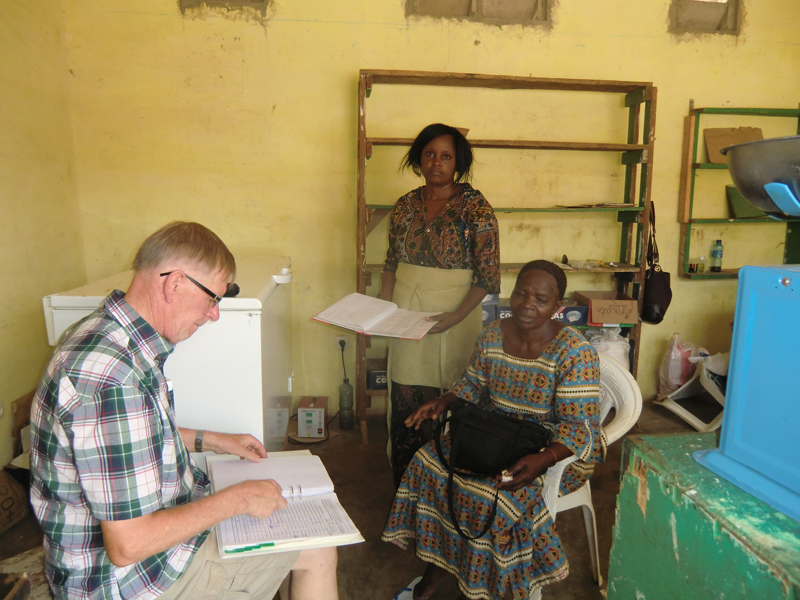
Today, Lennart and Lars-Ola enhanced the capacity of MSG. They have been working with the first group of entrepreneurs we trained two years ago. Seven of the nine participants have departed from the installment plan. Two have handled their installments to the letter. Of the seven, some have only small payments left, and a few have a slightly larger proportion of their loans remaining. The entrepreneurs will have to sign new loan contracts with tightened requirements. As a last resort we will trigger the guarantee, which means that the rest of the group will have to pay for those who do not comply. Excuses will only work to a certain limit. Sooner or later, they will be seen through. There have been some tough lessons for some borrowers, and Yapeco has been very strict. With regard to the follow-ups, we rely a lot on our local representative.

Bernt wrote reports and evaluations, and I prepared for this afternoon’s meeting with school leaders and teachers of the high school at the Baobab Church. I also supplied Lars-Ola and Lennart with new loan contracts and new installment plans as they negotiated with the entrepreneurs. They sat on the patio and Bernt and I worked indoors.

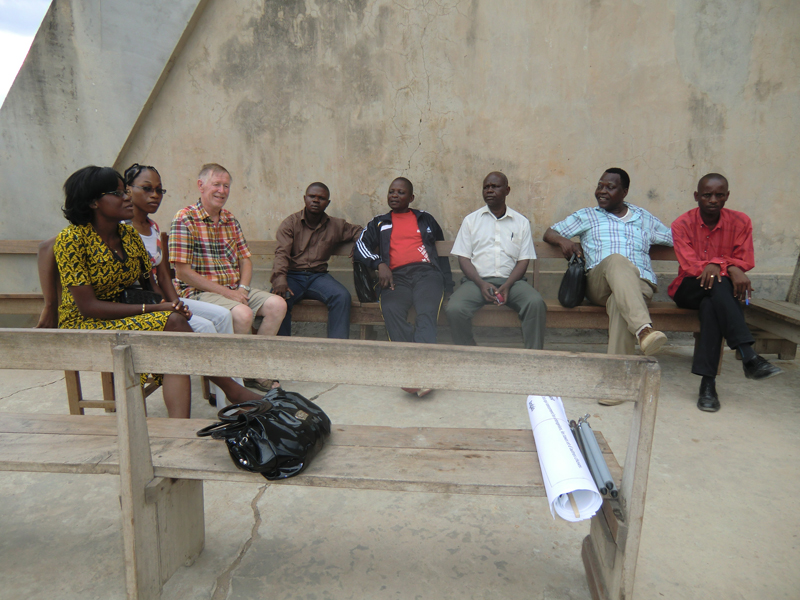
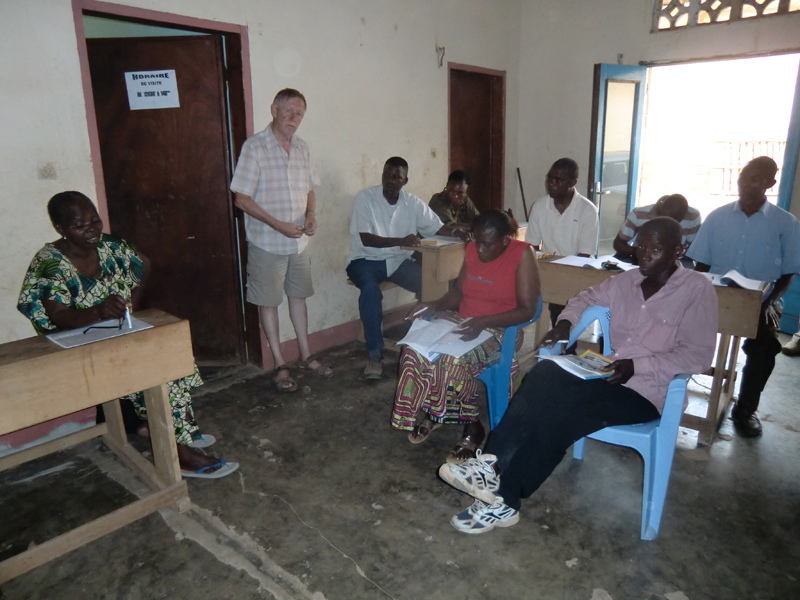
After dinner, Yapeco drove us to the Baobab Church. Unfortunately, we were very very late for the meeting. Logistics and Congo do not always agree. We apologized for our great delay, and their forgiveness saved our conscience. When it comes to waiting, the Congolese are amazing. They are usually not chased by the clock, and no irritation was shown on this occasion. They seemed to be happy that we came at all. The headmaster began with a prayer. Myriam and Anita from Brazzaville had joined us to the meeting, they introduced themselves and Myriam interpreted our discussion. Julienne, our regular interpreter was busy with Lennart and Lars-Ola. Myriam with her training in business economics fit in well, and she also gave us suggestions for textbooks that she had found in Brazzaville.

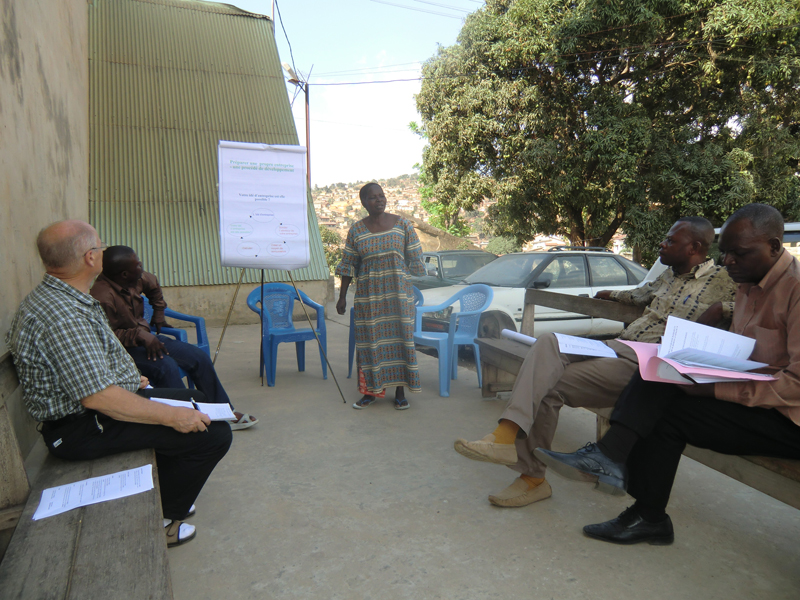
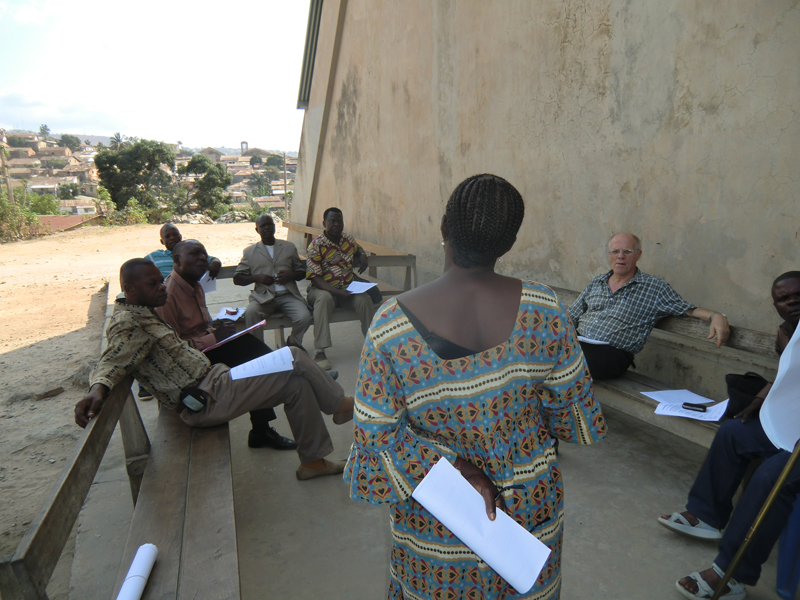
We shared our thoughts, and they shared theirs. Our training program is highly concentrated. We proposed to use this program the first semester. Then the students should start their own businesses. The teachers’ proposals is that they will manufacture school chalks. At the same time that the students are practicing being entrepreneurs, they will pursue depth studies in the different subjects of running a business, and obtain textbooks for these studies. After a couple of hours’ discussion, we ended by deciding to start a course for teachers on Saturday afternoon. At 1 p.m. everybody should be in place and no one will be allowed to do what mundele did today. The decision was unanimous. The meeting was held outdoors in the shade of the great church. The temperature was moderate today.

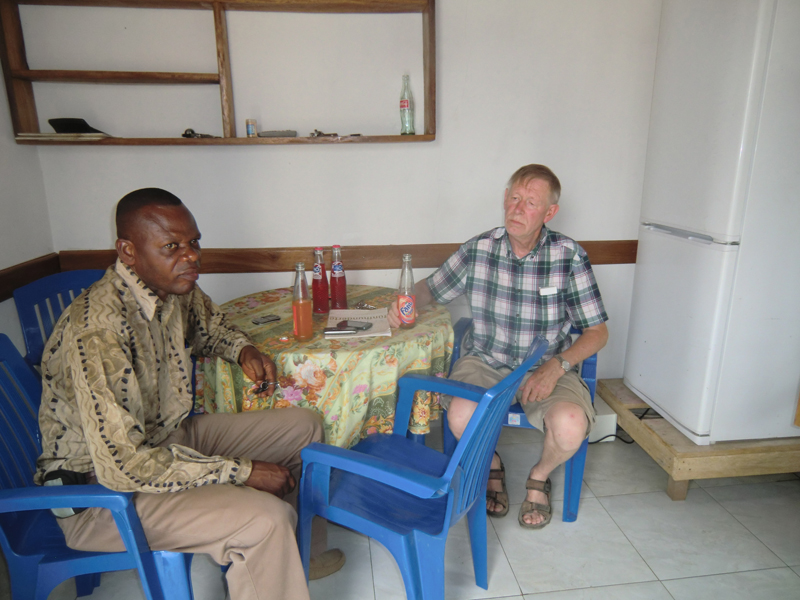
Then we went home and I took a shower to get rid of dust and sweat before having an hour’s rest in bed before the next meeting with Bibondo, a member of parliament. He stays here on Lisanga during his business trips. He wanted to meet us and we had a nice talk about almost everything under the sun. Good that we had a common language. During our conversation we had soft drinks with peanuts and bananas. A traditional snack in Congo. He expressed a desire to help us with the necessary contacts and we put our hope in him. Contacts is everything in this country.

Posted in MSG

New meetings

Yapeco, Dialendua, me and Julienne

Yapeco, Dialendua, me and Julienne

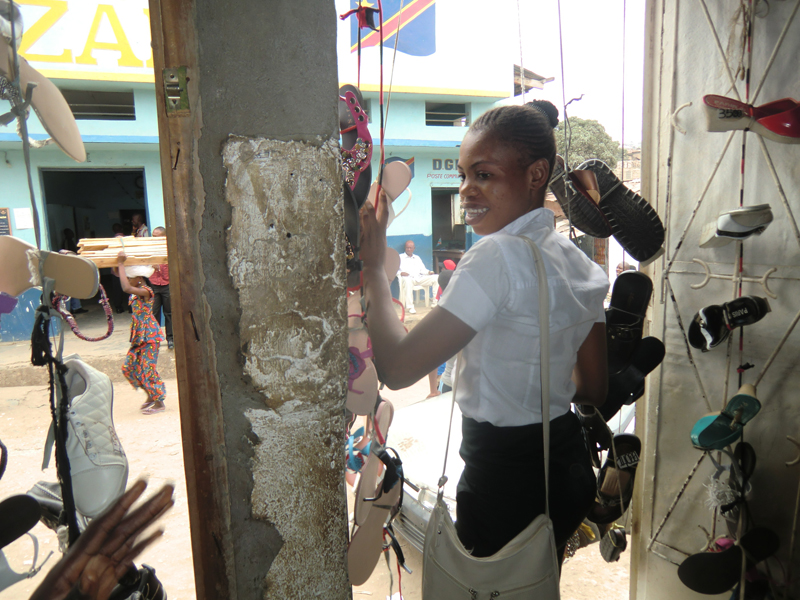
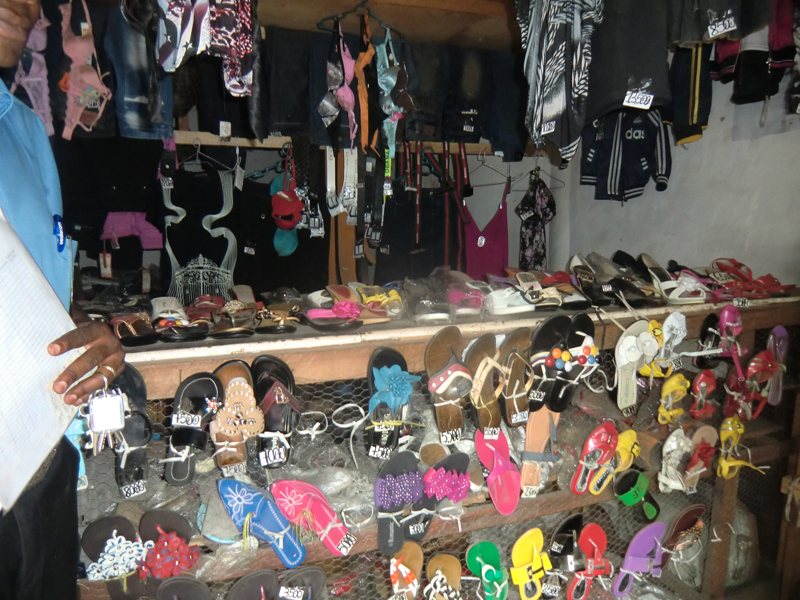
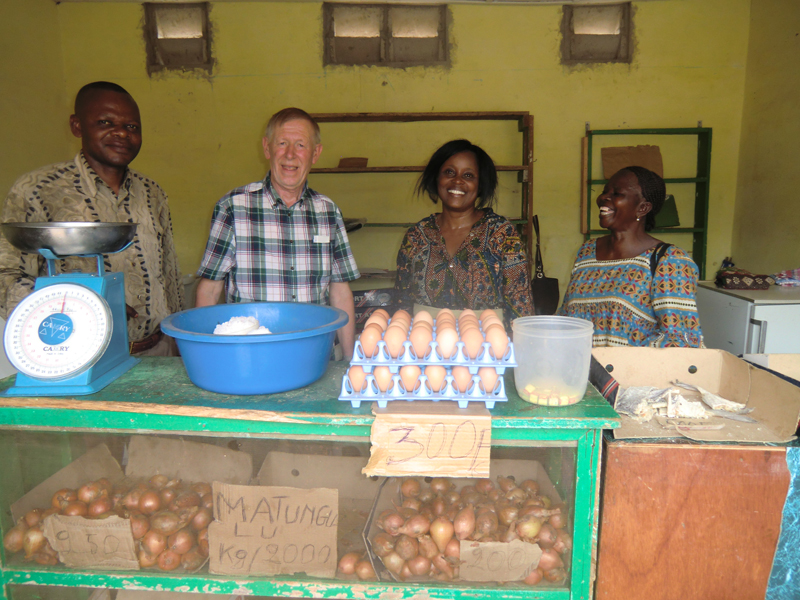
We spent the morning planning and booking various meetings with entrepreneurs, bankers and authority officials. Then we made visits to three more companies. First, we visited Kuva in his clothing and shoe stores. Since he joined our training and got a business loan he has opened a new store or rather doubled his retail space. The two stores are next door to eachother. He is investing in a youthful assortment of clothes and shoes, and the stores are situated on a street with a lot of people in motion. It seems to go well for Kuva and he is a happy and service oriented businessman. When we compare his budget with the outcome, he seems to be doing pretty well. With him, as with the others, we discussed the necessity of careful accounting and that a report must be sent to our local representative each month. Special forms for bookkeeping were handed over to him. He has one employee at the moment, and visions to expand his businesses.

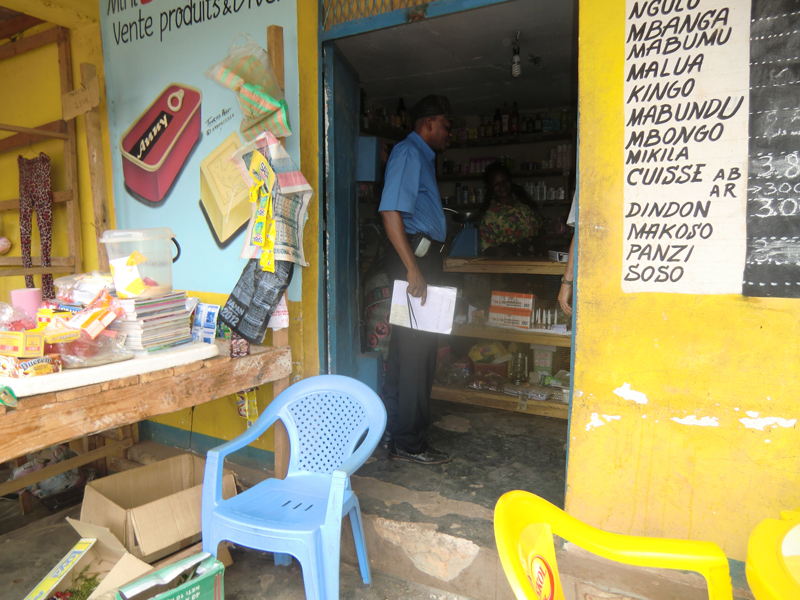
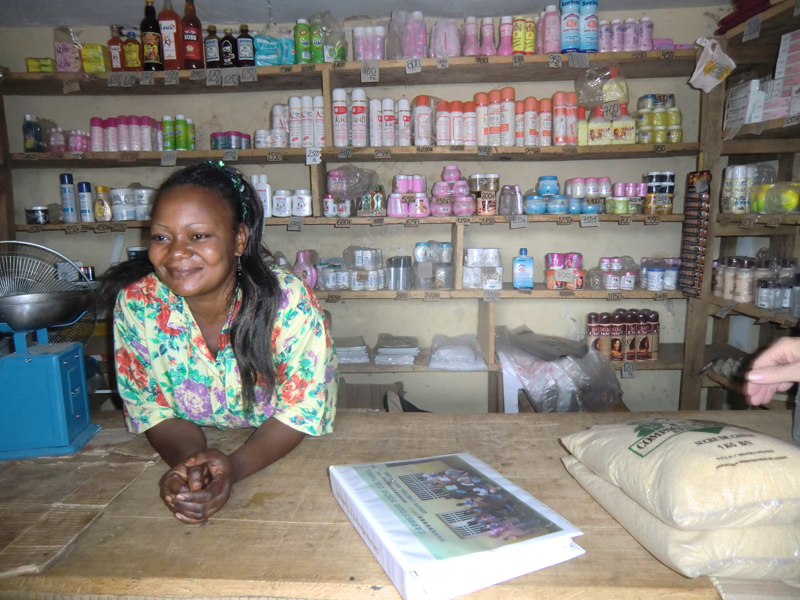
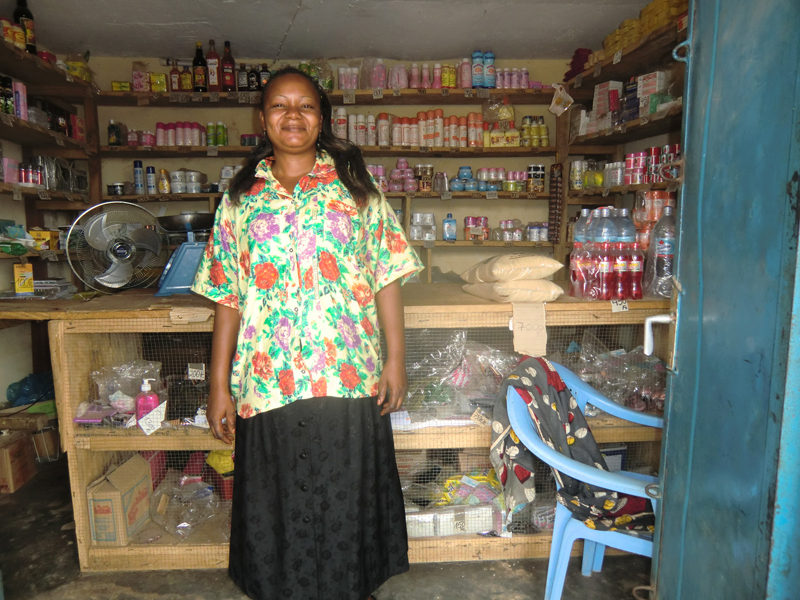
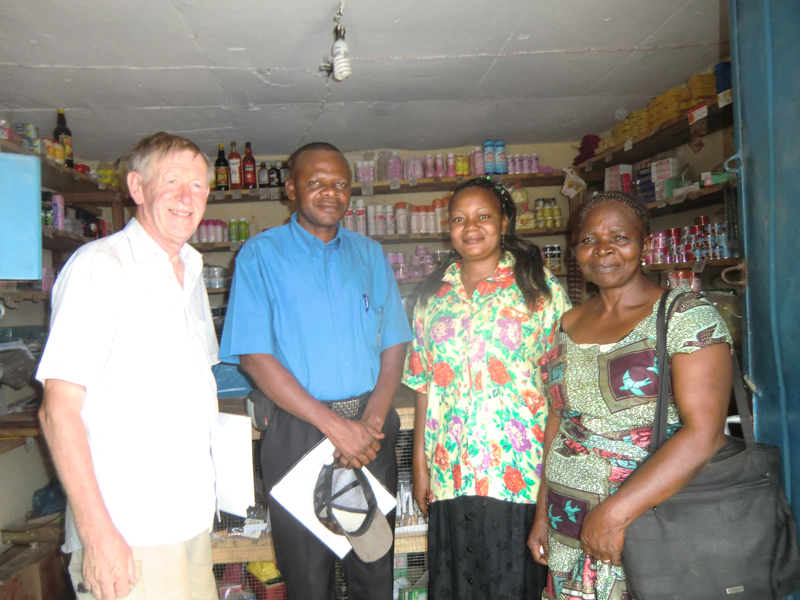
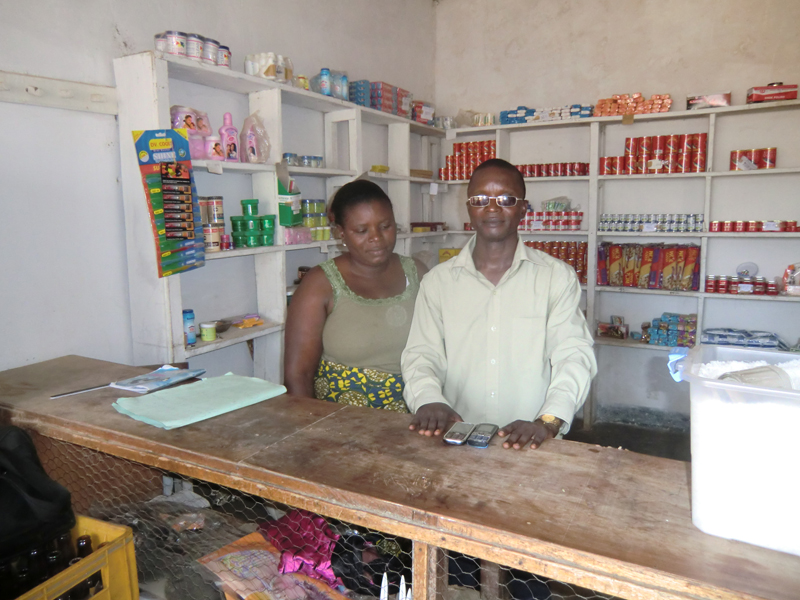
Next one store owner we visited was Lutete and his wife Brigitte. Lutete participated in the training, but his wife manages the shop, a family business. Lutete has another job as well. The shop is a mix of pharmacy and miscellaneous store. Budgeted revenue matches the outcome, and it is a good looking and nice store. When we left, Brigitte got a visit from the man who collects taxes and other fees. Many entrepreneurs complain about the tax collector. The taxes and fees seem to be arbitrary, therefore the business owner doubt the legitimacy of the tax collectors. Before he went to work Lutete strengthened himself with two beers, and we refreshed ourselves with soft drinks in the same cafeteria, next door to Brigitte.

The third entrepreneur, Matondo, came to us and told us about his business. His earlier plan was to sell spare parts for cars, but he claims that the loan he received was too small to start the business. He has previously been a taxi driver and he has expanded this business instead. He recently bought an additional car and now he has three taxis. He wants to work in the taxi business until he has earned enough money to put his business idea about spare parts into practice. Profitability seems to be good and he seems to be a responsible and committed person who we believe will succeed.

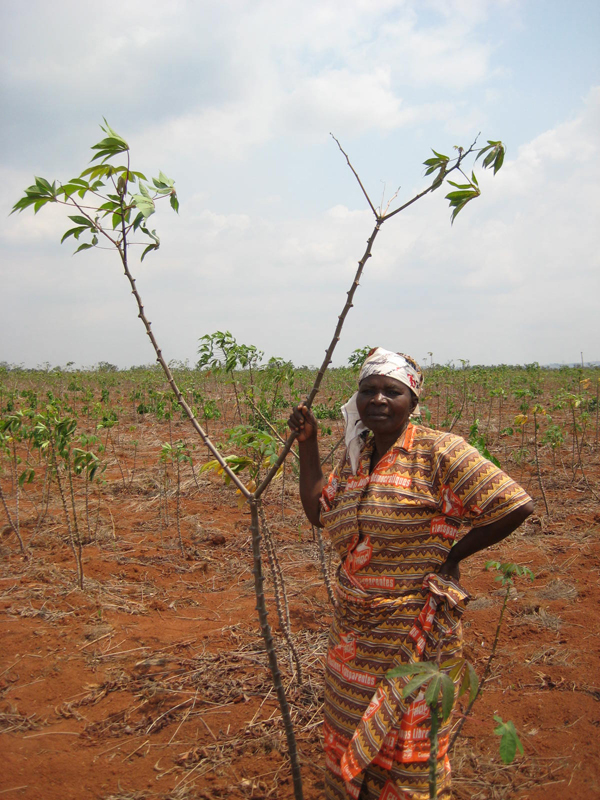
The afternoon we spent making necessary changes to the Nsanda Group. Several of the members in the group have been too passive, and cannot stay in the group. We summarized what had happened so far in the agricultural project and drew up guidelines for the future. Necessary repairs of machines must be done. The cultivated area will be expanded by 10 hectares. We calculated the amount of efforts needed before there are any incomes from marketable products. The participants in the Nsanda project will also get a plot where they can grow their own food. We hope for a good harvest of manioc which we hopefully will refine to increase the sales value.

Later in the evening the number of Swedes increased with 100% here at Lisanga. Lars-Ola Rydberg and Lennart Fridén arrived. They had also brought two women from Brazzaville. They will be here this week and next. We will now work alongside our entrepreneurs. The women from Brazzaville are business economists and will be here in Matadi to follow and learn how we work. We hope that they too will work in Congo with entrepreneurial training in the future.

Posted in MSG

Company visits

Bernt and I in Nsumbus' store

Bernt and I in Nsumbus’ store

The day started with a bit of weakness since yesterday. For breakfast, I ate a small serving of porridge, the first food intake after the stomach revolution. It went well and my strength has returned during the day. During the afternoon meetings, it was difficult to stay awake though. At home, I took a refreshing, cold shower, lay down on the bed and fell asleep pronto. After two hours I woke up and felt fit for fight again. After breakfast, Ing-Marie and Bengt left us to travel to Kinshasa and further on to Brazzaville, Point Noire and some other places in the neighbouring countryside.

Today we made three visits to the companies of our entrepreneurs. First, we visited Albertine. She is an engaged business woman and had planned to do wholesale operations in meat and fish, along with a restaurant. The has had to quit the wholesale business due to much and strong competition. The restaurant seems to work well, however. She serves 30 meals a day, and breakfast to patients in a nearby infirmary, which she also owns and operates. She has a staff of four physicians with different specialties. It is an infirmary for the Congolese who are well-off and there are a number of people with a good standard of living in Congo, we meet them now and then. Here we met a contractor who as far as we can judge is on a sound financial footing. We are considering whether our loans could make a difference for her. More and more, we come to grips with the fact that it is our knowledge and experience that are the most valuable things we can give, and it seems that she has taken the education to heart. In the restaurant, we were invited to have chilled soft drinks. The heat has been a little out of the ordinary today.

In the follow-up work, we try to get the entrepreneurs to share which parts of the knowledge we have conveyed that they use and what it means to them. We are trying to map out whether our work makes any difference and what results come out of it. Bernt and I will visit all ten from the last group here in Matadi. So far they have conducted their installments. What we lack from them is a monthly accounting report. We see that an important form of support and help is regular check-ups through the follow-ups which we plan to continue with for two years.

The other contractor is Zola. She sells a limited range of foods. She represents, in my view, an average Congolese. One of her problems is the much too frequent power failures. It affects her frozen goods, but she struggles on. When we got there, her two children were in the store. They were on their way to school in their neat and stylish school uniforms, they said “bye mom” and took off. We discussed the book-keeping with Zola and emphasized that we must have her report every month.

The third was Nsumbu. He has another job which is his main job, and it is his wife who is in charge of the shop. It is a family business, and that is usually a good approach. They have a slightly wider food range. When we looked at the budget, which he did in training, it appears that they have not quite achieved the planned sales. He explained that several similar stores have opened nearby. When this happens, you have to be clever and offer something extra, to create competition. That was part of our training.

In the afternoon we had a meeting with the Institute 1 Minkondo. The group works with the business education at the high school of the Baobab Church. We presented a number of subjects suitable for the program. Myriam Mbama from Brazzaville had found a number of textbooks, available in Congo and she had sent us a list. Julienne went through the contents of our entrepreneurial program. The group was positively interested and we will meet again on Wednesday to see how we should proceed.

Posted in MSG

A day off sick

The Youth House in Matadi

The Youth House in Matadi

Today, the staff of the Lisanga kitchen managed to produce such a porridge that we like. No more gruel. After breakfast we went to the Baobab church and participated in the French service. Because of faulty logistics, we were late to church. The French services don’t have as many visitors as the other services, today we were about a hundred churchgoers. A young man who I haven´t seen before held the sermon, and the service was led by a women. The pastor of the congregation, Edi Matthieu Diangitukulu invited us mundele to say a few words. They expressed their joy to see us in Matadi again, and promised to pray for the productivity of the two weeks we are spending here. The pastor also took care of the end of the service.

My stomach wasn’t in the best shape by now, and we had to hurry back to Lisanga. This is a normal result of being in a foreign and sometimes tough environment. We are not completely acclimated. Soon, after a rest and some Coca Cola, I felt much stronger. But after a while, my stomach continued it’s revolt and declared it’s dissatisfaction with the circumstances. For some time, it was really painful, and the only thing I could do was to lie down and let everything else be. It might have been a hint that I should honor the sabbath and refrain from all activities. This was not what I had planned. But I could only accept the reality. You learn as long as you live, I hope.

Now, It seems to go in the right direction again, and I live on water and Coca Cola. I can write the blog, which means that I am only 50% sick. It is shorter today because of weakness. Luckily, the others are well. They have visited the Youth House and the Mattie Marie Educational Center here in Matadi this afternoon.

Posted in MSG

Visiting an elephant hunter

Julienne the elephant hunter

Julienne the elephant hunter

Today, we almost got the breakfast we asked for yesterday. Apparently, our request had won acclaim with the superiors of Lisanga. But unfortunately, they didn’t reach the goal from the way we look at it. Namely, the result was gruel, evidently a remnant from the missionaries, as it is called missionary gruel.

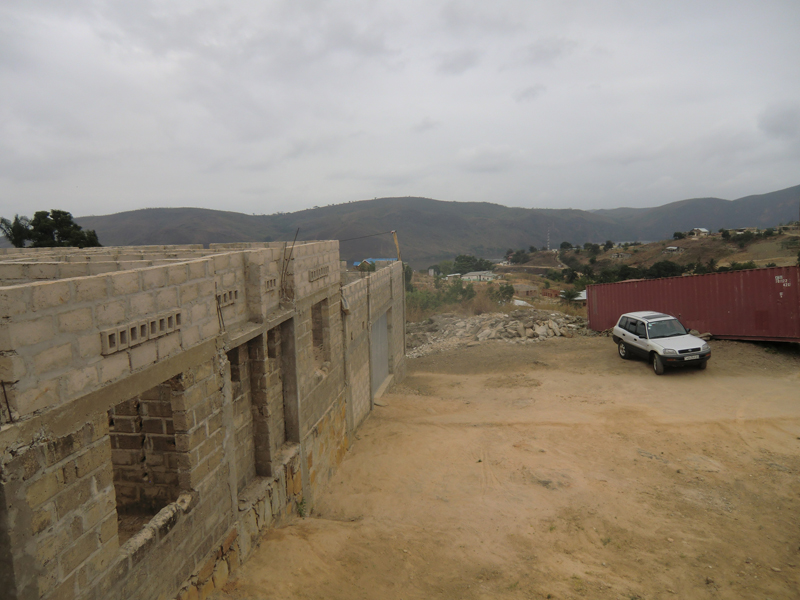
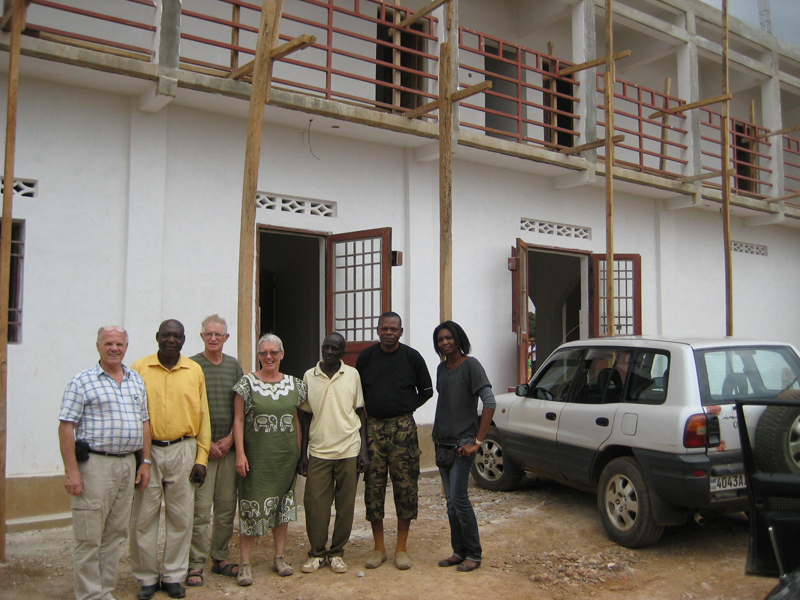
At 8.30 a.m. we were going to Nsanda, this time to inspect the piripiri field. But first, Yapeco gathered us in prayer for our travels and the day ahead. Before we got going, we met a buffoon in the street. He was dressed as Mobutu, a Congolese dictator of more than 30 years, and his message was clearly adressed to the leaders of today. He was a copy of the dictator, carrying dummy weapons and acting like him with a great sense of humour and satire. His “show” attracted general hilarity from the public in the street. For everyday – according to Yapeco – he is a department manager at one of the hospitals in town. Our next stop was the building site of Yapecos hotel, where we met Edimod. He, his wife and a child live in two rooms in a corner of the basement of the hotel. They have a roof made of corrugated sheet. Edimond is in charge of the around-the-clock watchkeeping of the building site.

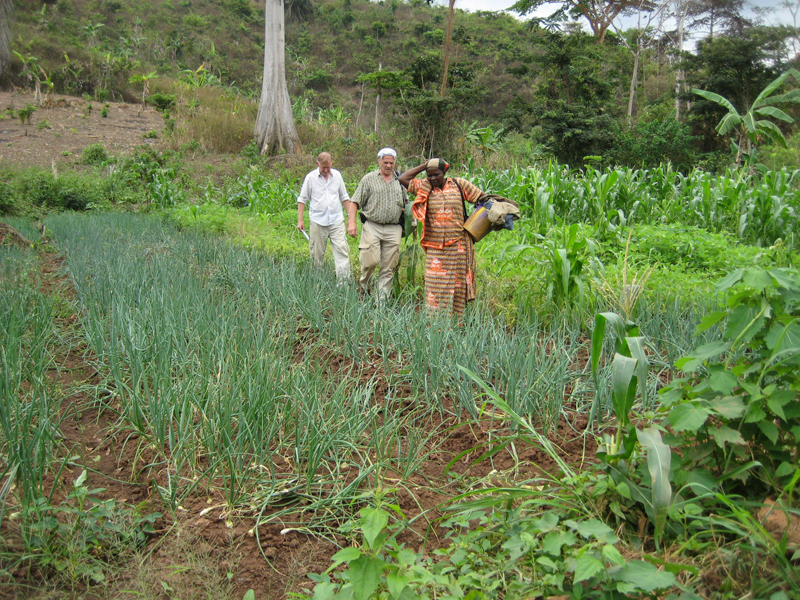
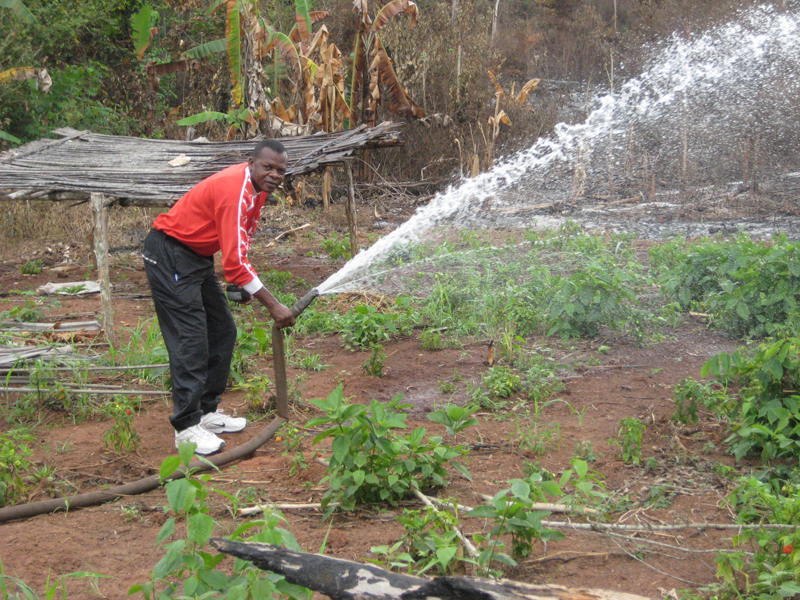
Then we headed for Nsanda. We provisioned and met up with Julienne and her driver Jima and the relative Iroci at the Nyambudi house in the village. Clement had gone to a funeral in Kimpese. Jima is not only the driver, but helps the Nyambudis with all kinds of chores. We went together the 14 kilometers to the field where we grow piripiri, peanuts, corn and onions. It takes two hours to walk between the manioc field, which we visited yesterday, and this field. This field is located by a river, and the river feeds the irrigation system that is very much needed during the dry season. Now, we hope for a lot of rain to boost the vegetation.

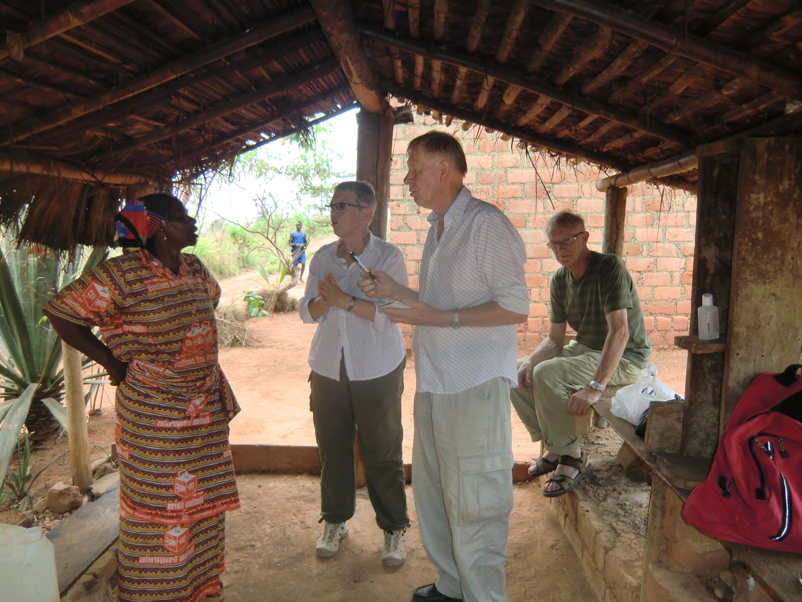
Before we walked into the field, we stopped by a cluster of small, plain brick houses. Here lives a former elephant hunter called Julienne, thus namesake with Julienne Nyambudi. The elephant hunter comes from the northern part of Congo and lives here by herself, at least 10 kilometers away from the closest neighbour. The plot where she lives is owned by her brother, and it adjoins the Nsanda fields. Julienne knows her pretty well, and we talked to her for a little while. We sat down in her paillotte, a gazebo with a grass roof, and had the soft drinks and snacks we had brought. When we sat there, she whetted her machete on a stone and then she went into the woods. An hour later she came back with manioc leaves for sakasaka and a bunch of bananas, and then she took her hack and went to her own fields.

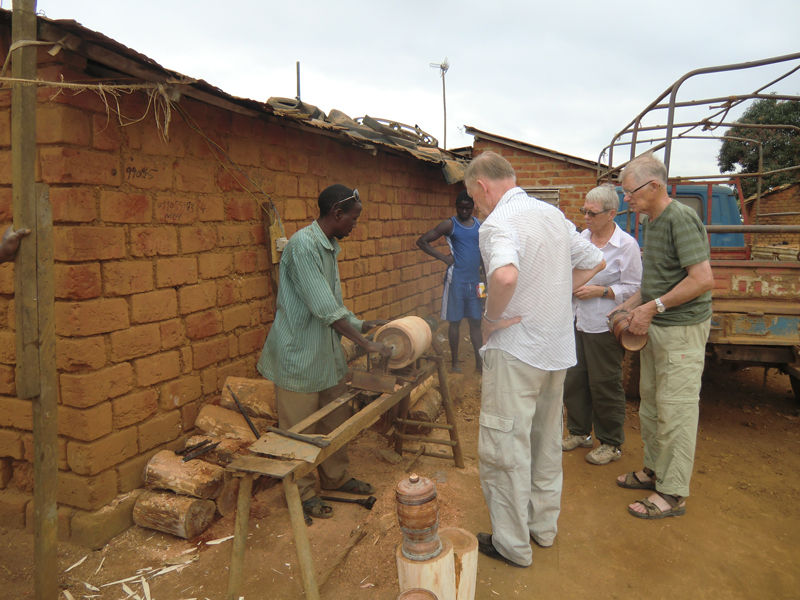
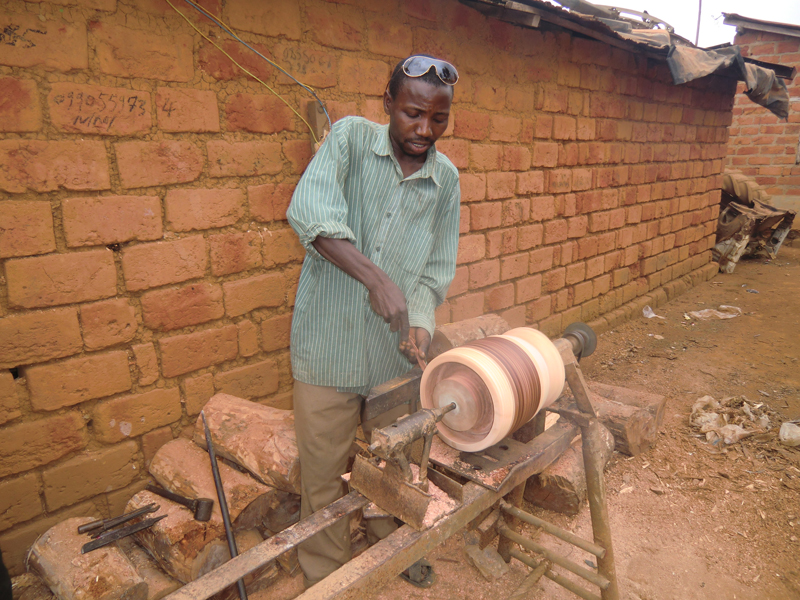
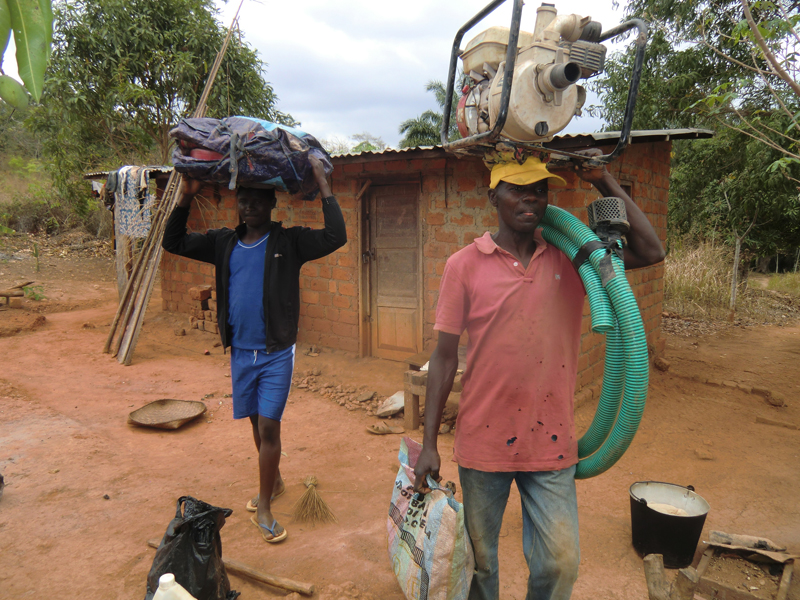
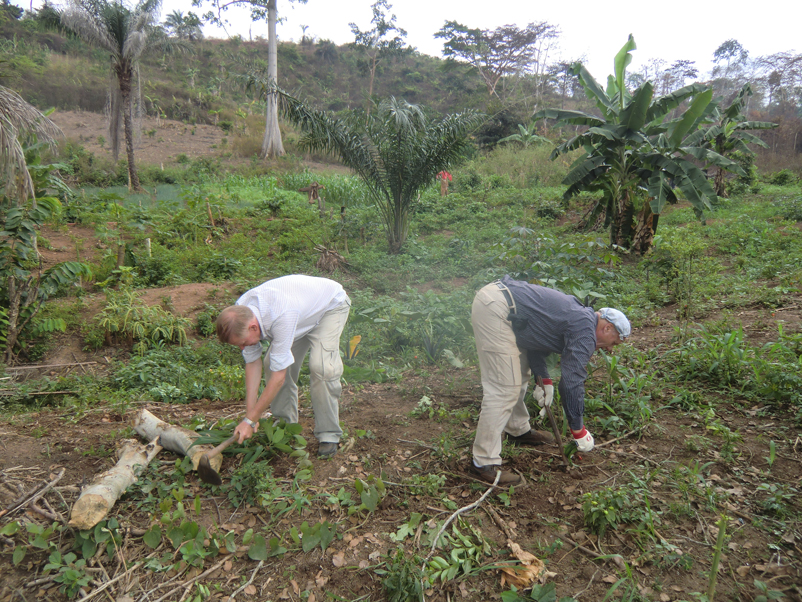
We walked to our field along a small path of about 400 meters. Jima lifted the engine driven water pump of at least 25 kilos onto his head, he put the hose over his shoulder and took a couple of bags in his hands. Iroci carried the gasoline and more hose on his head. Bernt and I weeded the piripiri, I managed half an hour and Bernt’s effort lasted for an hour. That’s all we could muster. The heat is hard on us mundele. Yapeco helped with the irrigation and Ing-Marie and Bengt picked piripiri. Ndombe can work on the field hour after hour. Julienne and her driver stayed at the field a couple of hours after us. Unfortunately, we have other collaborators at the field, the monkeys who are very interested and heave in a corn cob every now and then. On the way back, we visited another neighbour in Nsanda who lathes mortars in holly. He showed us how he lathes and we bought four mortars in different sizes from him.

On our way home, we were stopped by the police. A service charge was discretely handed over and we could continue our journey. At home, I had a lovely shower and then we went to Yapeco and Augustine for dinner. Today, Augustine had cooked a rooster for us to feast upon, and during dinner she told us about her chicken farm. Unluckily, there has been chicken thieves. She has lost 362 hens through theft. Yapeco has enhanced the theft protection by crowning the walls with barbed wire and putting up lamps controlled by motion detectors.

Posted in MSG

Off to Nsanda

Julienne and my brother Bengt

Julienne and my brother Bengt

The day started with a scoop shower, actually the first scoop shower in fourteen days. This must be a record for me, having had running water every day for fourteen days in a row in Congo! Here at Lisanga it is a rule more than an exception that we have either power or running water, seldom both at once. At the moment the running water seems to be coming back, but the power went away this morning. Thanks to the solar cell lamps we brought, I am able to write these lines. The lamps are invaluable. Amazingly, at 8.15 p.m. the power came back.
Today, we had breakfast here at Lisanga, at the restaurant. We had omelet, baguettes with peanutbutter or ordinary butter and tea. We missed the porridge, and Julienne and Ing-Marie went to the restaurant kitchen and asked if we could have porridge tomorrow. The kitchen personnel were not pleased, but they promised to asked their superiors if our wishes could be granted. We understand now how important porridge is in Congo, considering the high level at which the issue must be resolved.

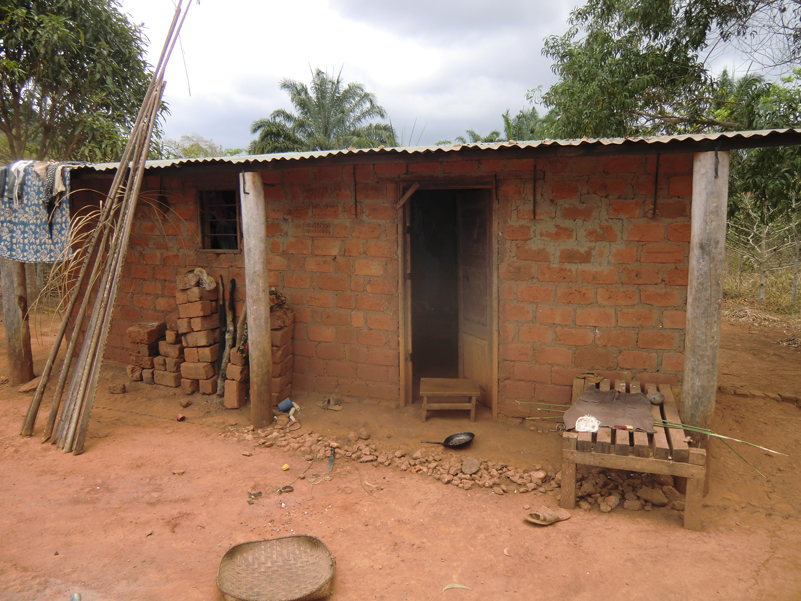
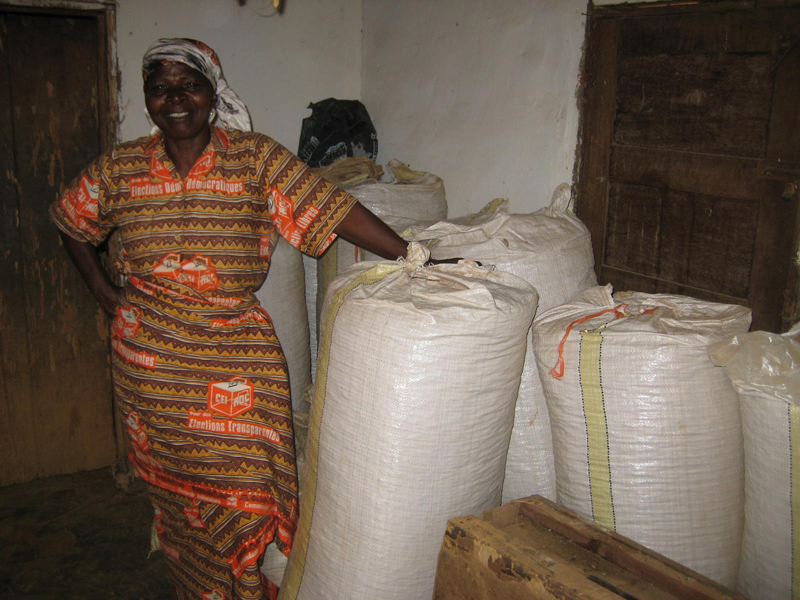
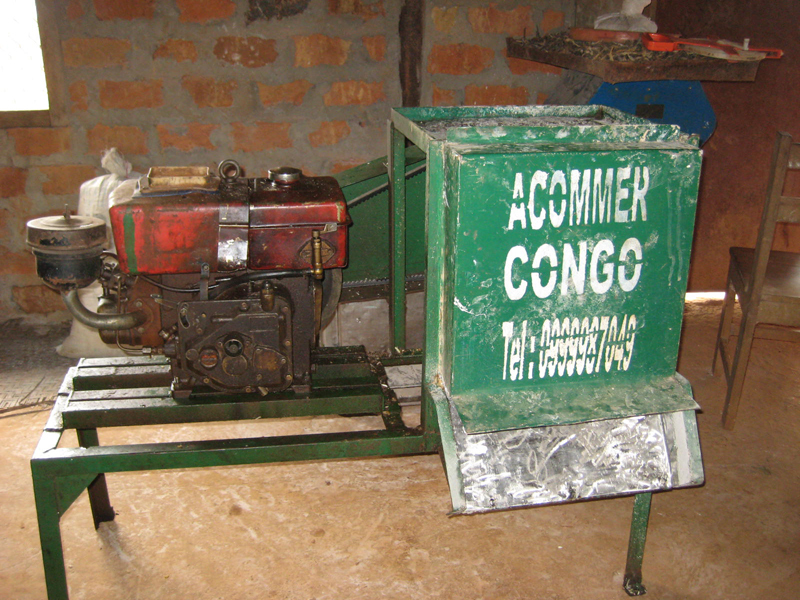
At nine o’clock I went to Yapeco’s Internet café and uploaded some pictures for the blog. Then we headed for Nsanga, a drive of 30 kilometers. In Nsanga we bought soft drinks at Julienne’s very fine pharmacy, and then we went to the house of Julienne and Clement. In Nsanda, they live in a very frugal house. The ceiling height is low, you can just about stand headlong. The house gives you shelter, but there are no windows, just holes in the walls. The only item that is up-to-date is a cord lamp in the larger of the three rooms. There, the peanuts are stored, the first harvest of Nsanda. A normal harvest would have given 5 000 kilos, but because of the draught, we got 900 kilos. Most of the peanuts will be sold, and will form the first income from our farm project. Earlier, we have sold a small quantity of piripiri. We have one hectar of piripiri and it is irrigated. It has begun to give a yield and will be providing a harvest for three years.

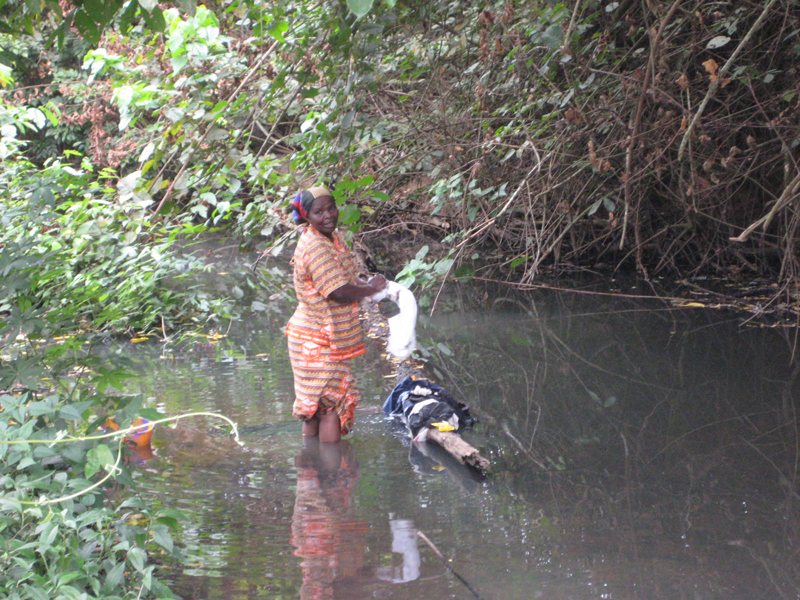
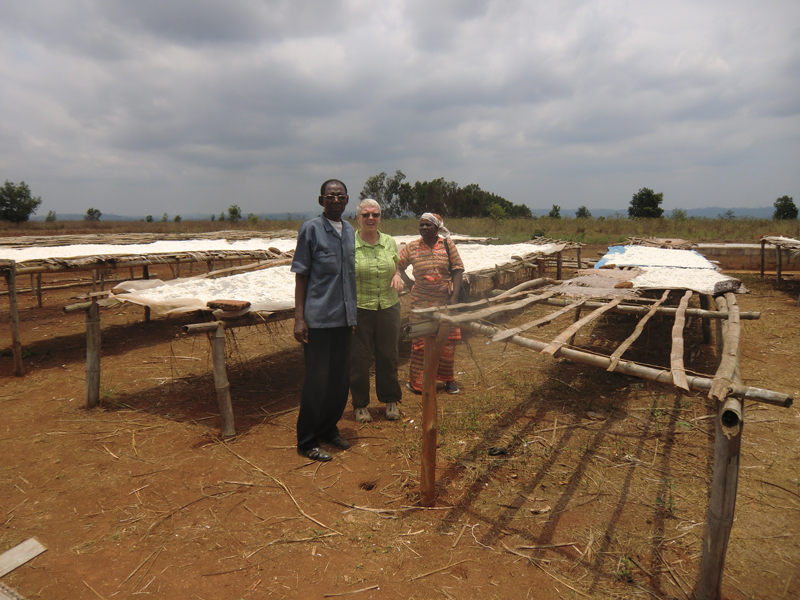
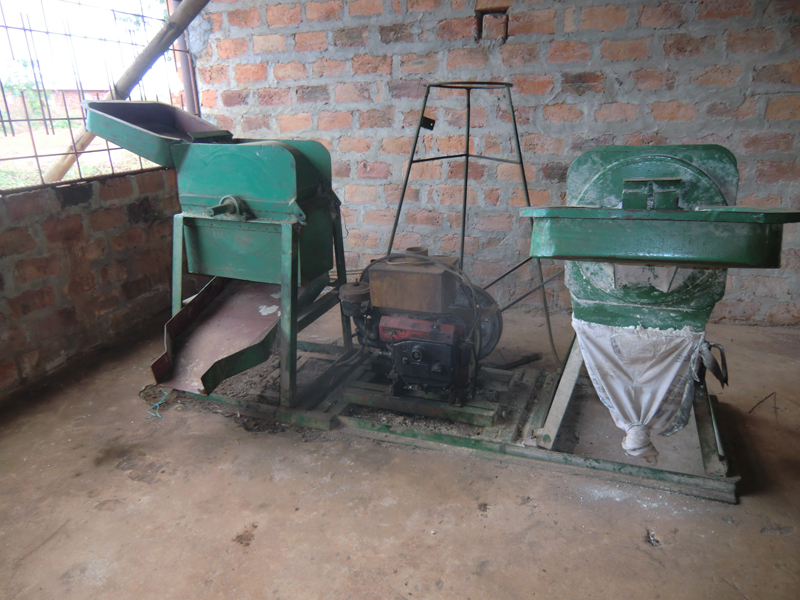
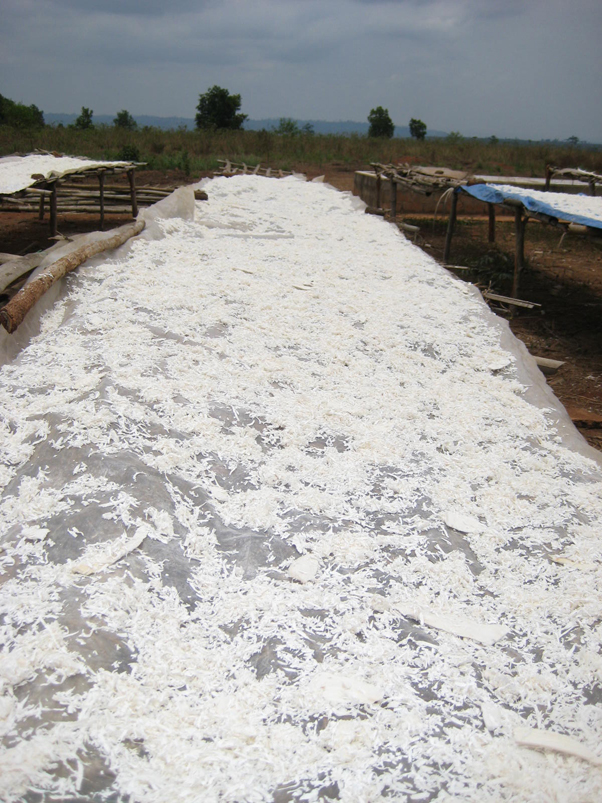
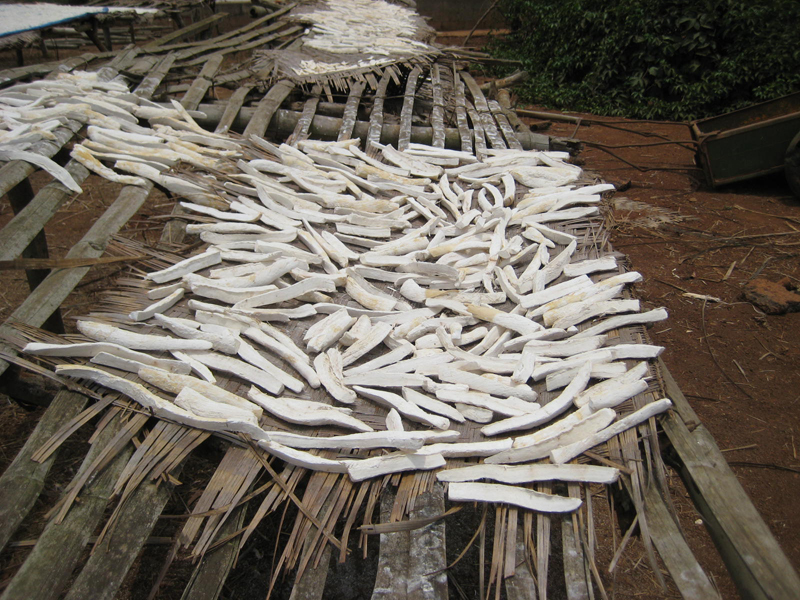
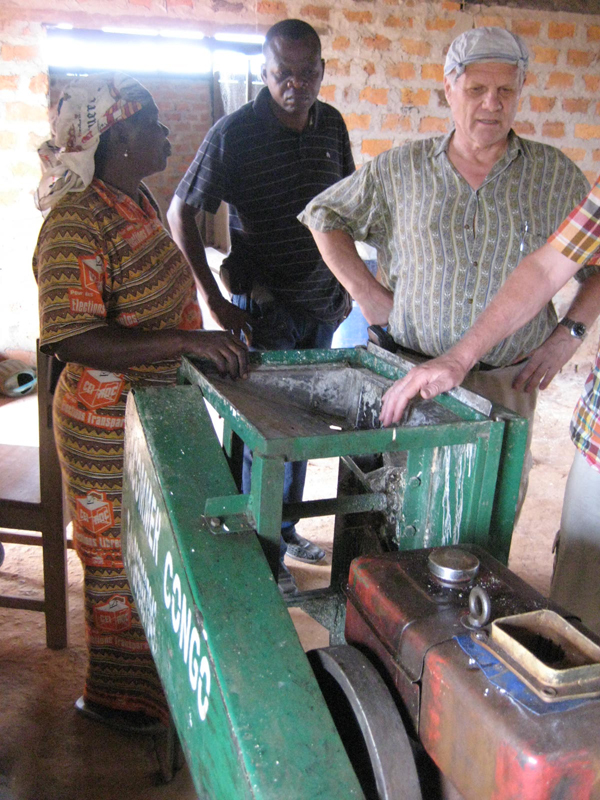
The distance from Nsanda to the farm is 14 kilometers. The first thing we looked at in Nsanda was a neighbour’s processing workshop for manioc. The manioc is peeled, soaked, washed, dried and grated to manioc flour, which is then used for foufou. Foufou and kwanga, another nutritious foodstuff made from manioc, are the most common foods in Congo. A byproduct in the process of making manioc flour, is something that is similar to potato flour. The manioc flour is sold in 30-kilo bags and fetches a good price.

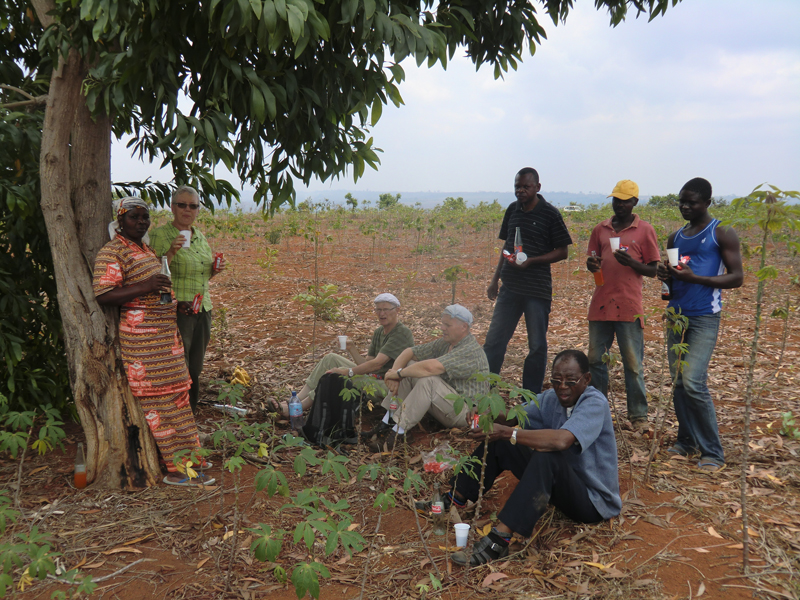
After this visit, we went to our own manioc field. When we arrived we were ready for something to drink. The shade of an acacia tree gave us the perfect place for our break, and the snacks and beverages were fine. Thanks to light vinds the temperature was reasonable. We inspected the manioc field, an area of 8 hectares. The field looked ok, but it will need plenty of rain in order to give a good harvest. So far, we have only received a few showers of rain, and we hope that the seriously rainy season kicks off soon.
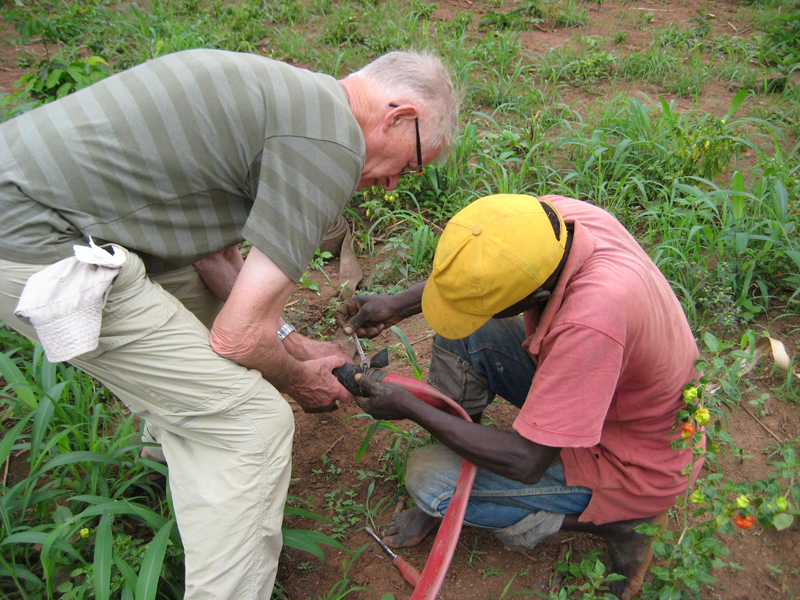
On the way back, in Nsanda, Bengt and Bernt checked Nyambudi’s Toyota Jeep. They realized that the generator and it´s regulator haven’t been working the way they should have. Because of this, the new battery has been ruined. The Jeep must be parked in a downhill slope to get the engine going. Furthermore, it produces a lot of smoke when it pulls. The generator of the tractor seems to be broken as well. Most things in the world need good maintenance if we want them to be of any joy to us. Reparations can become painful in one way or another if maintenance is neglected.
The trip back to Matadi made us quite sweaty. I had another scoop shower, and then we went to Yapeco and Augustine by 4 o’clock. The dinner was ready, and consisted of fish, rice, manioc, beans, salad and for desert; bananas. We were hungry and the food was delicous. Back home at Lisanga, after a siesta, we discussed what we had done and seen during the day. And then I wrote my blog entry.

Posted in MSG

Heading for Matadi

One of many cars on our way

One of many cars on our way

The usual morning routines were performed before morning prayer. Today, Bengt led the prayer, based on Psalm 23. He prayed for the blessing of the house we were about to leave, and God’s protection during our trip to Matadi. At 9 a.m. Yapeco, Bernt and I went to Emy’s office. I uploaded photos to yesterday’s blog entry, using Emy’s wireless network. Then we had a discussion with Emy about his cyber café, we talked about possible improvements and changes that are underway. We went through his production estimates, and talked about his responsabilities and tasks as the MSG representative in Kimpese. Mattias and Lotta Davidsson and their sons came by to say goodbye. We said goodbye to them, and to Emy.

Dinner was served at 12.30 p.m. today. We had spaghetti, potatoes, meat sauce, carrots and tomatoes. Then it was time to pack the cars, Yapeco’s Toyota Jeep and a taxicab, a Mitsubishi Lancer. We said goodbye to Nganga and Thérèse, their daughter Nadine and to Benedicte 10 years old, who also lives here. The drive to Matadi took three hours. The strech of road connecting seaport Matadi with capital Kinshasa is in good, paved, condition. The surrounding landscape is hilly with high hills and deep valleys, and the road winds around them and follows the natural formations. The temperature was pleasant, between 20 and 25 degrees C. Halfway, we had biscuits and something to drink. Yapeco always brings soft drinks on our journeys.

At 5 p.m. we arrived in Matadi, and checked in at Lisanga, an old mission station where we usually stays when we are here. Yapeco insisted that we would gather and thank God for his protection during the trip, before doing anything else. The traffic is bad, and many vehicles are in such shape that the person behind the wheel must be a master of the laws of nature. Unfortunately, there are many road accidents and as usual, we had seen a few along the way.

When darkness had fallen, we had a snack on our beautiful terrace with a view of the city, parts of the port and the hills on the other side of the river. We planned the week ahead. We had arrived to Matadi two days before schedule, and we had to make some rearrangements. Then we went through the bookkeeping of Nsanda and Julienne took care of the bookkeeping of the last month.

Then nothing remained but to crawl under the mosquito net for a few hours, before the dawn of a new day.

Posted in MSG

In dust and smoke

Emy Miantezila

Emy Miantezila

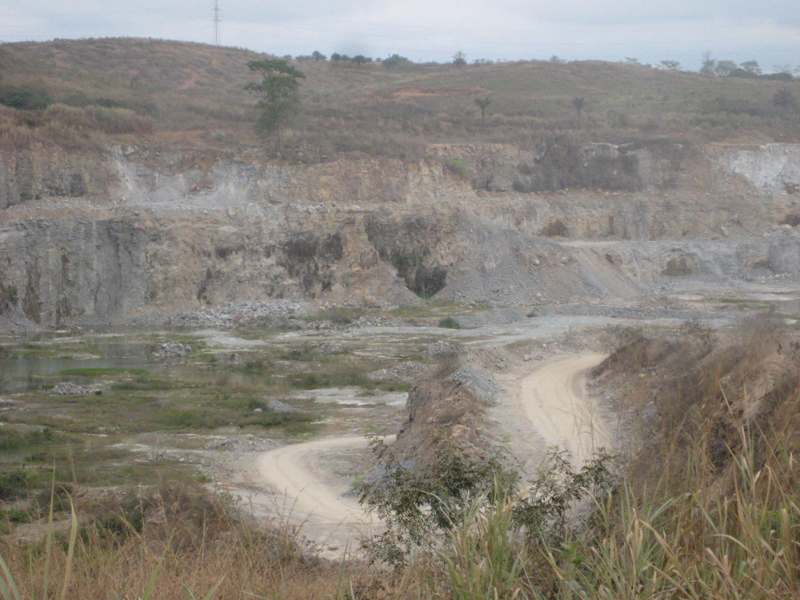
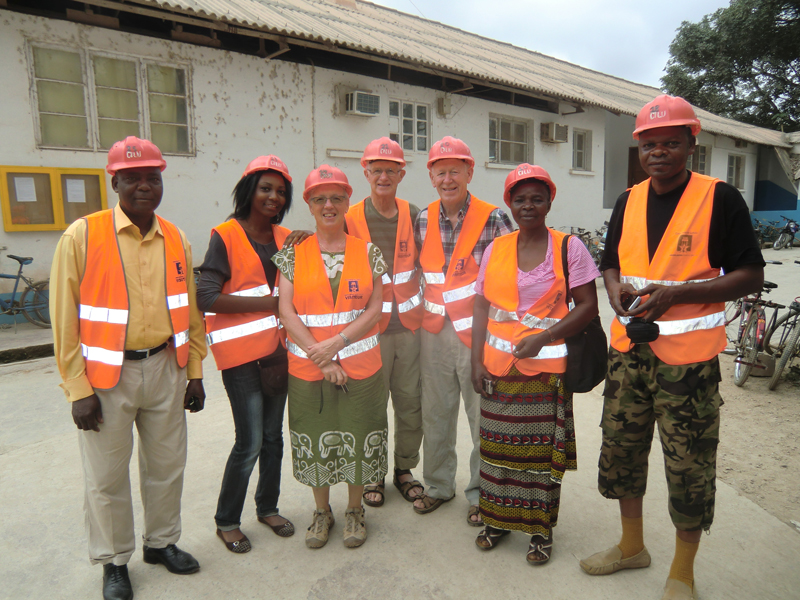
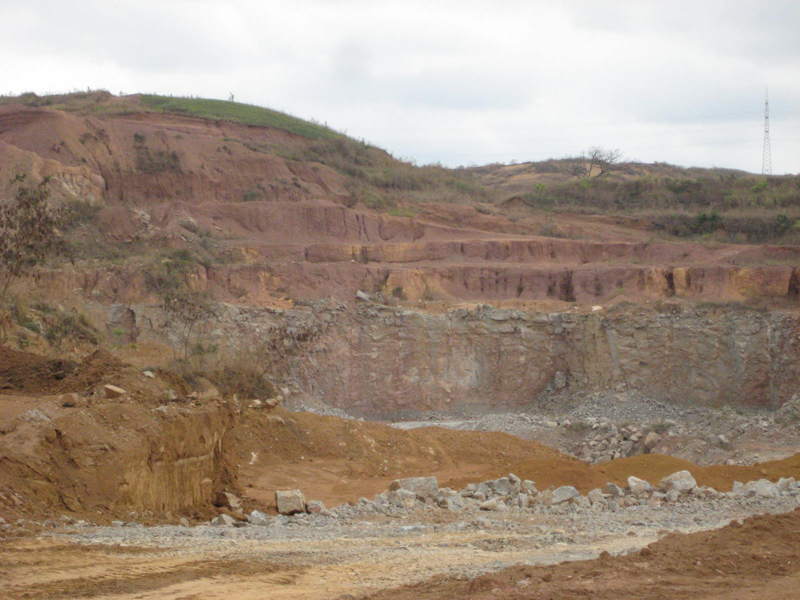
Immediately after breakfast, we left for Lukala and the cement factory CILU. Nganga has worked 40 years at this facility and Thérèse has worked there for 35 years. He used to be the the transport manager, and she was the company nurse. Our host and hostess are now retired, but they are very active. Nganga arranged our study visit at the cement factory. At the gate, we were equipped with helmets, visitor’s vests and a guide, Odi Oscar, who is the manager of service and security. First, he showed us the enormous pit where the factory have been extracting limestone for the last 65 years. Above the limestone, there is a thick layer of clay which is also used in the production of cement. Oscar told us that the limestone deposit reaches 100 meters below the bottom of the pit, and furthermore, there are other hills of limestone that are still unexploited. The availability of raw materials is assured for a long time ahead. This is but one example of the immense availability of raw materials in Congo.

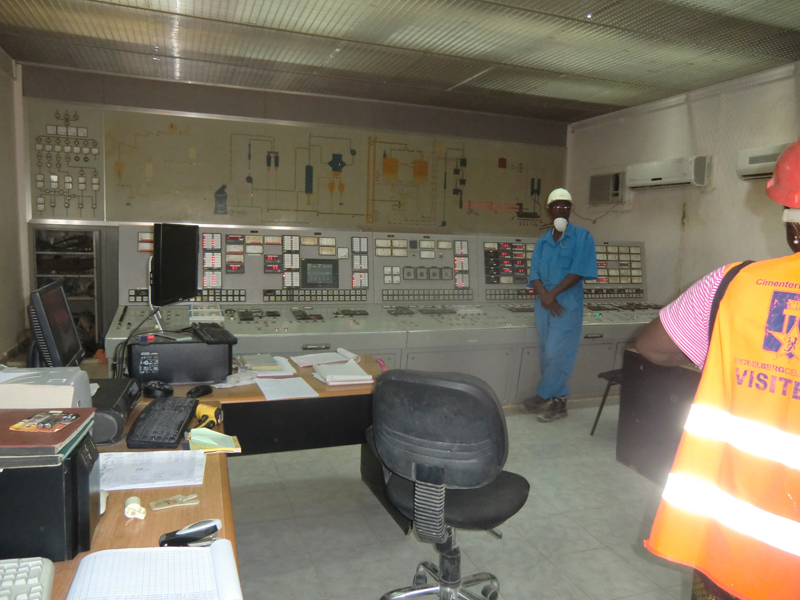
Large mining trucks shuttled back and forth to the factory crusher. In an impressive drum the lime is burnt and mixed with clay, and then 3% gypsum is added. This mixture becomes cement from CILU in Lukala. Their capacity is 1500 tons of cement per day. The Belgians have built the factory, but Germans bought it 2 years ago. 450 people are employed at the factory. From the beginning to the end of our visit we walked in thinner or thicker dust and smoke. Many workers wore respirators and as a nurse at the factory, Therese could confirm that many workers have problems with the bronchi and the lungs. We were dusty from head to toes when the tour was over, but we had been on a different kind of visit, and we had seen an impressive facility. Before we left the factory, we had to use airless spray to get the dust out of our shoes, sandals and clothes. Afterwards, we asked Nganga how it was to work at the factory, he had only praise for the collaboration with the Belgians. He also told us that the Chinese are allowed to import cement without paying any import duties. This makes the Chinese cement cheaper than the domestic product. This is only one among many examples of how imports hurt domestic production. Other examples of harmful imports are those of used and new clothing, or food. The food import has knocked out parts of the existing domestic production, and created increases in unemployment.

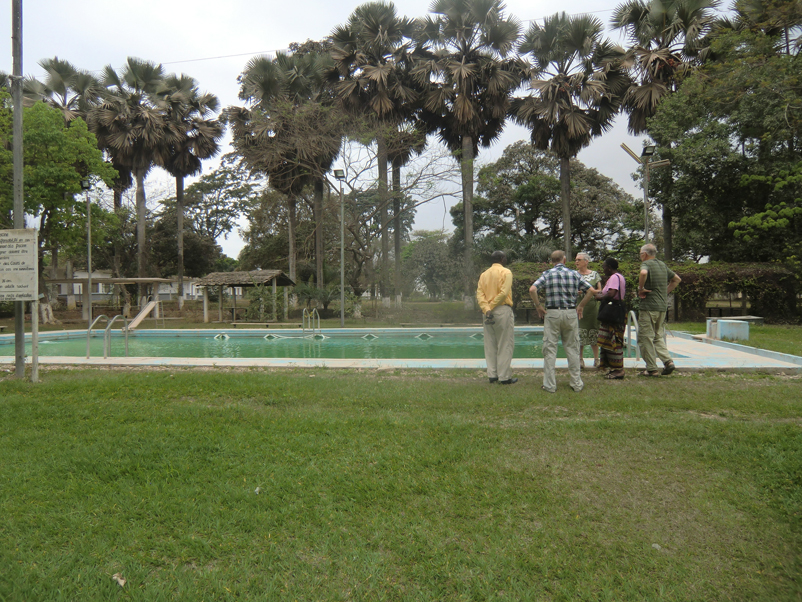
Afterwards, we crossed the thoroughfare and went to a very beautiful park-like area with many striking houses , schools, hospitals, a large swimmingpool and sports centers. On one side of the area, there was an airport, a chicken farm, a duck farm and exemplary vegetable gardens. This area is exclusively for the company management and officials of the CILU factory. Nganga and Thérèse used to live here. At a nice café we quenched our thirst with soft drinks.

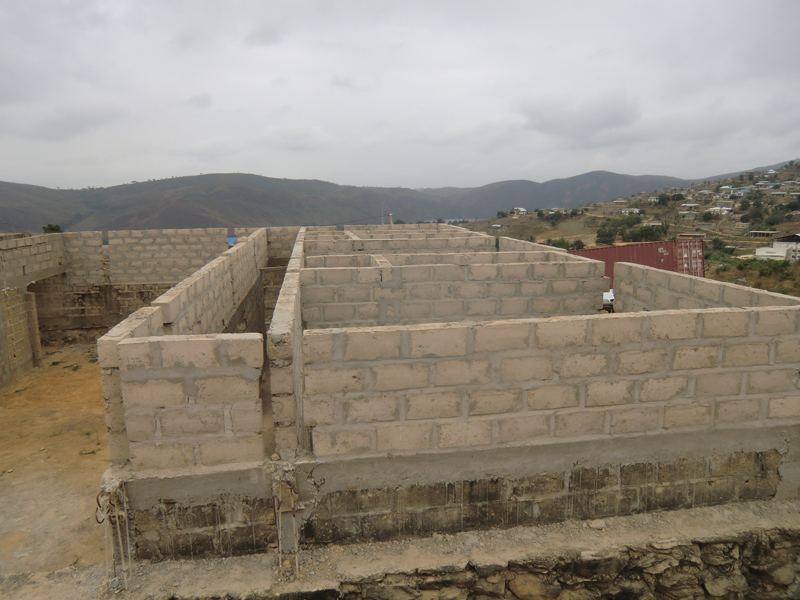
Then we went to Nganga’s hotel building site. He is completing the construction of two planes with painting and tiling. A lot has happened since February and in six months the two planes are going to be finished. The third plane will have to wait. He must get the business going to get the bank to lend him money for the third plane.

At 3 p.m., the entrepreneurial course was initiated with prayer. We usually start and close our gatherings with prayers. It’s a very natural element for a Congolese. Most of the participants had finished their homework, a production estimate that we collected. David presented his estimate about chickens. His calculations showed that the cost of breeding one chicken to the age when it starts laying eggs is almost 18 USD. Philoméne, who will start a bakery presented her estimate for 150 baguettes.

Today, we had to extend the class til 6.30 p.m. Darkness came, and the usual power failures arrived. But as we are getting used to Congo, we were prepared with solar cell lamps that Yapeco quickly put up. This gave Yapeco an opportunity to market his product, and he got a number of potential customers on the spot. No cloud without a silver lining. The next homework, the presentation of their business ideas, will be handed in to Emy, MSG representative in Kimpese, before October 24 when we will be passing Kimpese on our way to Kinshasa. The education will then continue later on, with more preparations and instructions to prepare them for handling a business loan. To get a loan without knowing how to handle it can be disasterous, for the borrower as well as for the lender.

Posted in MSG

Three interesting meetings

Meeting with the mayor in Kimpese, Dieudonné Mfitu

Meeting with the mayor in Kimpese, Dieudonné Mfitu

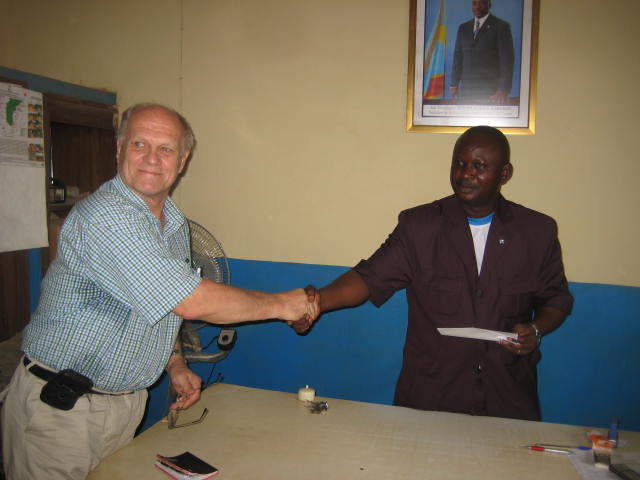
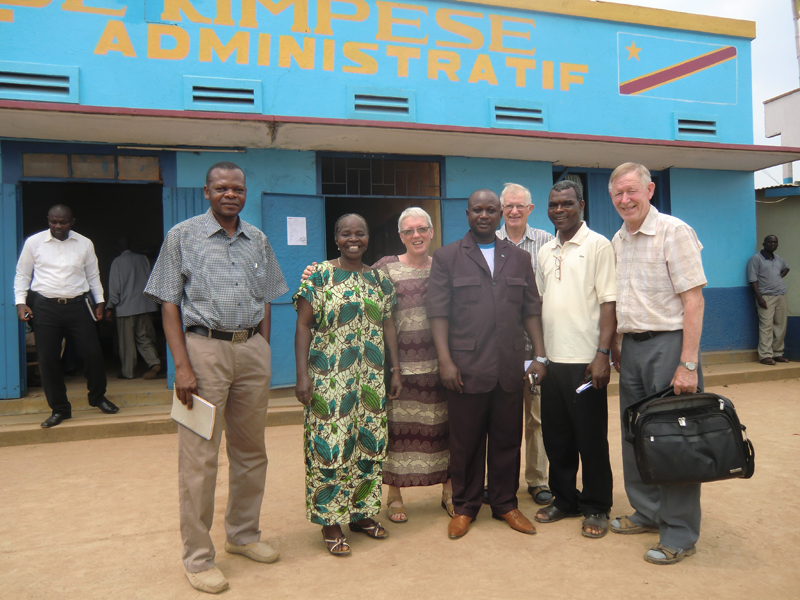
At 10 a.m. we had an appointment with the municipal director, Dieudonné Mfitu, here in Kimpese. I presented MSG and our activities in Kimpese, and Bernt introduced the idea of a collaboration between Borås and the towns of Luozi, Kimpese and Matadi concerning waste disposal. When the municipal director had listened to our presentation, he told us that we were an answer to his prayers. We were happy that he understood our visit and our message in such a way. You don´t have to see much of the Congolese cities to realize the profound need of a more efficient garbage and waste disposal. We exchanged addresses, determined to keep in touch. We decided to define the next step of this endeavour soon. I also talked with him about MSG’s need of support from leading politicians and officials in the community. We handed over our concept, the list of thirty items. He got a few extra copies for a visit from a minister from Kinshasa, his next appointment after ours. He took the time to be photographed outside the municipal building, despite the waiting minister.

After the meeting, we needed a coffee break, and we went home and had some with Thérèse. Her husband Nganga is away all day, working on the hotel. Now, he is putting up tiles. The building is located in the center of Kimpese, it is visible from the thoroughfare.

Then we went to Gothia Sport center with Emy to meet the manager, Abraham Matondo. We sat down in one of the school rooms and interviewed him. There are 226 children enrolled and they are between 8 and 17 years old. Five different groups practice football six days a week, and a group of girls train gymnastics. The activities are open to all children, and the children come from all walks of society. The goal is to create good citizens. Their motto is: Friendship, honesty and tolerance. In the schoolroom where we were sitting there were seven computers and as many laptops. Five leaders are working with the children. They are supposed to get a salary of 50 USD, but they haven’t been paid the last five months. The children are taught computer skills twice a week. Funding comes from Sweden.

Then we made a detour to the IME hospital where we met Lotta and Mattias who volunteer at the Gothia Sport center, coaching football. They had been in Congo for seven weeks, and are going to stay for eight months in total with their two children. It is nice to meet countrymen in Congo and this trip has offered plenty of opportunities, considering all the Swedes in Luozi.

The entrepreneur course took place between 3 and 5.30 in the afternoon. Julienne went through the thirty items of our concept, and then we talked about production estimates and market surveys. These are two important checkpoints of profitability. The homework for tomorrow will be to make a production estimate. Today, all the participants showed up at 3 o’clock. We explained our Code of Conduct yesterday, and made it clear that everyone who wants to participate must be present at the beginning of class, and that all mobile phones must be turned off.

Posted in MSG