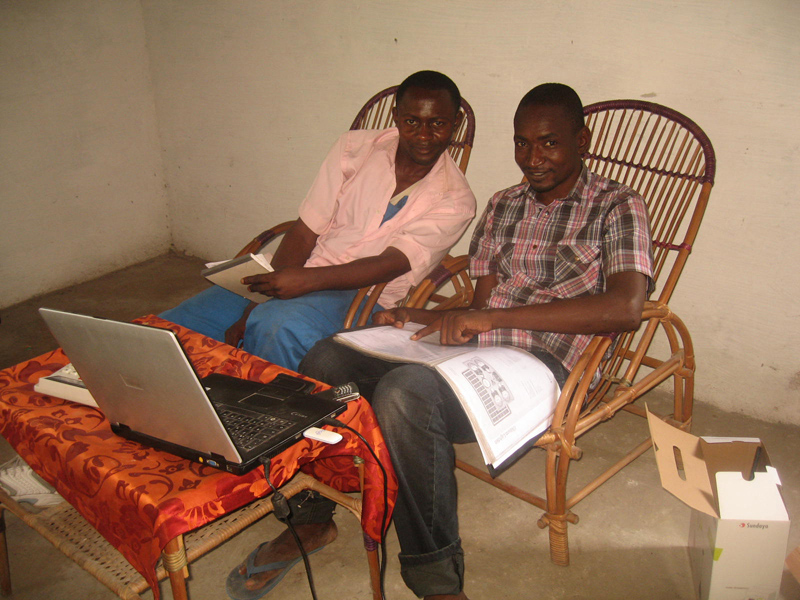
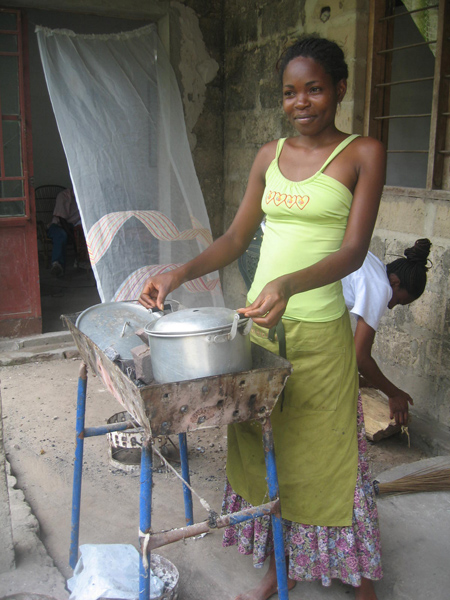
There are no shortcuts

The name of Robert´s land

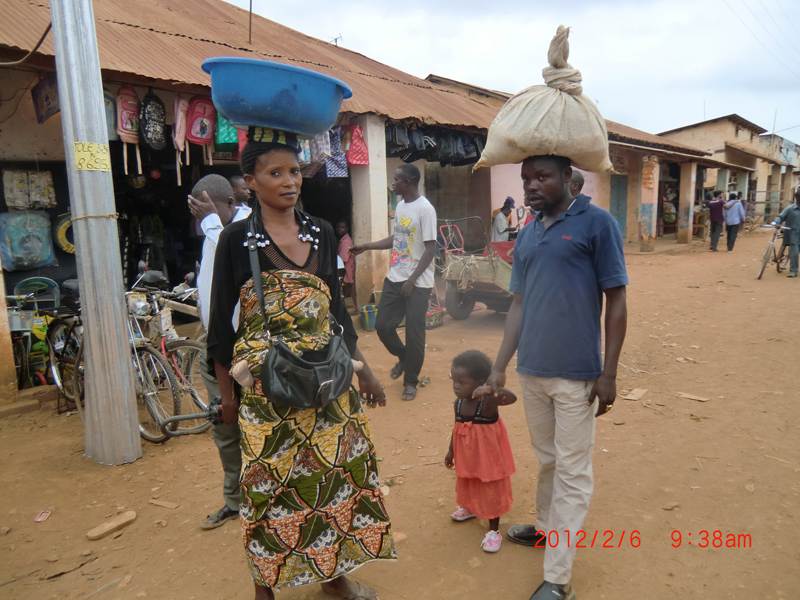
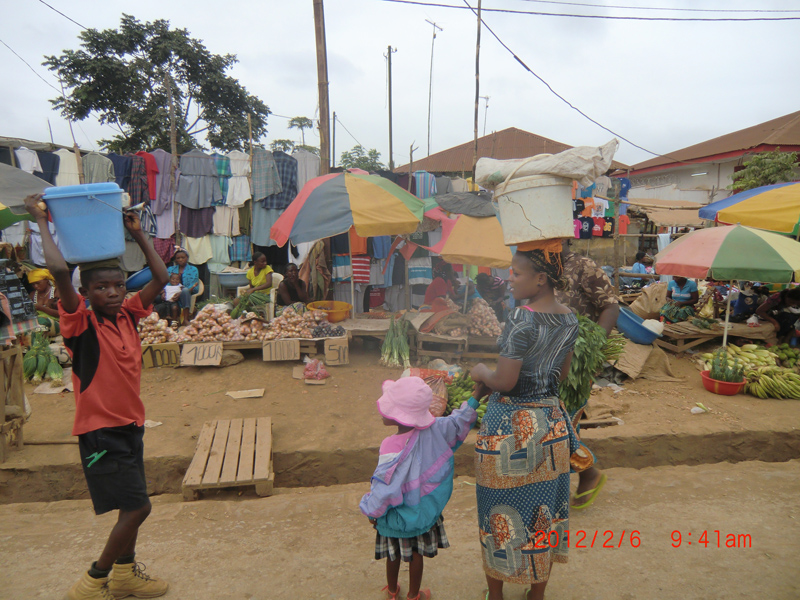
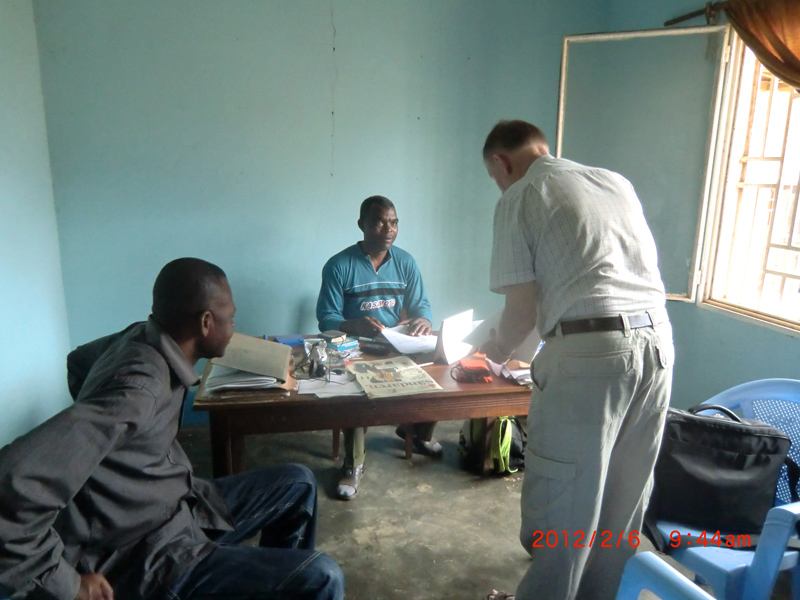
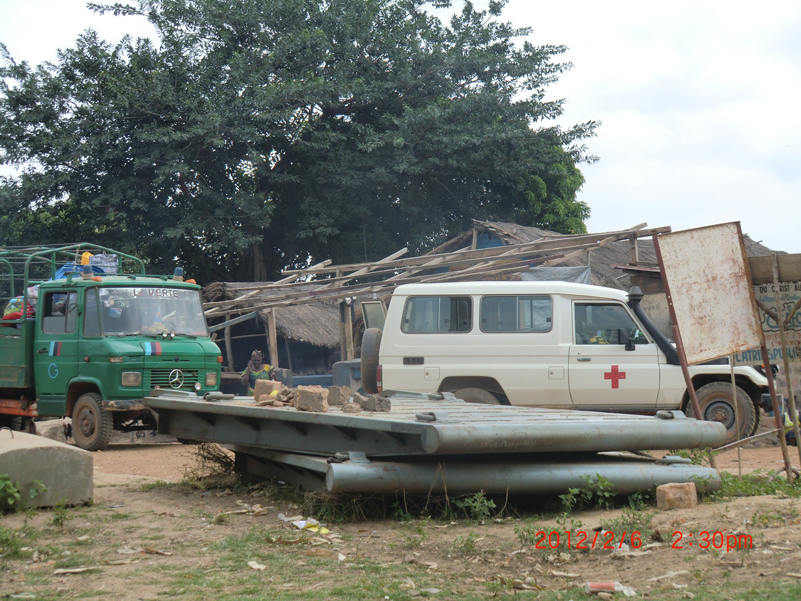
Today, we spent the day looking around Luozi with surroundings. We saw the stone houses built by the very first colonizers in Luozi 100 years ago. We passed the police station, where the police squad relaxed outside under a canopy of palm leaves. One of them turned out running towards us, a distance of about 100 meters, to ensure we weren´t a threat to the national security. We convinced him that we had peaceful purposes only. The policeman knew Robert Diyabanza, who is our driver and guide, and they exchanged some merry greetings. Then we continued our sightseeing. We passed the prison, which had long since passed it´s best-before date. The prisoners who are placed there have ample opportunity to choose if they want to stay inside or outside the prison walls. Even for this clientele, there is a possibility to make a choice in Luozi.

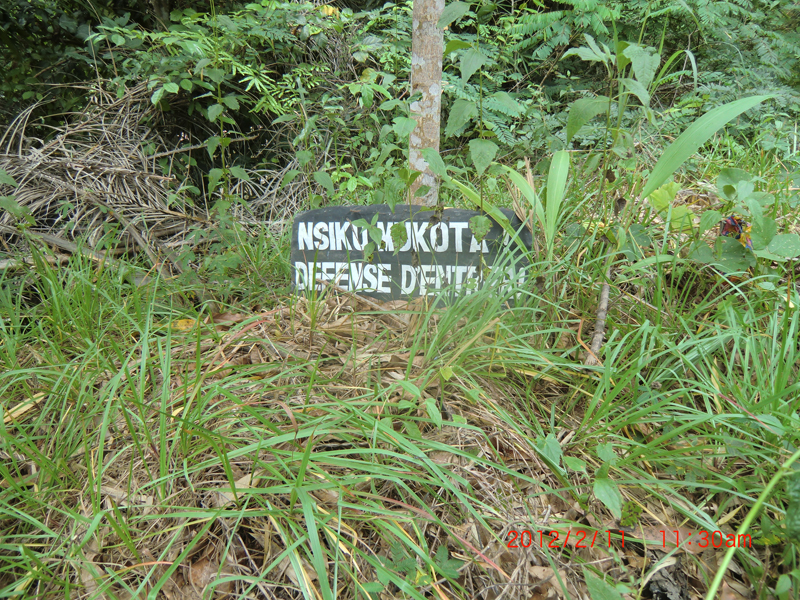
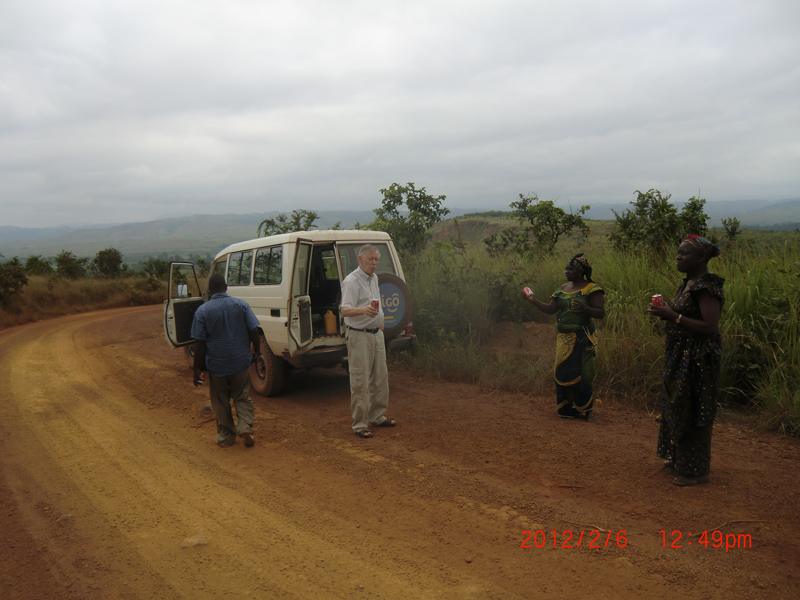
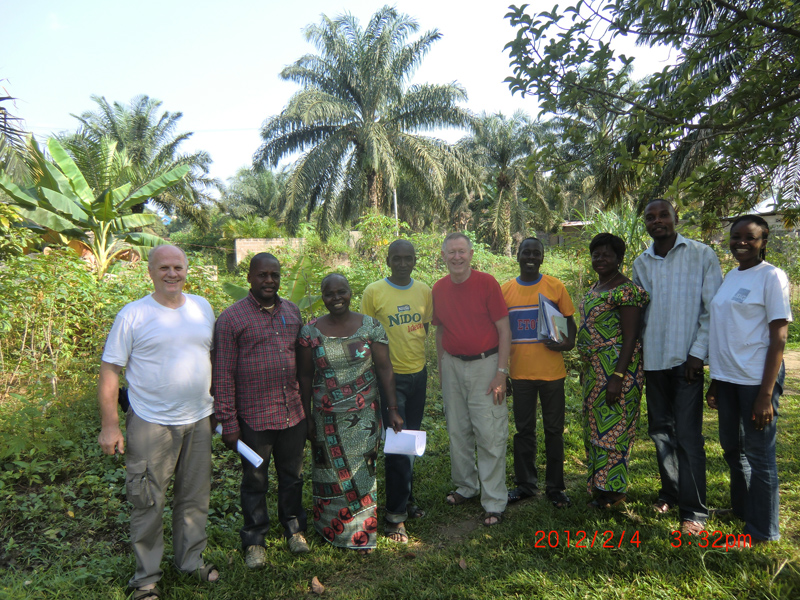
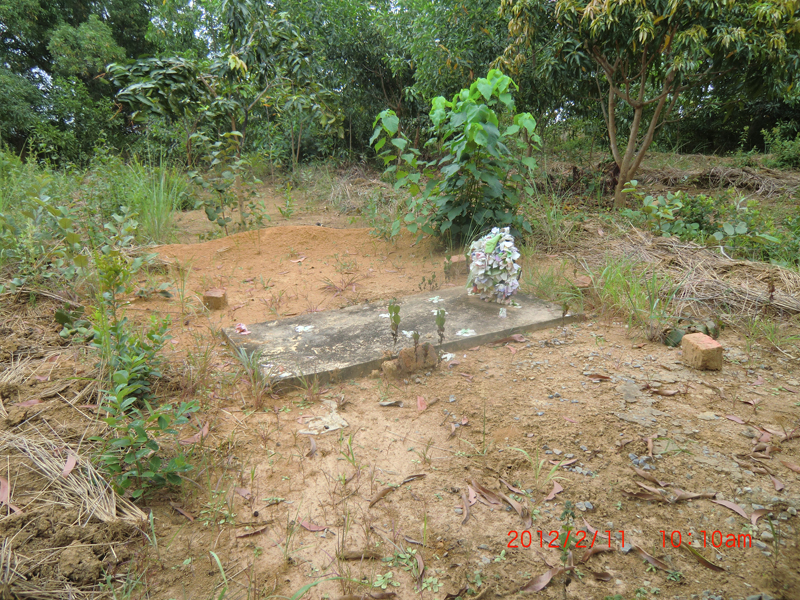
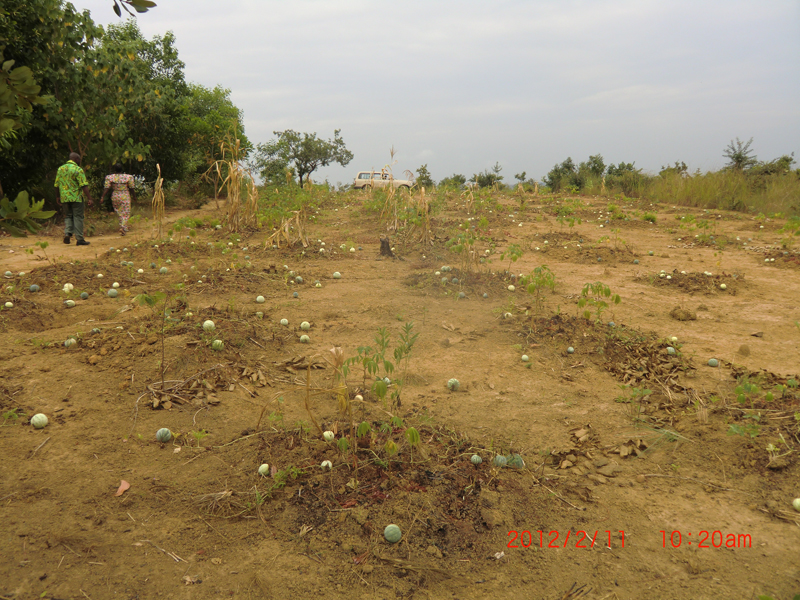
We were five persons in Robert´s Toyota jeep. Mbika, ironmonger in Luozi, Bernt and I, our interpreter Julienne and of course Robert. We continued to Mbika´s one hectar field, where he cultivates mango trees and oil palms. In the middle of the field, there was a grave. A brother of Mbika has his last resting place there. Mbika told us that it is an old tradition in Congo to secure the ownership of land with a grave of a relative. It is also customary to want to keep the dead relatives on your own property, when possible. This custom can be found in the Western world as well. The neighbour of Mbika grew an interesting plant on his fields. It looks like a tennis ball and contains almond-like fruits.

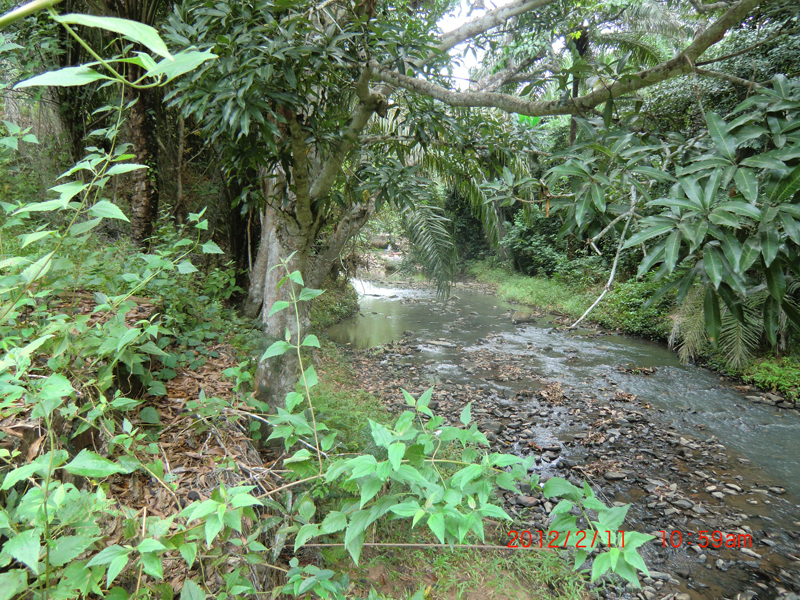
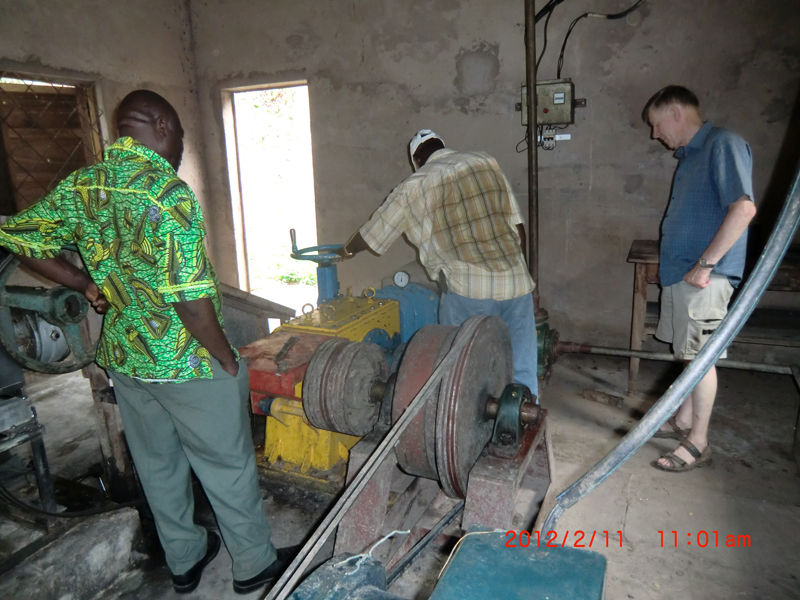
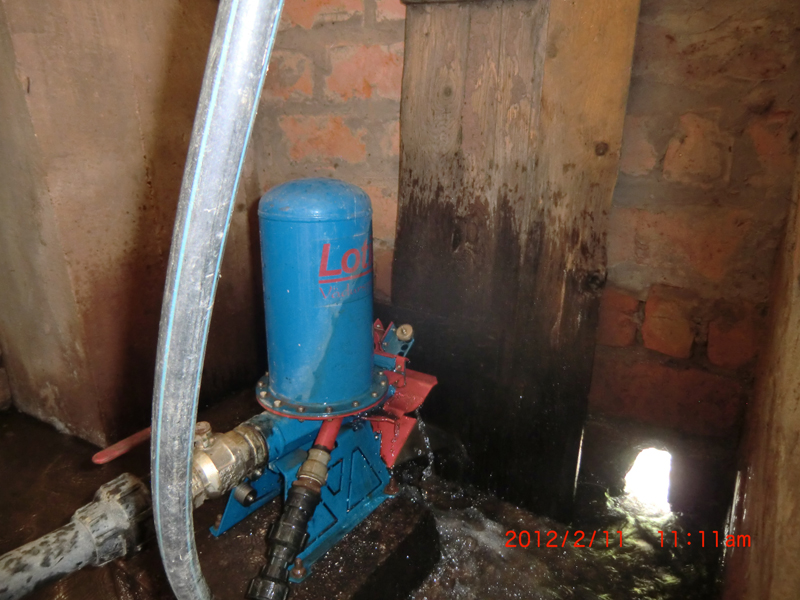
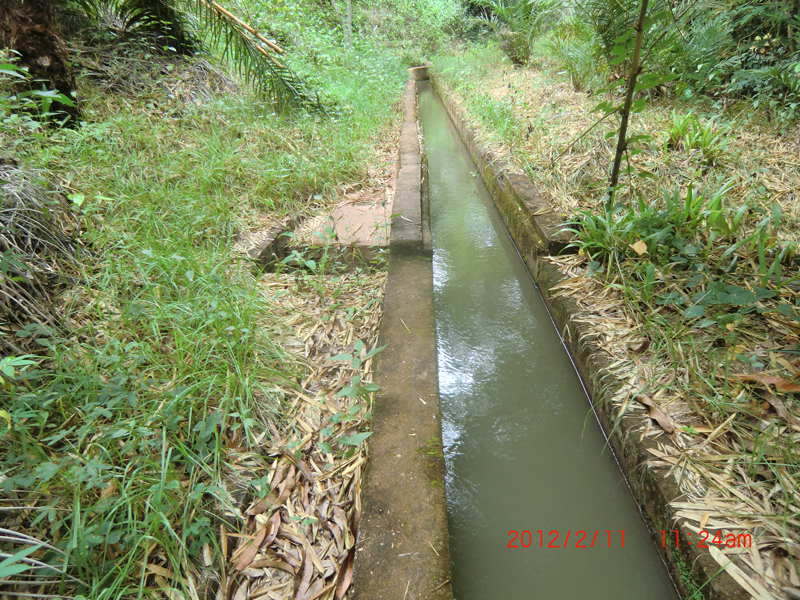
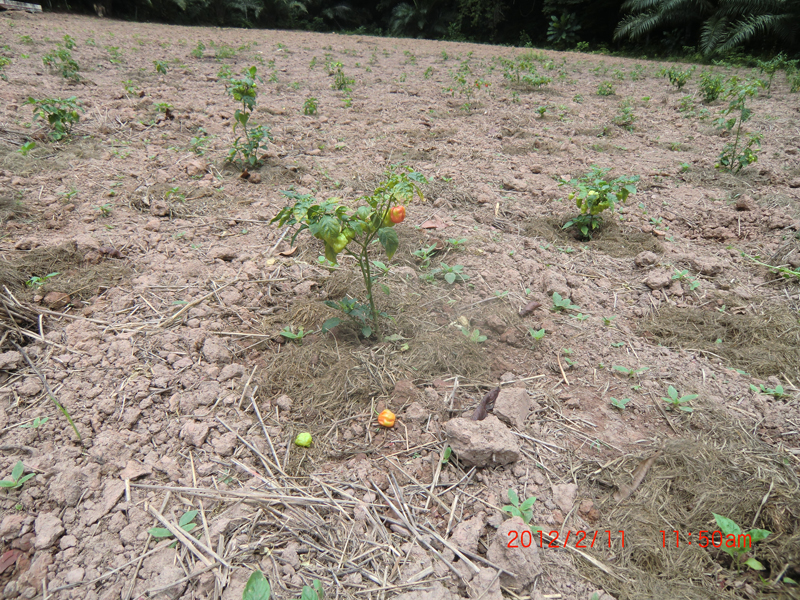
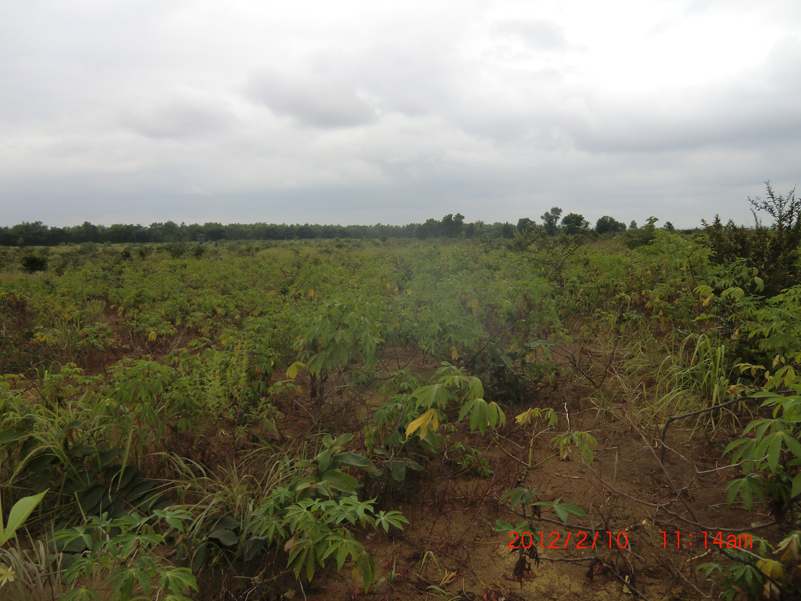
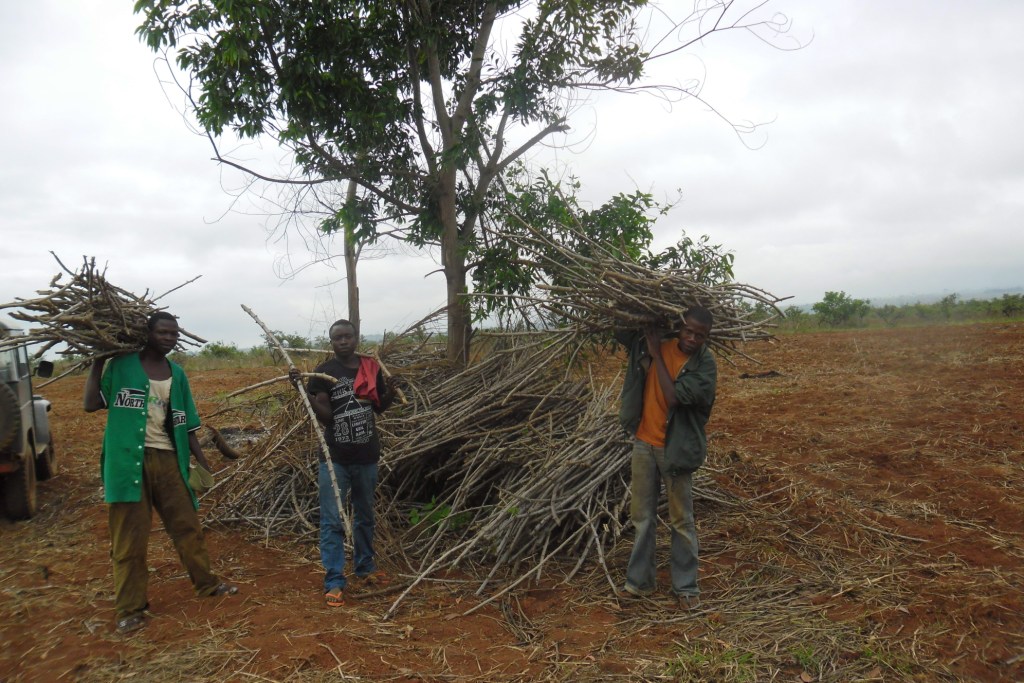
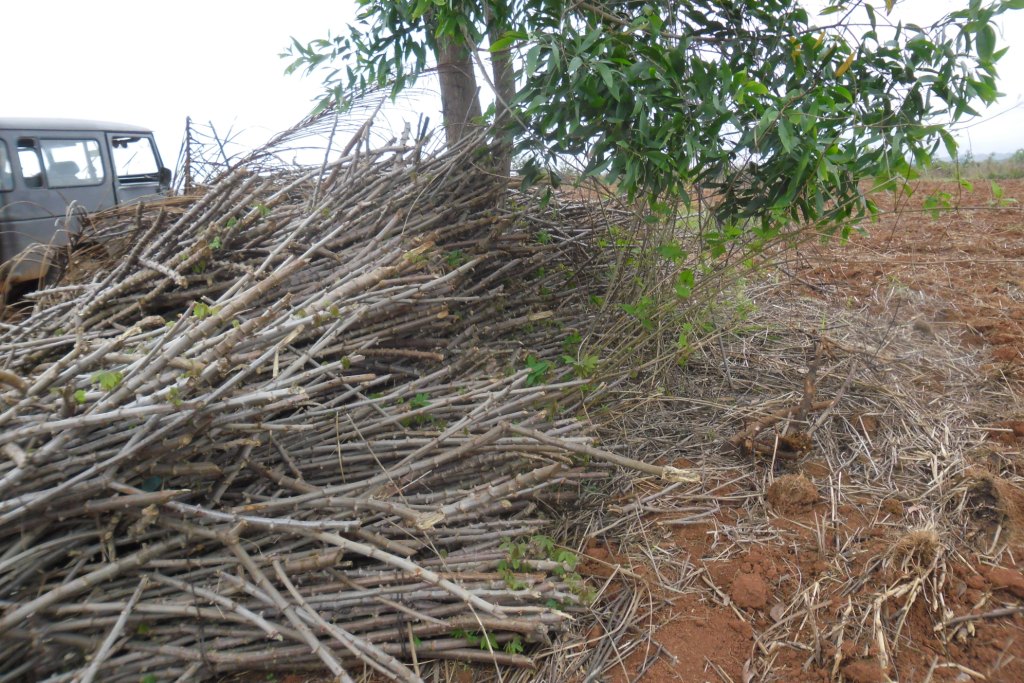
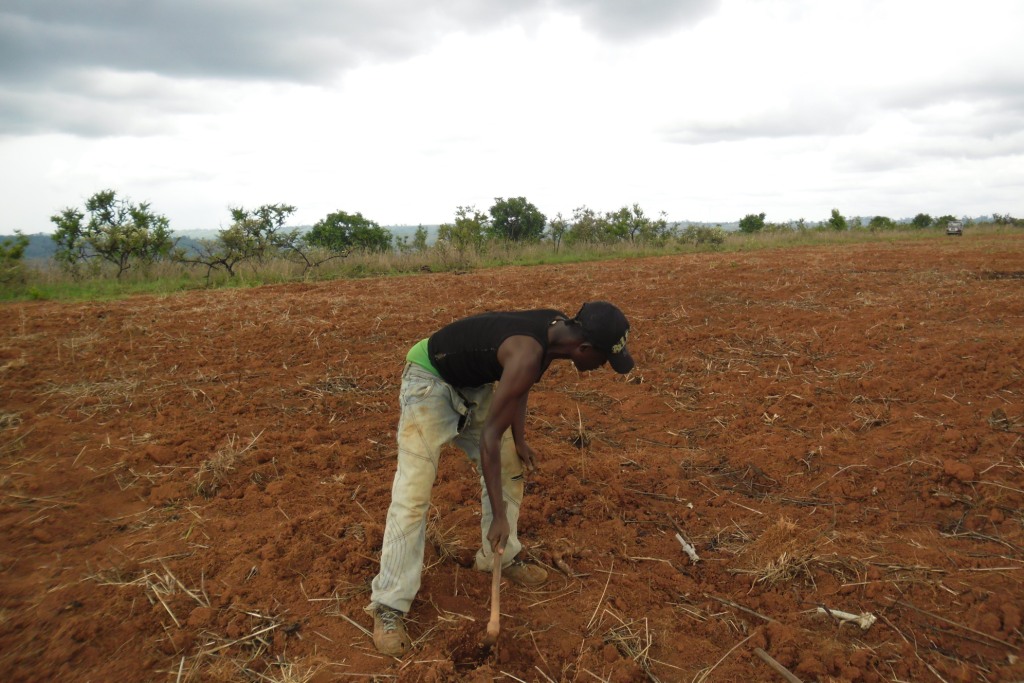
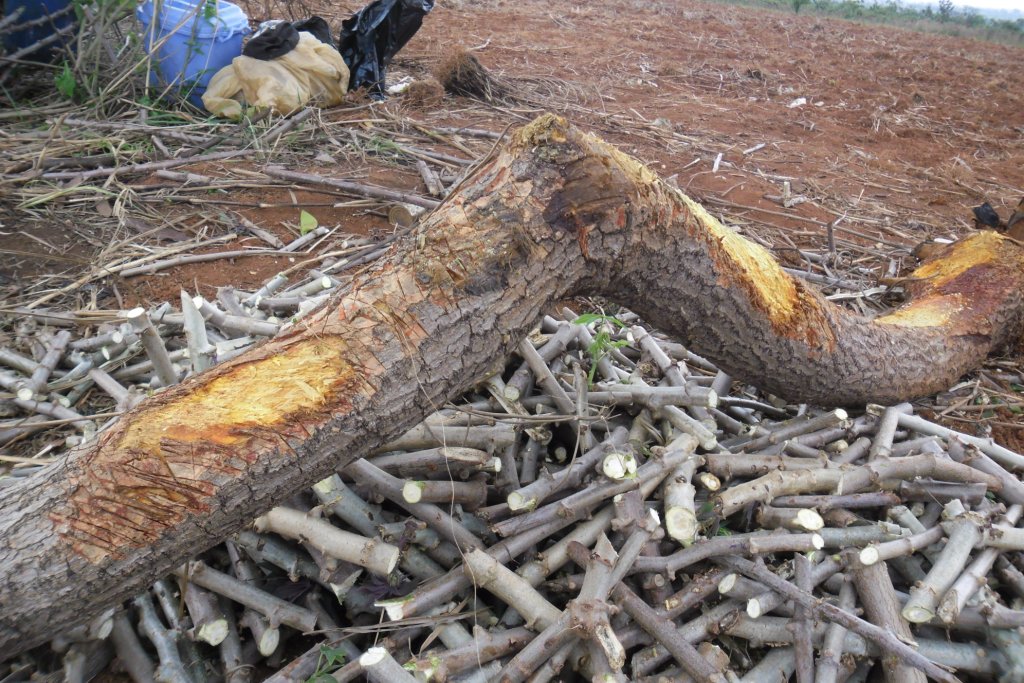
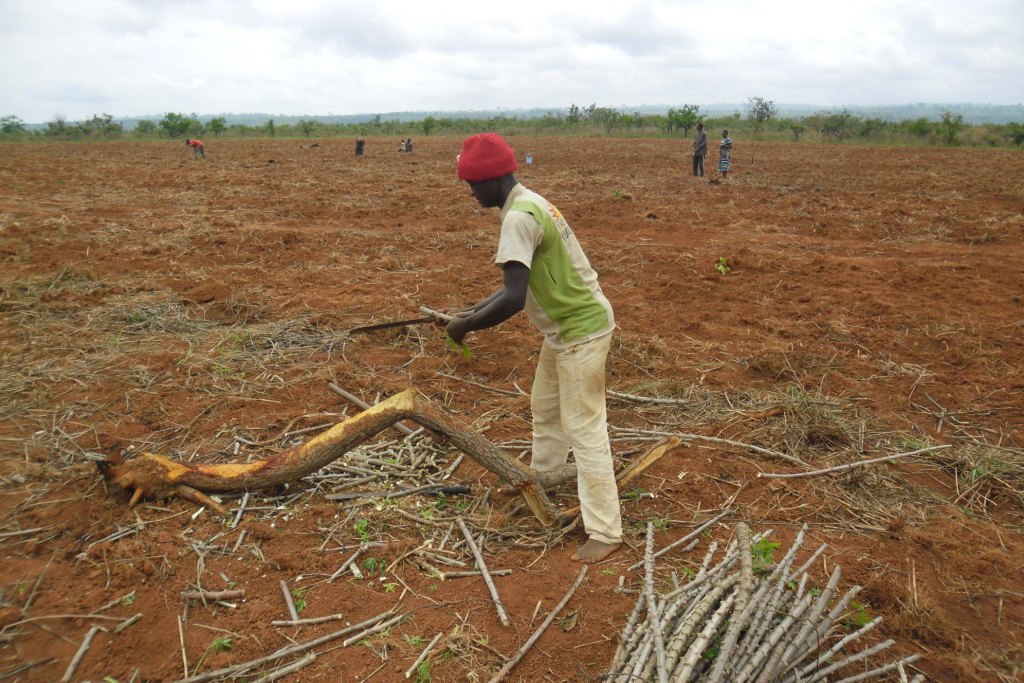
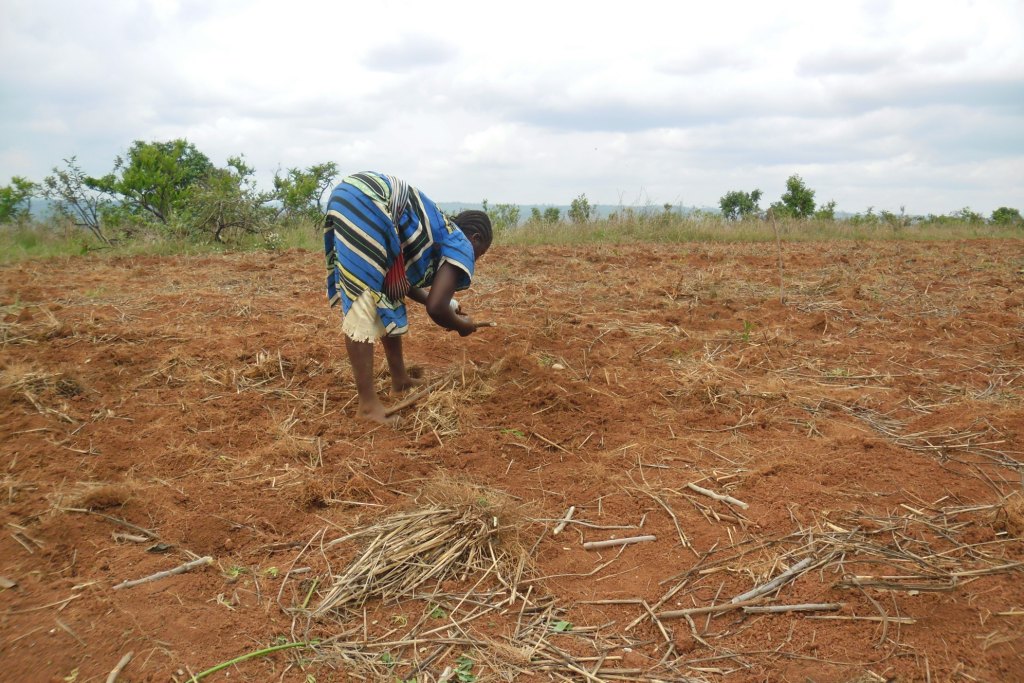
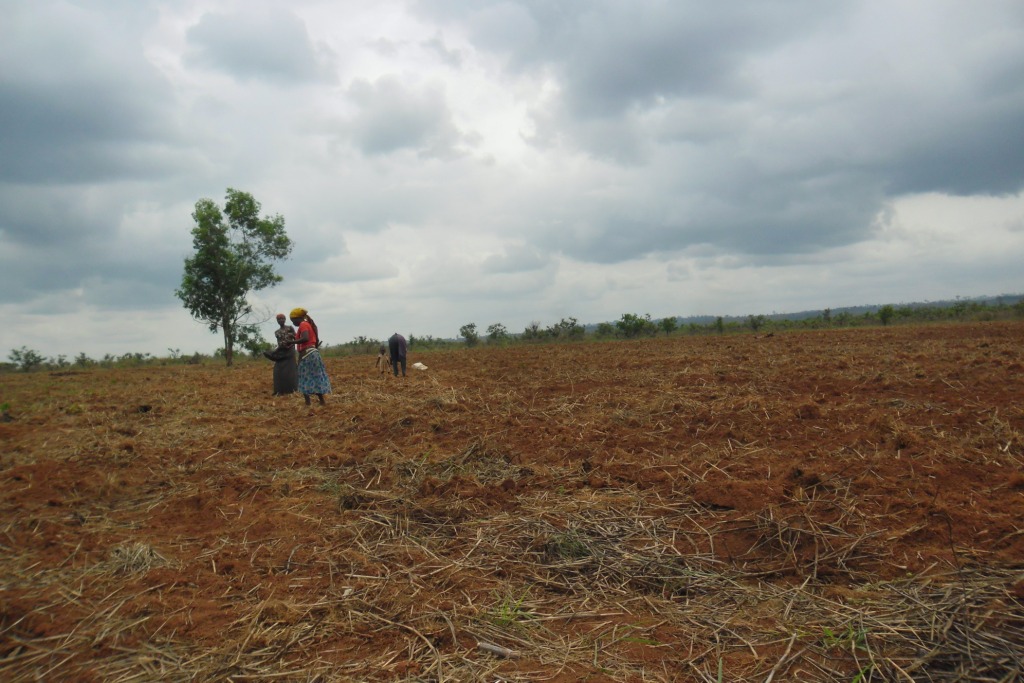
The next stop was Robert´s fields. He leases an area of 120 hectars. He has been an tenant since 1977. The surroundings of Luozi are mainly hilly savannahs. There are lots of steep hills and deep valleys. Robert´s land consisted of savannah before he started to cultivate. Today, the entire area is covered with trees and plants. There are 300 orange trees, about 500 mango trees, 10 000 oil palms, 120 000 pineapple plants, half a hectar of piri piri as well as several other trees and plants. He has a power station with a fall of 6 meters, which runs the oil press and a water pump that distributes running water to the houses of the employees. Another ingenious water pump is run by the water pressure built up by the fall. This pump provide the cultivations with irrigation.

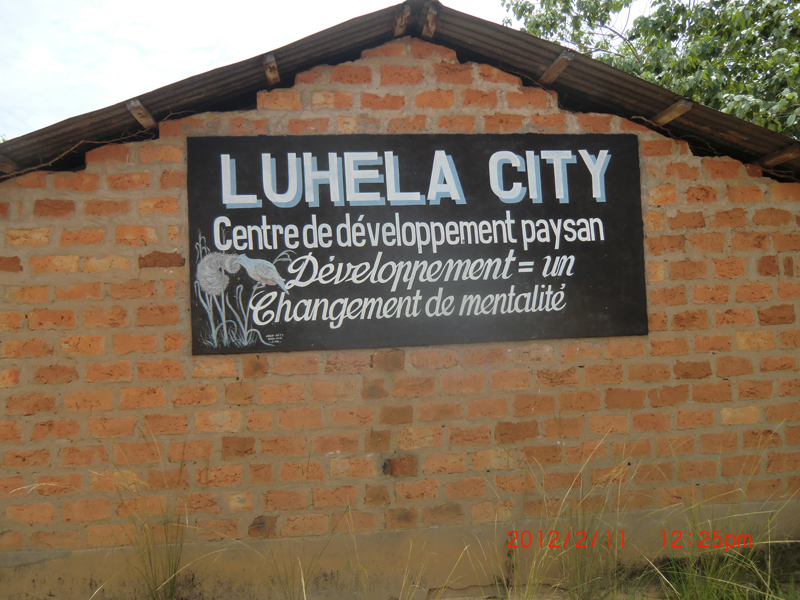
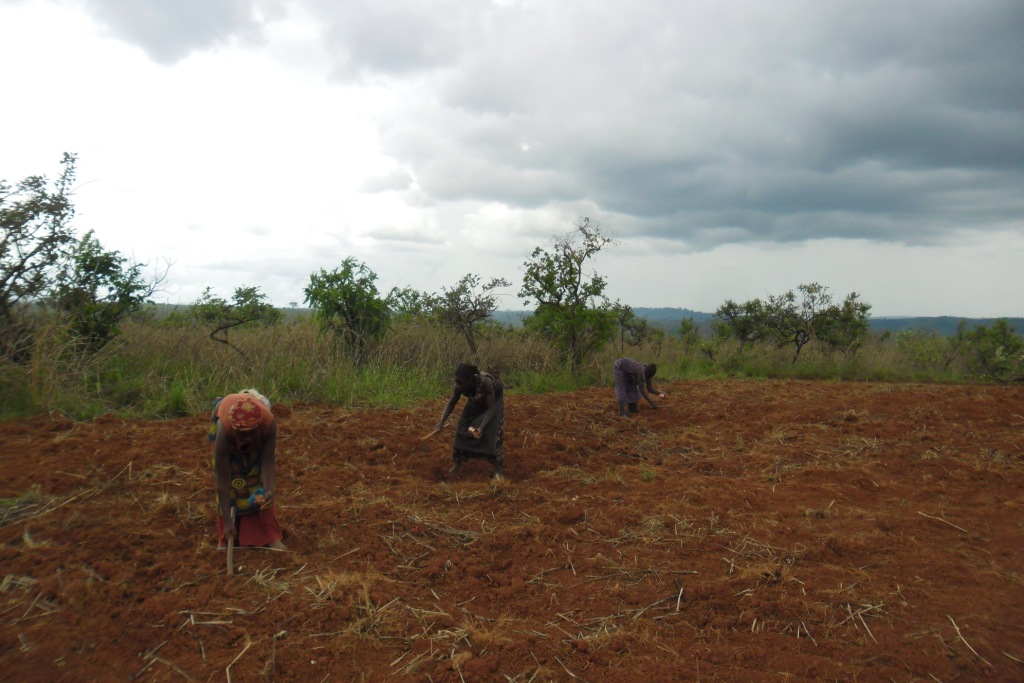
Robert is a good example of an entrepreneur who has changed a savannah to an orchard. He doesn´t live for the day, the layout is a long-range enterprise and his example calls for followers. There are vast expanses of savannah in Congo that no one uses. The supply of land is huge, you could just put the shovel in the ground anywhere. I hope that the Congolese some day will discover the opportunity that is literally at their feet. It will take determination and hard work. There are no shortcuts.
Posted in MSG

Hymn of impossibility

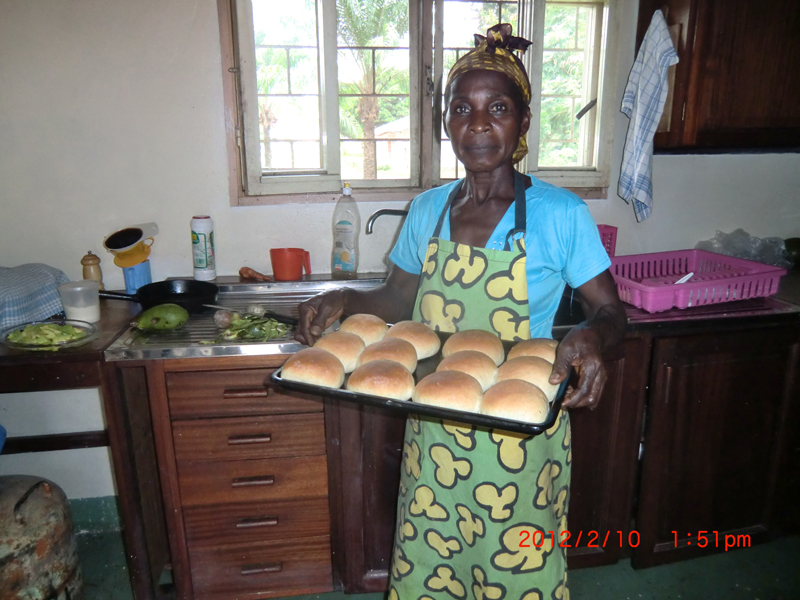
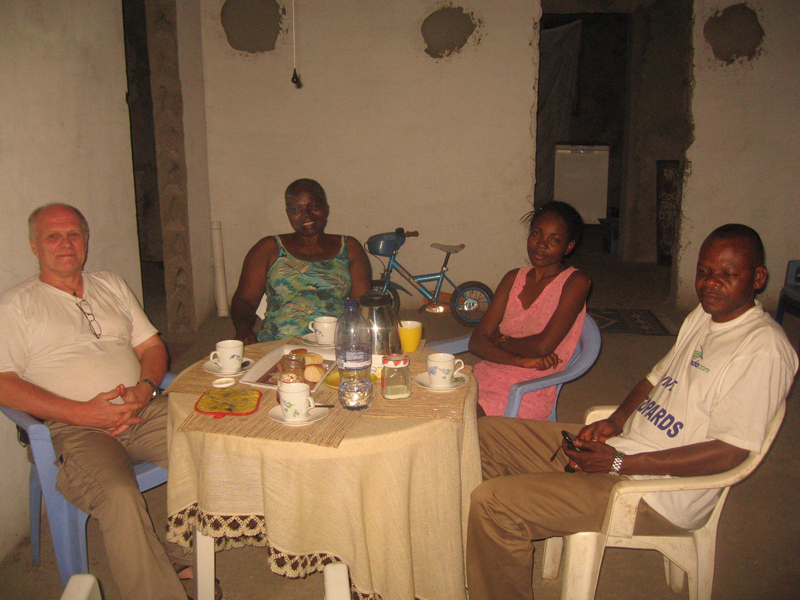
Pauline is baking bread for us

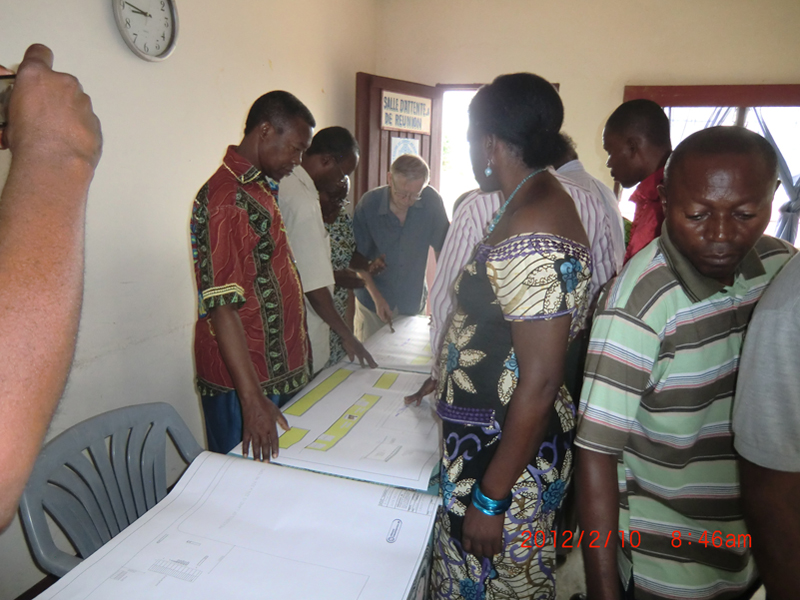
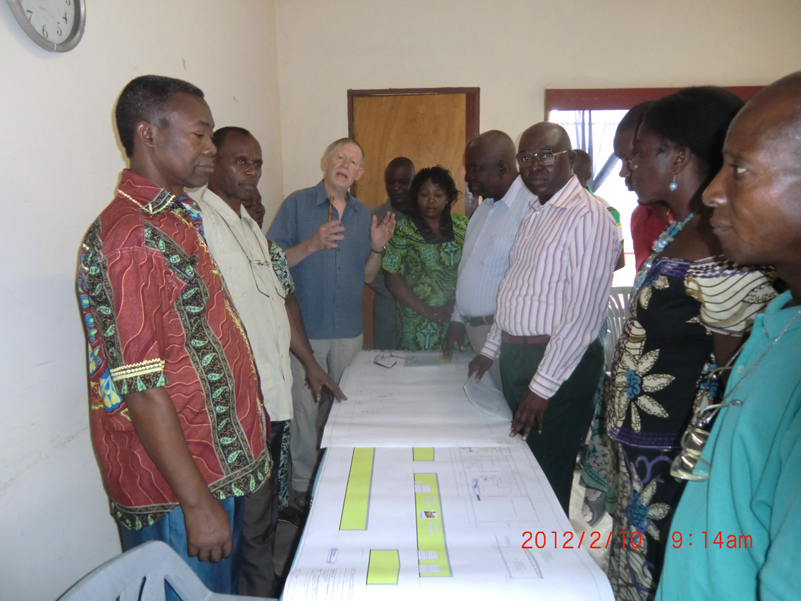
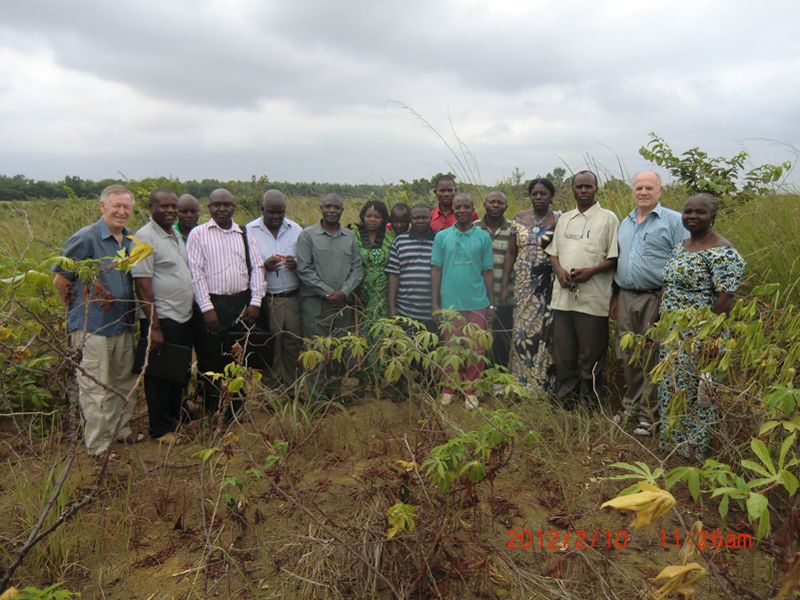
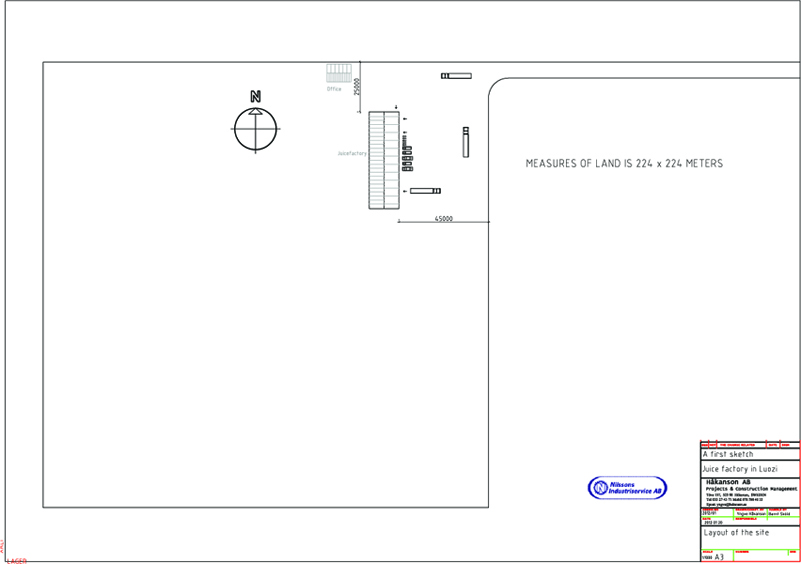
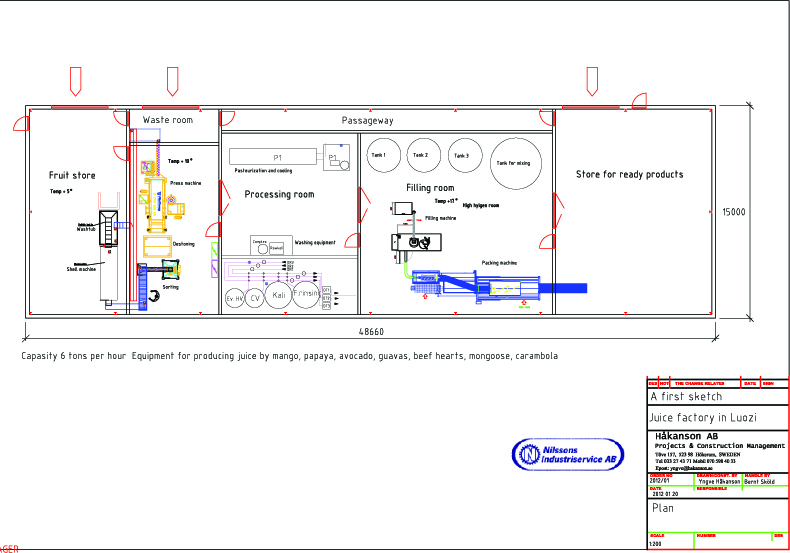
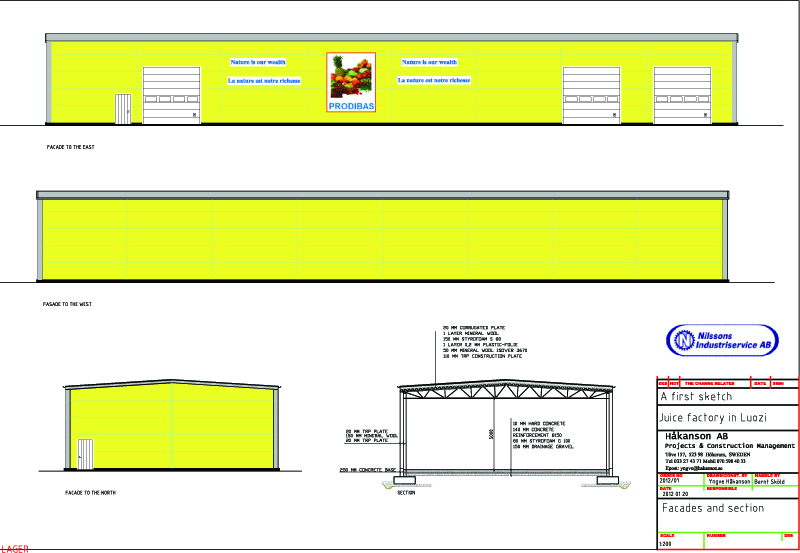
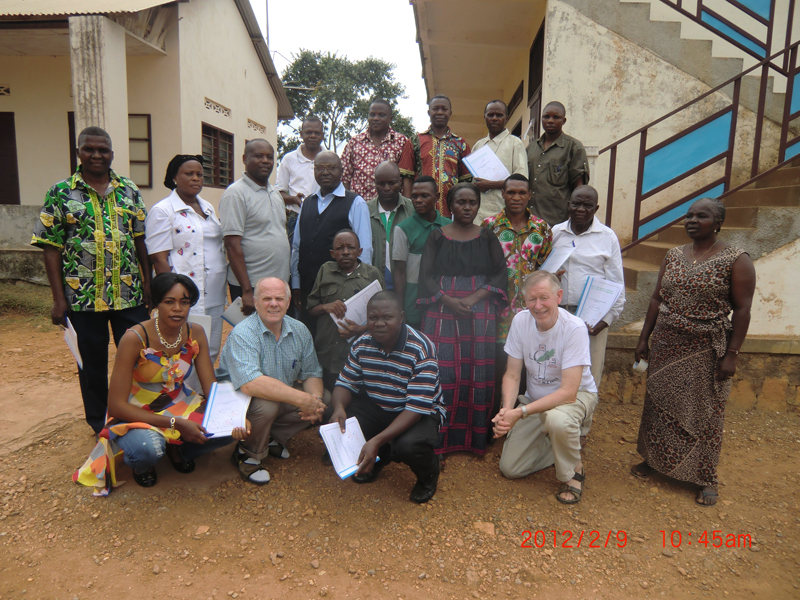
After the usual morning ritual, Yapeco, Bernt and I walked to the head office of the CEC Church. Our interpreter, Julienne, was already there. We were going to meet the committee of the future juice factory. Both the Church superintendents joined us. Chairman Ngoma Nsuni Celestin and the chemist André Ngalamulume had arrived from Kinshasa. There are several important persons in this group. André has taken our entrepreneurial course, and Ngoma has participated one of the course days. Today, there were thirteen in the group. Edi held an opening speech, and prayed that God would bless the project. We will need a lot of God’s blessing to pull this project ashore. Bernt related the history of the project, and I presented the drawings that I had developed together with the Italian machine supplier. With the help of some consultants, we have compiled a cost estimate. The estimate amounts to $ 5 million.

We explained to the group that the work we’ve done so far is related to the effort required as a peanut relate to an entire bag of peanuts. No one should be left uncertain where we stand today in the project. We suggested that the next step should be to solve three important issues. (1) Financing, (2) inventory of raw material supply and (3) the routing of electricity to Luozi. The group appointed members to take responsibility for the continued work in each area. The plan is to have these issues solved in September – October. After the meeting we went to the site, a good, flat plot of 5 hectars. There is even room for some fruit-growing on the site.
Most people who have heard of the project have sung the “hymn of impossibility” for us. We have listened with great seriousness, and learned their message. At the same time, Bernt says: ”The only things that are impossible (in Swedish: ”The only things that don´t walk”) are small children and broken clocks”. Bernt´s point of view has quite a few sympathizers. The future will show which approach is the more correct. It is said that pessimists are often right, but the optimist has more fun along the way.

During the afternoon, we visited a project in Luozi that is governed by the European Union. We talked for a while with the French manager, Sylvain Berton. The project is called Agrisud International, and works within a radius of 50 kilometers around Luozi. Their target audience is farmers, whom they educate and give grants in the form of seed, but they also support other kind of enterprises. They organize the distribution and the selling of the produce of the enterprises. Agrisud International are working in twelve African countries, and today, they cooperate with more than 900 farmers in the Luozi area. Their goal is to involve 2 500 farmers in the project. The organization has 25 employees, and the project will last for four years..

Today has been less hot, it has been cloudy but there is no rain in sight and the crops keeps withering. It is very dry. Robert Diyabanza came to see us last night. He told us that they had had a similar weather situation in 1978, and it had caused a severe food shortages. We had 28°C indoors. It is a little to much.

Thank you for all the prayers and happy cheering posted on the website. It feels encouraging. We gladly accept more of these lovely grains of gold.

Posted in MSG

An interesting case of special treatment

February 12 Group

I started the day with a scoop shower. There is no water in the water pipes, but that is only temporary, and there is a caretaker who compensates for the lack of running water. He keeps the water barrel in our bathroom well-filled. Except for the lack of running water, Bernt and I have very good accommodations here in Luozi. We have our own appartement with good and comfortable rooms. And we feel perfectly fine, our only wish is for the weather to be a little less hot.

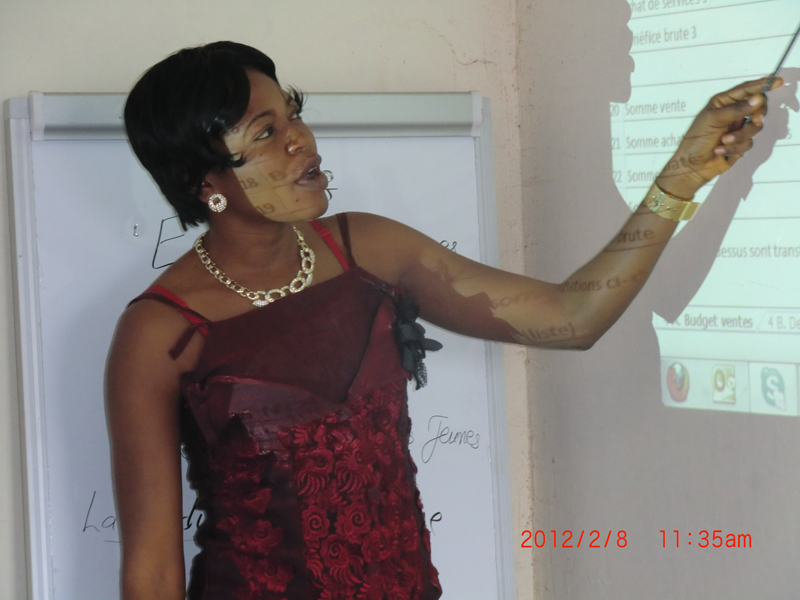
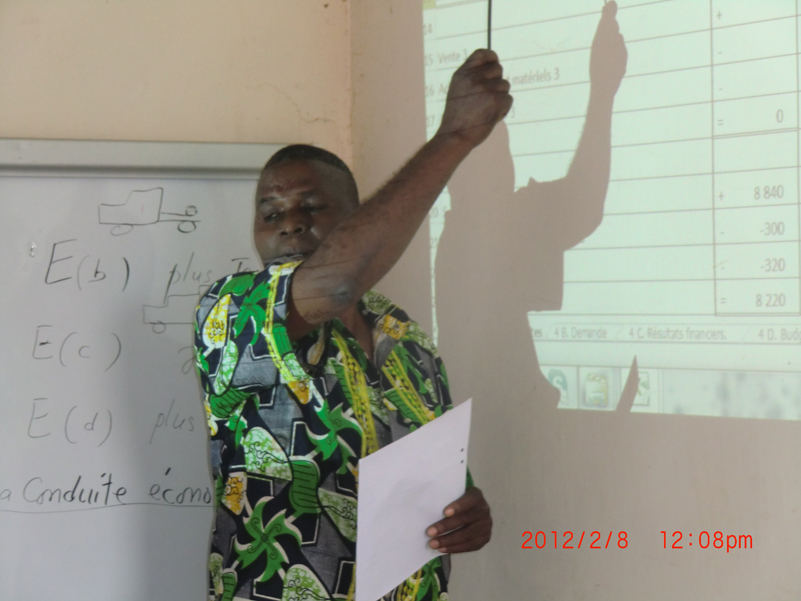
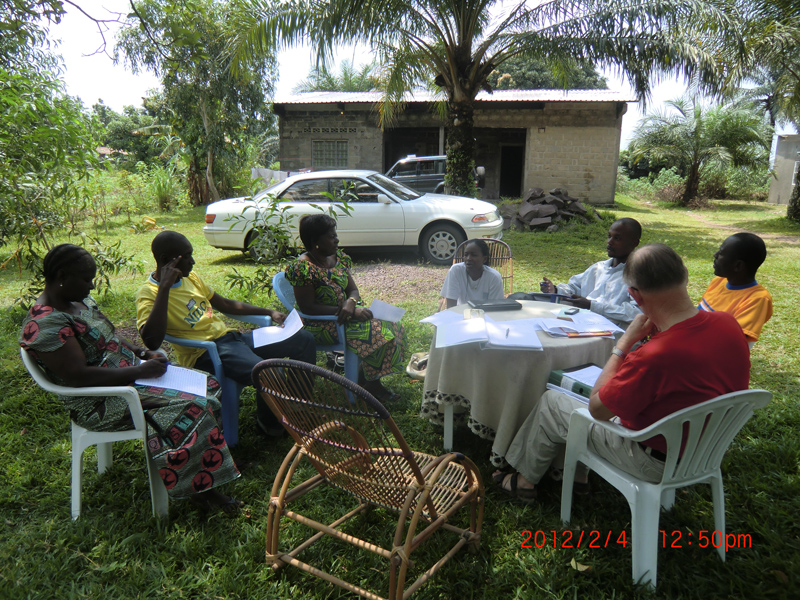
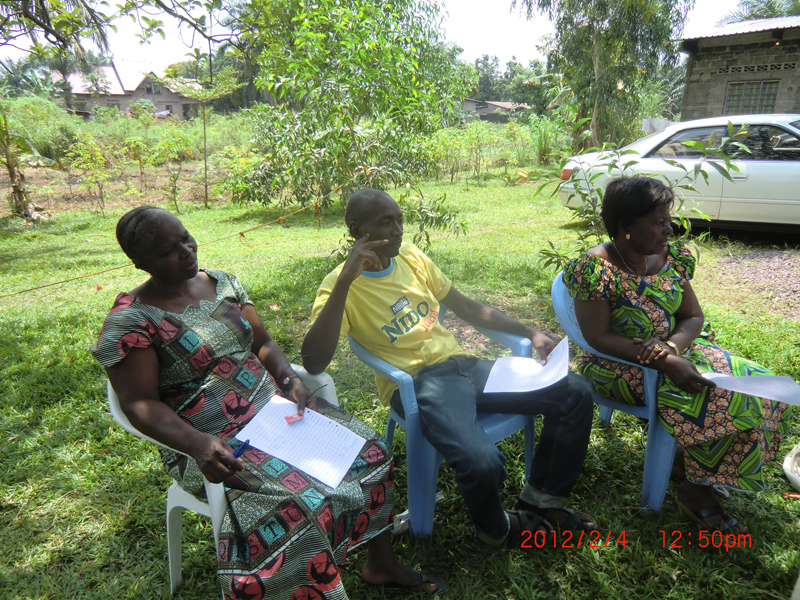
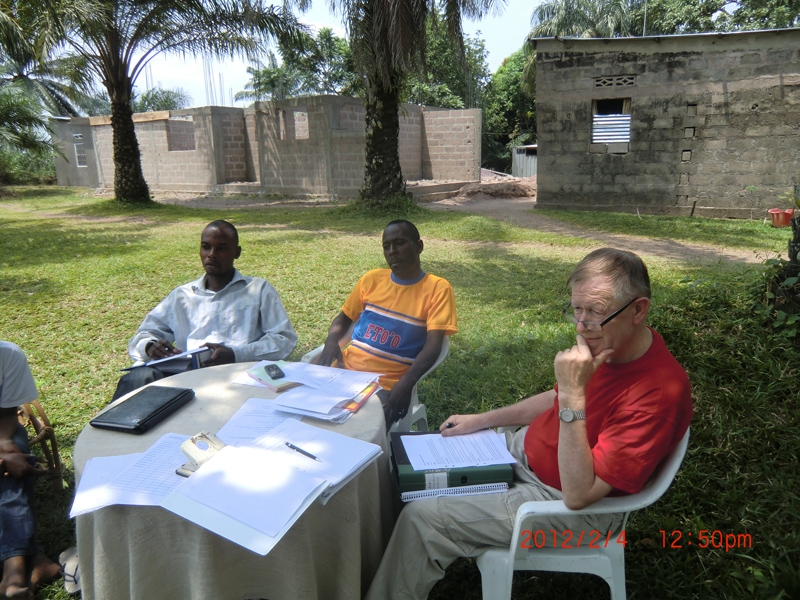
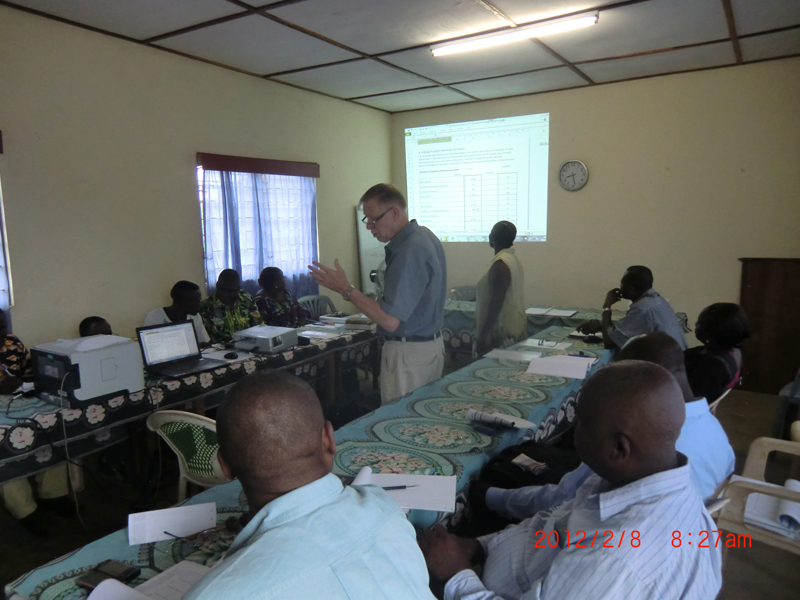
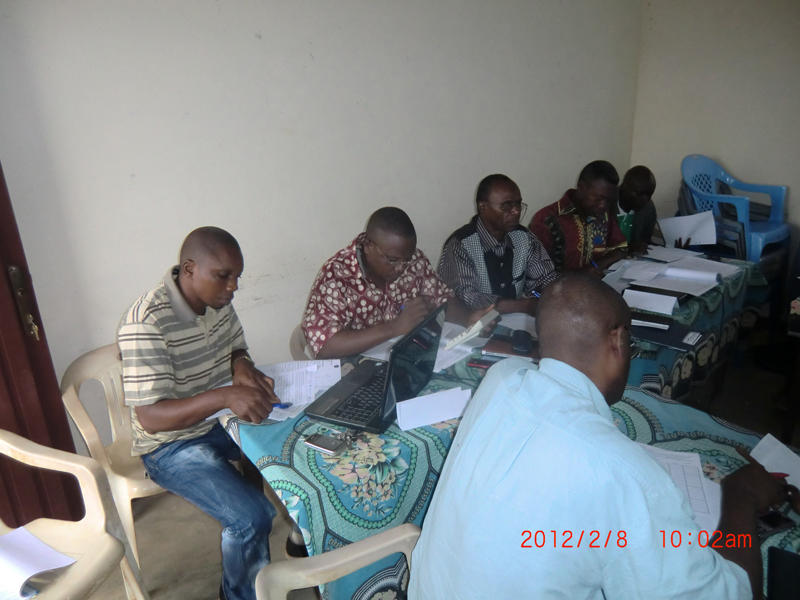
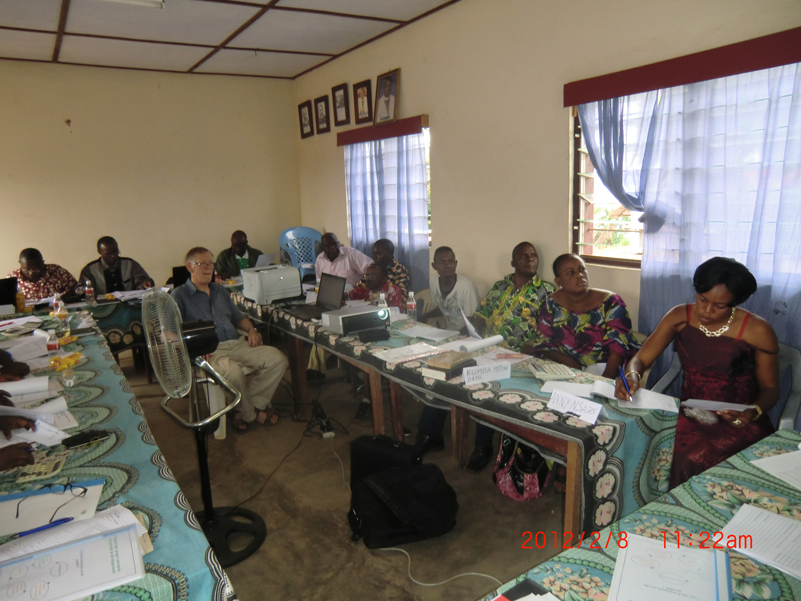
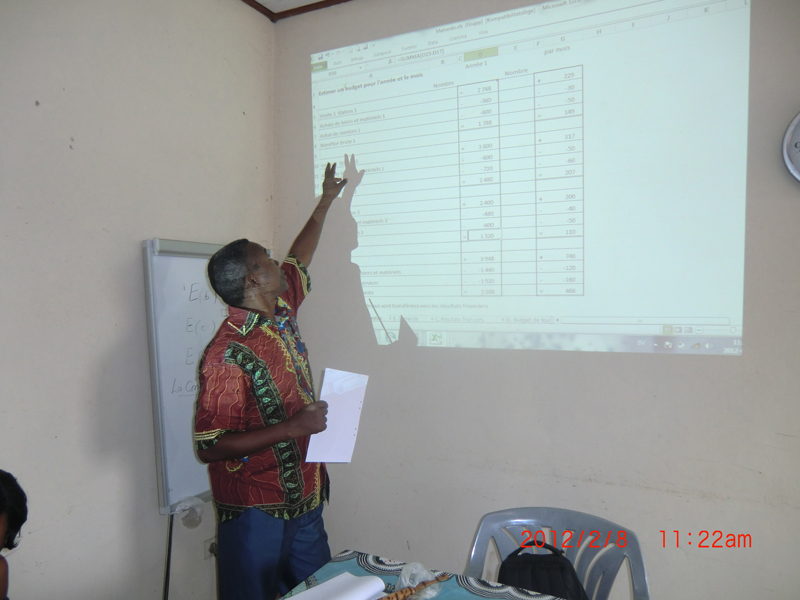
On day three of the entrepreneurial course, there was 16 participants. We went on working with the budgets, we went through the calculations of the participants together and discussed the different plans that had been presented. Just like the days before, we took a break halfway through and had some soft drinks and biscuits. The day before, I had asked for a working electricity supply, but when the clock turned 10.20 am, the power in the lines disappeared. The generator had to take a rest, and the engineer had to have his coffee-break. At 11 o´clock, the engineer returned to service, started the generator according to the regulations, and we could continue the class with our electrified equipment. Next part in the course was bookkeeping. We concluded that part with a number of business events that they were asked to record correctly. This part went really well. Budgeting was more difficult. The education will continue when we come to Congo the next time. During the time in between, they will complete and hand in their thorough descriptions of their business ideas. We finished the day with a slide show of our days in Luozi.
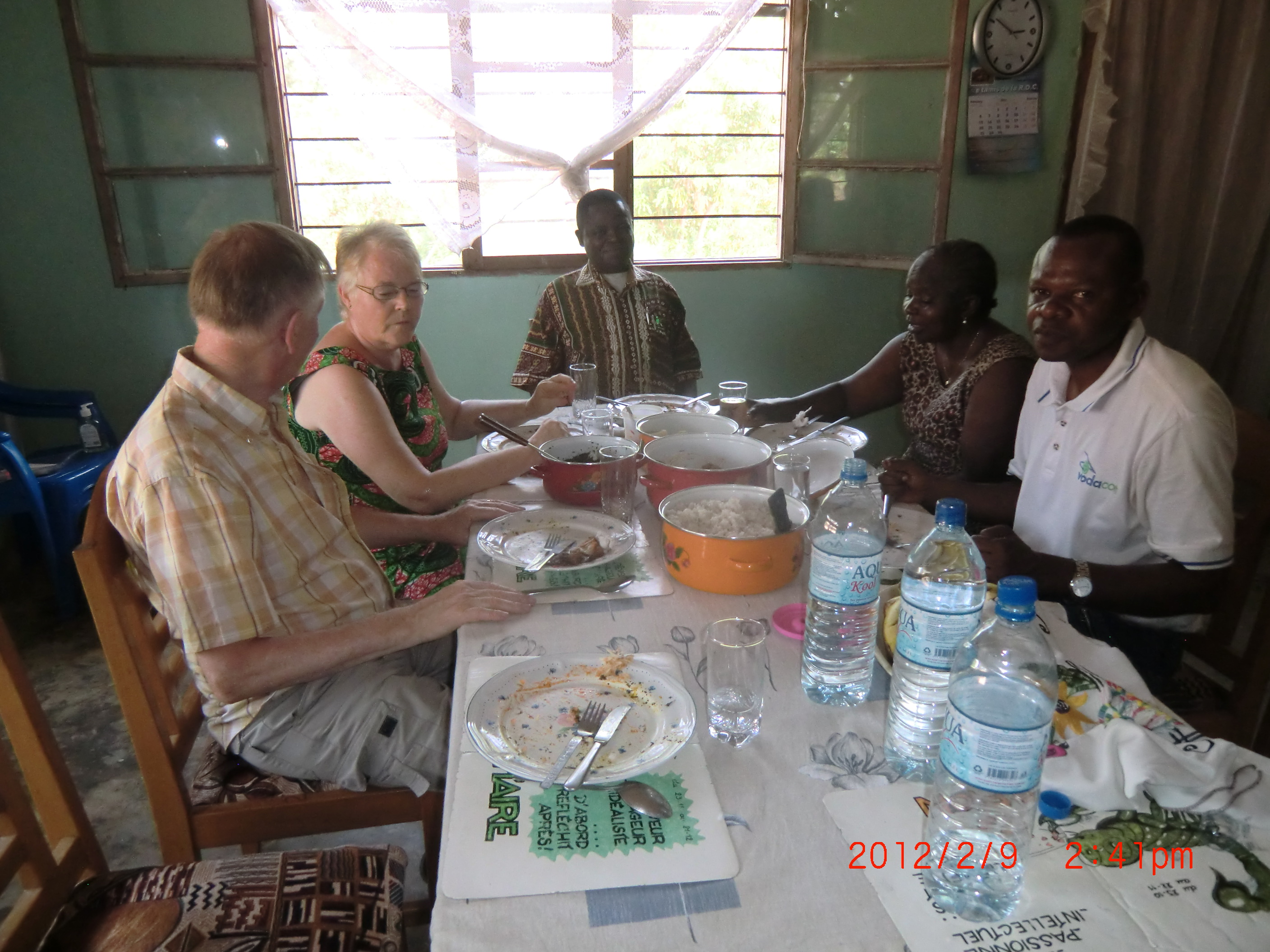
We were invited to dinner with the School manager Keto Clement. We had fish from the Congo river, manioc, rice and sakasaka, which is similar to spinach stew, but made from manioc leaves. For desert we had bananas. Afterwards, we went home and took a nap for an hour. The heat was pressing, we had +34°C in the shade, and considerably hotter in the sun.

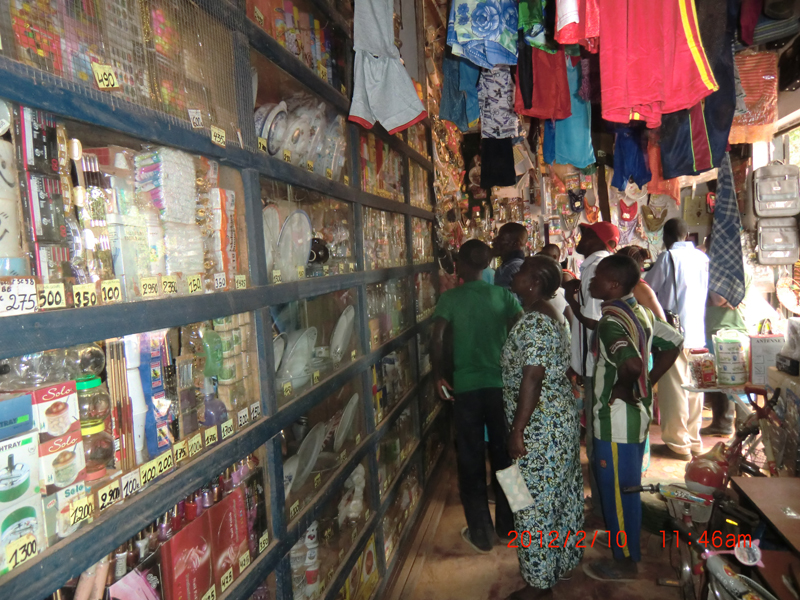
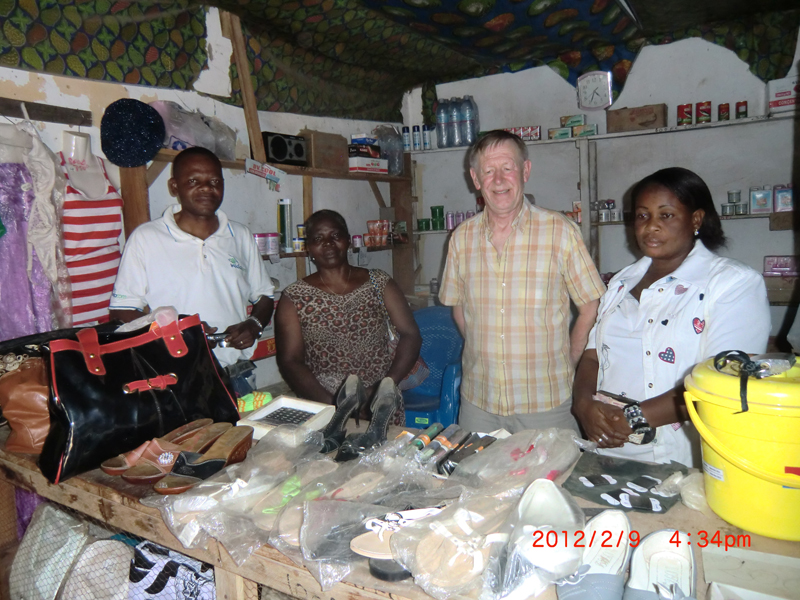
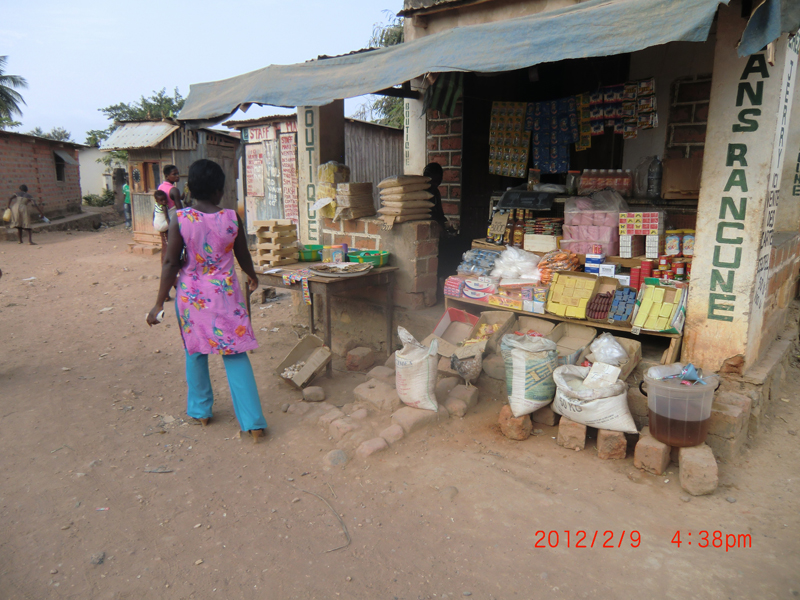
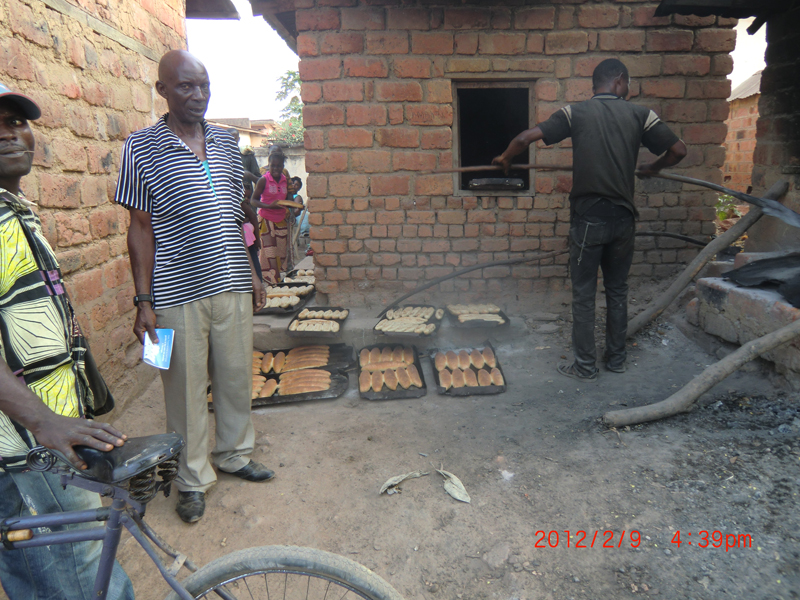
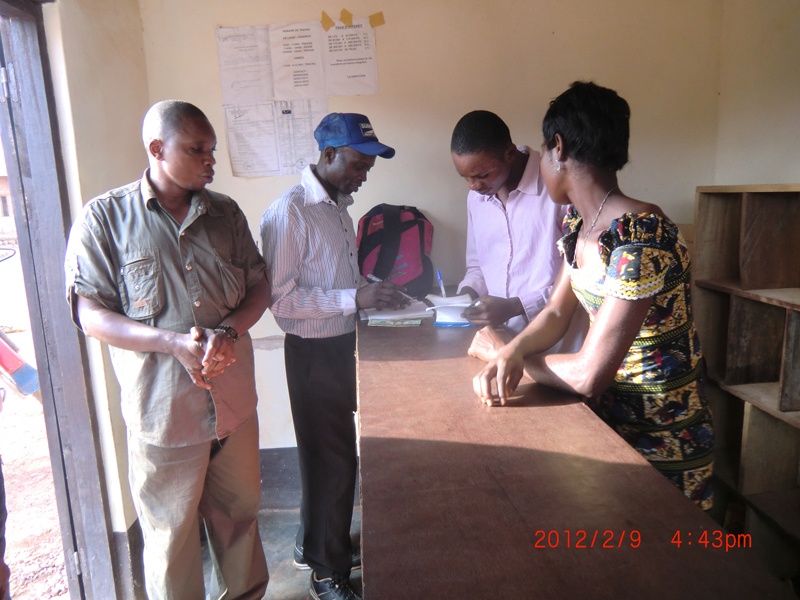
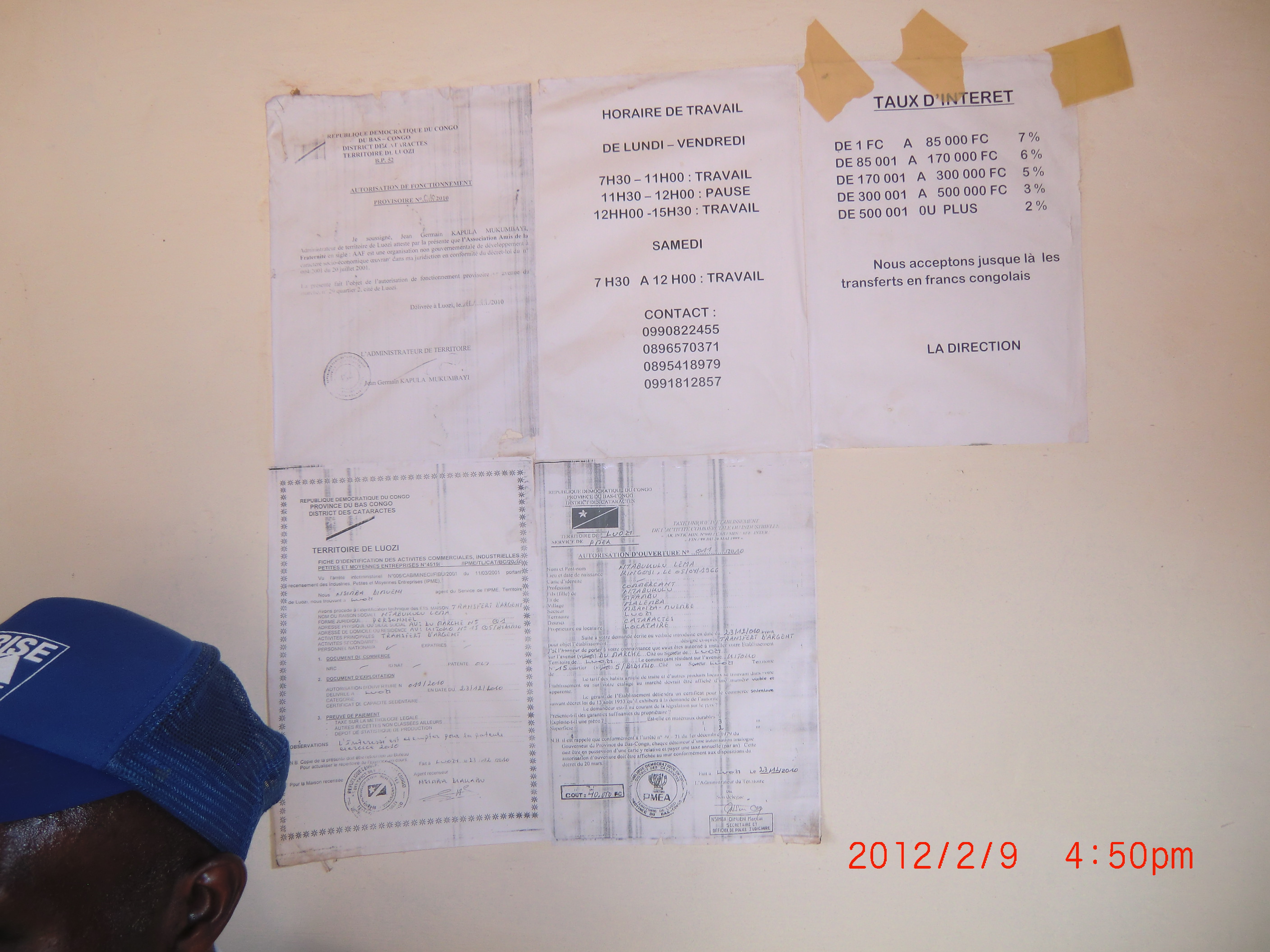
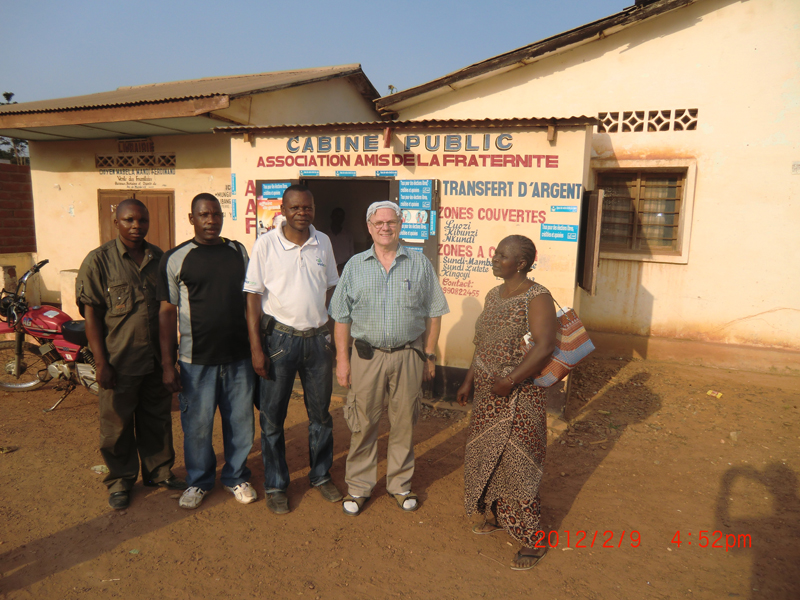
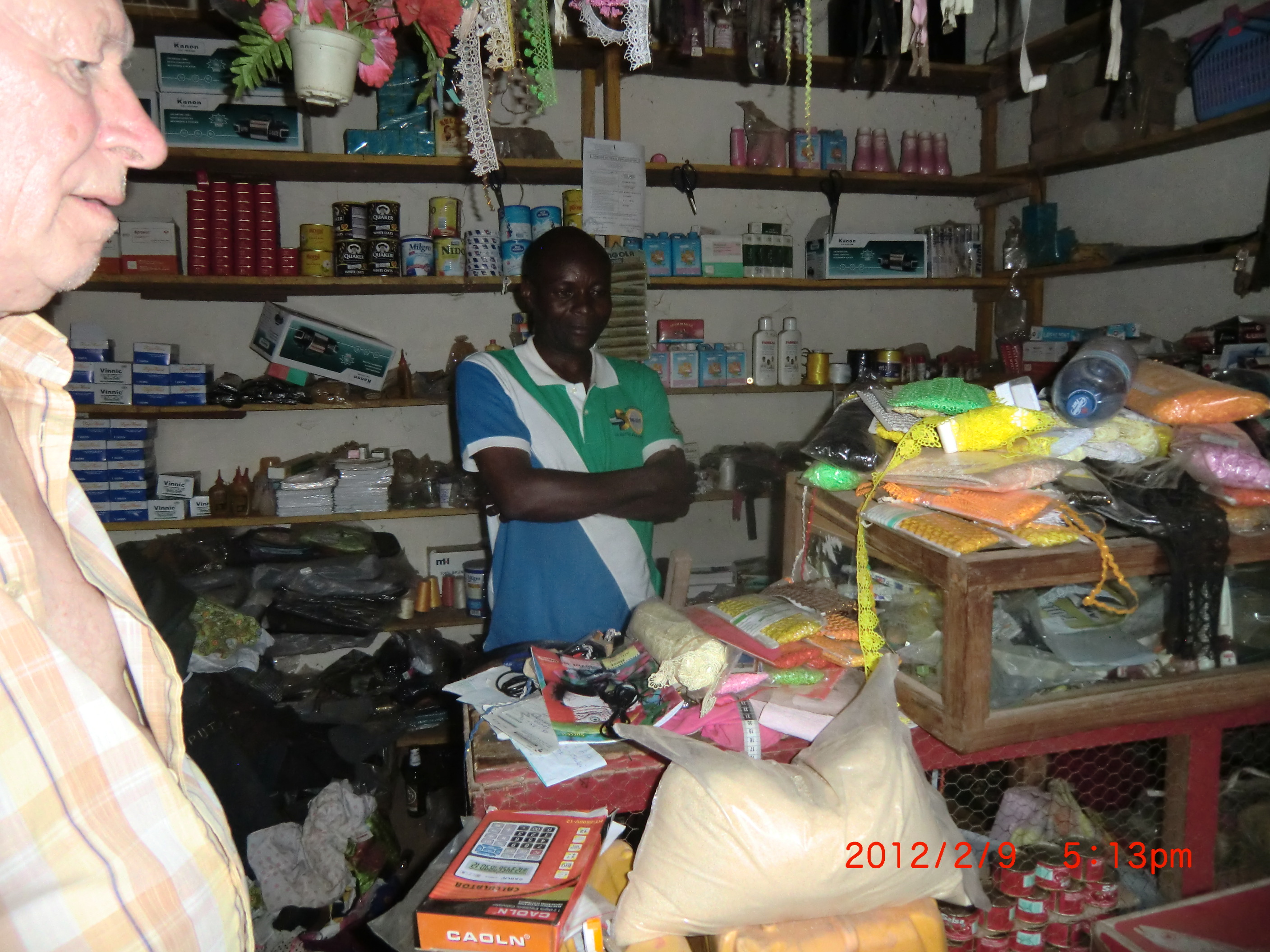
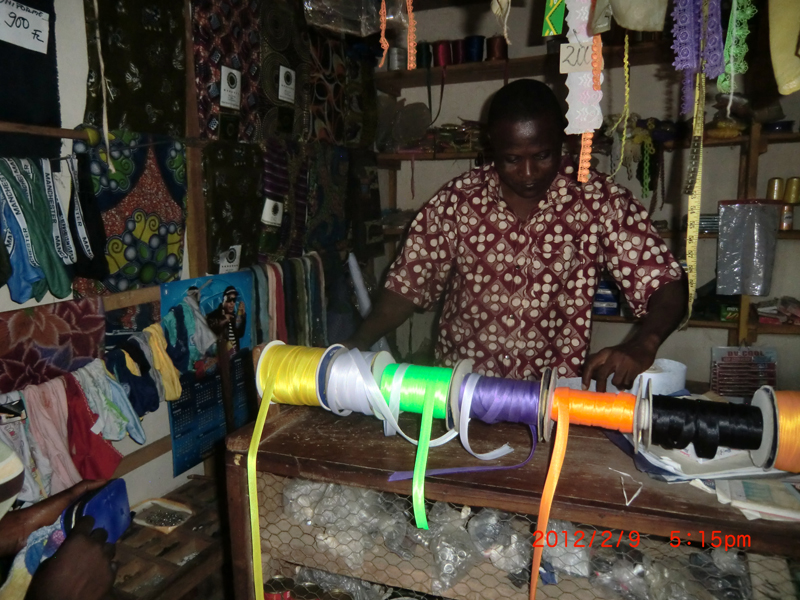
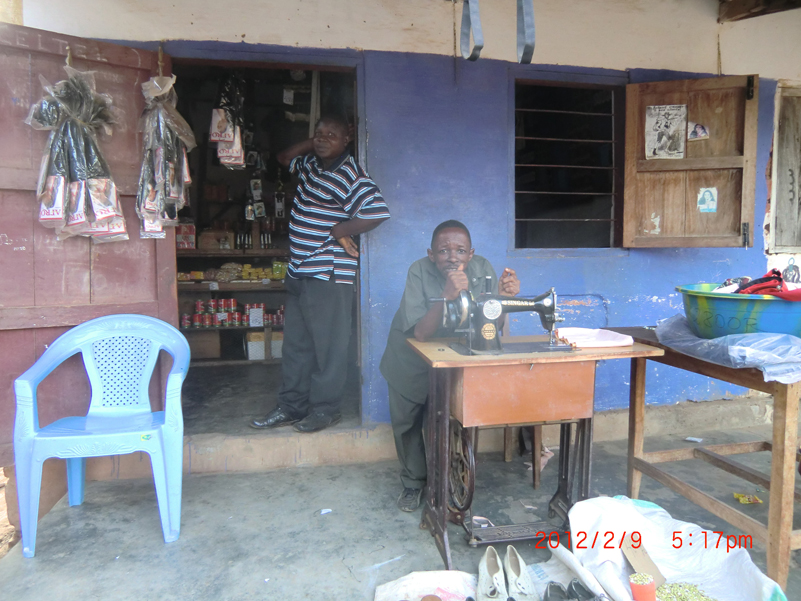
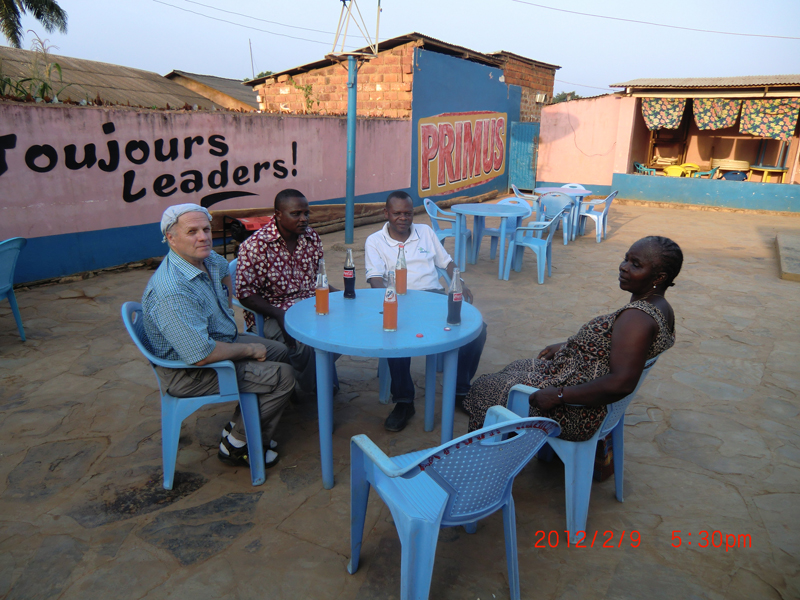
After our nap, we took a walk around Luozi and visited a number of entrepreneurs that have participated in our course. We visited a grocery shop, a combined clothes shop and tailor, and a restaurant, all of which are owned by Jean Patrice. He is a nice guy, and he offered us soft drinks which was welcome considering the heat. We talked to Lema who runs a business that facilitates money tranfer between different places in Congo. This is a new type of business that we hadn´t heard of before. There were two entrepreneurs that had started this kind of service. We also visited a savings bank and talked to the manager. In order to use the services of this bank, you have to be a member and you have to save money for a certain amount of time before you can apply for a loan. The bank took an interest of 10% of the loan from male customers, and of 5% from female customers provided they were a group of three. This is an interesting form of special treatement,and it gives a good perspective on the differences in trust capital of the two genders.

Posted in MSG

On two spindly legs

Education of entrepreneurs in Luozi

Today is the first day during this visit to Congo that I stand before a mirror when I am shaving. I see a pensioner in his best years, with a slightly pear-shaped body on two spindly legs. It is not exactly an aestethic experience, but it is alright. I have to accept reality as it is. Today, Gunnel boiled our porridge, on our request. It feels safe to start the day on that foundation.

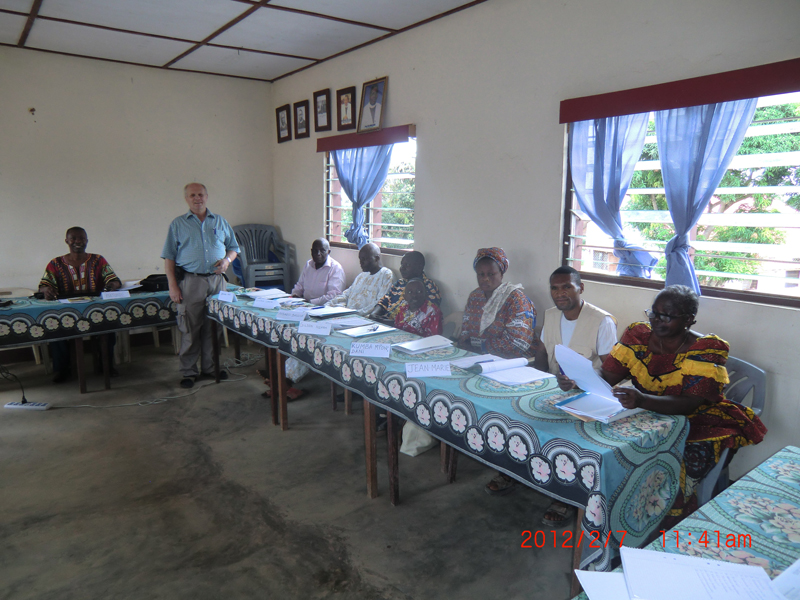
At 8.00 am we began today´s classes. The power is turned on at that time. I had rigged the computer, the projector and the printer, and all the equipment started on time. Today we had 17 participants, plus the three extras from yesterday. How many will come tomorrow, day three? Today´s classes were dedicated to budgets. I showed two different budgets from projects that are already launched. Then, they got to work with their own budgets. As soon as they were ready, I entered the data into the computer, and they took turns in presenting their own budgets to the group. Judging from the atmosphere, they were very committed and their presentations showed that they had listened to our message. Superintendent Diafuanakana and deputy superintendent M. Matondo participated as well. In all, we had five hours of intense acquisition of knowledge today too, including a break with soft drinks and bisquits. We experienced a power failure at 11.15 am. The engineer who looks after the generator was out on coffee break, and obviously the generator thought it needed a break too. It is not good from an educational point of view, having to break in the middle of a presentation. Fortunately, the manager of the electric company is in the course. I asked him to go and start the generator. He was somewhat reluctant, and I think we will have to pay extra for disturbing the engineer´s coffee break. For tomorrow, I have ordered power without failure. We´ll se if my request can be satisfied.

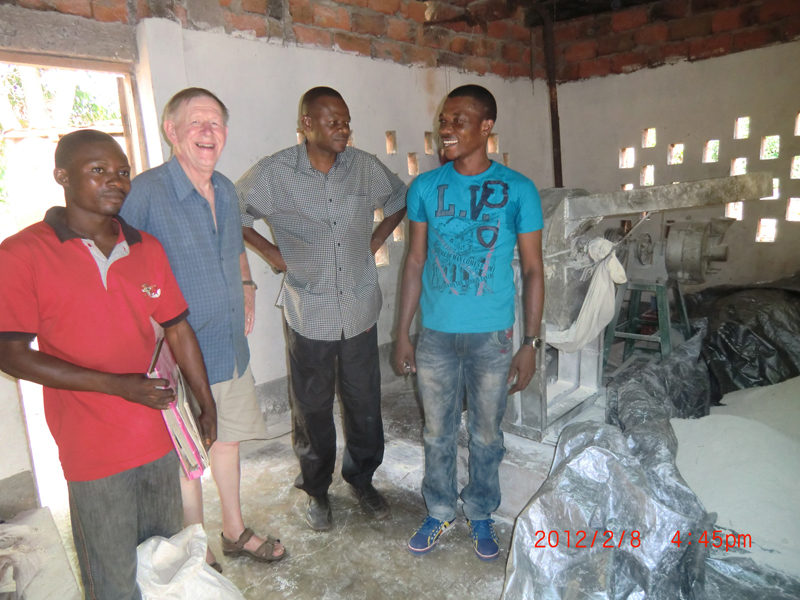
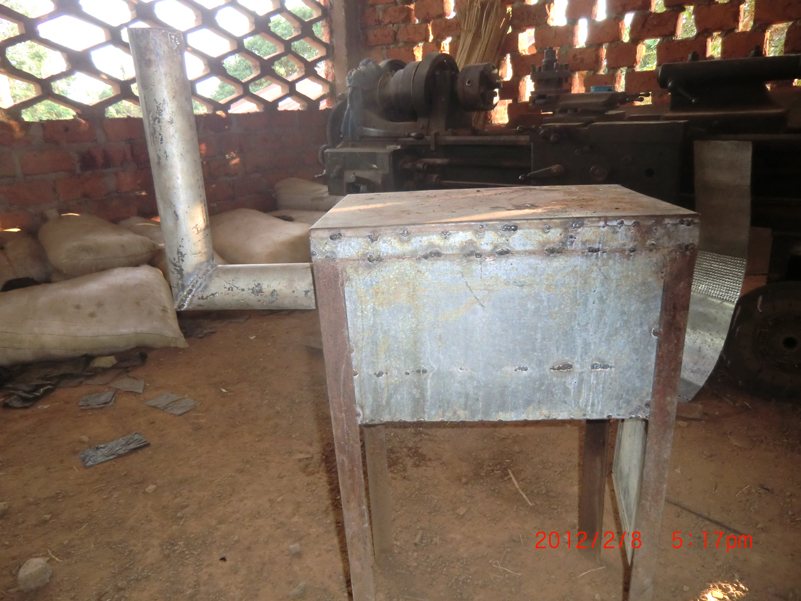
This afternoon, workshop owner Daniel Bimpe came, and we discussed production of wood stoves. We visited a manioc factory that he had delivered the equipment to, and then we went to his workshop. He had been experimenting with two different types of stoves. One is very simple, it reminded me of an old iron tripod that you place in the fire, and then put a pot upon. The other one was a more elaborate, traditional stove with some clever solutions. We will continue with the development of our ideas, and meet again at the end of the month.

Tonight, the CEC Church School manager, Keto Clement came to see us. We put forward our ideas about an entrepreneurial program for the Baobab Church Secondary School. He thought it was a brilliant idea, and we will continue working together with the idea when we get to Matadi. Keto said that practically everybody is occupied with various commercial activities, and he meant that it is a sign of a society in crisis. A program for entrepreneurs could be very beneficial in teaching young people to plan their economy.

Posted in MSG

Necessity is the mother of inventions

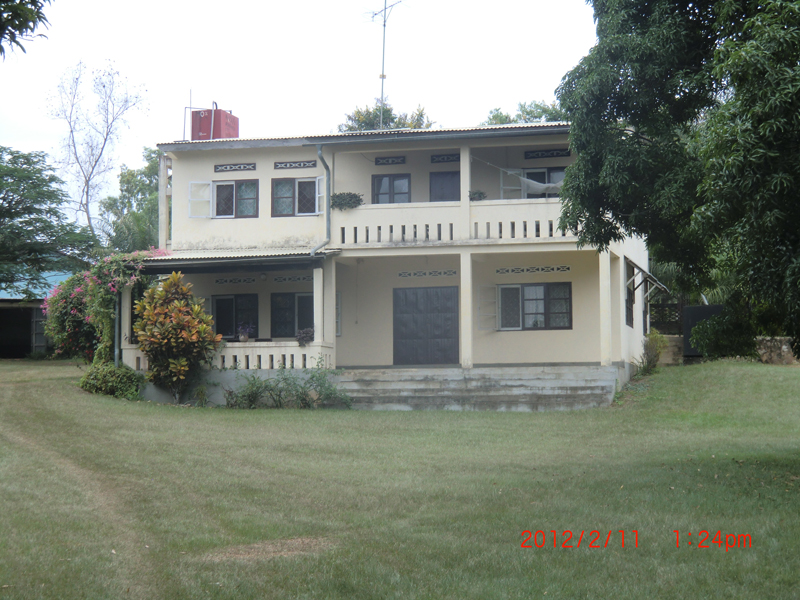
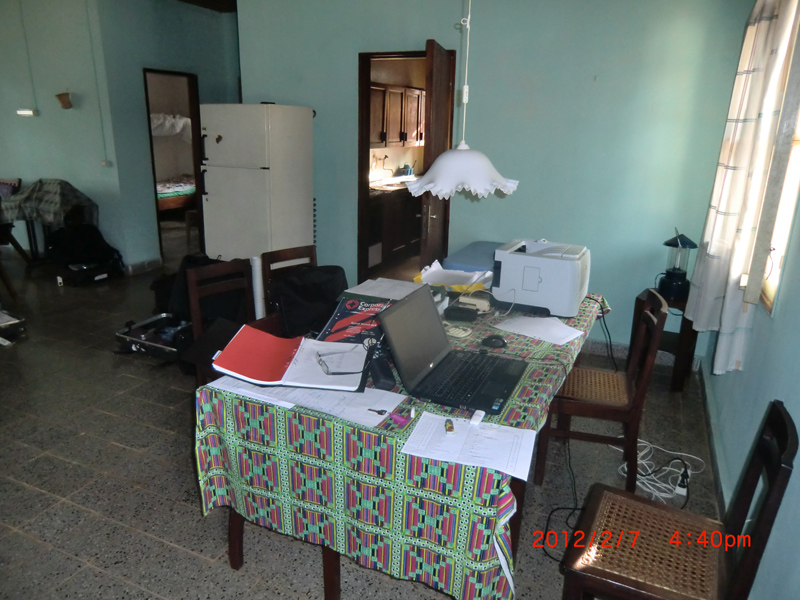
Our house in Luozi

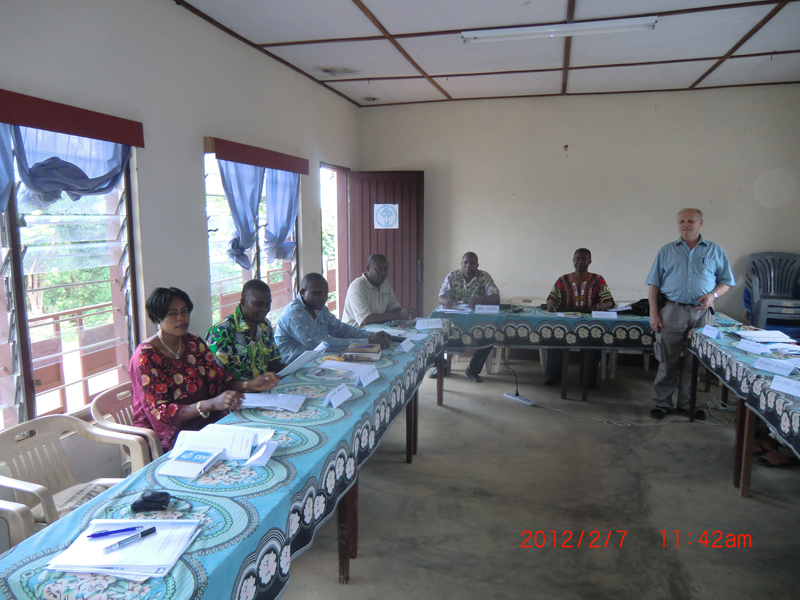
Luozi is a very nice place, a quiet place on earth. The administrative center of the CEC Church is located here and we use their premises for our entrepreneurial course. Today, a new course began. Ten participants were called, fourteen came. The church deputy superintendent, Matondo is participating, and during the last class of the day, the superintendent Diafuanakana came. Yapeco started the meeting the Congolese way, with a prayer. He prayed that this course in basic entrepreneurial skills will be a new beginning for successful entrepreneurship and progress, both for the entrepreneurs themselves and for Luozi. Then the participants told us a little about themselves. Several of them were already engaged in various enterprises, some in trading, others in growing crops for sale. We mondele also told the group something about ourselves, and emphasized that we are here to share our expericences as entrepreneurs with them.

Almost all Congolese are occupied with commercial activities of different kinds. When we the other day took a walk along the Congo river, we saw some men who were drilling by hand in the rocks. They put wedges in the boreholes to fracture the rock. The stones they got from the process were going to be used as building material. Survival is of course paramount, and you will find practical applications everywhere you go in Congo of the saying: ”Necessity is the mother of invention”. What we see a need for among our Congolese friends is economic planning. The inability to plan probably has a lot to do with the society you live in. In Congo, nature provides a year-round pantry. In that position you don´t need to plan the procurement of food, and you will have the possibility to live for the day. Most people on earth would suffer greatly if they neglected to plan ahead. They wouldn´t survive.

Bernt was in charge of the course today. He started with introducing the 30 points that we call ”Concepts for entrepreneurs in Congo”. You can find the list of points on the website under ”About us”. The concepts are both carrot and stick. There are no shortcuts to success. It takes hard work and sacrifices. We offer tools, but it is the entrepreneur him-/herself who will perform the hard work. The tools we offer are: the course, business loans and follow-ups. Our principles are: openness, transparency and results. Bernt made it clear to the group that participation in the course doesn´t guarantee a business loan. In order to get a loan the participant has to pass the tests and get an approved result. We have to be sure that our message has got through to them. Myself, I used a large part of the day to prepare for future exercises.

After Bernt, Yapeco, MSG´s man in Congo, talked to the group. He went through the forms that the entrepreneurs will have to fill out in order for us to be able to evaluate their ideas and plans. It was probably nice for them not having to listen to the interpretation of strange noises from the white man for a while. The forms cover ten pages, and every participant must hand in a completed document as these are absolutely crucial for us, when we assess the viability of the business idea and whether it follows our principles. After five hours of cramming in +33°C, we felt it was enough for today. Hopefully we have given our participants a few new thoughts and ideas. To be continued tomorrow.

Posted in MSG

A short night

The boys in Kimbemba

The night was short of sleep – I spent quite some time on paperwork before I went to bed. After two hours sleep, at 3.30 am, the cock of our hosts the Diamfunisas started crowing. It turned out that the hen house was located just outside our bedroom, and we couldn´t close the window. At each full hour and half hour, he ran around flapping and screaming at the top of his voice. Never before has a cock been as loud as this one, as far as I can recall. The thought crossed my mind, that if I had had a machete, it would have been very tempting to chop off his head. But I would never kill the cock of our most hospitable hosts. At breakfast, the Diamfunisas apologized for the behaviour of the cock, and told us that he will be locked away next time we stay there overnight.

We had the usual porridge and medicines for breakfast. Then Yapeco, Bernt and I went to the bank to withdraw a sum of money for Emy Miantezila. It was a Swedish donation specifically made out to benefit his activities. At the BIAC Bank, we made the withdrawal in a cash machine with a VISA card. We talked to Emy and his son David, an agronomist, about agricultural projects around Kimpese. In order to proceed, they will look into a number of important issues until our next meeting, on February 24.

Nganga Diamfunisa is building a small hotel with eight rooms and a restaurant. He showed it to us, and he reckons that he will be able to open in March or April. It is an attractive building in the center of Kimpese.

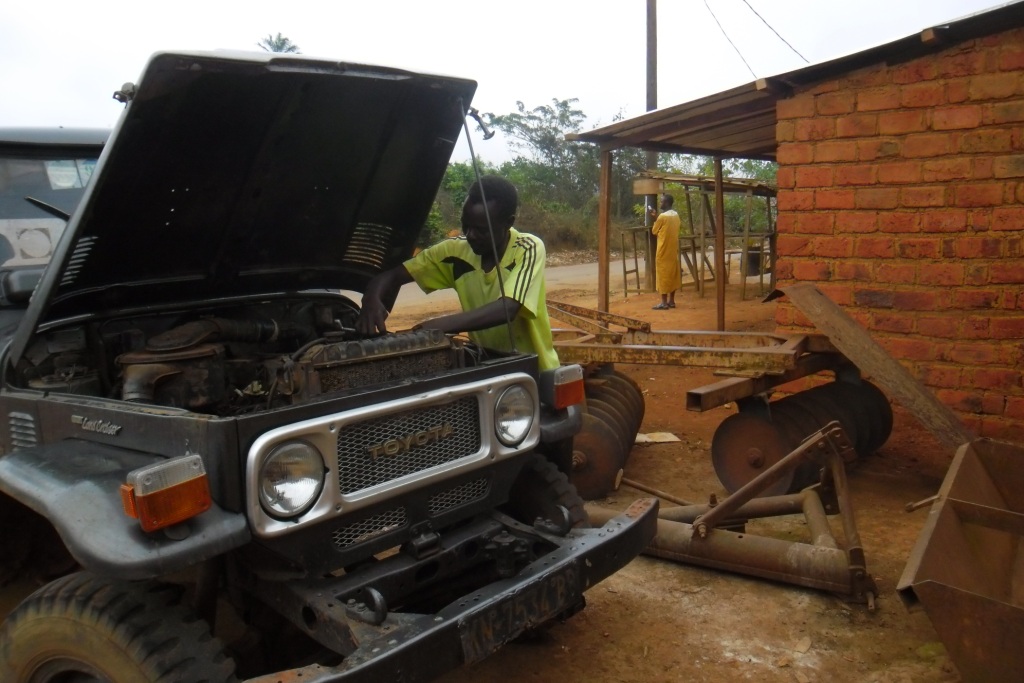
Sam from the IME hospital picked us up and drove us the 100 kilometers to the ferry stop in Kimbemba. The drive lasted for three hours on a surface that is everything but a road. Sam is used to the Congo roads and drives as fast as the car can handle. He has a Toyota Land Cruiser, a sturdy jeep with a 6 cylinder diesel engine. On this distance, you can´t use anything but off-road vehicles. The trip is not comfortable, but we reached our destination, somewhat shaken.

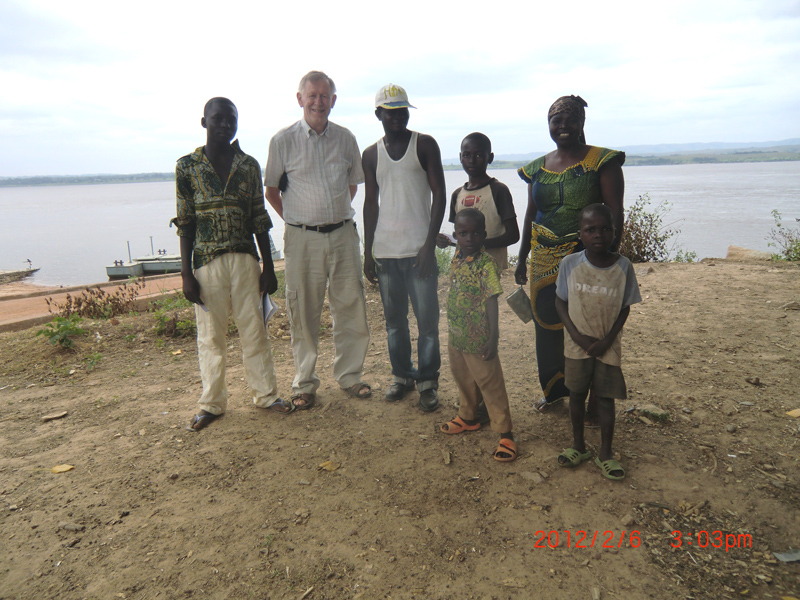
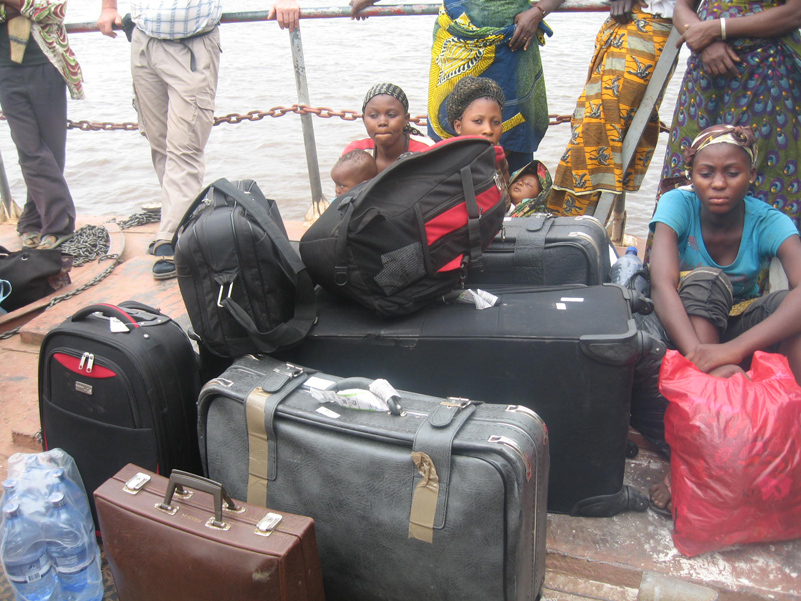
The boys whom we met last June, and whom we gave the New Testament came and talked to us for a while. We didn’t quite understand how they could know that we would be there at this day and hour, but then we saw that one of the boys, Honete, helped out on the ferry. He must have notified the others. We asked them to email us if there was anything they needed, but they told us that they didn´t have access to the internet. We had an agreeable half-hour trip by ferry over the Congo river. On the other side, we were met by Gunnel Jönsson.

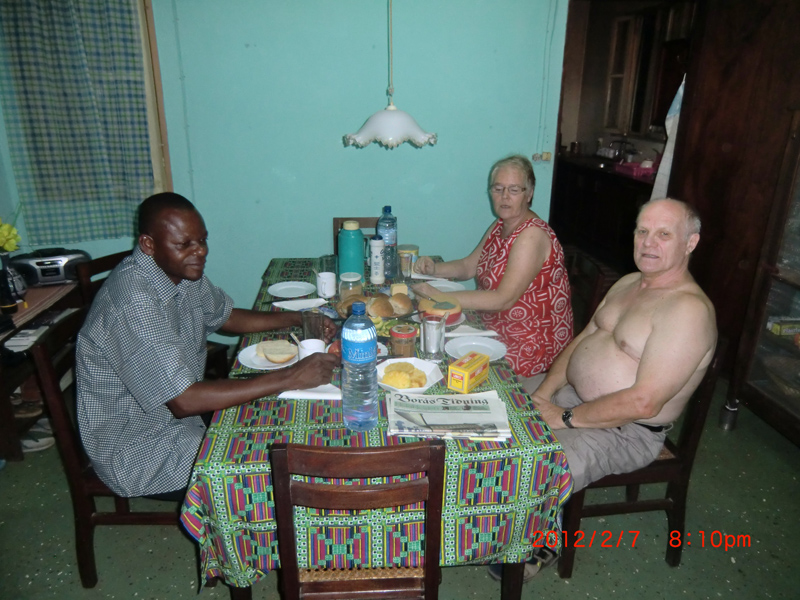
We are staying at Gunnel Jönsson´s house, where we have a whole appartment to our disposal, but we take our meals together with Gunnel. Yapeco is staying in a guest room in Gunnel´s appartment. In Luozi it is quiet and nice, and tonight we have electrical power which makes everything easier. After dinner we planned tomorrow´s meeting with the new entrepreneurs. Robert Diabiyanza came to fetch parts to his chain saw and medicine. Daniel Bimpe, workshop owner, came to book a meeting for Wednesday. An evening sandwich rounded off the day.

Posted in MSG

We packed our stuff

Pastor Damas with family, Yapeco and Yngve

At dawn, I rose and took a badly needed shower. The first scoop is cold, but you quickly get used to the coolness. We packed our bags and had the usual oatmeal porridge for breakfast – how great you feel when you eat porridge in the morning! So far, our Nordic stomachs have worked well in spite of the tropical challenges, maybe thanks to the porridge. The porridge was accompanied by the malaria medicine Malarone, and – to prevent dehydration – one glass of water and one cup of tea. The fluid balance is important to keep in mind in this hot climate. It takes a while to make friends with the heat, but you do get used to it little by little.

We put our bags in Tuto´s jeep, and when we left we were certainly packed. There were suitcases, backpacks, briefcases, handbags, a power saw besides car owner Tuto, his sister Emma with her son Merje, the mother Julienne, Yapeco and us two mondele, that is Bernt and I. We made for the church where the Nyambudi brother and sister are members. It is called the Evangelical Church of God.

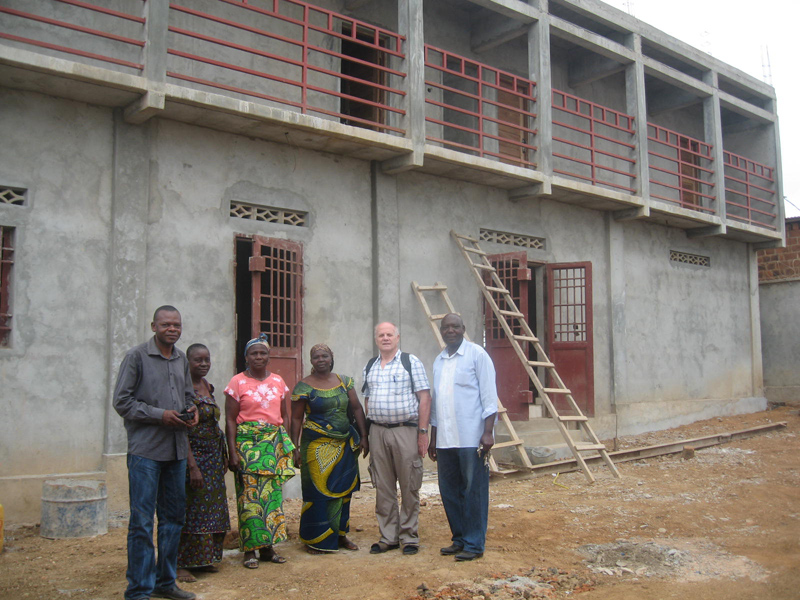
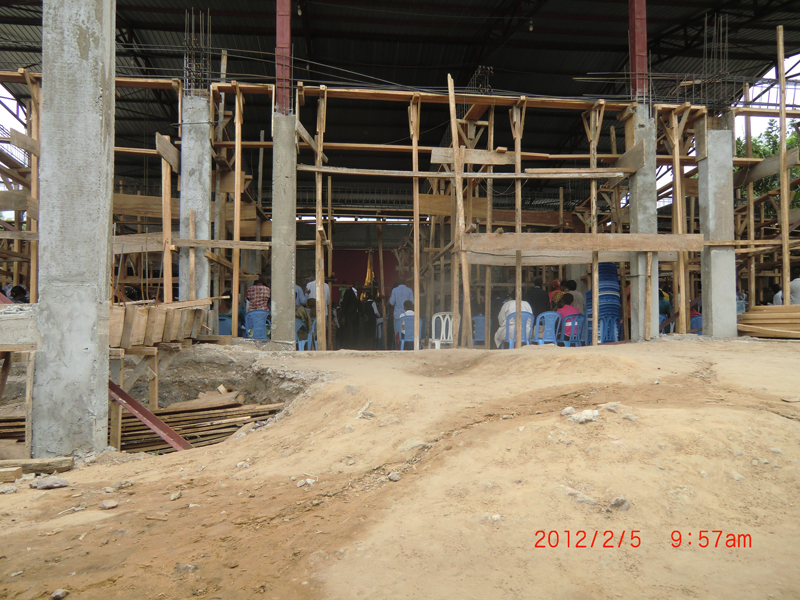
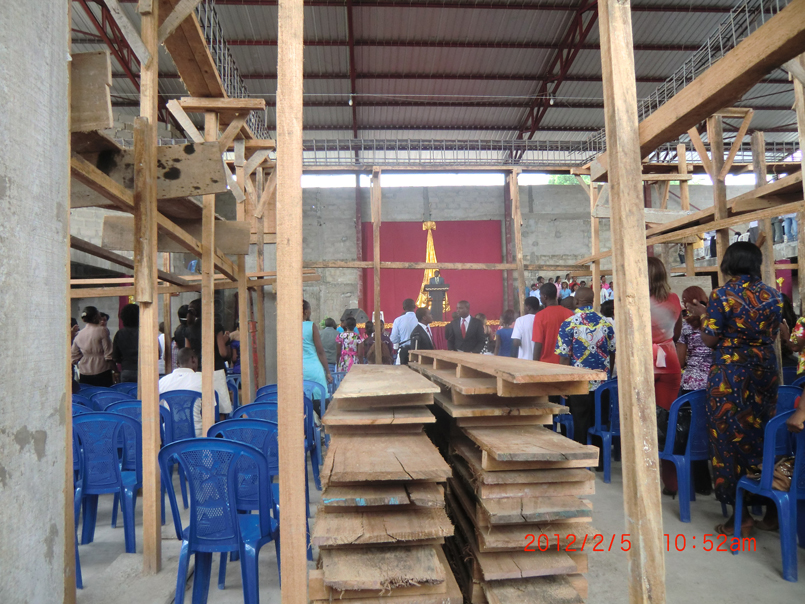
We arrived at a church that also is a building site. Being a building constructor myself, I am always interested in the way buildnings are put together. The framework was made of steel, and the roof of sheet metal. The walls, mortared in concrete bricks were halfway finished. At the moment, the builders were engaged on forming the beams that will carry the gallery. Below the gallery, there were much shoring, that is struts that holds the molds of concrete in place. Within the walls, there was room for about 400 people. We came around 10 o´clock, when the first service already was going on. The language was Lingala. At 10.30 the second service started, in the languages French and English. While we were waiting we sat down under a roof outside the church. The children who had participated in Sunday school waited with us, but they were waiting for their parents. The style of the service was joyous, with a lot of singing and great committment in what was taking place. We were very well received and we were asked to write a little about who we were and what we are doing in Congo. One hour later we left for Kimpese.

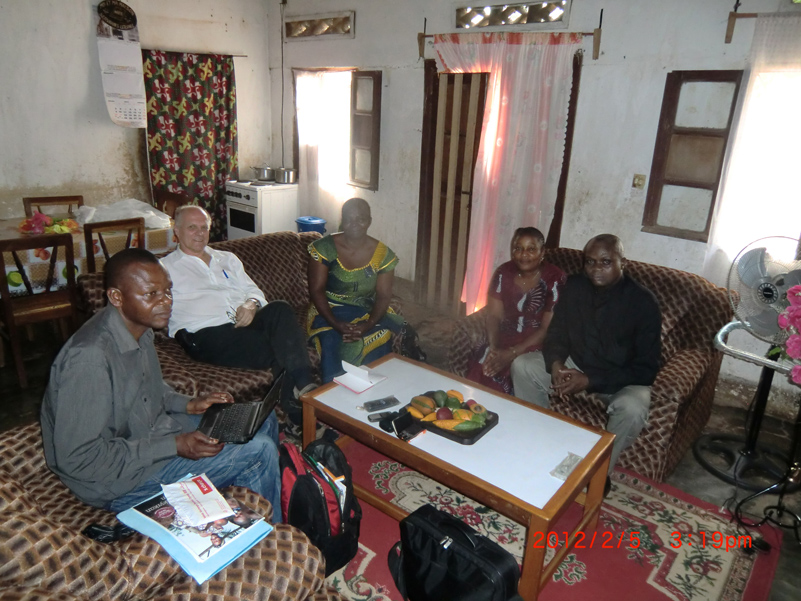
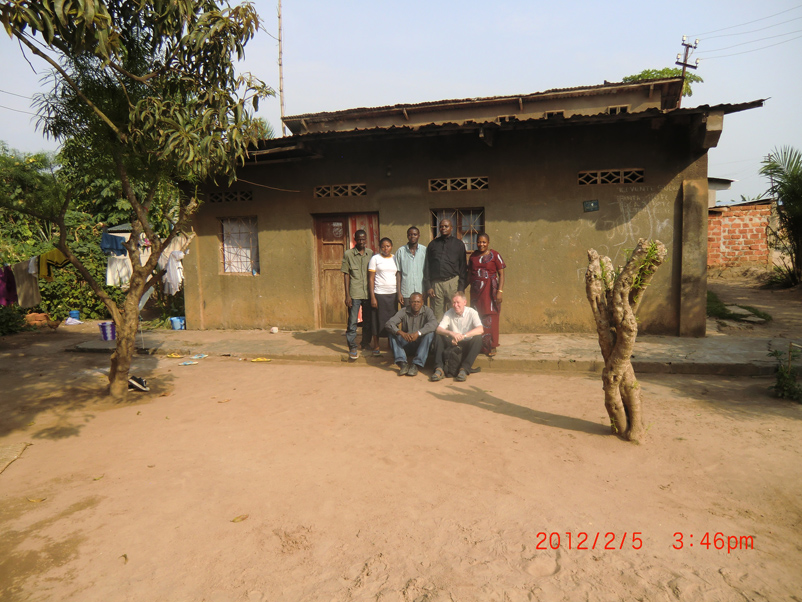
We made a stop in Inkisi. Damas Mangikulua, former pastor of the Baobab Church, has been moved here. He belonged to our first group of entrepreneurs. It is one part of the follow-ups to meet and check to see how the entrepreneurs are doing. Damas has suffered two difficulties as an entrepreneur; firstly he was moved and had to leave his old fields, secondly he has been affected by the draught. He has had to start over again in the new place, and that is why he hasn´t been able to follow the payment plan. We drew up a proposition to a new plan, which will have to be authorized by his group and the board of MSG in order to apply. Damas´ wife Npenba offered us cold Coke and other soft drinks, together with bananas and peanuts – a perfect snack!

We arrived in Kimpese at 6 o´clock in the afternoon, where we were going to stay with Nganga Diamfunisa and his wife Thresia, a very nice retired couple. Their house had all the comforts you can need, including an air conditioning. For dinner we had goat meat, rice and manioc, for dessert bananas, all of it was very delicious. After the meal Nganga drove us to Emy Miantezila. We had a good chat with him and his son David about family farming.

When we got back, I could show hour hosts how to call anywhere in the world with the help of a computer, and at no cost. We talked to Anders in Grovare, Sweden and Aron in Moscow, Russia. Both conversations had excellent video and sound transmission.

Posted in MSG

Bitter medicine

The usual morning concert from the cocks in the neighbourhood woke me up at dawn. Under the tin ceiling, the bat traffic was quite intense. They cruised skillfully through the roof trusses. From my perspective underneath the mosquito net, I had a good handle of what was going on.

When we had our breakfast porridge, the neighbour Budri arrived with some figures we had needed his help to acquire. He had compiled an extensive report on several A4 pages. Neighbourliness and helpfulness seems to be in good shape. We added his report to the material we had compiled to the meeting with the Nsanda Group.

At noon, most of the group members had arrived, and we gathered under a palm tree. Nine of thirteen partners were present. Some of the absent four will probably have to leave the grop. The present members expressed something in that direction. If the person is absent from work as well as meetings, there is not much hope. One of the present members declared interest in taking over parts from members who drop out.

We had a bitter medicine to offer the group. There will be no harvest of peanuts and soy beans in February, which means loss of revenue of about $ 5 000. The five hectars of peanuts and the three hectars of soy beans that we sowed in October are lost. Our proposal is to plough another two hectars and sow piripiri and beans. That means that everybody must fulfill the obligations agreed upon from the start, and contribute $ 340, either in labour or in money. The members who have missed to fulfill their obligations during the last five months now have an opportunity to correct themselves. This will be followed-up from month to month. All the present members showed determination to continue.

Today, we tested to use Skype, first between two computers and then between computer and regular telephone. The first alternative is free, and the other costs 0,21 SEK per minute. When we were working on our computers today, there were two power failures. One of them was so lenghthy that even the battery of my laptop died. Power is now back, and my solar cell lamp supplements the electric lighting and makes my work space lighter and more work-friendly.

Posted in MSG

A rescue plan

Today, we were awakened by two cocks performing a morning concert. They seemed to be competing for the title of the most vociferous fowl. At dawn, the songbirds added their vocal parts to the concert.

Before noon, we had compiled our cost estimates and forecasts for the solar cell import business. Then we visited the head office of ProCredit Bank in Kinshasa and had a productive meeting with Kasuda Mindan who is responsible for business customers. He asked Tutondele to gather further information to complete the application for a loan. We gave Mr. Mindan an introduction to MSG, and made plans for continued cooperation with the ProCredit Bank in Matadi.

Next meeting was with Olle, who has more than thirty years experience of working in various African countries. Since last autumn, he is stationed in Kinshasa working on developing large-scale forest industry. An hour’s talk with Olle gave us some useful information about working in Africa.

During the afternoon came a tropical rain with thunder, at last! Let’s hope the raining will continue.

We prepared tomorrow’s meeting with the Nsanda Group. We will present a rescue plan that will require some sacrifices. The neighbour Budri, who is agronomist, will assist us in taking out some figures on agriculture. Tomorrow, we will see how our plan will be received.

Posted in MSG

No harvest in February

Yapeco and Julienne are cooking porridge

The day began with desk work, I had an annual meeting report to write. Then I had a shower using the scoop-and-bucket method. Tuto´s bathroom is not finished yet, but that will be changed as soon as the finances permits. Today it is equipped with the indispensable toilet and drainage. All water handling is manual. When we were going to shave, we realized that the bathroom didn´t have a mirror, but Bernt and I agreed upon that we didn´t miss out on any aestetic experience. The breakfast menu was according to our wishes: porridge, milk and bread.

Before noon, we went through the Nsanda project. Five hectars of peanuts and three hectares of soy beans had withered, thus there will be no harvest from these crops in February. There has been no rain since the beginning of December. We had some rain Monday night, but it was too little to make any difference. The eight hectares of manioc seem to be alright, but it is harvested at the end of the year. We reviewed the commitment of the Nsanda partners, and noted that some of them had not contributed according to plans. When you are facing a crop failure it is easy to loose initiative. Now, it is important to make the necessary efforts, break fresh ground and sow again. We have to focus on the possibilities if we want to reach good results. For the meeting on Saturday with the entire Nsanda Group, we are preparing a list of efforts that every one must put into the project.

Tuto and another computer engineer are compiling a list of interesting solar cell components. The list will be a starting point for an annual budget and an estimate to show the bank.

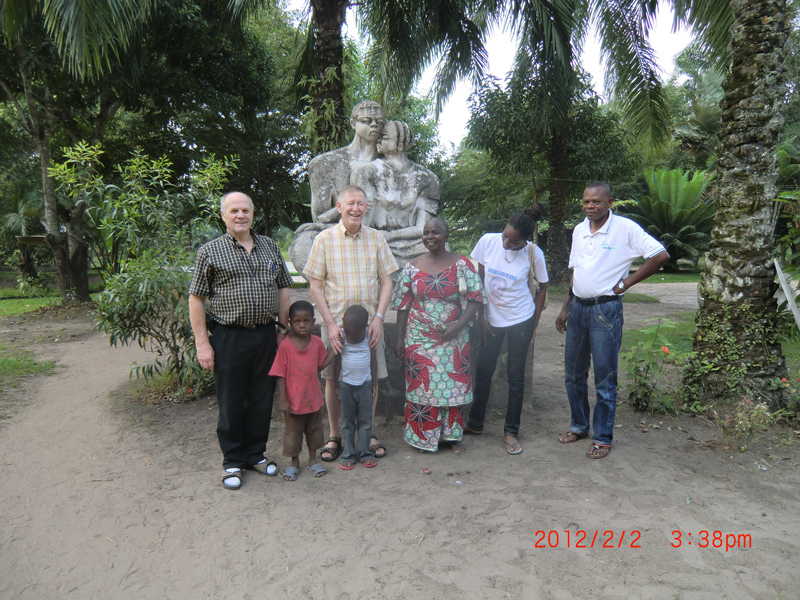
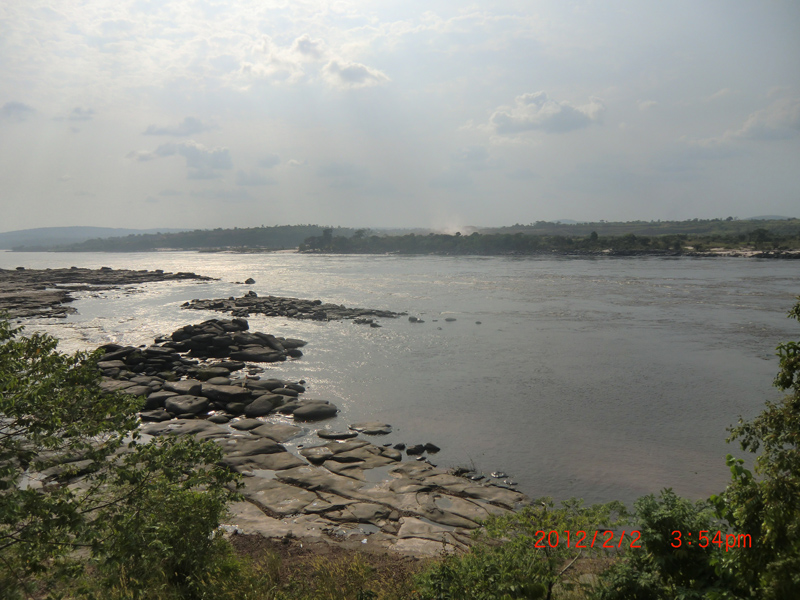
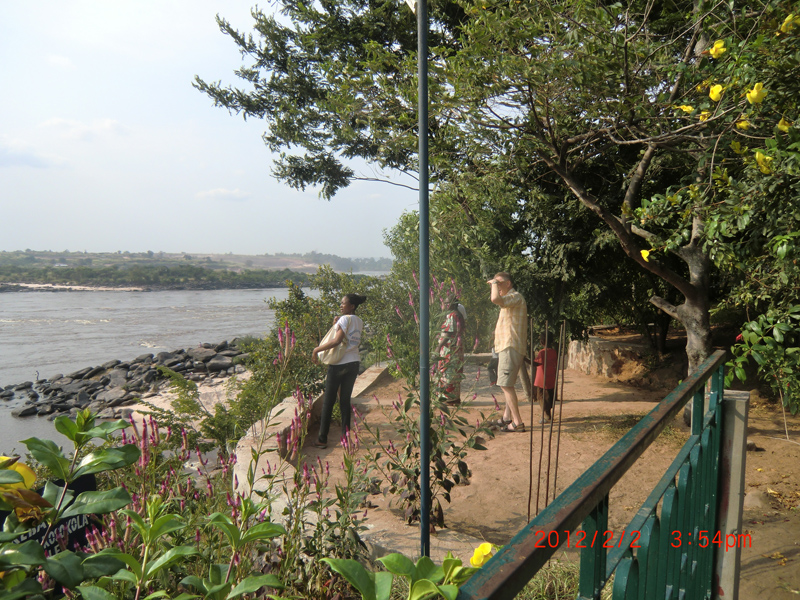
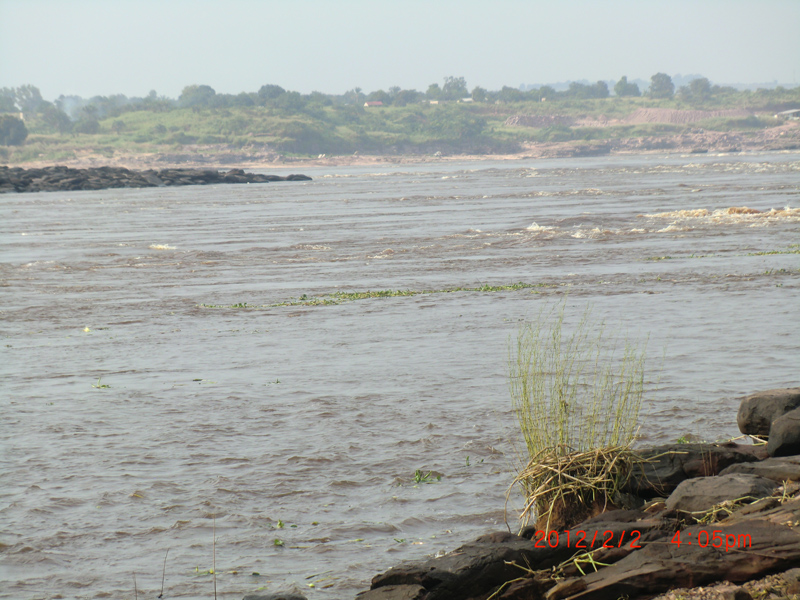
In the afternoon, we took a walk to the park Mbudi Nature. It is situated by the Congo river. From the house where we stay, we have about 650 meters to the river. Five-year-old Merje and his best friend wanted to accompany us, and they held my hands during the entire walk of two hours. There were several activities going on in the park, but the heat diminished our need for further activities than walking. Along the park, the river would be an excellent white water rafting site. The water is running by rapidly. Maybe that could be a future tourist attraction, as tourism is an industry that could provide many jobs. The need for employment is great in Congo.

P.S. For supper we had thin pancakes, fried on wood charcoal, with strawberry jam.

Posted in MSG