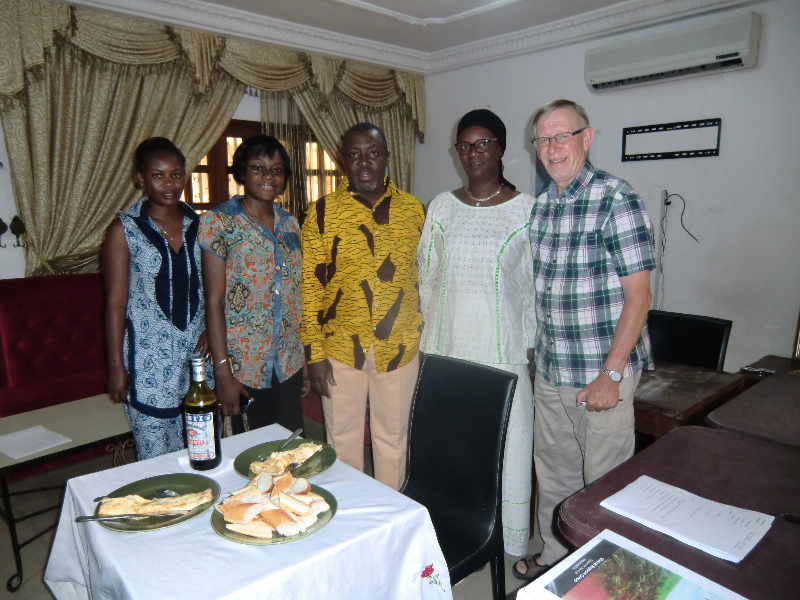
Thunder and rain

The four legs hotel guest has parked in a armchair

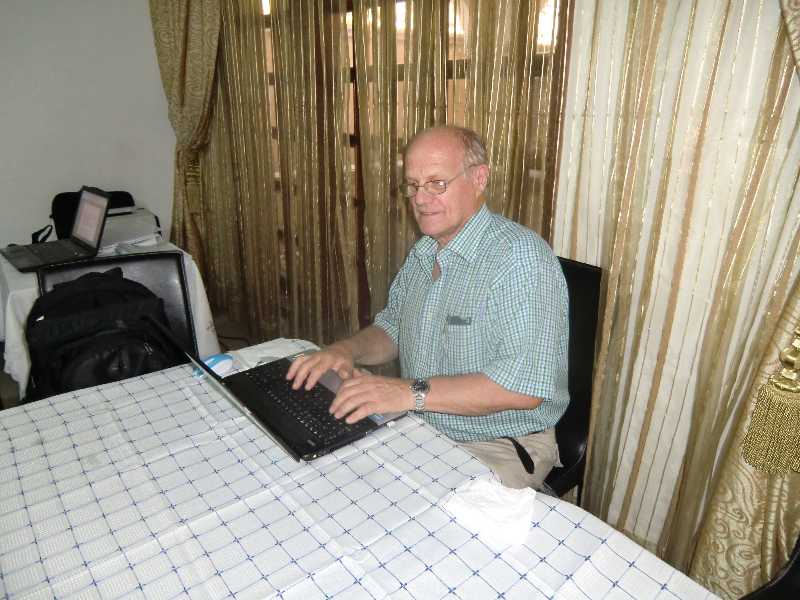
The day began with thunder and a steady, though not heavy rain. When I came out of my hotel room at 5 o’clock in the morning it was about 25 degrees outdoor. Now, all plants must be growing like mad. No wonder that an acacia seed becomes a tree, suitable for sawlogs, in just 15 years. There are huge opportunities for profitable forestry. Today, forestry is just a small part of the Congolese economy.

Congo’s way of conducting forestry might not be surprising. Instead of using forestry to the benefit of the whole country, the government allow foreign companies to harvest and export the forest products. Yesterday Paul, one of our participants complained loudly about these conditions. Local people get no possibilities to make use of “their” forest. The foreign companies are interested in the kambara, limba and carbon, trees that can become around 1 m in diameter and commands a high price.

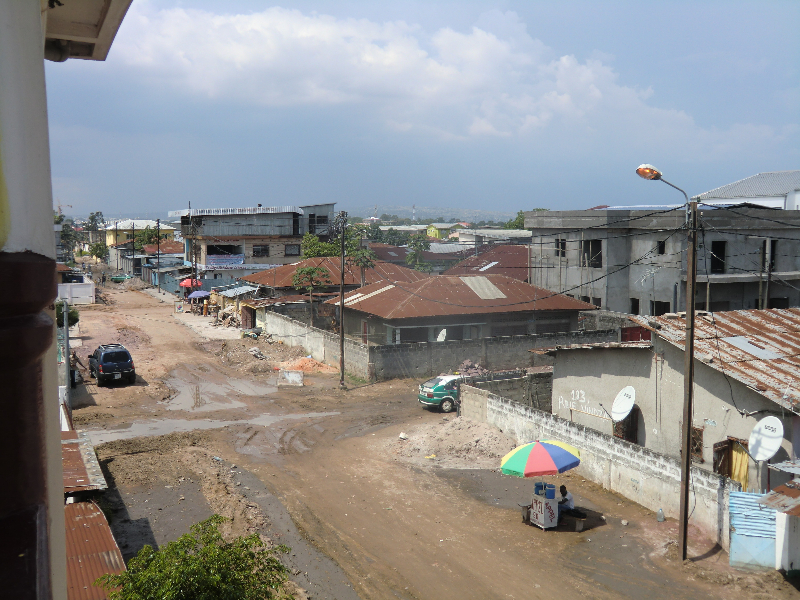
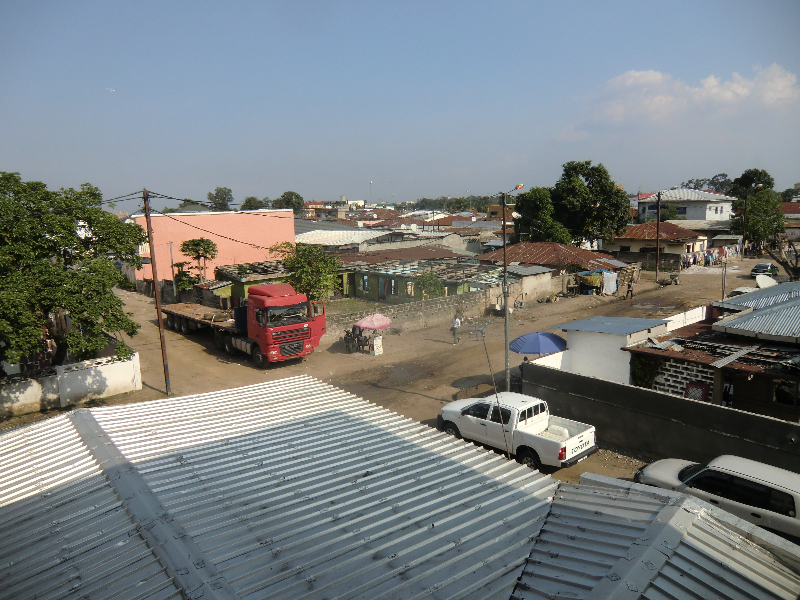
When I looked out after the morning’s desk work, the street outside the hotel had all the characteristics of a canal. There were little islands here and there, and the pedestrians jumped between them in an attempt to remain dry. On the hotel entrance floor there were small streams, but there will probably not be any property damages because the floor consists of tiles and concrete, and there are drainages in several places. You only have to push the water to the one nearest. The neighbour of the hotel was in the process of building a provisional wall to stop the water from entering his house. Across the street, a store owner scooped water with a plastic bucket over his provisional wall formed like a semicircle outside the entrance.

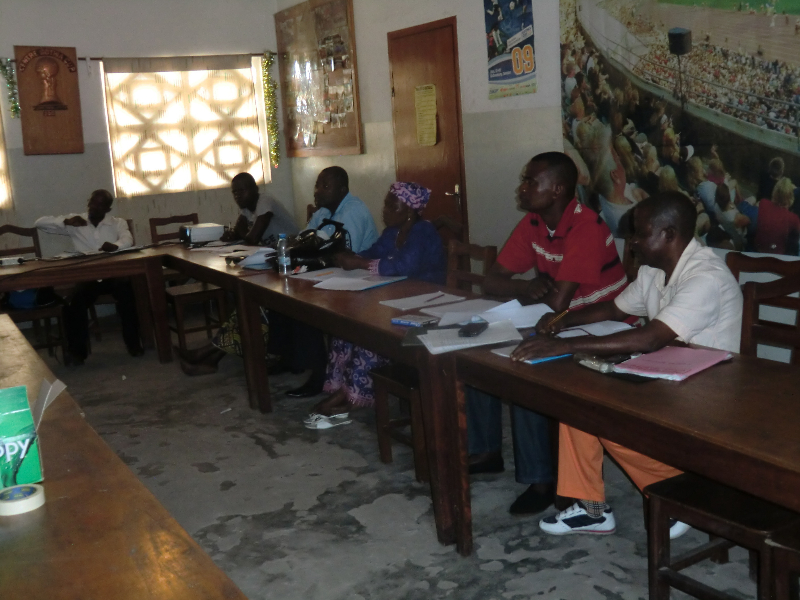
At 8 a.m. there were three students in the classroom. Three hours later all but one had arrived. On a day like this, there are valid excuses for late arrival or absense. It is not easy to go anywhere when a lot of things are floating around in the streets, and low-lying places are flooded. You have to face the whims of nature with some patience.

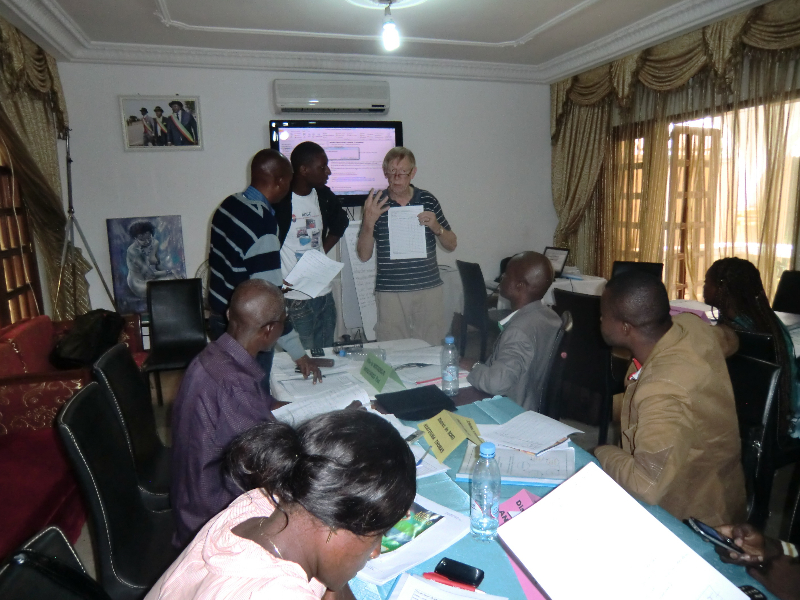
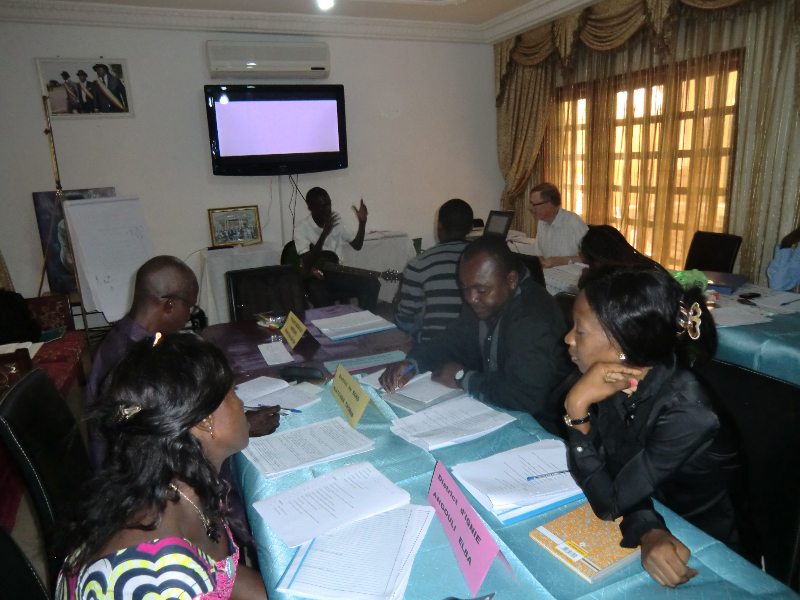
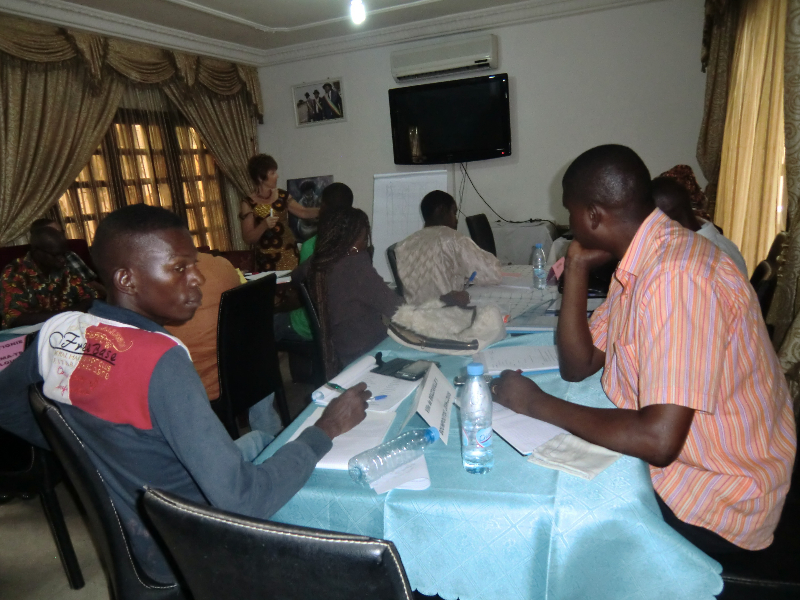
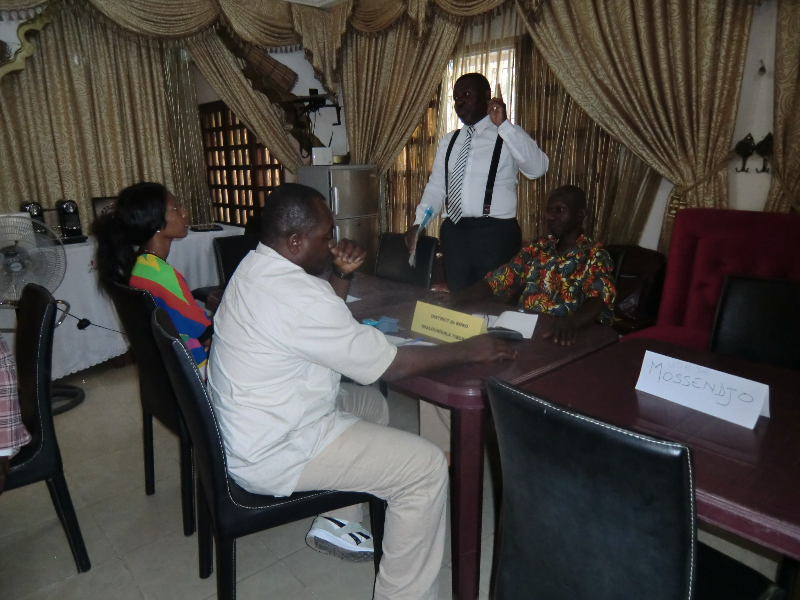
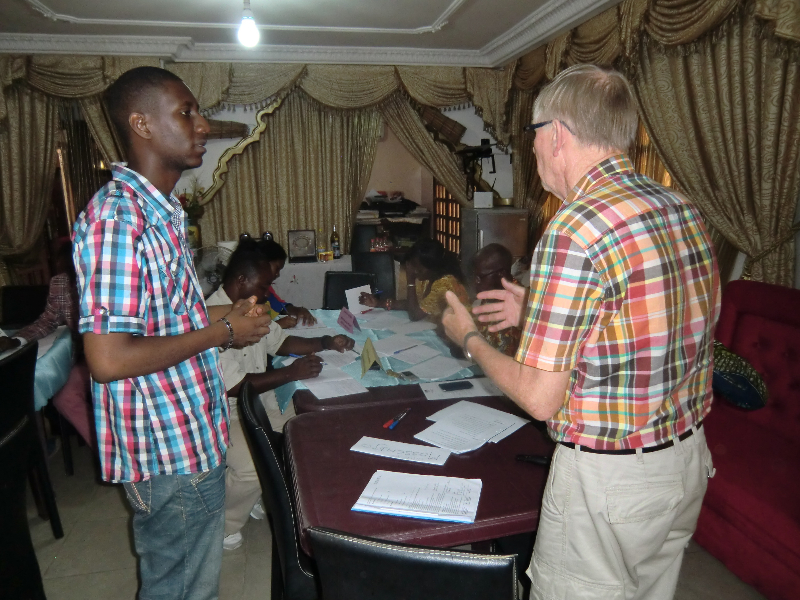
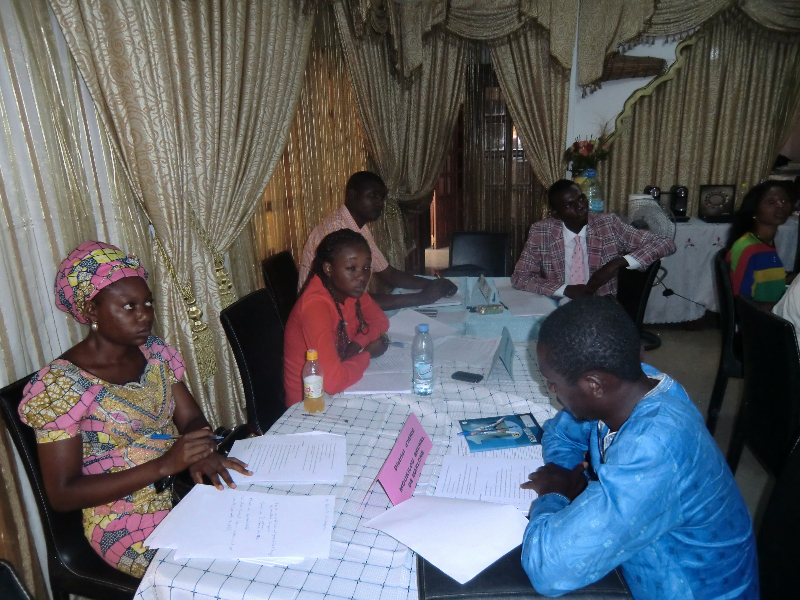
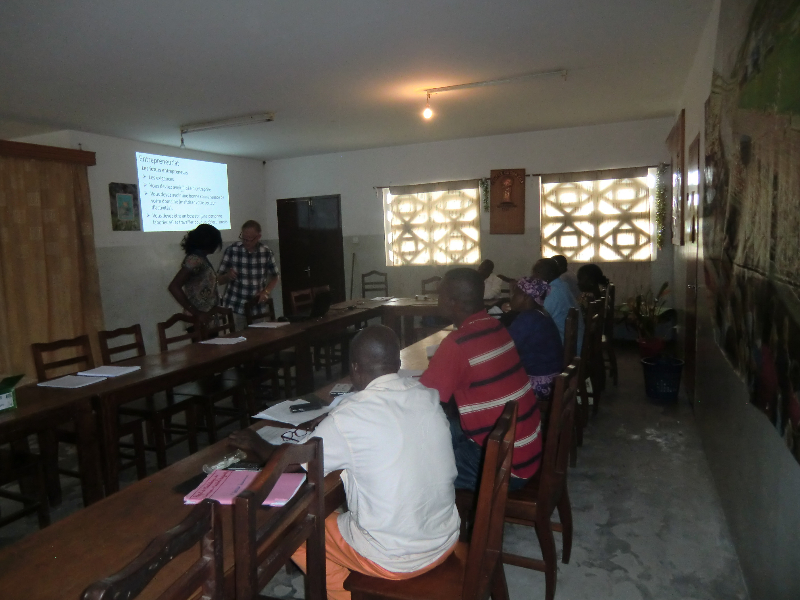
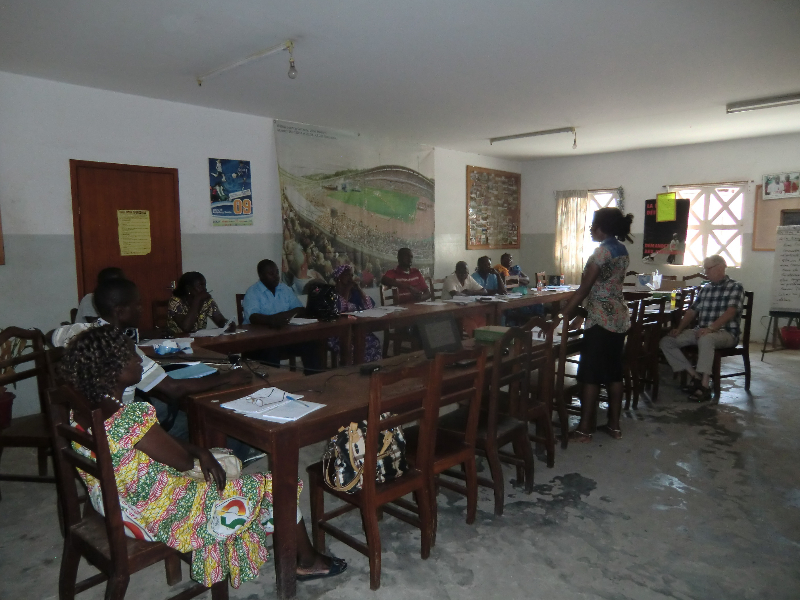
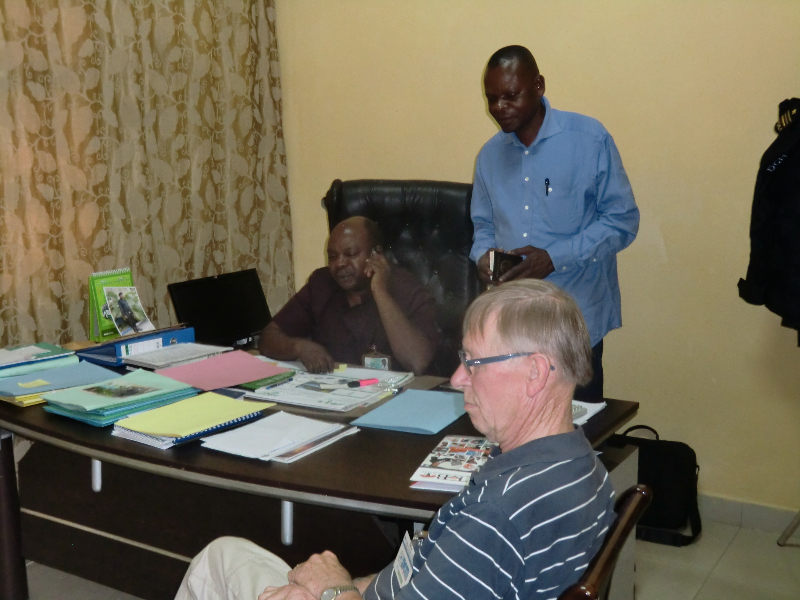
Today we worked productions cost estimates and in class, the participants got the assignment to calculate the cost of a farm with 5 acres of cassava, corn and peanuts. The assignment was more difficult for our friends than we had thought it would be. They tended to confuse costs and revenues. It was also difficult for them to understand the units of measurement that were use. For example, the concept of measuring the work effort in “man-days”, i.e. “one person, 8h work” was not entirely clear. Besides the confusion of concepts, we had some minor difficulties to maintain order in the class. We would prefer that one person speaks at a time, but the group sometimes resembles a Polish parliament. But as soon as we ask sincerely for their attention, they listen.
Posted in MSG

A troubadour

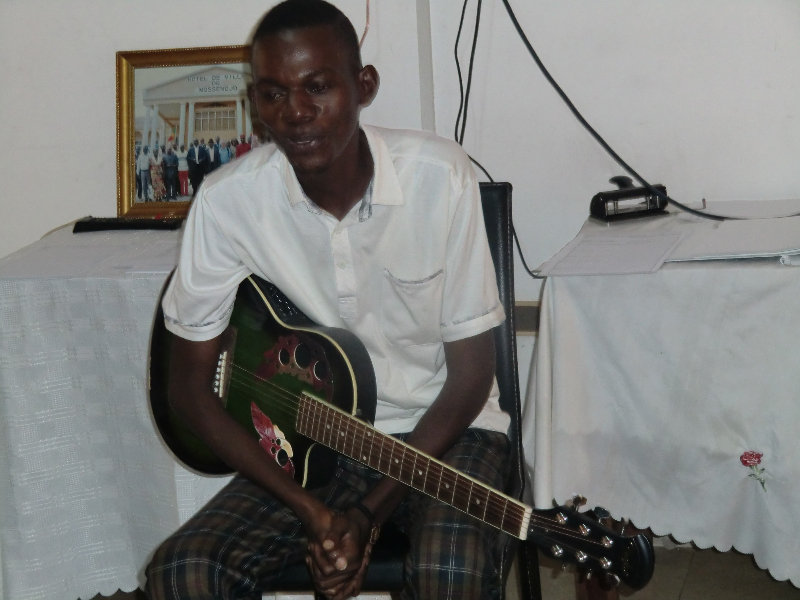
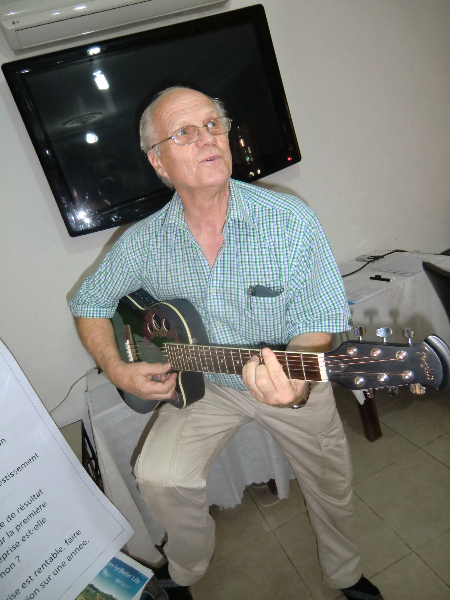
The Troubadour N´KANZA GUY HERBERT

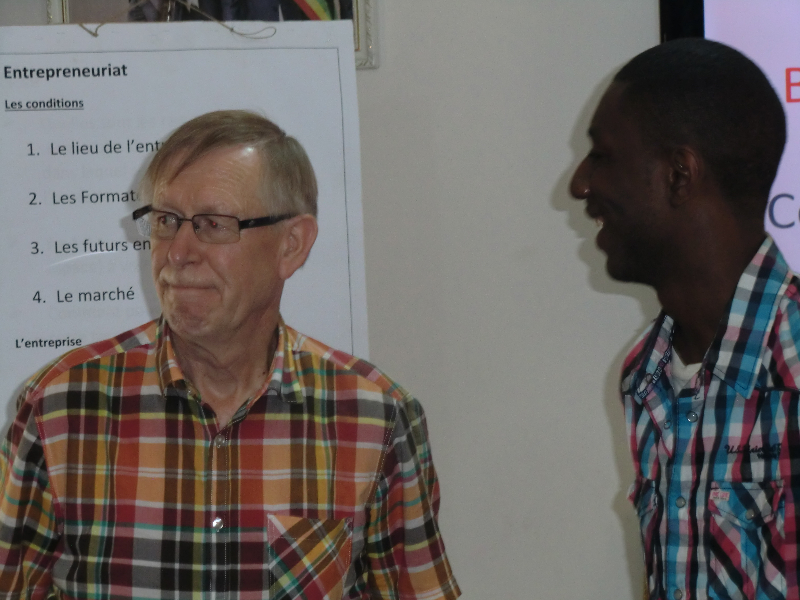
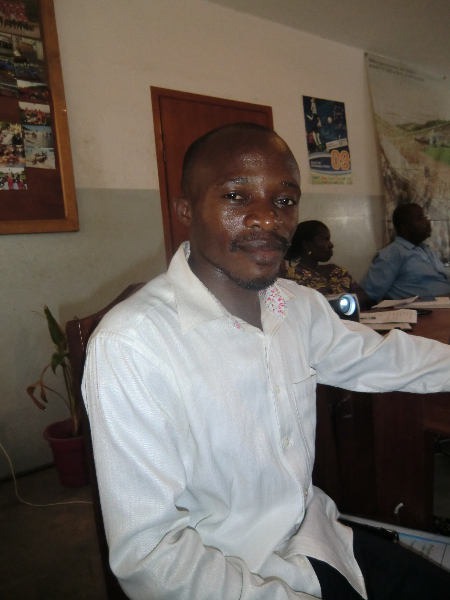
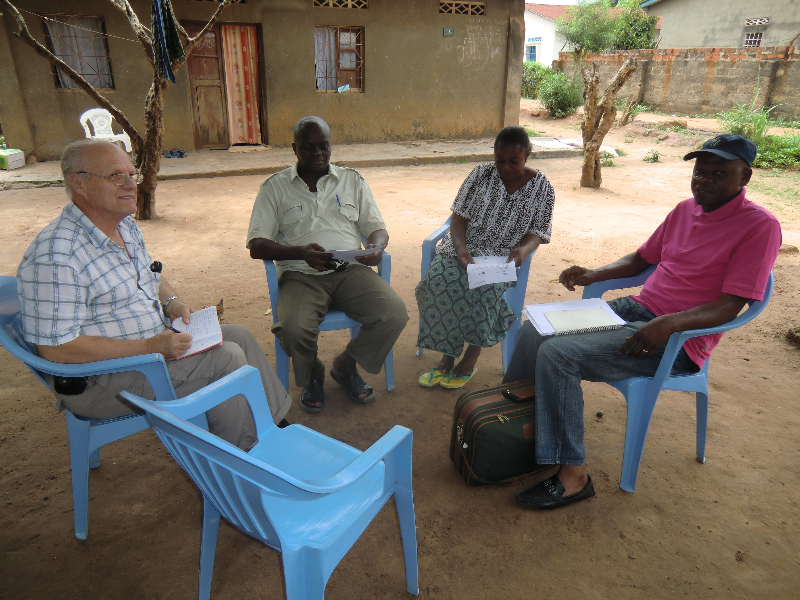
One of our participants, Herbert is a music teacher and a guitarist. I asked him yesterday to bring the guitar and he started the lessons with playing and singing to us. The performance was appreciated by everyone. During the two first days, we have studied the conditions of a company. We have looked at the geographical area, the person who educates and supports the entrepreneur, the entrepreneur himself/herself and finally the market of the company. The company is shaped by these four factors.

Today we looked at different kinds of ownership of a company as well as different types of businesses, trading companies, service companies, manufacturing companies but also agricultural companies. We have talked about the control function of the company in which the owner – entrepreneur has ultimate responsibility. He or she ensures the orderliness of the business, especially in the form of the book-keeping that shall show what works well in the company and what doesn’t work.

We have also talked a lot about understanding the value of money, by which we mean that it is an utterly essential asset in a company. In other words, you need to save some of the money you make to be able to keep your company going. Those who do not save money for investments in the company have little or no opportunity to develop their businesses. Maybe the only way to understand the value of money is to work hard for them. Then you have personal experience of how long it takes to earn every dime. Unfortunately, MSG have made ​​the uncomfortable experience that it can be difficult to understand the value of the borrowed money. Easy come easy go, and where MSG expected the entrepreneurs to have at least a somewhat profitable enterprise, there was nothing but debt.

Development was our next topic. To start your own business on a small scale with your own money is probably the best way to become an entrepreneur and a business owner. The development potential is less dependant in money but more of good ideas. If you have a full wallet and no ideas, your wallet will soon be empty as well, however, if you have an empty wallet and your head full of ideas, then the wallet might be full eventually.

We talked about the responsibility of taking a loan. Every dime has to be paid back with the addition of interest If you are in debt you are not free. Then we talked about the issue of maintenance and upkeep of the equipment of the company, cars, tractors and other machines. On this point there is generally a lot to be desired. Taking care of equipment does indeed save money as well as provide increased profits. Here, there is money to be saved.

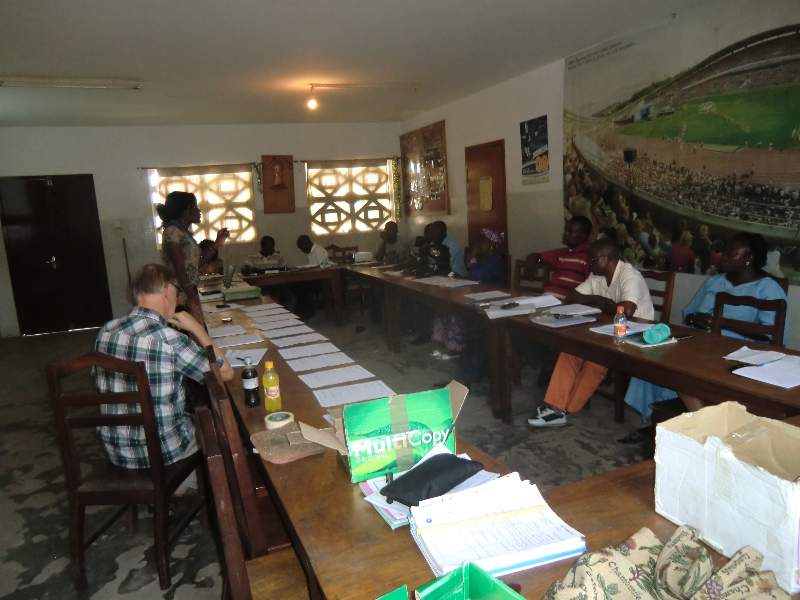
Then we went through the foundations of minimizing costs and maximizing revenue – an extensive subject and an important part of entrepreneurship. So far we have given them seven different financial statements to review. Most of them will become homework. Because of the amount of paper I hand out the group has given me the nickname “Monsieur Papier”. Our own troubadour finished today’s lessons with a wonderful song that even resulted in dancing, and then he led us in prayer.

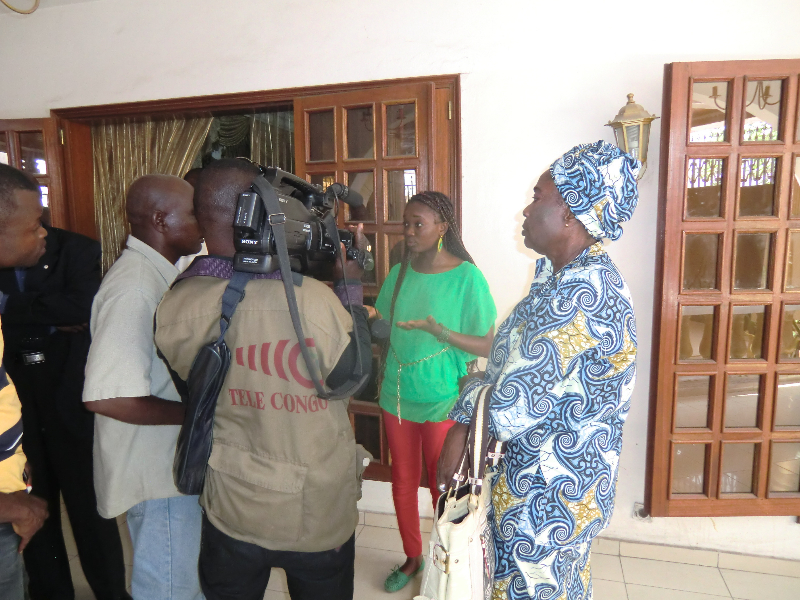
Today we were visited by two TV teams who also made recordings. One private and one public television company. They made the recordings in Lingala, Kikongo and in French. They broadcast in all three languages​​.

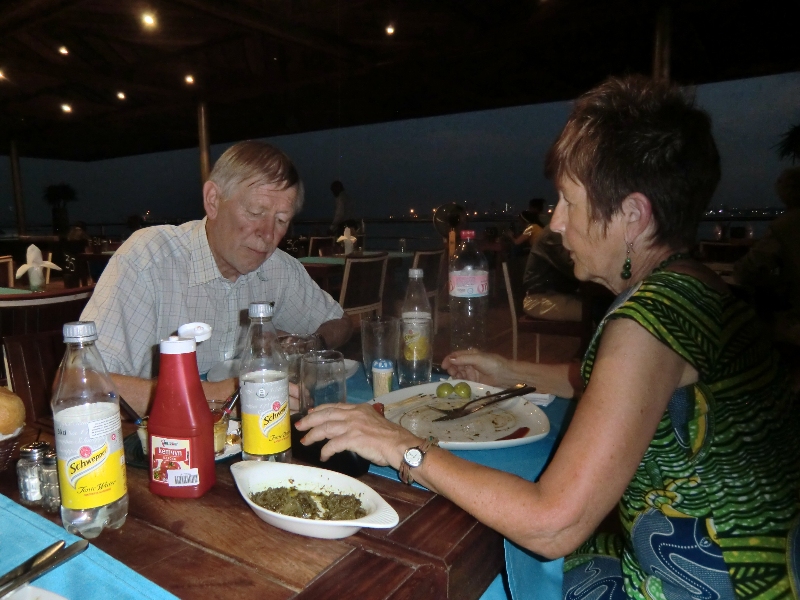
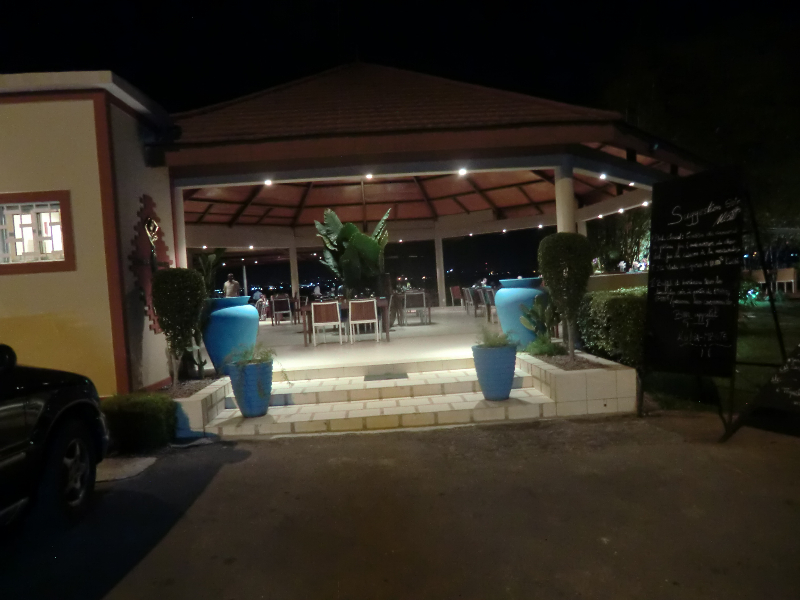
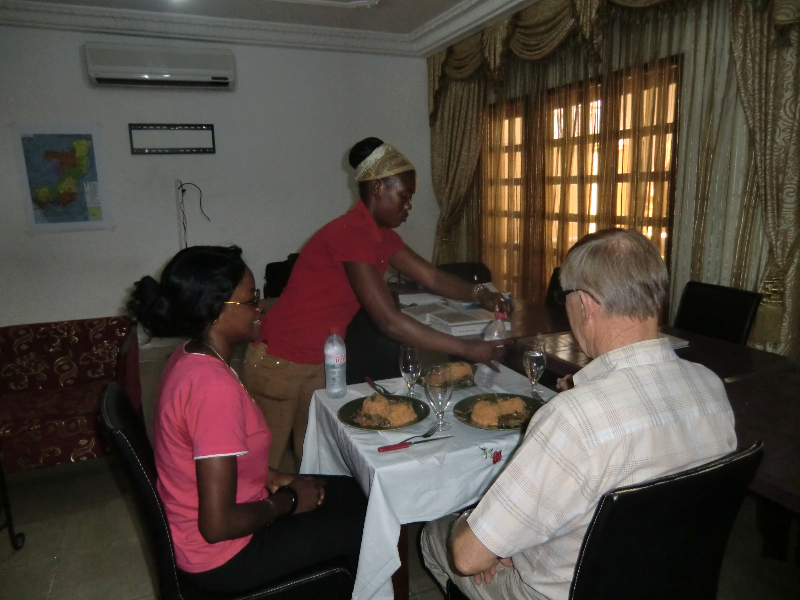
After our workday and a short rest, we went to the restaurant Mami Wata with Astrid Stålberg. It is beautifully situated by the Congo river. We sat on a terrace right on the water. Bernt and I had grilled beef with fries and Astrid took sakasaka with chicken. Astrid thought that we needed to get out a little and see the town, and we agreed with her.

Posted in MSG

The second day

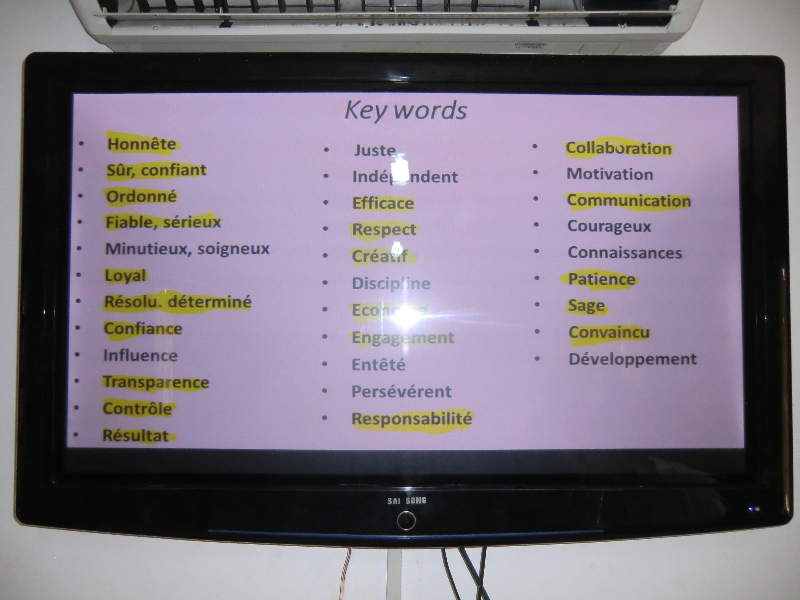
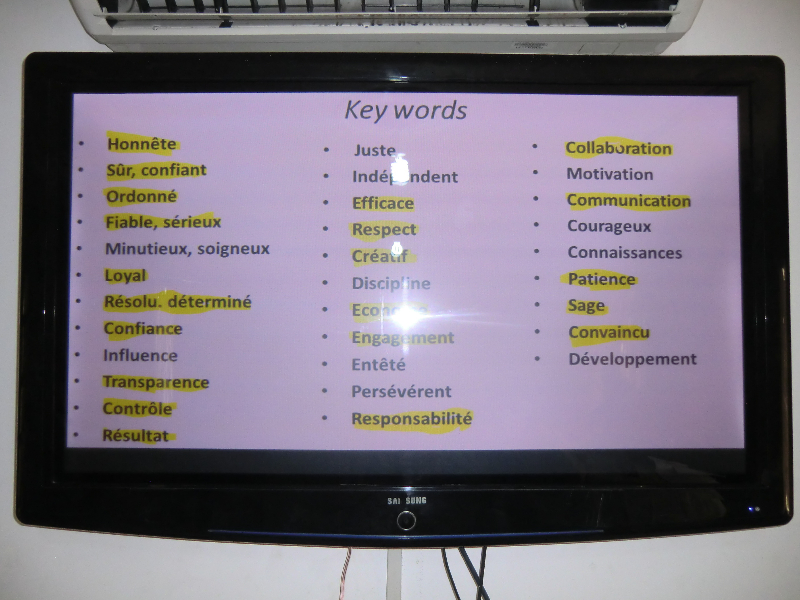
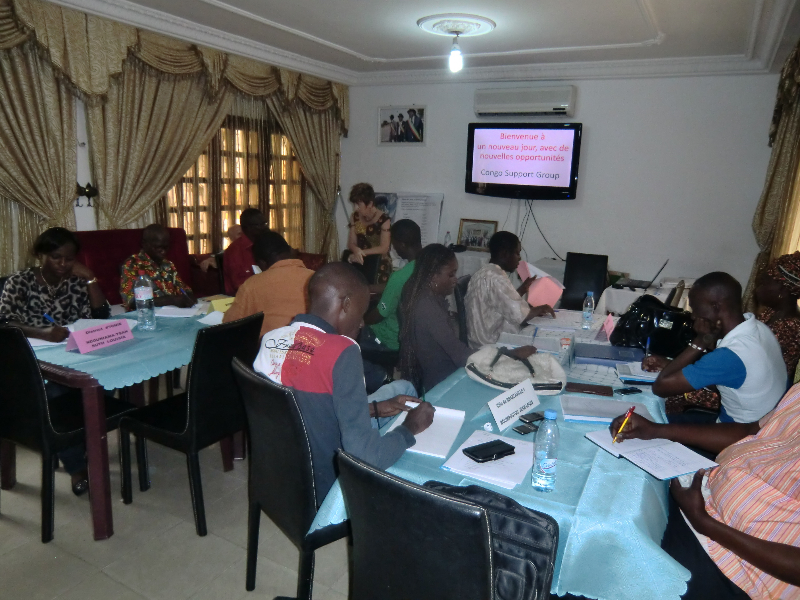
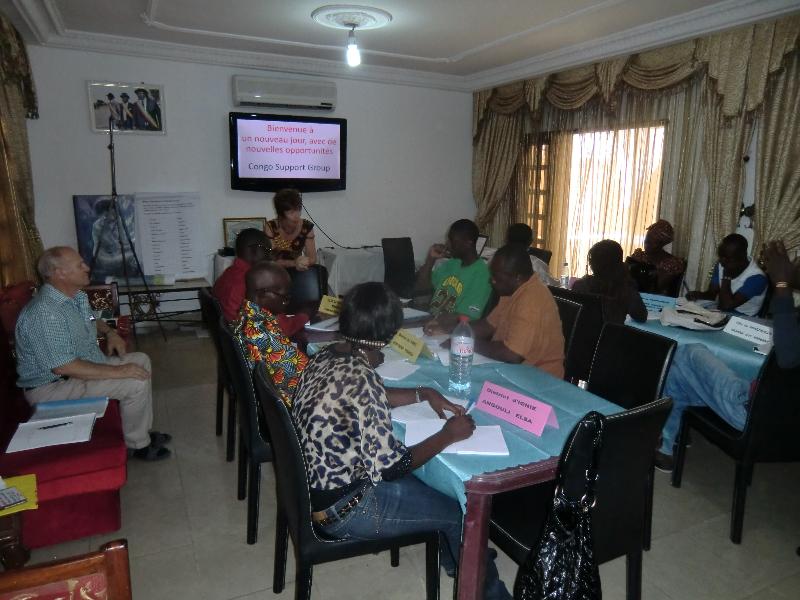
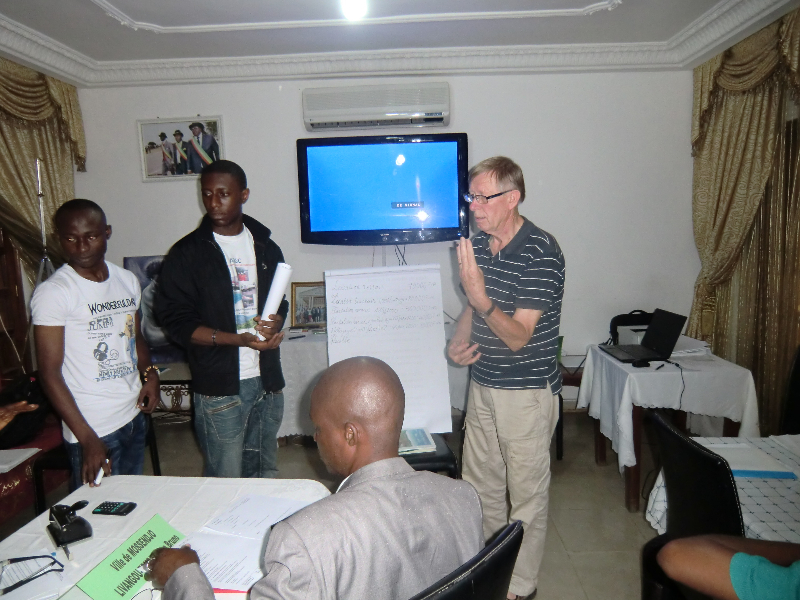
Today, the text on the TV screen said “Welcome to a new day with new opportunities.” We started with the oral presentations of everyone’s five most important key values​​. The participants were also able to talk about other words in the list or a word of their own proposal. All the key values should be life orientating guides. Honesty was the most popular key value in the group. Honesty is also the word that best sums up the other values. If we are to influence others, we must live by these values.

We went through what is considered entrepreneurial competencies and they are: initiative, responsibility, transform ideas into action, curiosity, self-reliance, creativity, courage to take risks, make decisions, communicate, collaborate, capitalize on opportunities and changes, develop and create value.

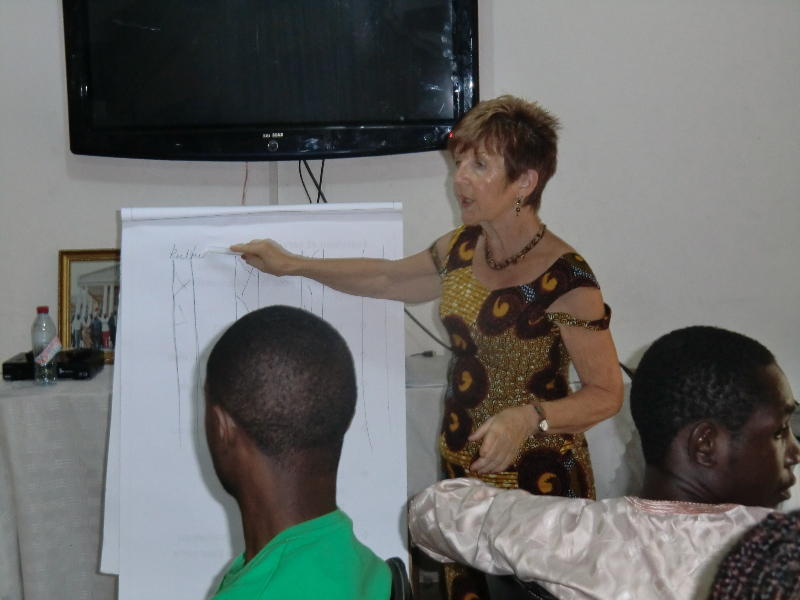
At 9.30 a.m. Astrid Ståhlberg came. She stayed until the end of the lessons, at two o’clock. She lectured on how small can be great, on the good that can be born out of a crisis, on failures that may have the merit of providing good lessons and insight, on good ideas being more important than money and that it is the ideas that create the successful entrepreneurship needed in Sweden and in Congo. Among other examples she told us about a shopping center in Harare that would be built and operated ecologically.

They wanted to avoid the expensive and energy-consuming air-cooling system and found their model in the animal world, in the way that termites tempers their stacks. The eggs must constantly maintain a temperature of 24 degrees. Termites have a sophisticated ventilation system that closes the channels towards the sunny side and opens towards the shadow side. The shopping center ventilation system was built after the termite cooling system. Astrid used many examples like this to concretize her message, and she gave many good examples of Congolese entrepreneurs who could serve as great role models for our group.

At the end, I asked if they would like us to finish with a prayer and I got an unanimous response. God’s blessing is also important for a Congolese entrepreneur.

Posted in MSG

The first meeting

One of the trainers

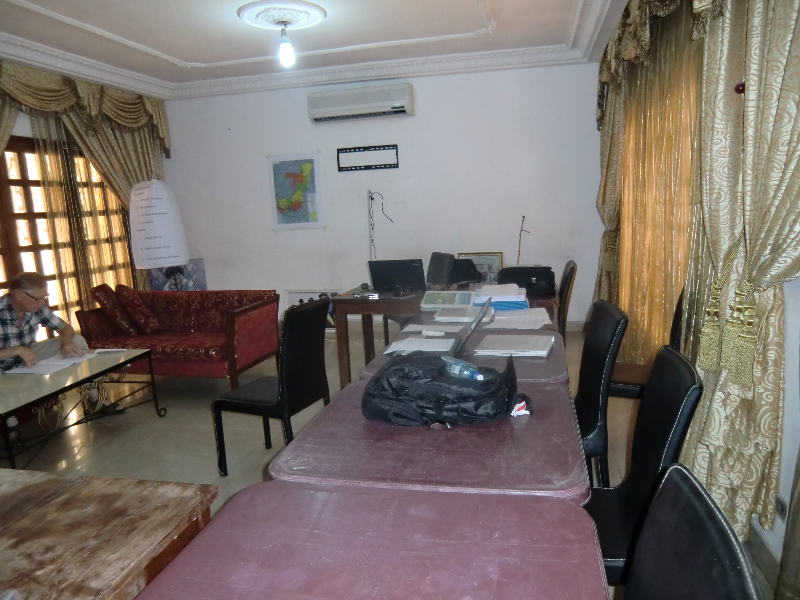
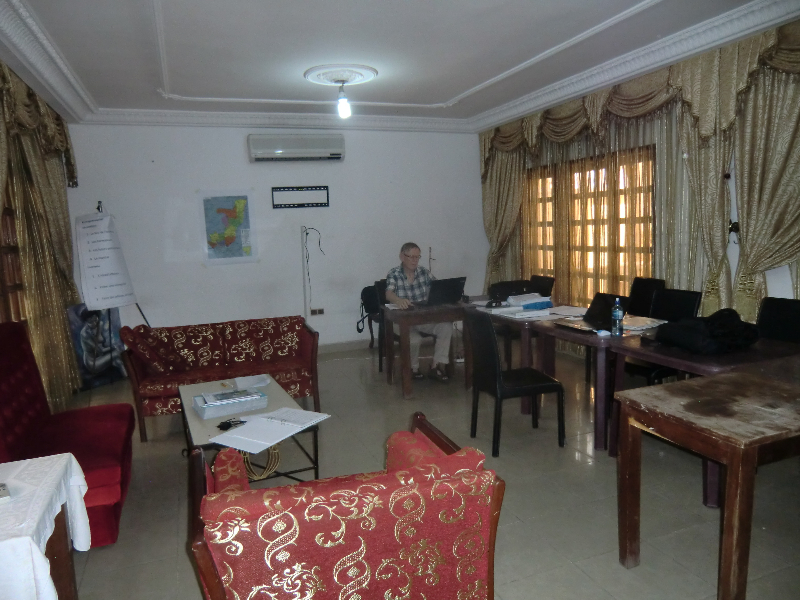
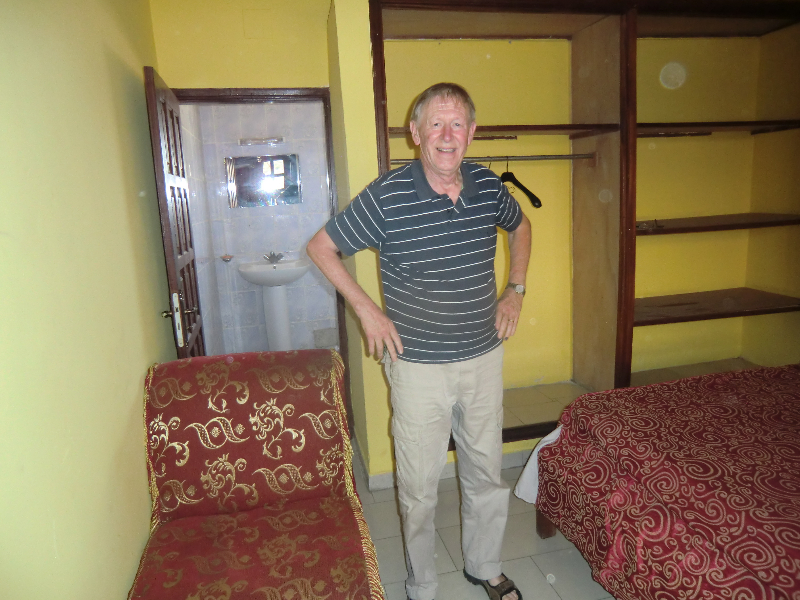
Today was the first day we had running water in the shower. We even had the possibility of choosing hot water, a luxury that we are simply not used to here. Furthermore, we have a well-functioning air conditioning and a broadband that seems to work now.

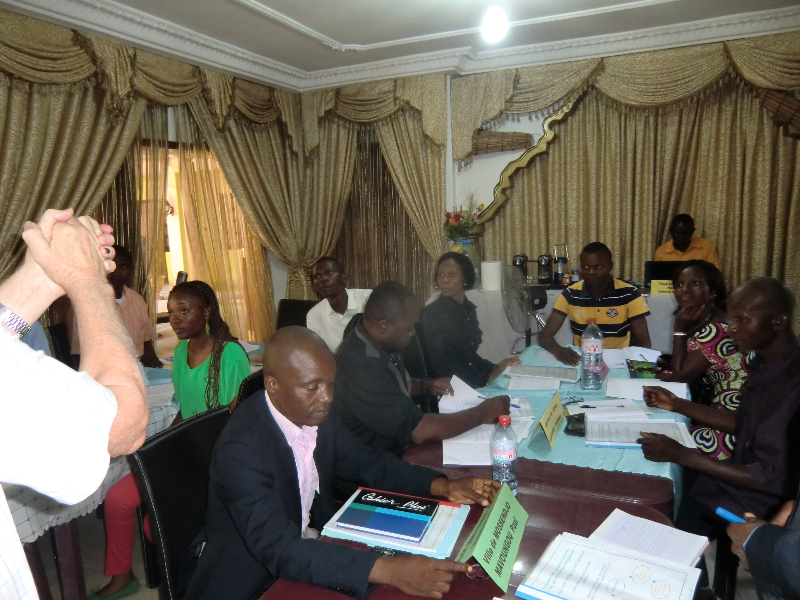
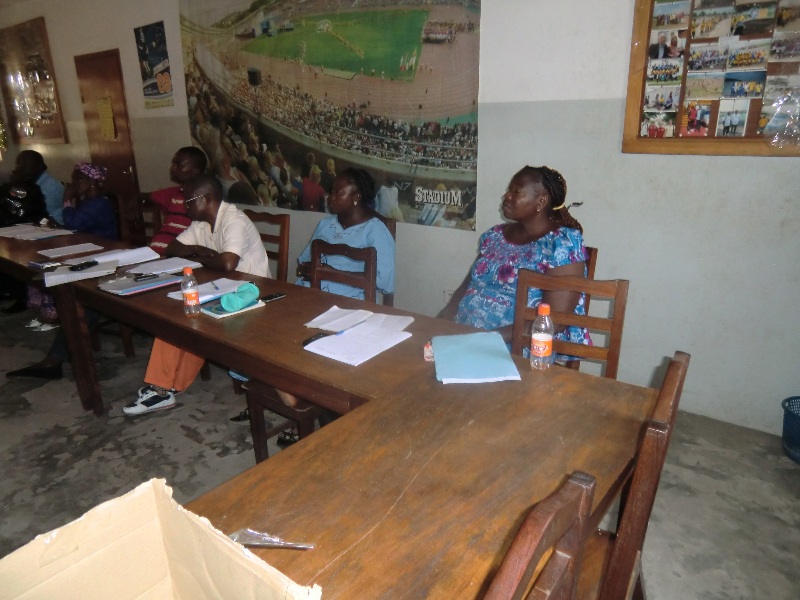
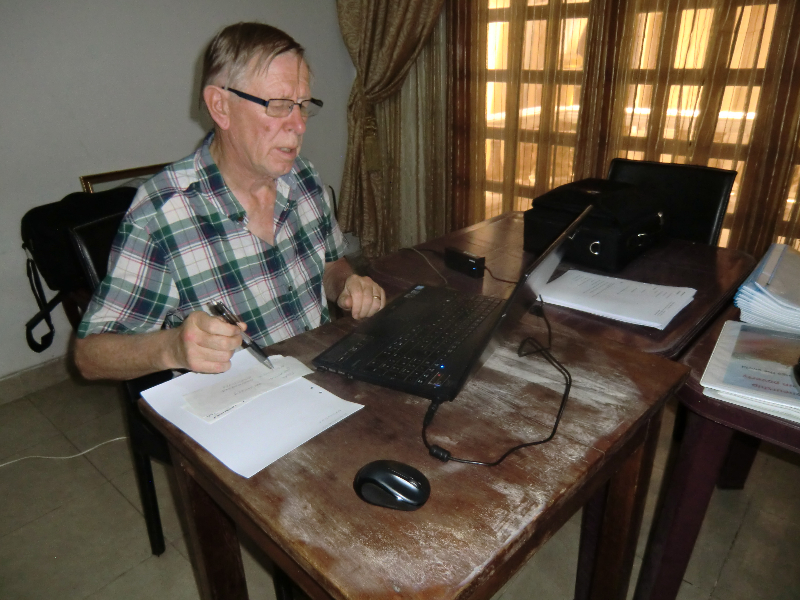
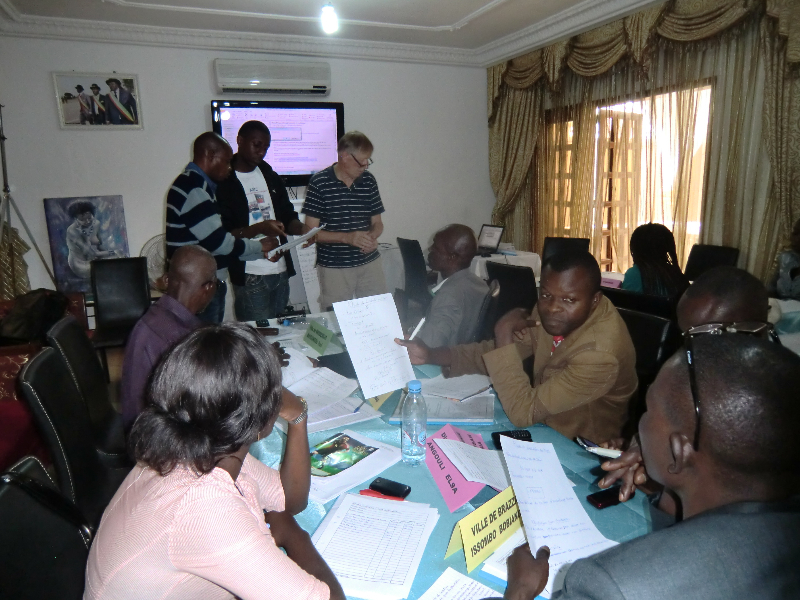
We had set our minds on starting the training 8.00 a.m. sharp today, but we have to admit that the clock became 9:15 a.m. before we started. We made ​​it clear, though, that we expect all of them to be on time in the future. Some had excuses, they had traveled here today from far away. But I am sure that if we had set the time to nine o’clock we would not have got started before ten. Today, the group consisted of twelve participants. Two more are joining us tomorrow. Then, there will be a total of four women and eight men in the course.
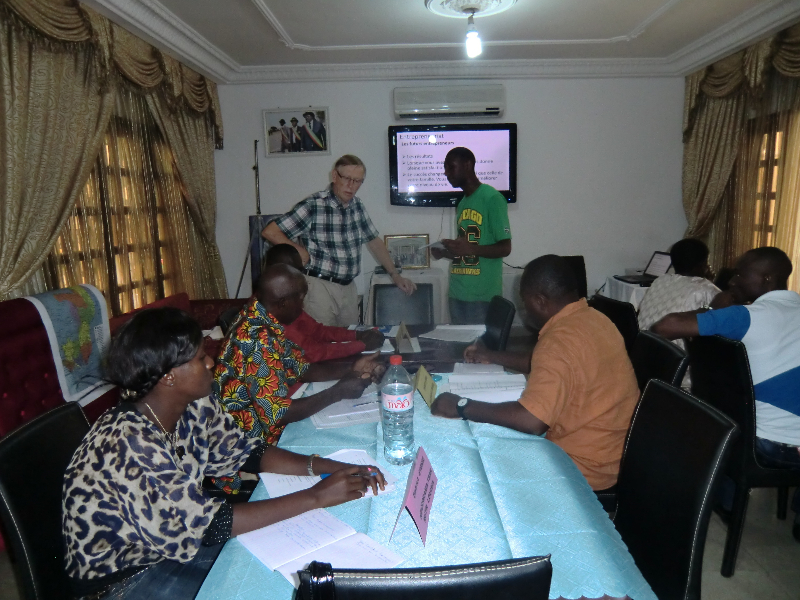
After the presentation we went through the first two chapters. The first is about the place they are from and where they will work as educators. We tried to analyze available resources, both natural and human. How is it possible to use the natural resources, refine them, giving them added value that can appeal to the market, and be turned into money. Most of the trainers are from the countryside and they talked a lot about different kinds of cultivations, but also forestry. For those trainers who are from the cities Brazzaville and Point Noire there are other opportunities. They can involve various types of service and trading, such as shops, restaurants, hairdressers, garages and bookkeeping bureaus. In homework they got a form where they should report the possibilities and difficulties in their respective geographical areas.

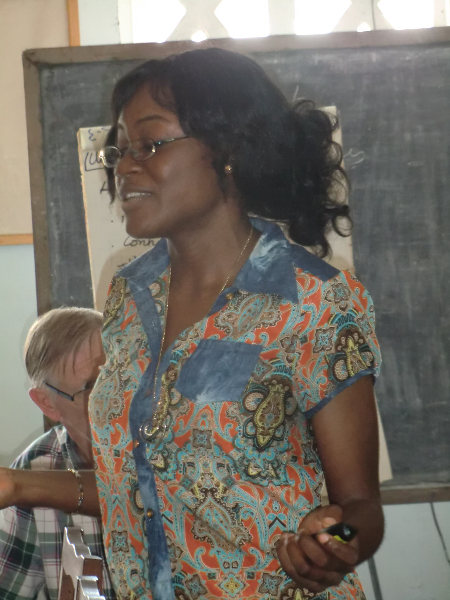
The second chapter focuses on the educator himself/herself. He/she must be reliable, always stick to the truth, be a role model, a teacher and make things understandable, give people inspiration, courage and self-confidence and use both carrot and stick to motivate. He/she has to be able to recognize the strengths in his/her students, to get students to discover their opportunities, to collaborate and work toward a goal, and much more. The trainers are the key. We went through about 40 different key values​​. The participants had to choose five of these and to write down what these key values meant to them. Tomorrow they will make an oral presentation of the words they have chosen.
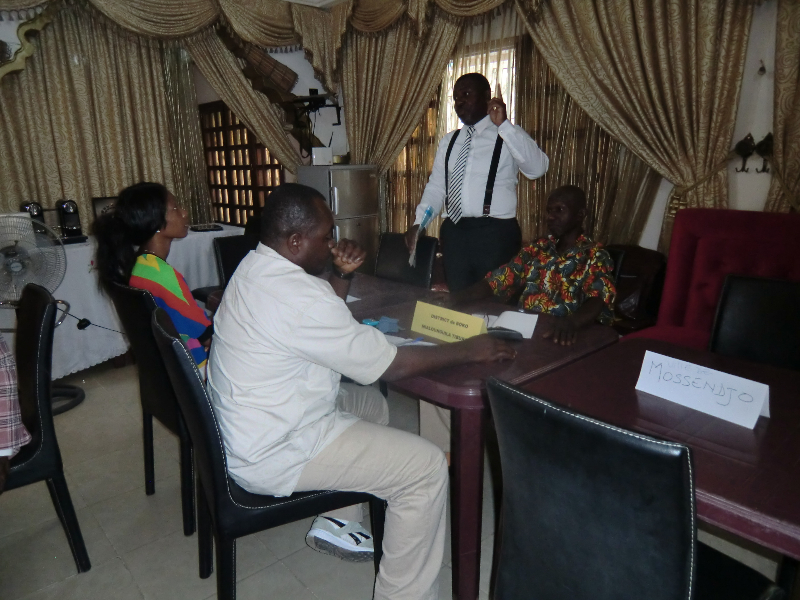
The group was at times very intense and sometimes it was difficult to get them to speak one at a time. They seem to be aware of what they are letting themselves in for. Our interpreter Roy had it tough at times. Mostly, he interpreted his compatriots as they were speaking, it was the easiest because it’s hard to stop a Congolese when he/she gets excited.

Posted in MSG

Sunday morning

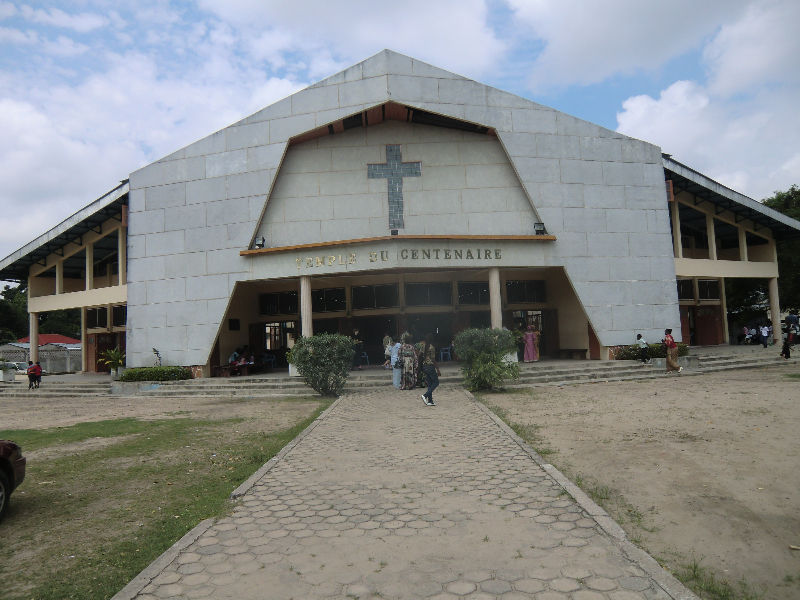
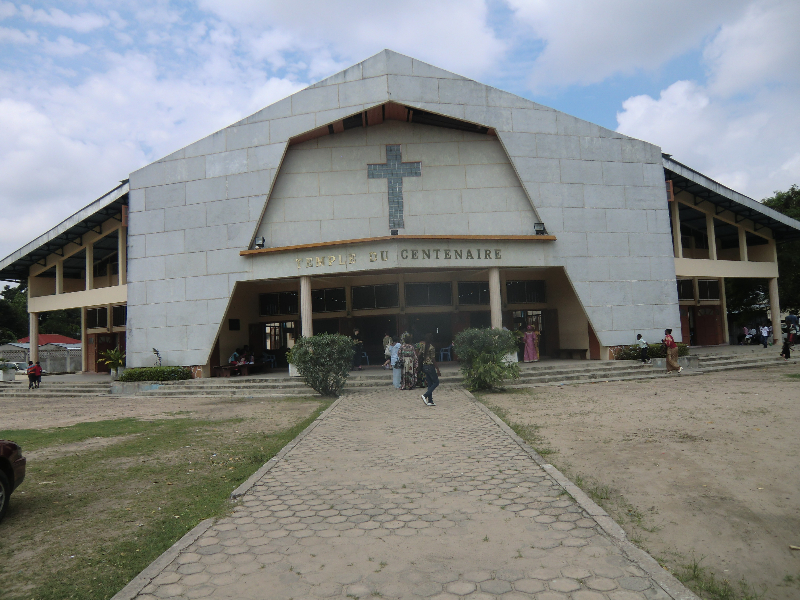
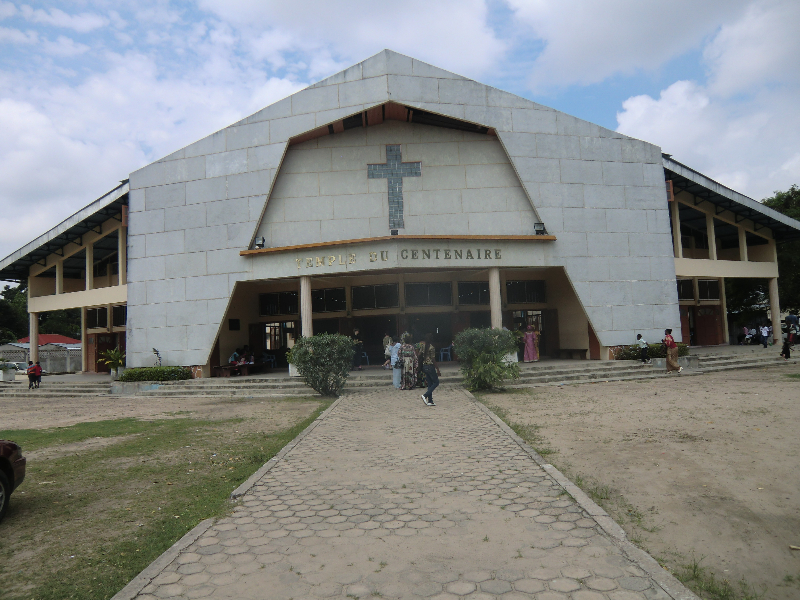
Paroisse du plateau Temple du centenaire

During the desk work of the morning a four-legged guest came and screamed a little piteously for attention. But as soon as he had jumped up in a comfortable chair, he became quiet and fell asleep. I directed the attention of the staff to the new hotel guest. The staff fetched a broom and the cat fled headlong out of the hotel. I am lucky not to be a cat and get such brusque treatment. The two-legged guests are treated very well at the Comfort hotel.
The running water was fixed yesterday, but gone today. I had a bucket of water in reserve. Also, I have developed a system with a sawn-off 1.5 liter water bottle that I use to pour water over my head. I save water and I have one hand free for ablutions. The challenge is to live what we preach, in this case to minimize the consumption of resources and improve the efficiency of the use of resources.

I got a happy message from my computer when I came down for breakfast today: it found the internet and the connection is good. This enabled me to send yesterday’s blog. Let’s boldly assume it’s here to stay.

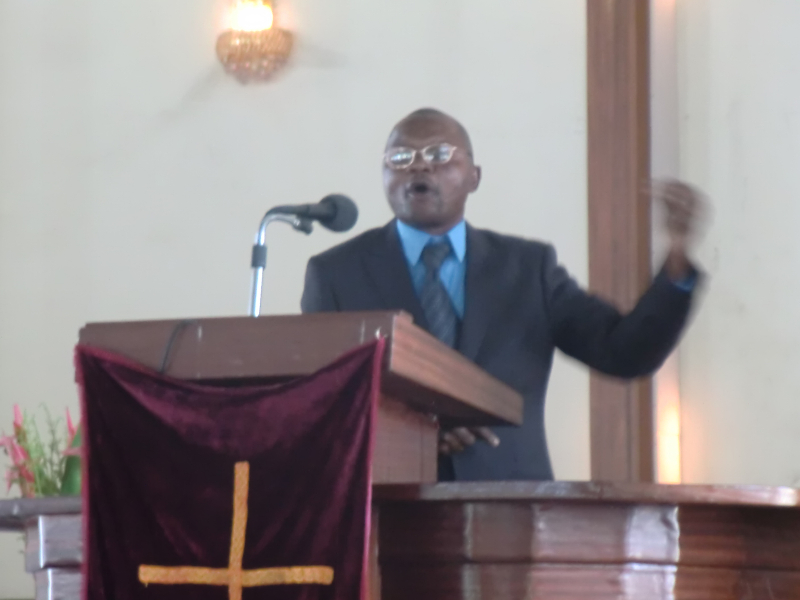
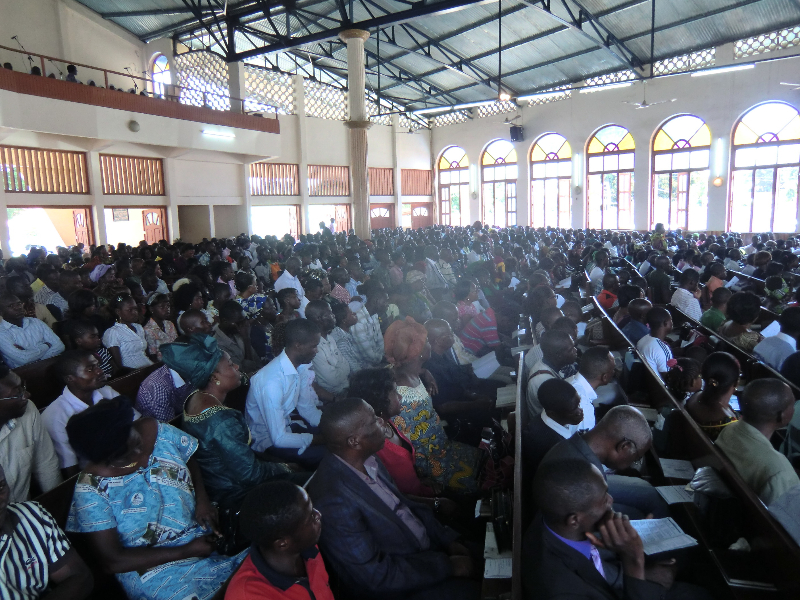
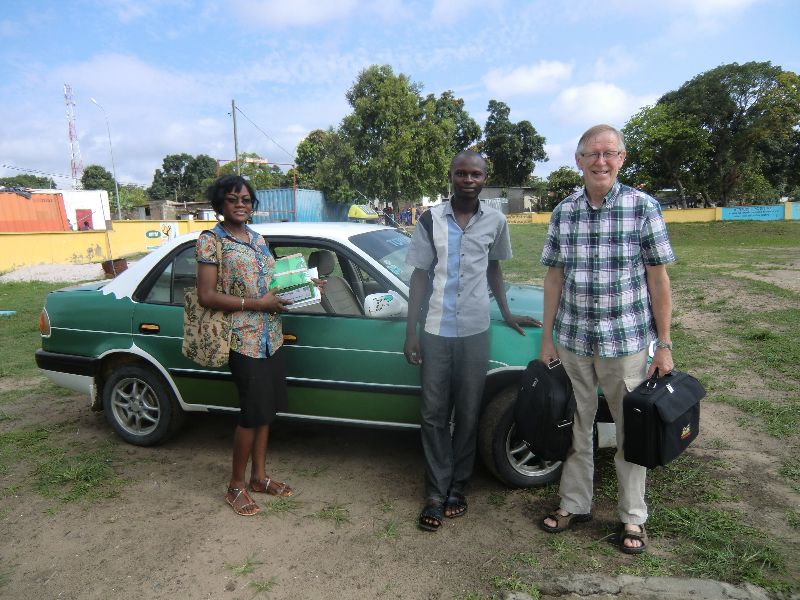
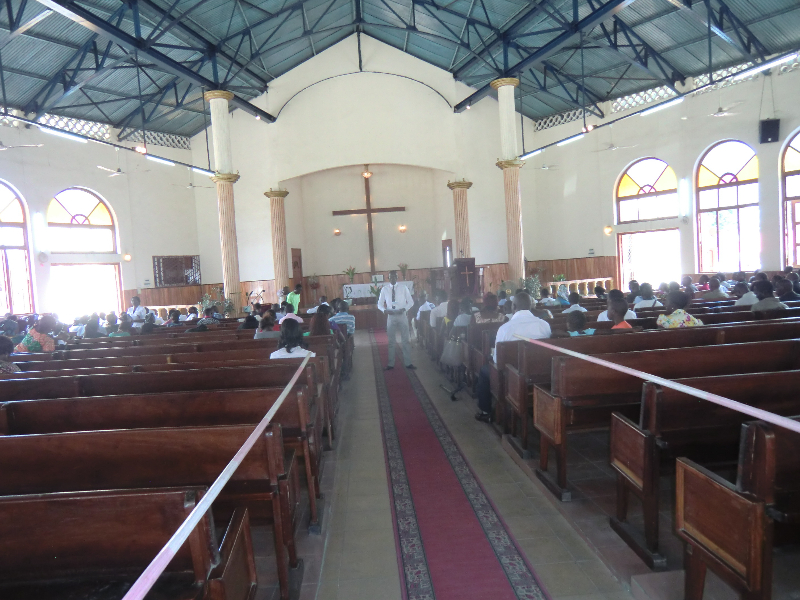
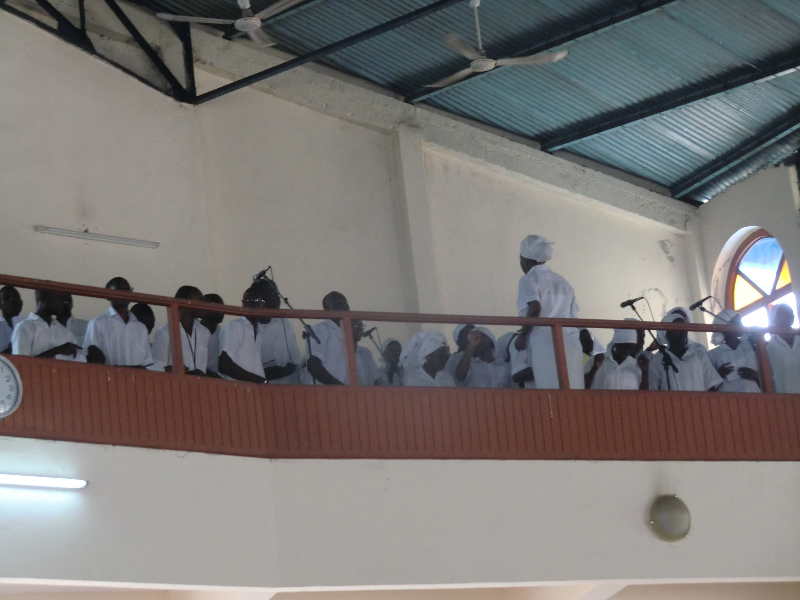
At 9.30 a.m. we took a taxi to the Plateau Church, a large and handsome temple – the finest I have been in, in Congo. I would think that it can accommodate a couple of thousand churchgoers. Shortly after the service started, it was full. The choir stood in the stands and sang joyfully. The brass band contributed with a couple of rousing marches. They also played when there was common songs. They had a clever way to fill the church from the front. The rear benches were roped off to a start. When the front portions were filled the ropes were removed. A good way not to let the latecomers disturb, and easy for them to slip in unnoticed.

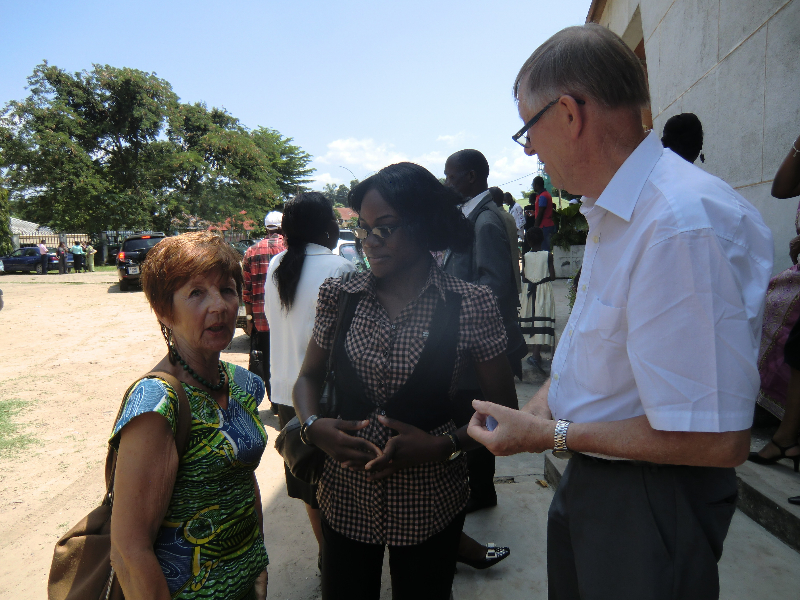
Today there were several Swedes in the service, a dozen. There were students from Lidingö community college. They are here for 5 months as a part of their training. Maria Lorentsson live and work here on a permanent basis and Astrid Ståhlberg is a tour guide and educator in entrepreneurship. There were also some volunteers from the Gothia Cup. It was a worship rich in content, and the 28 items on the program lasted from 10 a.m. to 12.30 p.m..

Judging from the car fleet outside, the churchgoers who owns a car seem to be affluent. Most cars were large new SUVs of Japanese origin.

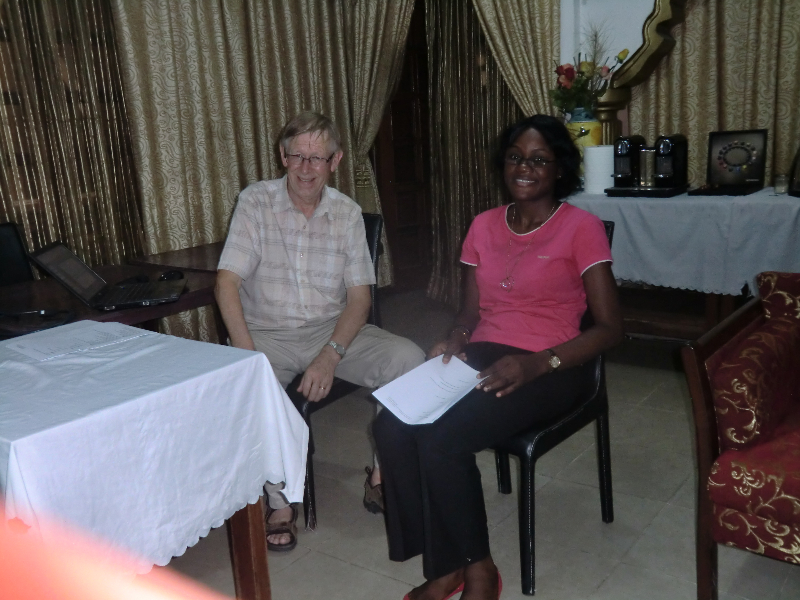
Bernt and I had dinner with Astrid at a restaurant she knew of and we talked about our experiences of Congo and the educational materials we work with. We got half a promise that she will come on Wednesday and give a guest lecture to our students/future trainers. When we got back to the hotel we took a nap.

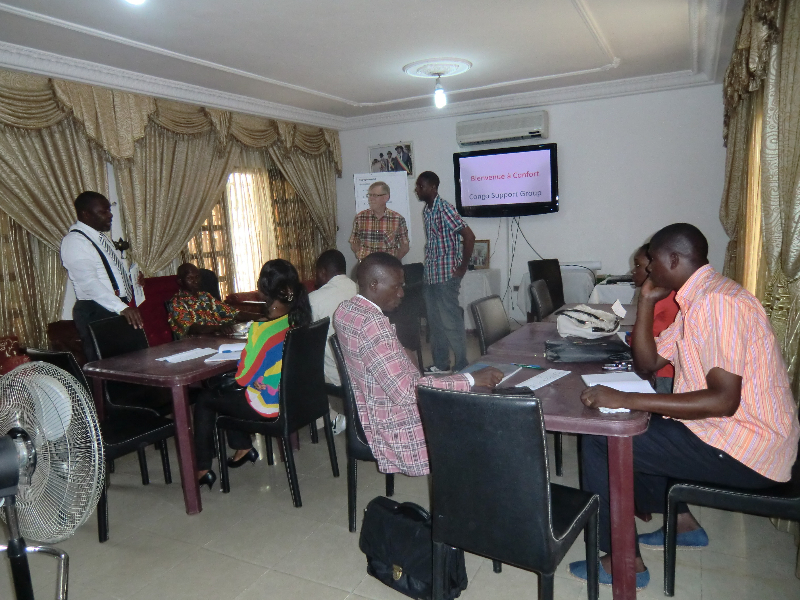
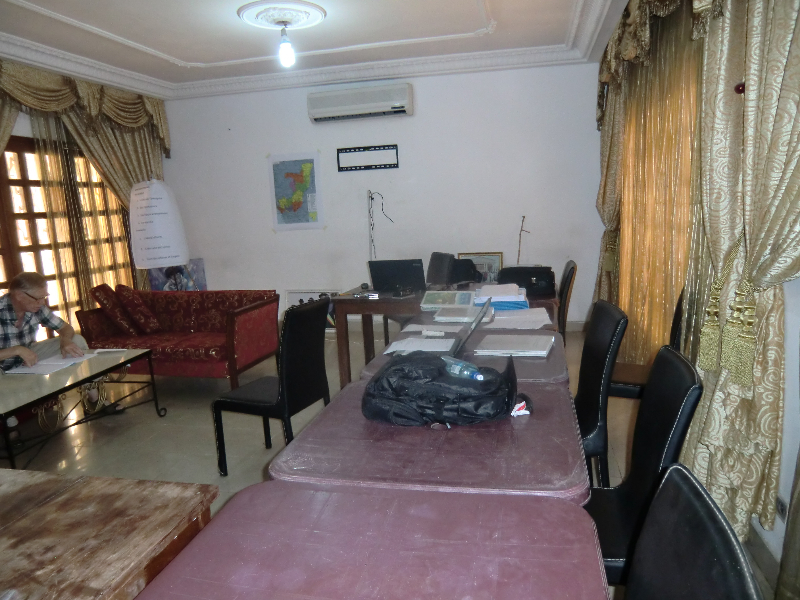
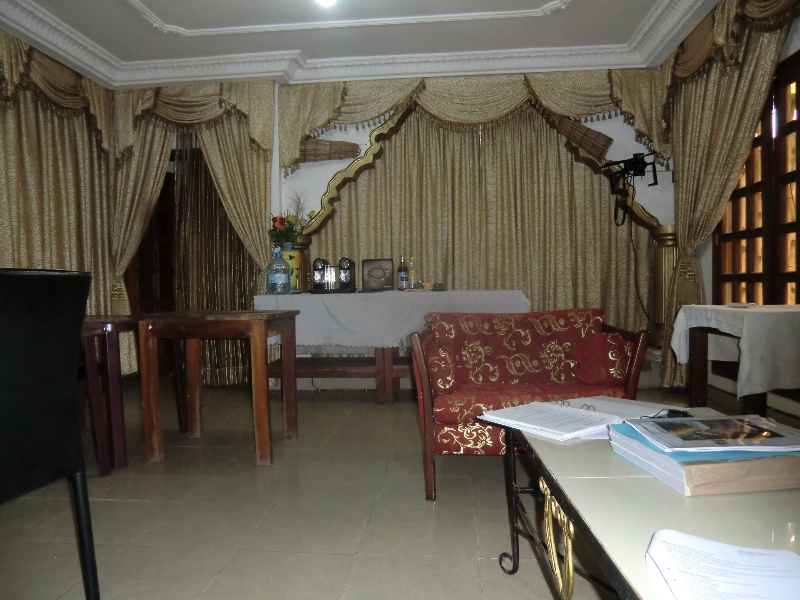
Annicet had had a TV technicians here and they had installed a large TV screen on the wall in our classroom. We will connect the TV to our computer and show power points and slide shows on the screen. Our students have started to arrive to the hotel. We have said hello to two from Boko and more are on their way. Tomorrow at 08.00 a.m. sharp we will start up and latecomers will not be tolerated.

Posted in MSG

Gothia Cup in Brazzaville

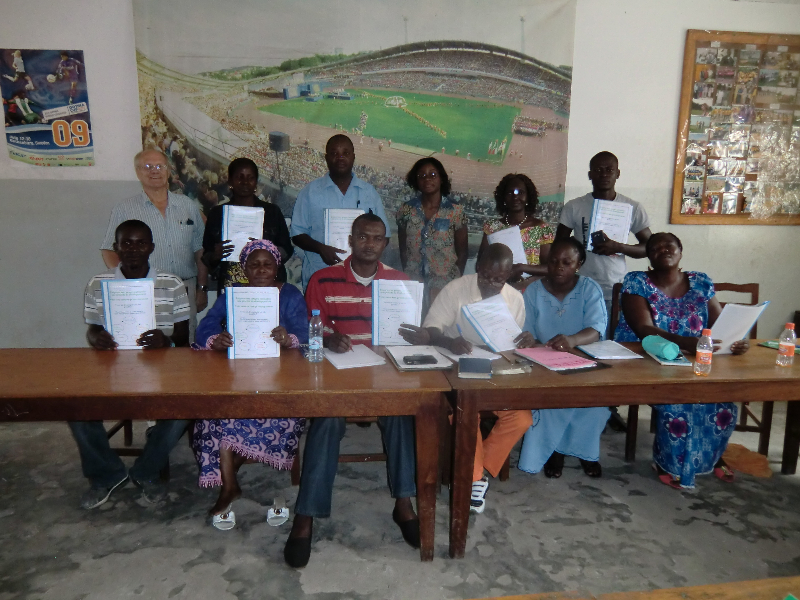
The OSDO group. The background is the opening ceremoni of Gothia Cup 2002 at Ullevi in Gothenburg. A collaboration between Congo and Sweden

After an early breakfast Myriam came in a taxi to pick us up. At 08.45 a.m. we were at the Gothia Cup stadium where we were going to meet the OSDO group. They started to come at nine o’clock and came one by one. By 11 o’clock the group was complete. This is a fairly typical way to arrive at a meeting. Takeoff time is long. If a meeting starts at nine it doesn’t mean that you should be there at nine o’clock. At best, it means that the participants present themselves at this time, but they might as well arrive one to two hours later. In Congo you have the time and in Sweden you have the clock. That’s the difference.

But the practical consequence of this way of managing time makes participants miss out on much of the information that the meeting is intended to give. It is difficult to recoup such a loss of information. This approach to time, we see as cavalier and irresponsible towards those who arranges a meeting. But most of all it affects the person who comes late, he/she misses vital information and knowledge. To keep up with developments, you need to be on time. The importance of time, or rather what you miss when you are not on time, must be reassessed. All humanity share the premise that we have a limited number of days and hours on this earth. You need to take advantage of yours!

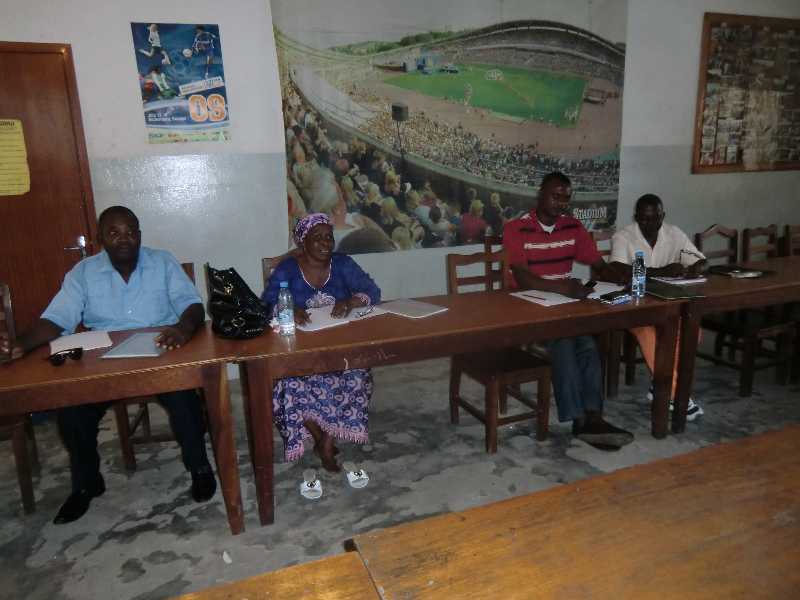
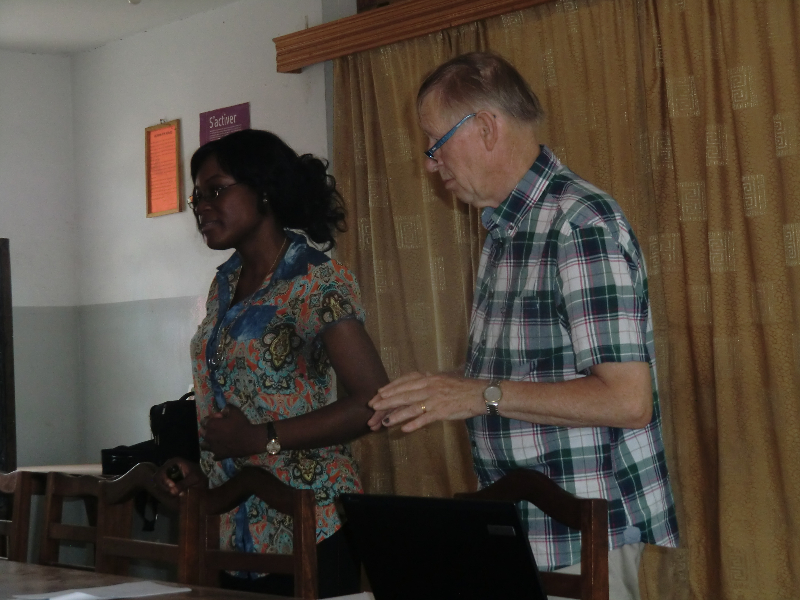
When six of the participants had arrived we started the course. Bernt and I told them a little about MSG and the new organization here in Congo Brazzaville, Congo Support Group. Then, Myriam took over and started the teaching. She continued where she left off last time, which was the entrepreneur him-/herself, what personal qualifications you must meet. Bernt and I made a few remarks every now and then, translated by Myriam. She has taught them three times before. Myriam used the material which she had translated into French. I had made a Power Point of the material she used. When she was going to start on the final chapter of maximizing revenue and minimizing expenses there was a power outage, not an uncommon occurrence. There was no surprise and hence no irritation.

Myriam seemed to have a good handle on the situation and had a nice interaction and dialogue with the participants. They seemed to get along. As far as we can understand Myriam is doing a very good job. The participants seemed to be motivated and to have a goal. It was very interesting to see this group. They were much older than we had thought. We had a small break between 11 and 12 o’clock. One of the students went and bought drinks and biscuits for us all. The lesson were supposed to end at two o’clock but then there was a heavy rain and no one could go out, so we kept on for another hour. The power came back and I finally found some pictures from the last visit here in April.

We were back at four o’clock and the dinner was served. We had chicken and rice with vegetables and then a little siesta. I wrote this blog and we had a meeting with Annicet about the time schedule for next week. His nephew Roy, who has studied in Pretoria, South Africa, and speaks English, interpreted our meeting.

The internet on the first floor of the hotel has started to work again, and we hope it will be faster than what we’ve had in our room on the second floor. That has been really slow. But…the joy of internet was short-lived this time, it disappeared again. You have to be really quick and alert to make any use of it. We hope for it to be more stable next week, but nothing surprises us anymore. The person who is working on fixing the internet gave us some hope that it will work on Monday. Let’s think he’s right.

Posted in MSG

The lack of running water

Visitors at Yngve´s entrée door

There were no water in the taps this morning, although it seemed promising last night. Instead we used a bucket of water and it works just fine. By now, we have good experience in dealing with buckets in this context. The problem of the water supply system was beyond the plumber’s competence area. This time, the engines had become damaged by the uneven supply of power. Until further notice, we use buckets.

Today’s breakfast menu consistedof baguettes, tomatoes, tuna, avocado, jam and salami sausage from France, juice from South Africa and butter from Russia. Despite the lack of porridge the breakfast was quite acceptable. We ate in silence, letting the food silent the mouth. We have no common language with Annicet except a few words in English, French, Swedish, and Kikongo – one form of extremely simple creole.

The broadband of the hotel is now working on the second floor, even though it is somewhat slow. However, on the first floor, where the course will take place there is not a shred of this great finesse. Our room is on the second floor, therefore all international relations are managed from there.

Myriam came at two o’clock. We ate dinner together and then we took a taxi to the city center and withdrew some money for everyday needs. We took a walk in the center of town and then we went back to the hotel to prepare for tomorrow’s lessons. Primarily, Myriam will do the teaching. It is unnecessary to weary the trainers with a foreign language.

Bernt and I will talk a little bit about our organization. We will stress how much the success of a company depends on the entrepreneur him-/herself. Maybe as much as 90% of the success is directly related to the mindset and the approach of the entrepreneur. Joseph’s reflection the other day reflects one way of thinking, and I will use it here as an example. I talked about the importance of bookkeeping. Then Joseph said, “Accounting is complicated, I trust in God.” Firstly, I tried to explain how easy the book-keeping system we have set up is. Secondly, God is not an accountant and he doesn’t do your bookkeeping.

However, God has equipped us all with a brain that can learn and understand, eyes that see, ears that hear. We also have got hands that can write, feet that can go to the store and buy paper. God has given us every opportunity to take responsibility and also take care of the accounts, if the task has fallen to our lot. God will be disappointed in us if we don’t use the abilities with which he has equipped us. Unfortunately, we have met other Congolese who think the same way. If something is difficult and complicated, you ask God for help. It’s not a good idea. As I’ve already said, I don’t think that God answers this kind of prayer. And the only result is that nothing changes.

“You cannot help men permanently by doing for them what they could and should do for themselves.” Quote by Abraham Lincoln.

Posted in MSG

Uploading

The hotel boss and hotel owner MP Annicet Gomas

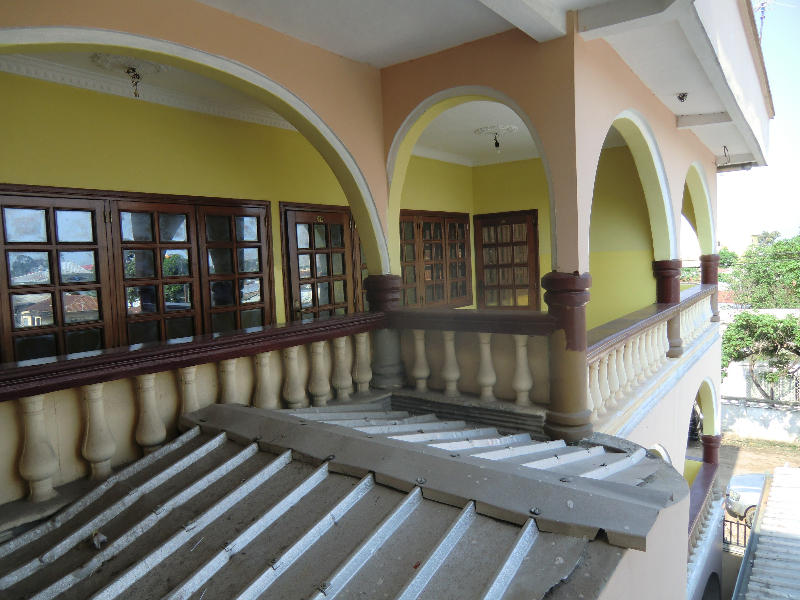
We have now made ourselves comfortable here at Comfort hotel. We have prepared the room where we will have the course with our trainers. Here, we will focus on training the trainers who will work with entrepreneurship in the villages. The hotel does not fully live up to it’s name but it is quite ok. We have air conditioned rooms. But so far, we’ve had no water to speak of in the taps. There is just a small jet of water, you can barely soak your hands. But this evening at 9 p.m., a plumber will come an put the hotel’s water supply in order. The hotel has it’s own well outside with its own water pump. I’m looking forward to a bit of coolness in the shower.

As the preparations for our arrival had been on the slow side, we gave our friends a little more time to sort out the missing parts. We have told them today that the course will start on Monday. Tomorrow is public holiday – All Saints Day – and no one has any great desire to go to school. Instead, we have planned is to direct our energy toward students from OSDO on Saturday. OSDO is a school with vocational training, and we will teach entrepreneurship to those who have completed their education. Myriam has already been there to teach on a couple of occations, and they are waiting for us to come.

My mobile broadband came to an end last night when I had sent the blog. The broadband has two limitations, the amount of information is limited to 2 GB and there is a time limit of 30 days. The 2 GB limit was apparently reached yesterday. The price of a subscription is 45 USD, quite expensive. The price apparently depends on the fact that the infrastructure is under construction and that there are not enough users who can share the cost. For a short while, we managed to start the wireless network of the hotel. There was a lot of tinkering before it worked, because it had been down for a while. It worked just fine for an hour and we had time to send a few e-mails. Then the network disappeared completely without a trace. Our computers could not detect the slightest signal anymore. I will buy another subscription of mobile broadband, that’s for sure.

To some extent, although not entirely, this day was wasted. We were supposed to have started the course for trainers by now. And we would have, if the proper preparations had been made. Instead we have gone through the material once more, and rehearsed the lessons of next week. Besides that, we have also relaxed a bit.

Our evening meal consisted of mango juice, tea and freshly baked and hot Mikati that we dipped in raw honey, that is honey straight from the hive without any processing. It was truly an enjoyable evening snack.

Posted in MSG

To Brazzaville

Yngve receiving the visa

We had a good night’s sleep at the Nzo-Binati guest house despite yesterday’s trials and tribulations. We were quite annoyed about the visit to the Immigration office. But we had time to calm down in the evening. You have to accept the things you cannot change. We had been forced to pay a $200 bribe to get visas. Our receipt just covered the visa, which had cost $133. The bribe was not on the receipt. But this morning, we had a very nice conversation with the official who left us the visas and our passports. At the end, he promised to come and pick us up at the ferry station when we come back to Kinshasa and take us to N’djili Airport. Interesting to make new contacts, we hope that he sticks to his promise.

An observation I have made here in Kinshasa is that the car fleet is newer and more well maintained than earlier. Large SUVs, mainly Japanese, dominate the roads. There are also many new buses, mostly Mercedes minibuses. The bus company is called Transco is probably state owned. There are less of the scrap heaps of buses that we have seen before, thank god. Another observation is that there are new road signs between Matadi and Kinshasa, with the names of communities and towns. The road has been repaved. Development is underway.

There are certainly enough formalities before you get on the ferry. It takes about one to two hours, and it costs $ 50 including the ferry ticket. The passenger ferries are powerful speedboats. Today we were 20 passengers, and we all wore life jackets. The crossing takes 10 to 15 minutes. We arrived to Brazzaville at three o’clock. A man met us at the ferry and arranged everything that had to do with with the passport control. We were driven to Annicet Goma’s hotel “Comfort”. The three MPs and a few others had a meeting at the hotel. It was a happy reunion and we were thoroughly welcomed. Then we went to our assigned rooms for a short rest and refreshment.

Then we had a briefing with the MPs Annicet, José and Joseph. We handed over the training material that I had put together and went through the program of our week here. So far, we have no translator from Swedish to French or Kikongo to help us with the course. This means we will have to speak English. Joseph speaks English and he will translate to French and Kikongo if we can’t get hold of a translator. As far as we understand there has been minimal preparations for our visit. I have e-mailed the MPs about the materials needed for the course, but my e-mails seem to have vanished into thin air. Originally we were supposed to have started the course today, unless the faulty visas hadn’t put a spoke in the wheel. But now the course seems to be postponed some more days. The longer it takes before we get started, the tougher the course days will be.

At six o’clock Bernt and I were driven to the Saphir hotel for dinner. Except for the driver there was also a bodyguard. He was with us the whole time last time we were here, then in full regalia including a Kalashnikov. Now he was wearing civilian clothes and less equipment. It was a happy reunion when we met here at the hotel. We were welcomed the Congolese way. He guarded the door while we ate. Last time in Brazzaville we stayed at this hotel, it is a little more luxurious than the Comfort hotel. For dinner we had grilled beef tenderloin with fries. We really savoured the food because we were quite hungry, we had not eaten since breakfast.

Then I compiled a list of materials needed for the participants of the course. The material will be bought tomorrow. It will be interesting to see how this will unfold. Right now the thunder began with a bang and the rain is pouring down.

Posted in MSG

From one to two

Three spectators

We left Kimpese at 7.30 a.m. The first taxi took us to Bandalungwa, where we switched to another taxi. Next stop was in Inkisi where we visited Pastor Damas Mangikulua and his wife Aline. They have both been in our training and we had a few things to go through with them. The meeting began and ended with prayer and in between we talked about entrepreneurship. Damas inquired about the Baobab Church and Matadi, where he was formerly pastor. Aline gave us Cocacola and biscuits.

At noon we were in Kinshasa but we got stuck in a traffic jam for about an hour. Despite the police’s valiant attempt to untie the knots, it took some time. Road constructions has not had a chance to keep up with the rapid growth of the car fleet. And if you take into account the impatience of the average Congolese car driver, the roads must become clogged from time to time.

The traffic jam delayed our visit to the Immigration Office, we weren’t there until three o’clock. When we got there, we understood there was a problem with our visa. The visa stated that we could enter the DRC only once. On the visa application, I remembered that I had put a tick in the wrong box, but Bernt assured that he had ticked the right box. Anyhow, both our visas stated that we could only enter DRC once. Which was a problem, because now, we were going to Brazzaville and in two weeks we are going to Kinshasa and the N’djili Airport, for our trip home. We had hoped that the word “once” could be changed to “twice” without too much trouble, but no, not in the world of the bureaucratic Congo. We had to purchase a new visa and a couple of extra forms, and the whole bill ended at $233 (SEK 1500). It was an expensive lesson, but it is just to bite the bullet. We tried to tell the official how many time we had been here, and that we are here on a noble cause, at least we think so ourselves. But the official was adamant, his only priority was the rulebook, full stop.

The official said that we could come the next day at 11 a.m. and get our visas, but only if we paid in advance, other methods of payment were excluded. An adversity rarely comes alone. We had not counted on an overnight stay in Kinshasa and we were expected to arrive today in Brazzaville. But we couldn’t do anything about it. We decided to stay overnight at Nzo Binati. There were two rooms available for us three, our companion Yapeco is with us.

Posted in MSG