Young mushroom pickers

Meeting with small mushroom pickers

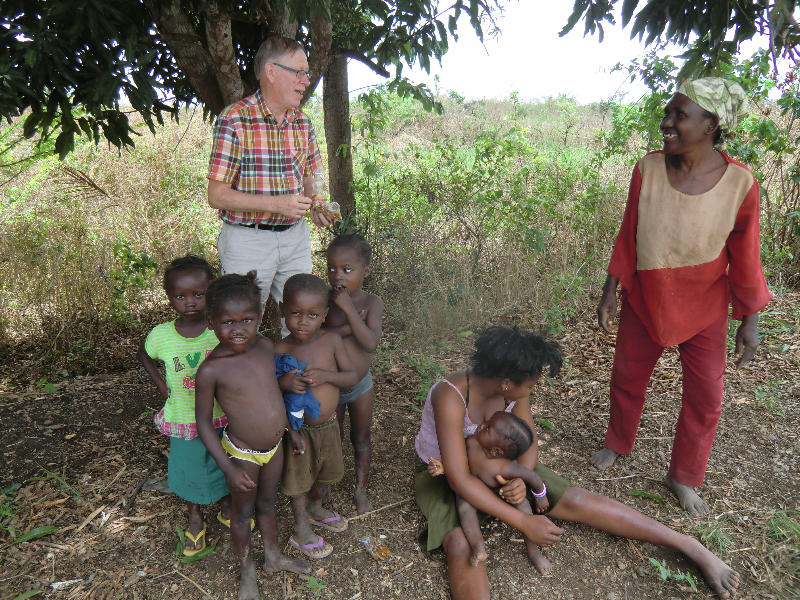
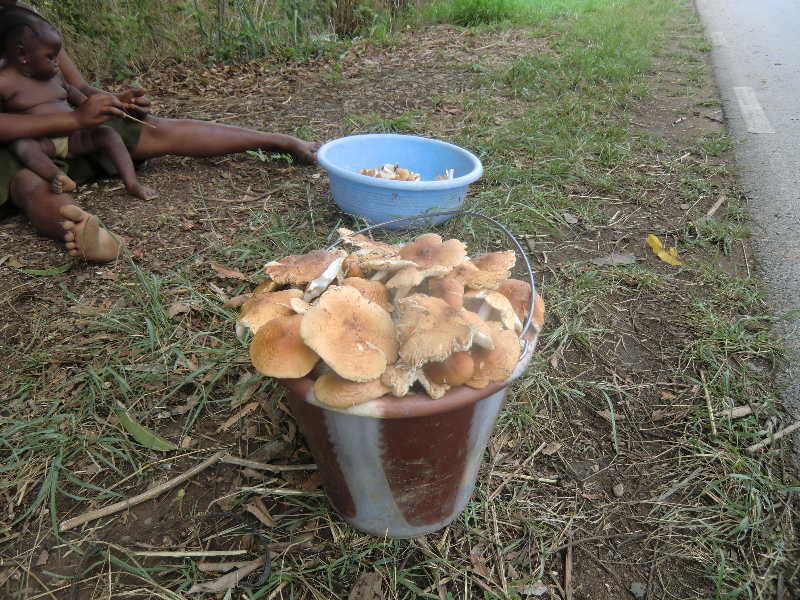
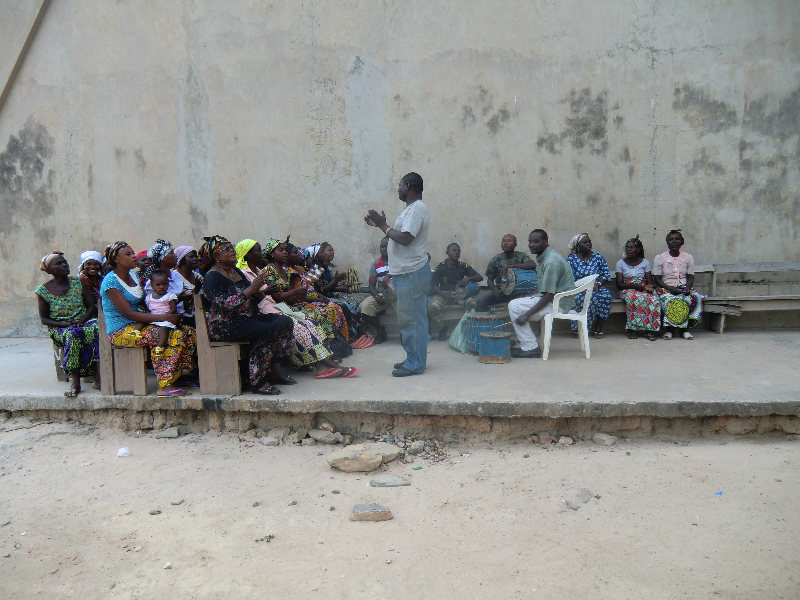
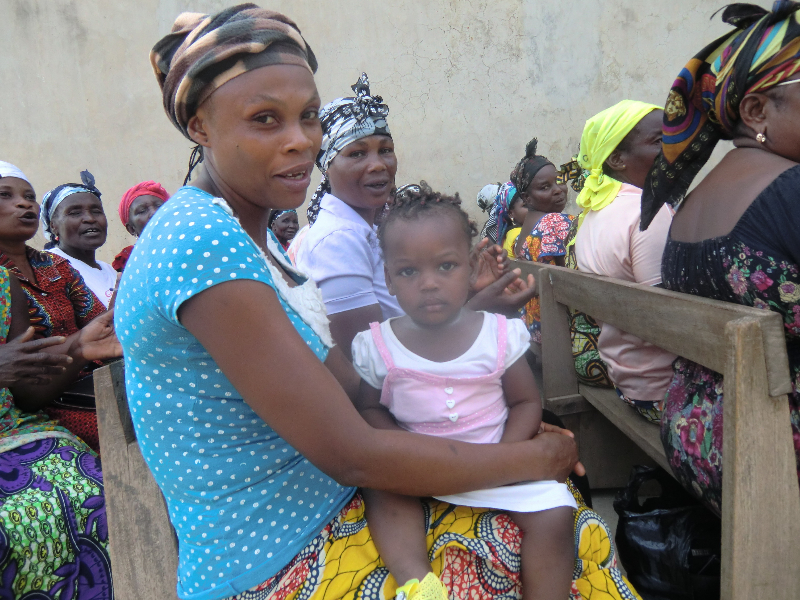
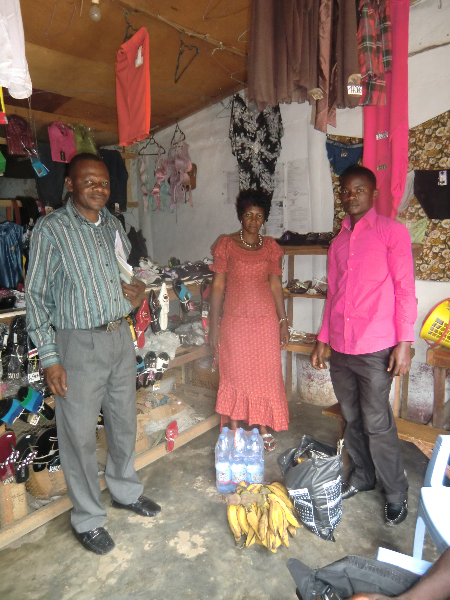
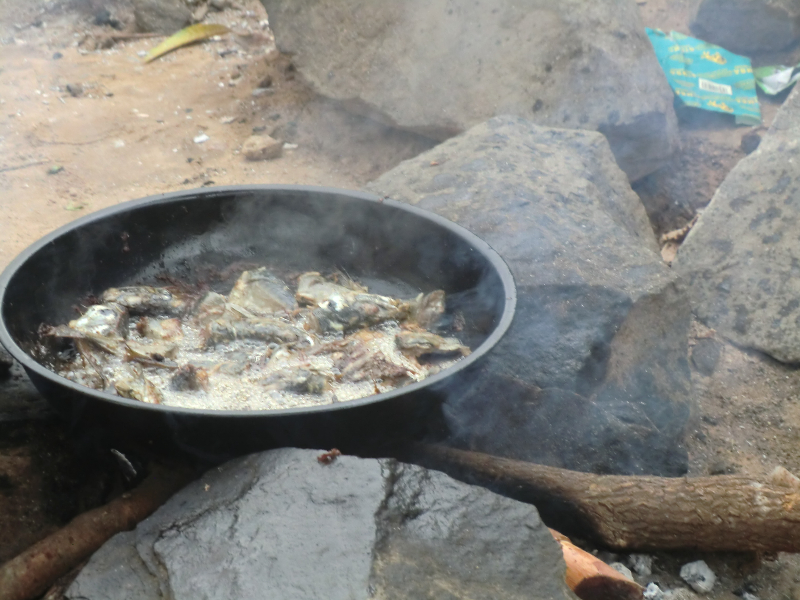
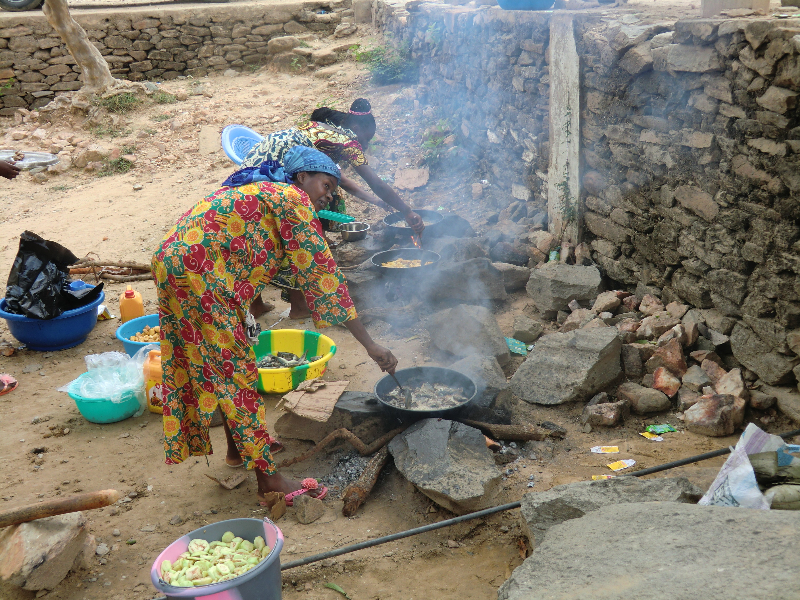
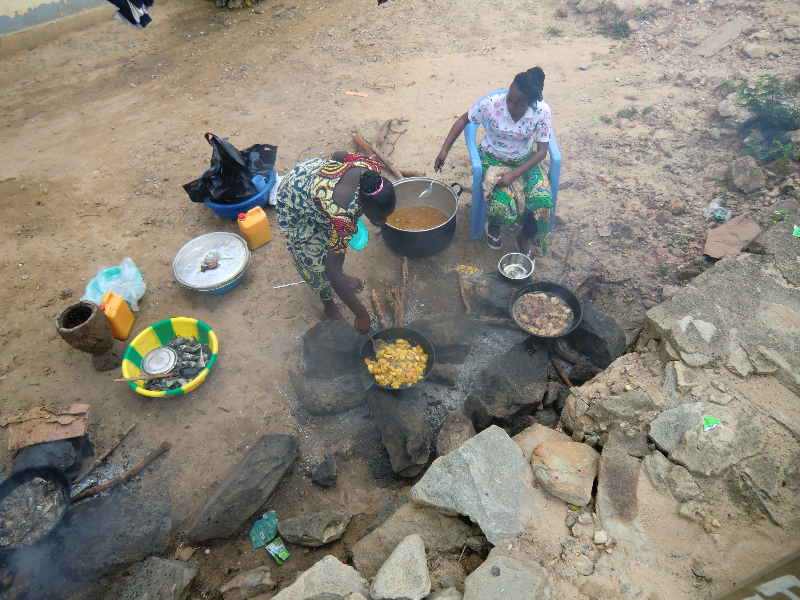
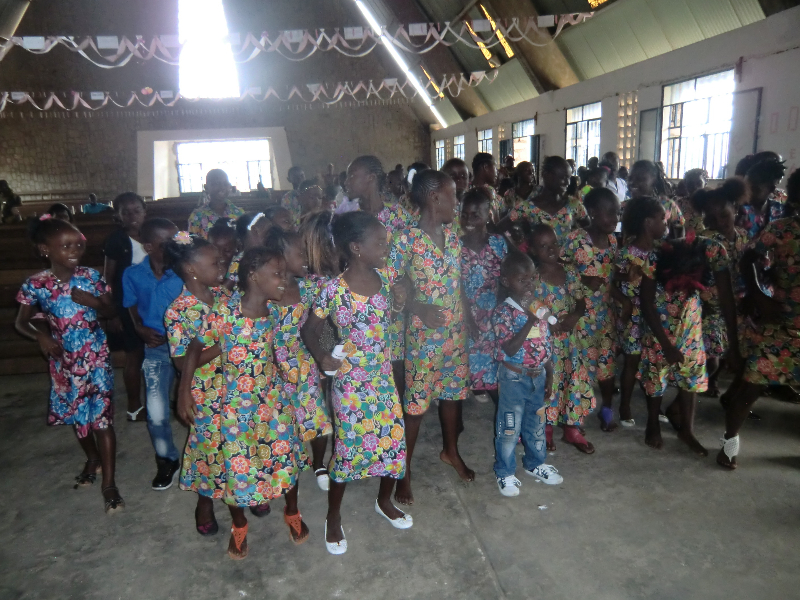
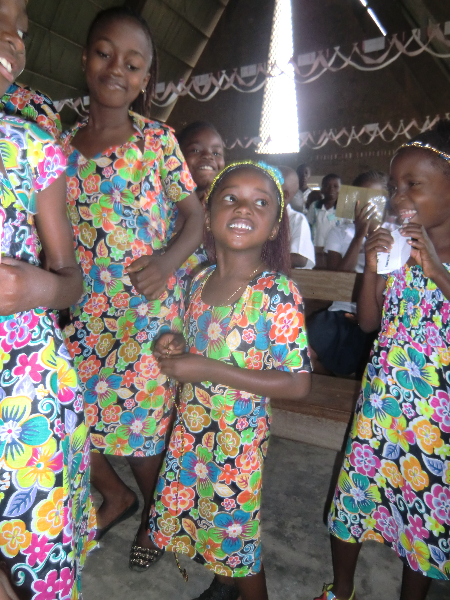
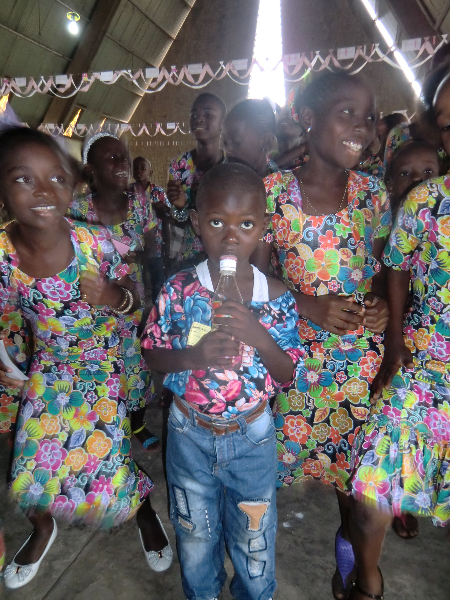
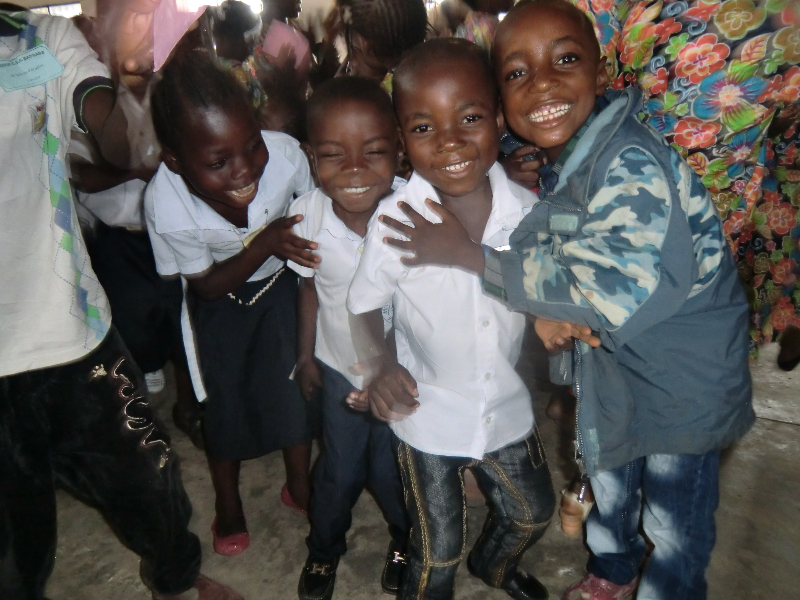
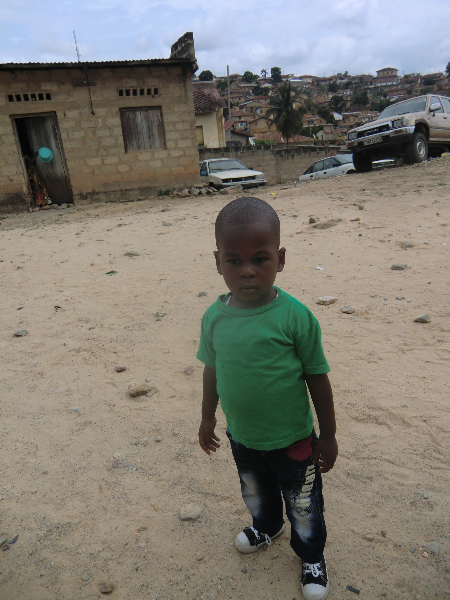
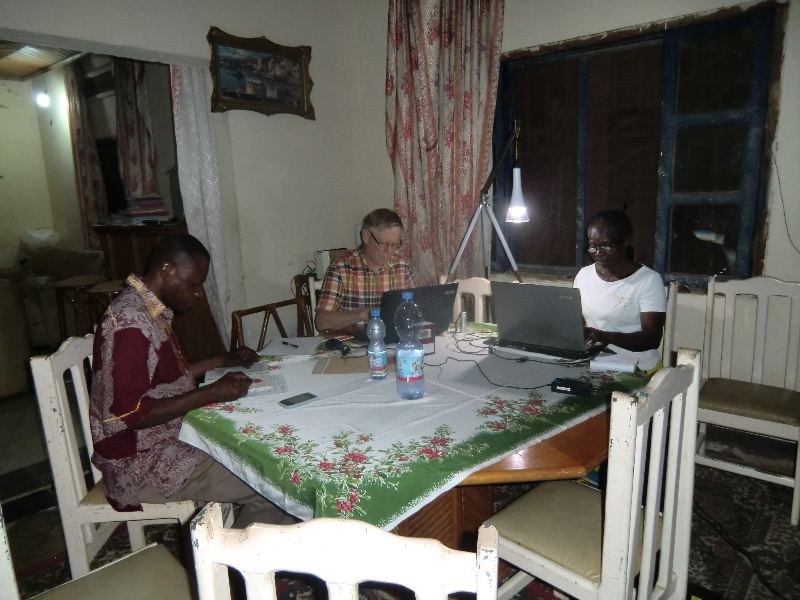
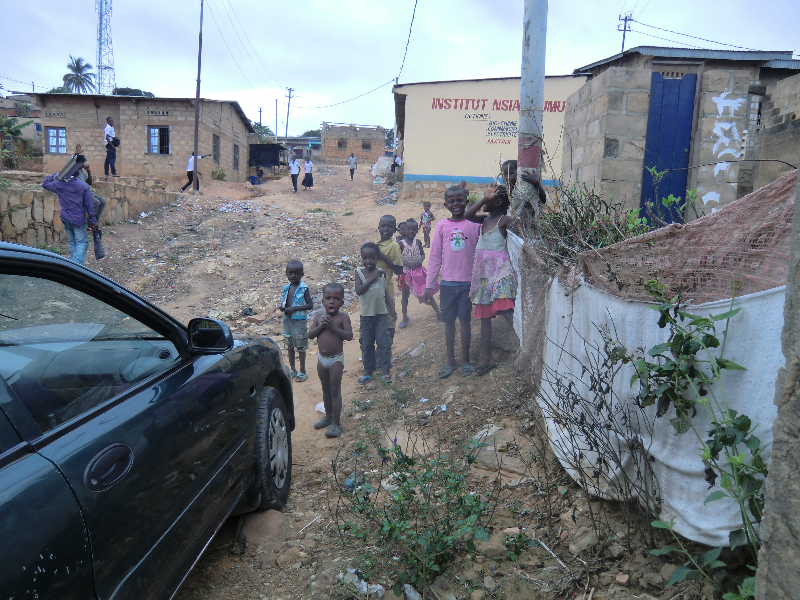
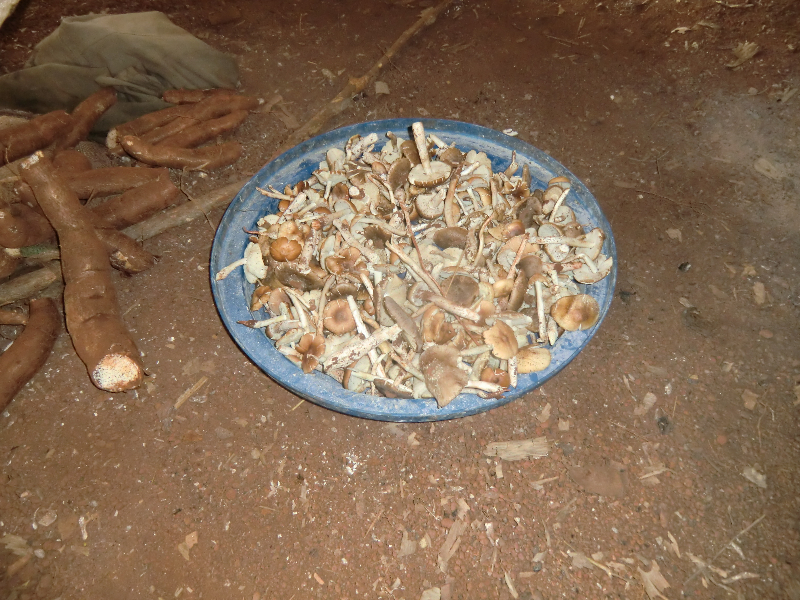
After breakfast we said goodbye to Matadi. Julienne our interpreter went to her farm Nsanda and we left for Kimpese. We got a quiet and skilled taxi driver who brought us safe and sound to our destination. Along the way, we took a short break on the roadside for a snack. Then a small group of very young Congolese appeared. They wanted to sell mushrooms to us. The mushrooms looked very nice and fresh, but we were not equipped to take care of mushrooms today. Despite our lack of interest in their product, they were happy and satisfied, and we offered them soft drinks and mankondo. It seemed to be appreciated. At one o’clock, we arrived to Kimpese. Then we made some preparations for the afternoon and had a little rest, both before and after dinner on my behalf.

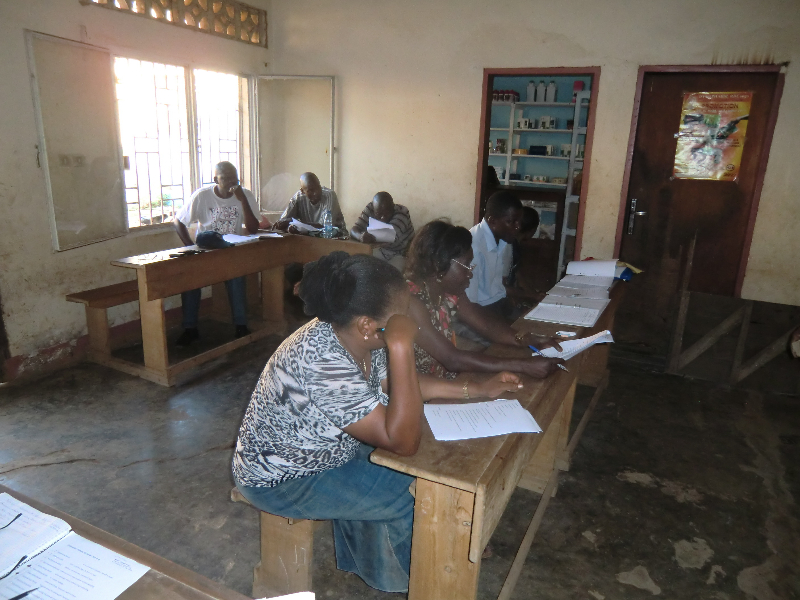
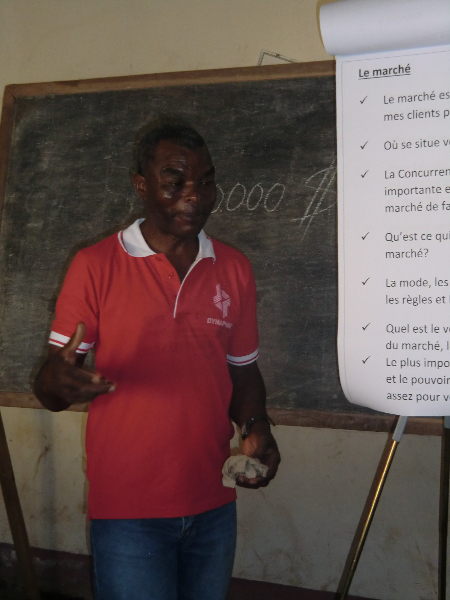
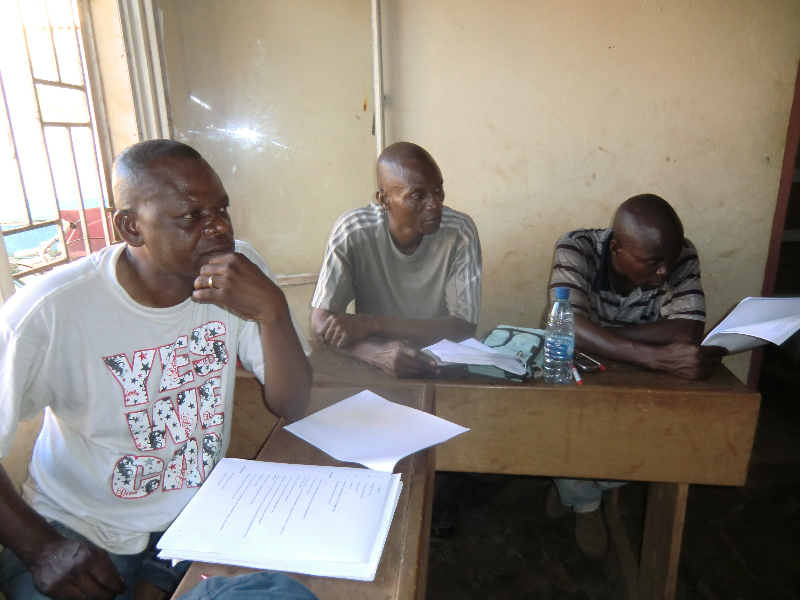
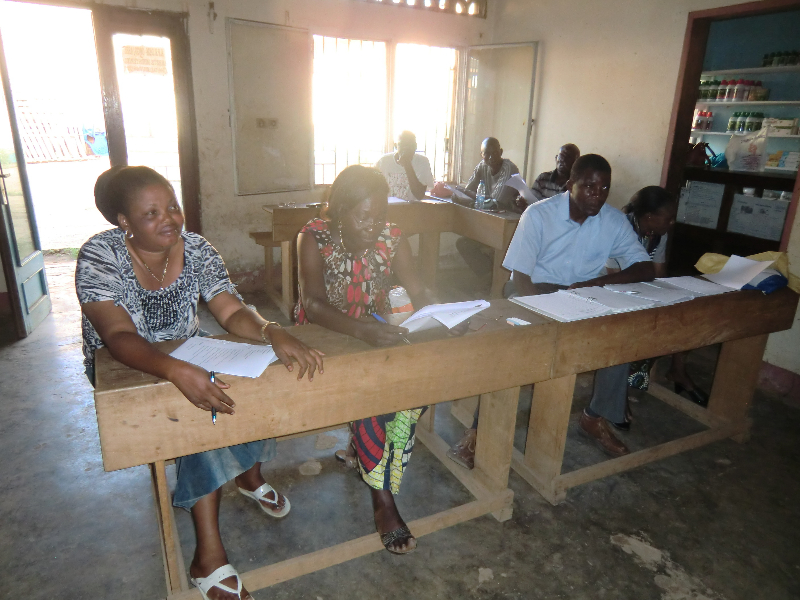
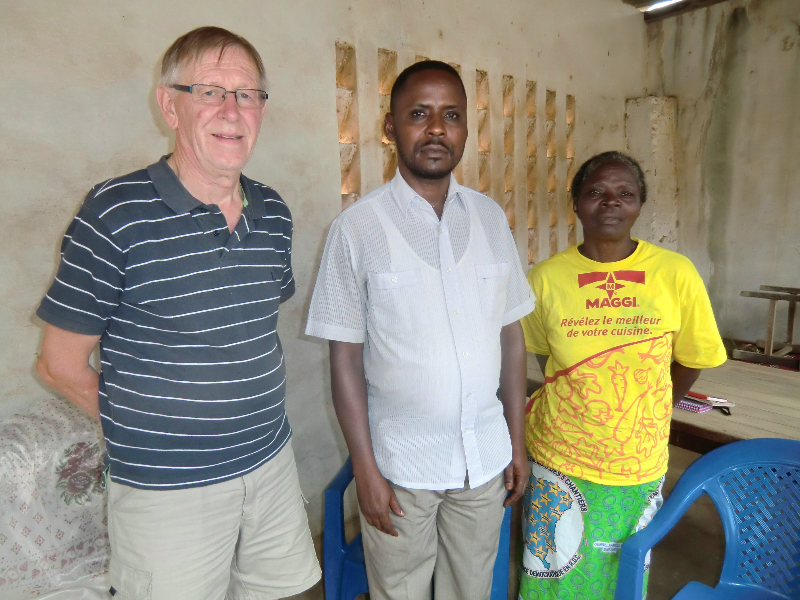
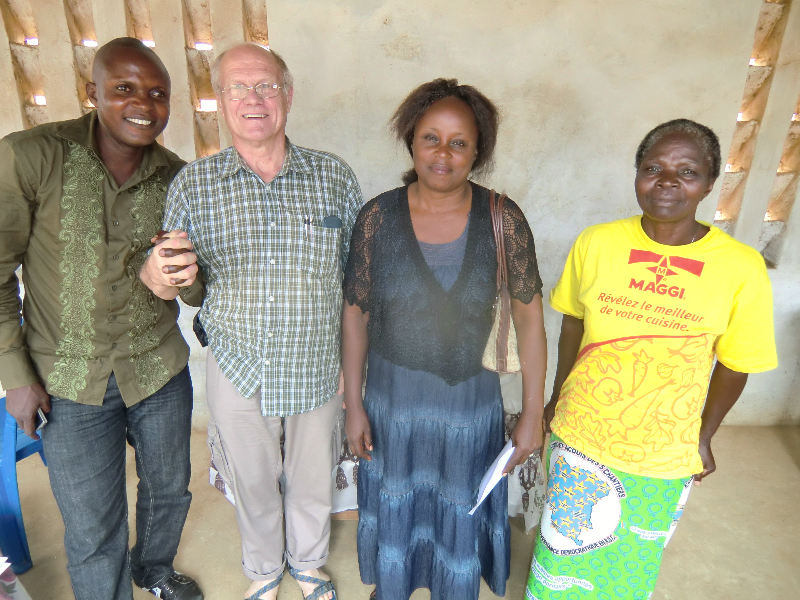
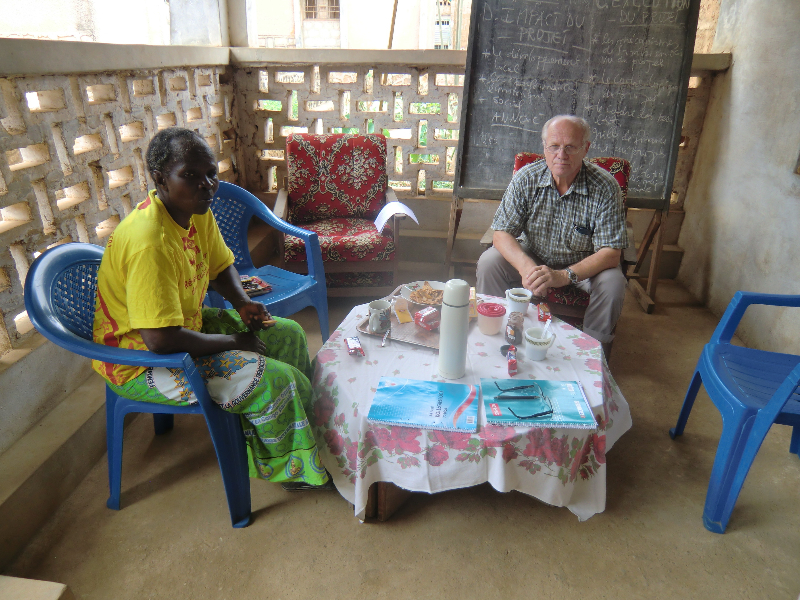
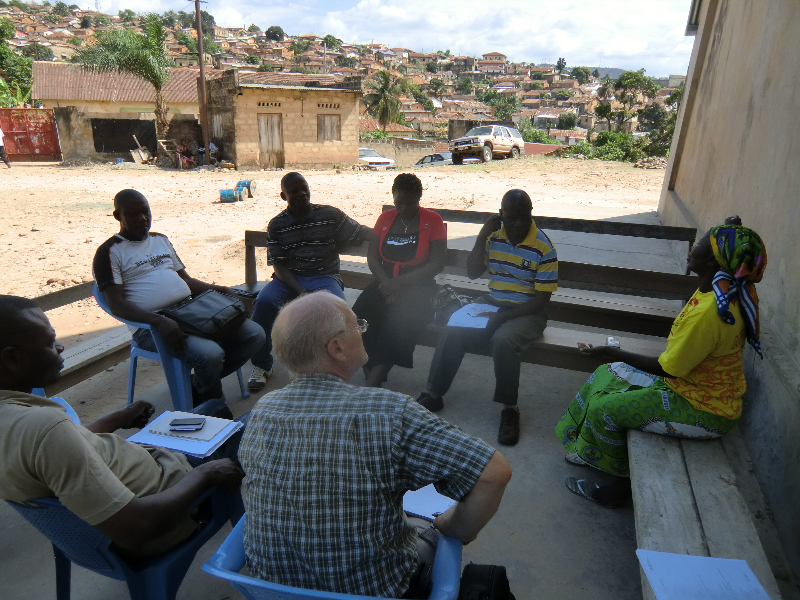
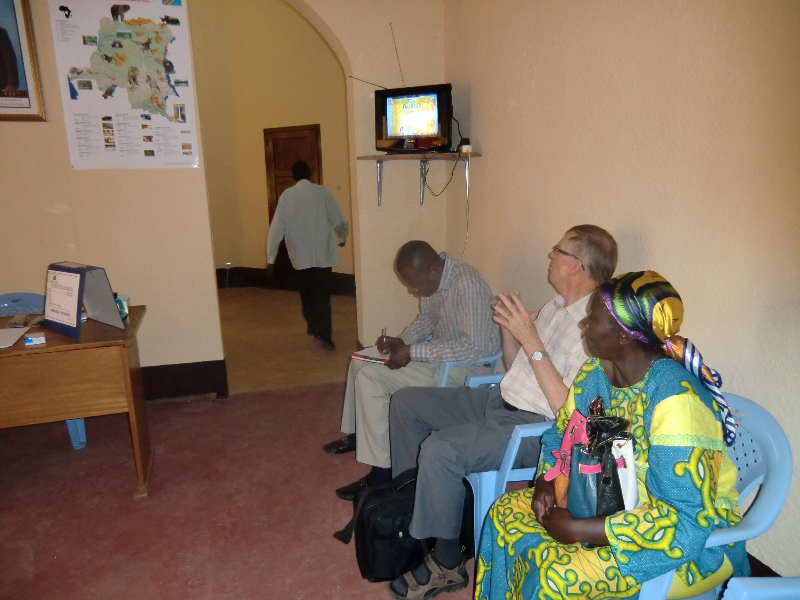
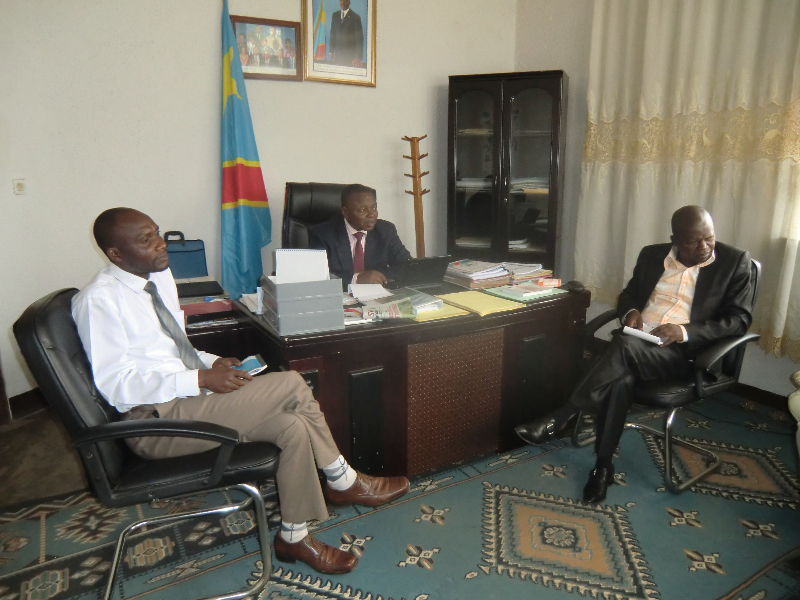
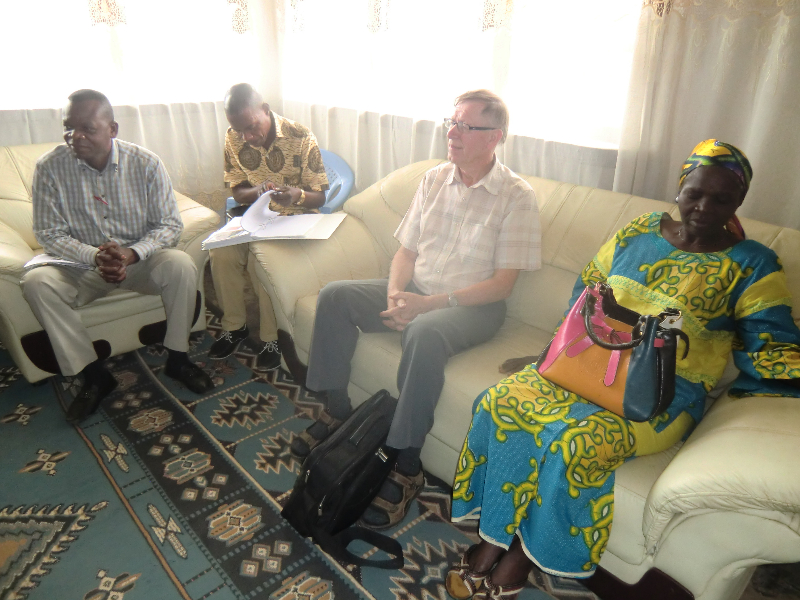
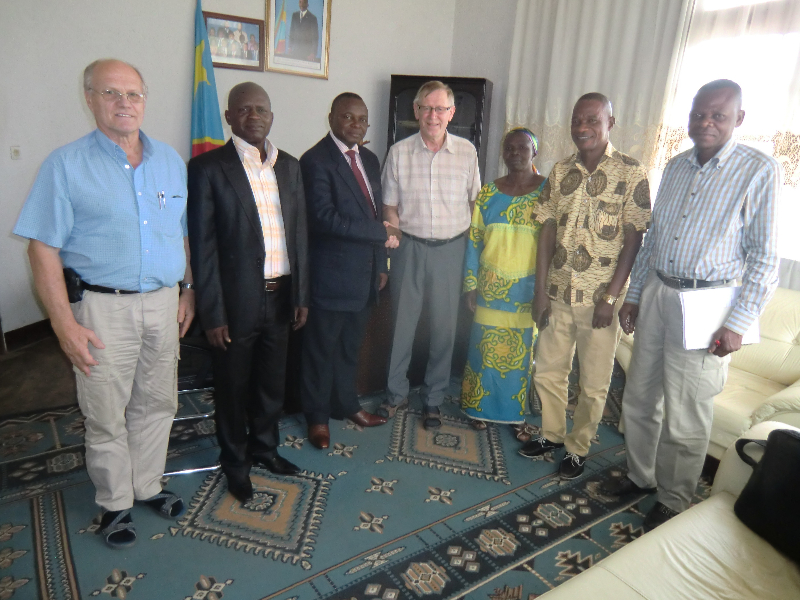
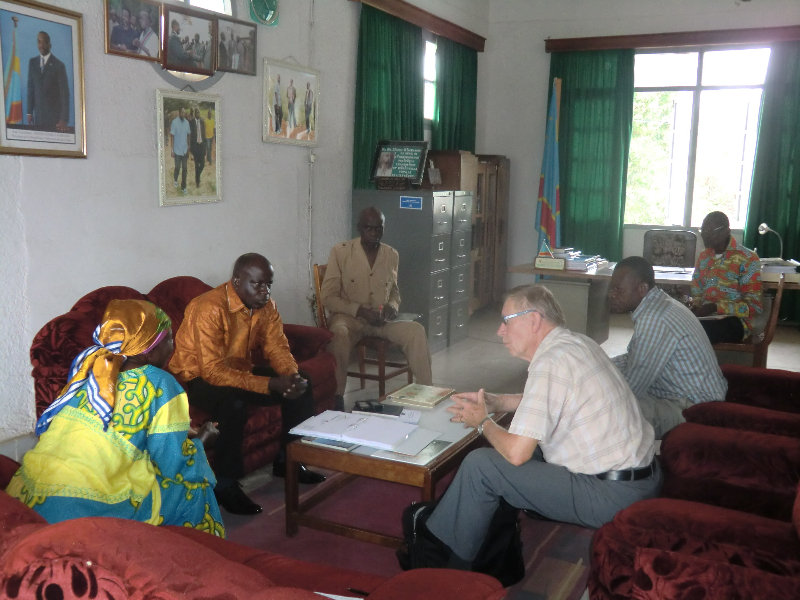
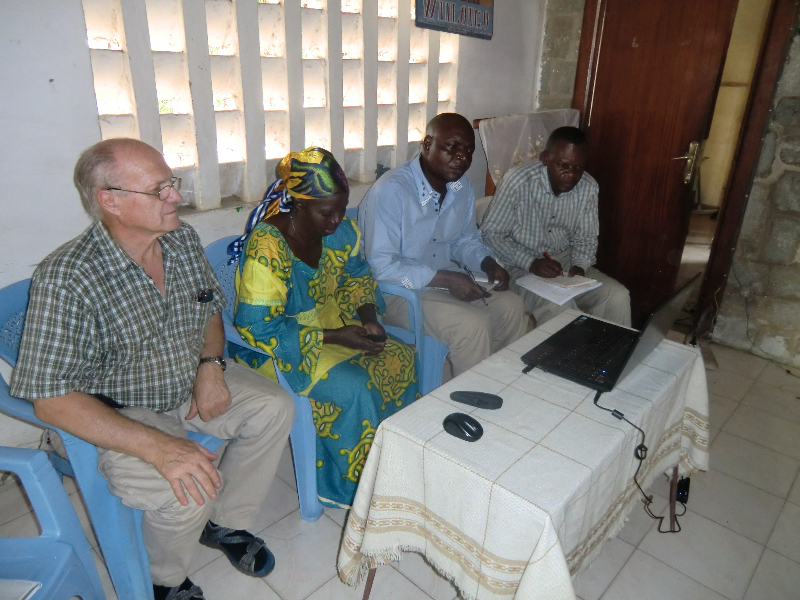
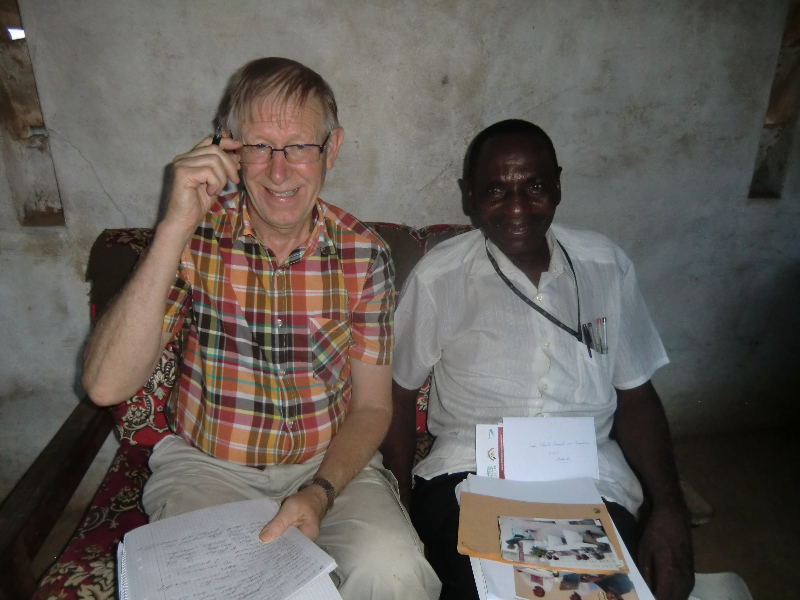
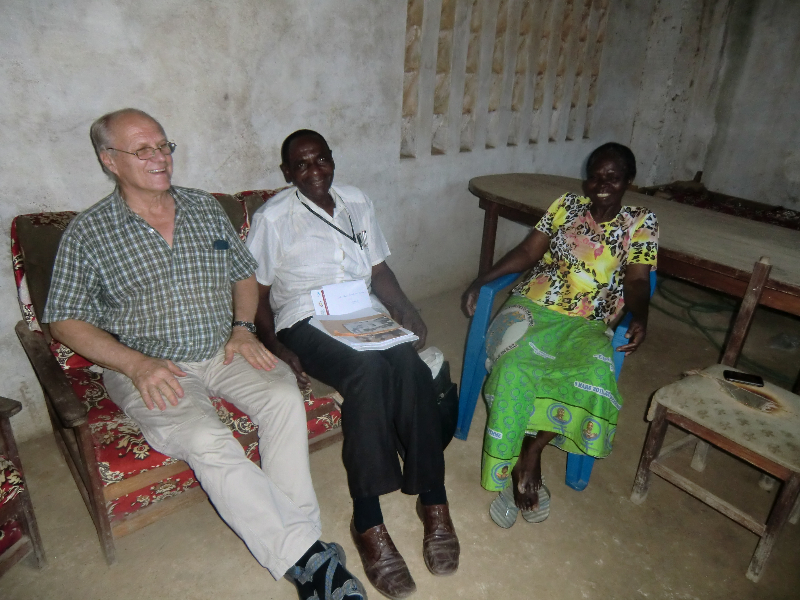
At 3 p.m., we were at Emy Miantezila’s office and in his classroom. We were going to meet a group of entrepreneurs at that time and give them additional training. Today, it took an hour before most of the group’s members had arrived. Maybe the takeoff was especially tough today because it was so hot, about 35 degrees. We had walked there, about 1 km, and we had had some materials to carry and our cooling system had made ​​us thoroughly sweaty.

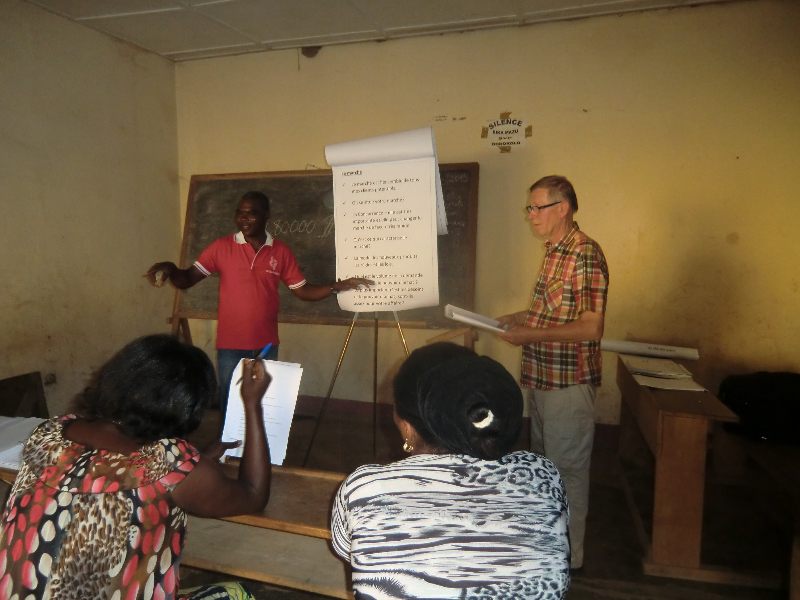
I had prepared 25 flipcharts at home, all in French. This was the first time we tested the material. It is based on the experiences we have gained during these three years in Congo. We think we have understood which areas we should put our efforts in, to make entrepreneurship understandable and practicable for our friends. There may not be any complicated economic theories. It must be down to earth and possible – hopefully – to recognize from their frames of reference.

Emy took care of the teaching. I just needed to make a few remarks. This is one of our goals – to have Congolese teachers take care of the courses. It’s tiring for the students to have a foreign language on top of all the intricacies of enterprise. We will move on to train educators instead of students. We think this will enable us to work more efficiently and to get a larger spread of our activity. It seemed that the material was well received. I have asked Emy to review the material to see if there is any need of explanations and additions.

The largest part of our entrepreneurs have failed to improve their income through their entrepreneurship. Some of them are even worse off now than before. The main reason is that they have used their loans the wrong way and that it has not generated a profit. But there are also other kinds of difficulties. The result in these cases being that there is no income and still a dept to be paid.

When we see our contractors fail, it is also our failure. We learn from it and adjust our approach and our ways of working.

After the entrepreneurs we had a briefing with Emy and presented the new material that we plan to work with, Focus Business School.

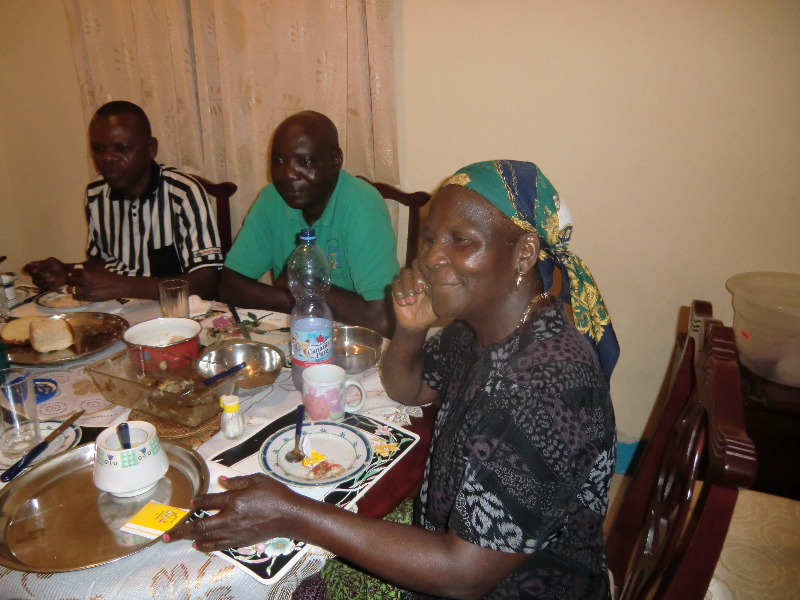
At 7.30 p.m. we were back at the home of Nganga and Therese. For my part, I went straight into the shower. Here, the water comes out of the tap. Rarely is a shower as lovely as it was today. Then supper was served. Therese had boiled potatoes for the meal. She makes us feel at home with dishes from our food culture in the North.
Posted in MSG

Tornado

The service leader

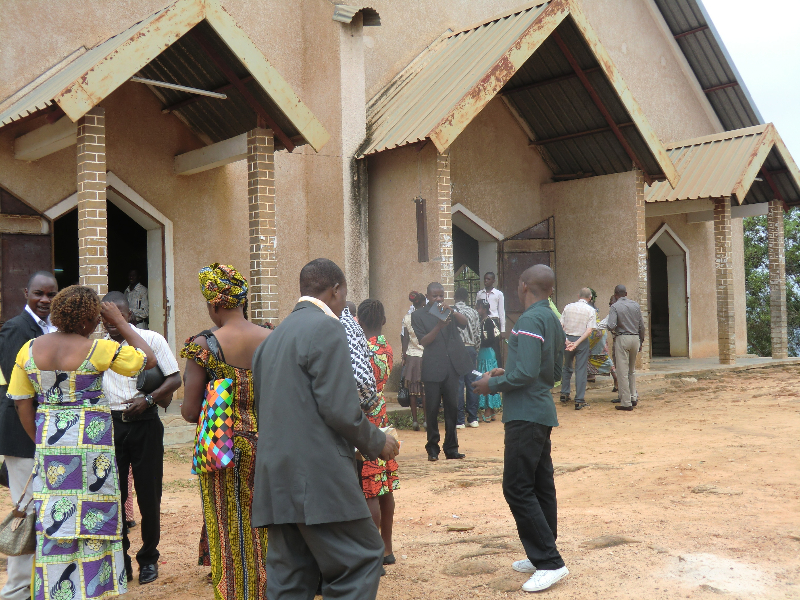
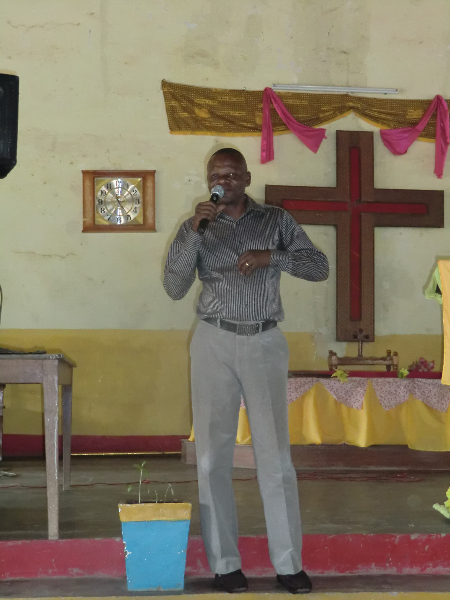
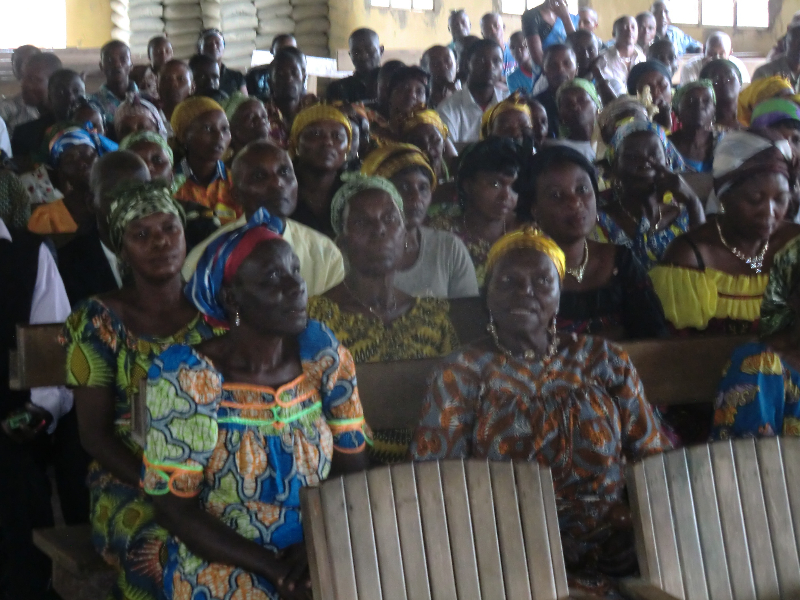
Today, we broke the tradition to go to the service in the Baobab Church. Instead, we went instead to the Mvuzi church. We had planned tos see their pastor, Madiadia, but he had gone to another church today. The French service dragged on and we got an opportunity to talk to some of the parishioners outside the church, including the leader of today’s service in kikongo. He seemed to be a calm and cautious person. But when he later entered the podium to speak, he was anything but calm. He was a veritable tornado in a positive sense and he got the whole congregation engaged in a dialogue, of which the Congolese are masters.
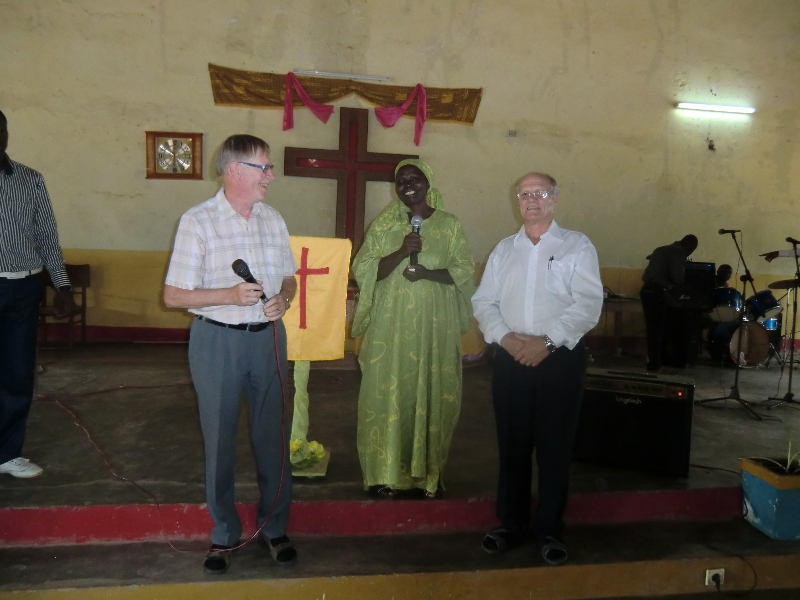
The Congolese generally use the whole body to express themselves. In the lectern, it is mostly the arms that underline the message, but the voice resources are also fully used and loadspeakers help the churches to be heard far and wide. Here you do not put your light under a bushel – no one can fail to hear what is being preached. In all church services in Congo guests get a special welcome. Here too, we were welcomed up on the podium. Yapeco told the congregation a little about MSG and I supplemented with a few words in kikongo – “mbote” and “tutondele”. These little words are important and you get immediate response. They mean “How do you do?” and “thank you” and they are door openers.

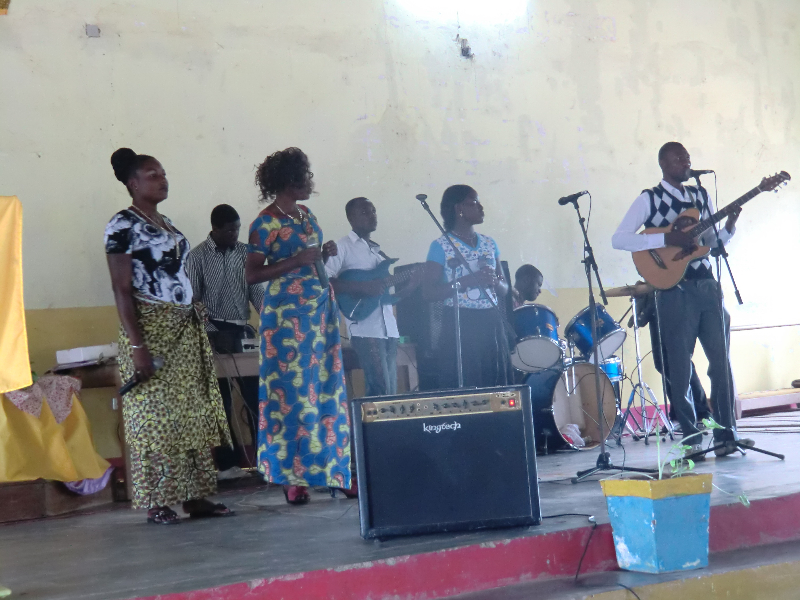
The band consisted of two guitar players, a drummer, a bass guitar player and an impressive amplifier. The noise level was certainly not healthy for anybody’s hearing organs. We hope that the musicians eventually realize this and reduce the sound level a few decibels. I think the whole congregation would be grateful and the music and the singing would come into its own. The music and the songs designed to honor God should be pleasant for everybody. Today, the thought came into my head that they perhaps think that God is old and deaf. In this case, I think they are wrong.

Today’s preacher came from N’djili in Kinshasa. He held a lively and vibrant sermon about freedom in Christ. It was traditionally Congolese with much dialogue and feedback from the congregation. A number of church goers stood up and made small additions to the sermon.

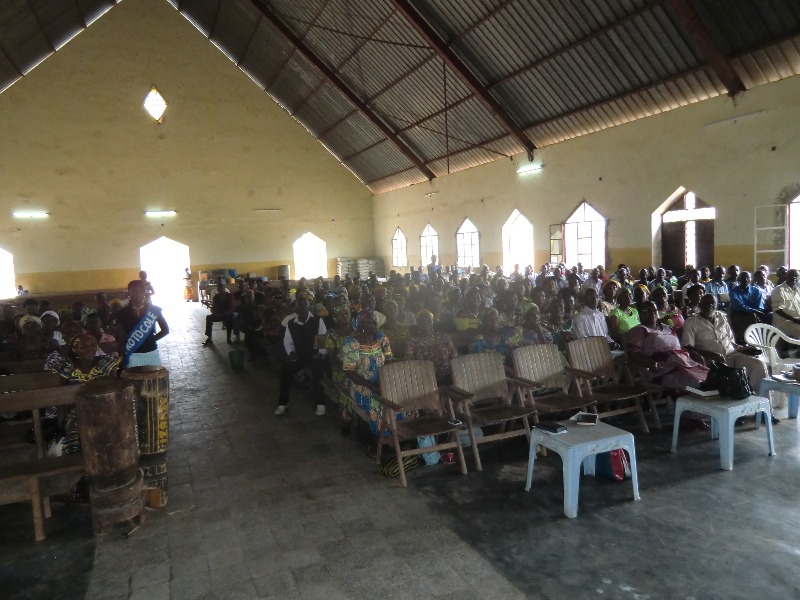
A Congolese worship service is something special. It gives an experience that lifts your spirit. There is a lot of movement and much prayer. It is rich in content and there are no dead spots even though it usually is very long and may last 3-4 hours. Today I noted that it was only young people who took care of the various functions of church service. All of them had blue banners with the text “Protocol”. Before we left the church we were served a chilled soft drink and biscuits and then we had to write our names and personal data in two different guest books.

Posted in MSG

Seen on TV

Member of the parliament Luthelo Myller

Our first meeting today was spontaneous. Lunama Wafingusu Brevard who came and knocked on our door. He had seen us on TV, he said, and now he wanted to know more about waste disposal and recycling. He is a chemist who works at one of the universities here in Matadi. We sat in the paillotte and had a one-hour briefing on biogas, recycling and the contacts we have with the authorities here in town, before he had to go start his working day at the university.

Two of our entrepreneurs, Matondo and Zola, came to see us a little later. At first, Matondo tried to run a taxi and transportation business. Profitability was low and he closed down the taxi business, but kept the truck. His next venture was a school, a kindergarten and a primary school. There are now 200 children in the school, and he employs seven teachers and a principal. It has three semesters per year, and the student must pay $30 per semester. Later on, he will start a secondary school too. He seemed happy and contented and claimed that the operation went well.

Zola first started a grocery store where he also sold frozen food. But she had problems with constant power outages and she closed down the store. Now, she is about to start selling Chinese porcelain. She is not going to have a physical store, but will walk around to people’s homes and offer her goods. We hope that it will work better for her. She is certainly not dependent on the arbitrary power supply in this new scenario.

Neither one of them is helpless, which is a good sign of entrepreneurship. When one project does not work you find something different to do. It seems like they are doing alright. Since last time, both of them have got behind in their repayments, and we put up a new plan together, where further infringements will result in penalisation. We agreed on the terms and signed the deed. Then, both of them gave us an oral report on their activities. They complained about tax collectors who charge hefty fees. The fees often seem arbitrary. These men are a scourge for the entrepreneurs. We hope that the President’s ambitions on curbing corruption will have an impact. His speech has been broadcasted repeatedly, all week. We had some new material that we have developed based on the experience we have acquired over the three years we have worked with entrepreneurs in the Congo. At the end of the meeting, Julienne agreed with Matondo that he will help with the transportation from Nsanda to the market.

Today we had coffee at 11 a.m. in the paillotten. Even if it is Nescafé, it tasted very good. Oumba Hantoinete, maid, went and bought biscuits for us. We also had Mankondo, deep-fried bananas. They produce a lot of mankondo in this house. They pack them in small plastic bags and deliver them to different stores. The brand is “Mama Augustine Yapeco”. Oumba washed our clothes today. The service is really excellent.

At 1.30 p.m. we met principal Musungu and three teachers from the secondary school of the Baobab Church. We have had dozens of teachers in training on entrepreneurship on a couple of occasions in the past. Now, we wanted to check with them if they had managed to get anything started. They said they are short in funding. But they have included our material in the curriculum of the business students. They have a plan to start manufacturing crayons with their students. They will work out a plan and give us a cost estimate. Then MSG will have to take some time to think about the plan. We also went through our new material with them.

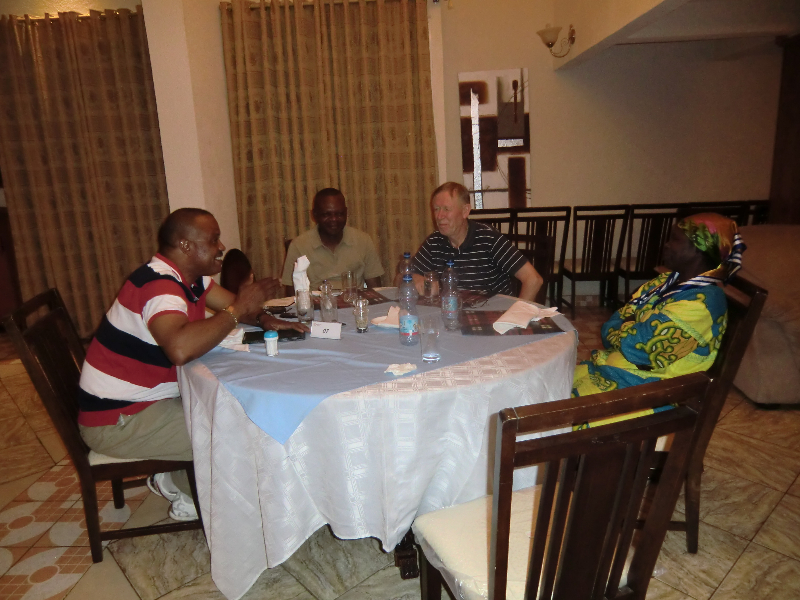
Just before seven o’clock, we went to Luthelo Myller. He invited us to a nice restaurant in Matadi. They served European food. Very tasty. Luthelo is chairman of the GSCL in Matadi and is very likable. He is one of 500 members of parliament in Kinshasa and belongs to the Presidential party. He has been in Parliament since 2011. It is good and necessary to have contacts in a country like Congo. He promised to contact people who can be of great importance for our work.

Posted in MSG

The president’s speech to the nation

The Clinique Church in Matadi

President Joseph Kabila held an estimated speech to Congress and the nation on Wednesday. He talked about three problem areas where actions must be taken: corruption, rape of women and individuals who enrich themselves at the expense of others and the nation. He condemned corruption in strong terms. It is forbidden in the DRC’s law, yet it is widespread and permeates society in many areas. It has become a culture and hardly anyone react or have that opportunity to react. People accepts the system, is silent and suffers. We’ll hope that there are effective actions behind the president’s words, and that people listen and react against corruption.

To tackle structural problems in a society where the rule of law is not prioritized is not easy to master. When officials use their position to wrongly acquire money from others, or when they are plain and simple incompetent, this creates uncertainty and takes away the power from many good initiatives for change. Poverty keeps it’s grip on the people. The president promised to appoint an adviser on corruption. The large amount of rapes on women must also be stopped. It destroys the women and shatters the families. And there must be a vigorous control of those individuals who enrich themselves thanks to their position. Many congolese appreciated the President’s speech, and his frankness. It bodes well for the future of the nation and the goal of development.

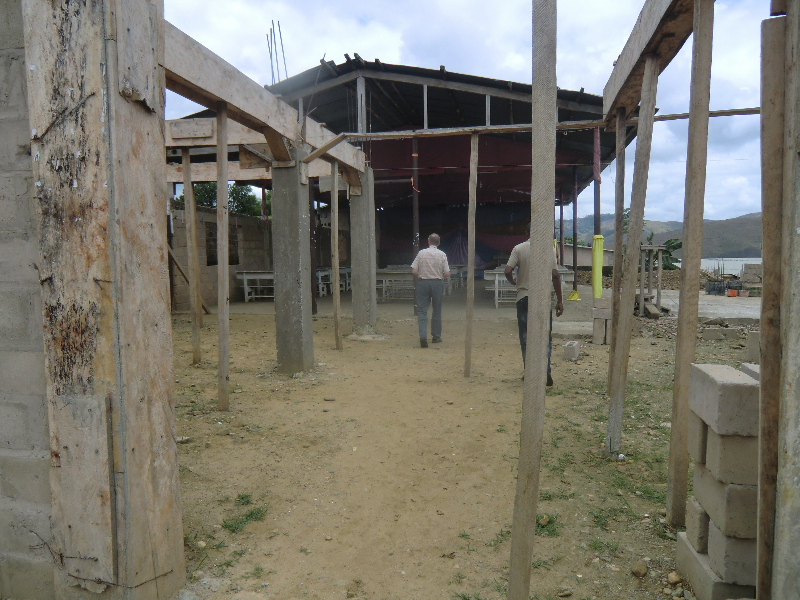
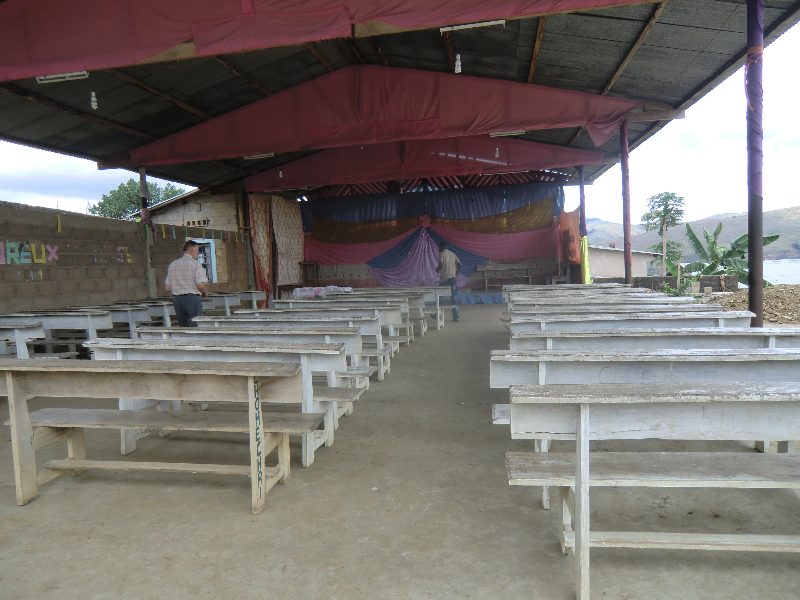
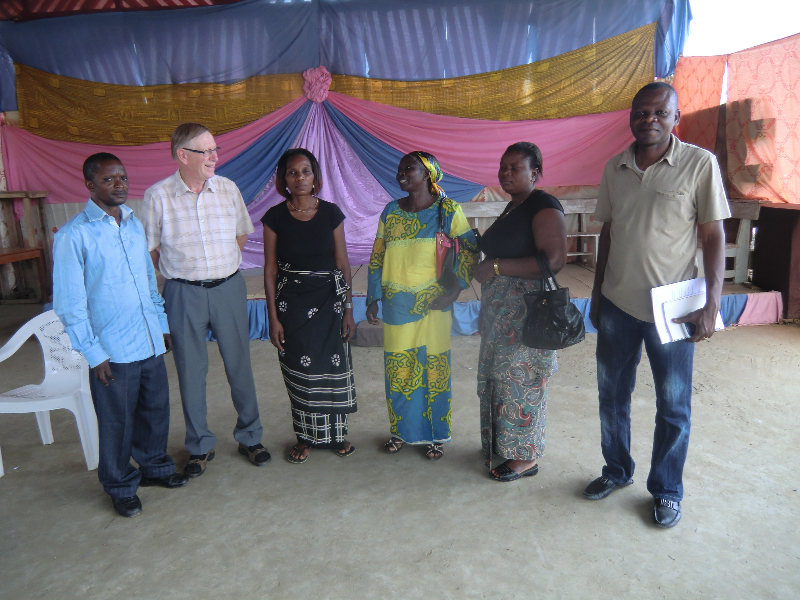
We started the day by visiting the BGFI Bank. We discussed the loan financing to entrepreneurs and the financing of an ECO house. We went through the conditions of security and interest rates. After the bank we visited Pastor Nsumbu Ngoma and his wife in their church Clinique. We had a chat with them in their church that were not much more than a roof, concrete floors and benches.

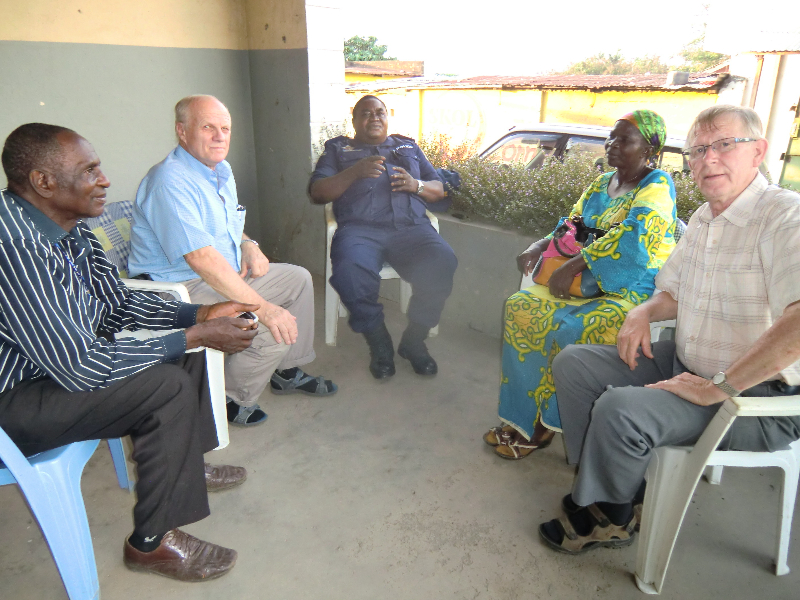
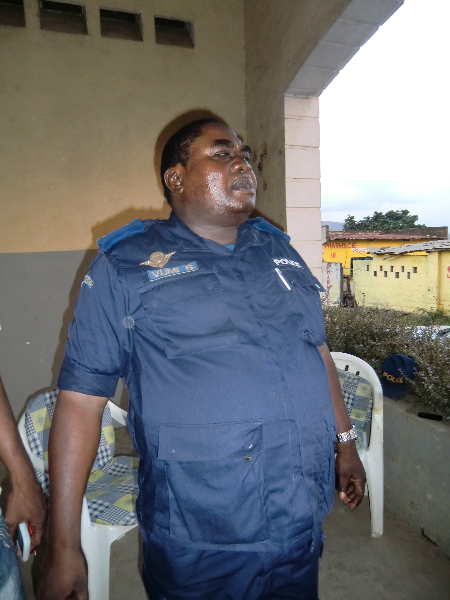
In the afternoon we visited the police chief of Bas-Congo, Vumi Bahelele. Samuel Nkailu was also there. Vumi told us that he is also a farmer. He has 7 acres where he will now sow soybeans. We talked some farming with him and Julienne discussed some legal problems. He was a cheerful man who was nice to visit. Before we parted on Vumi offered orange drinks that tasted well in the heat.

Posted in MSG

Nsanda group

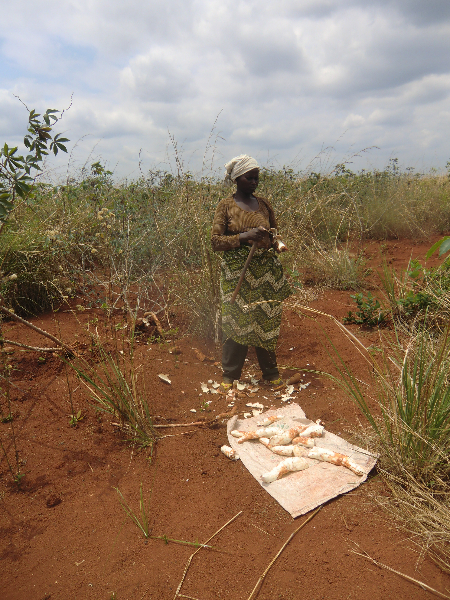
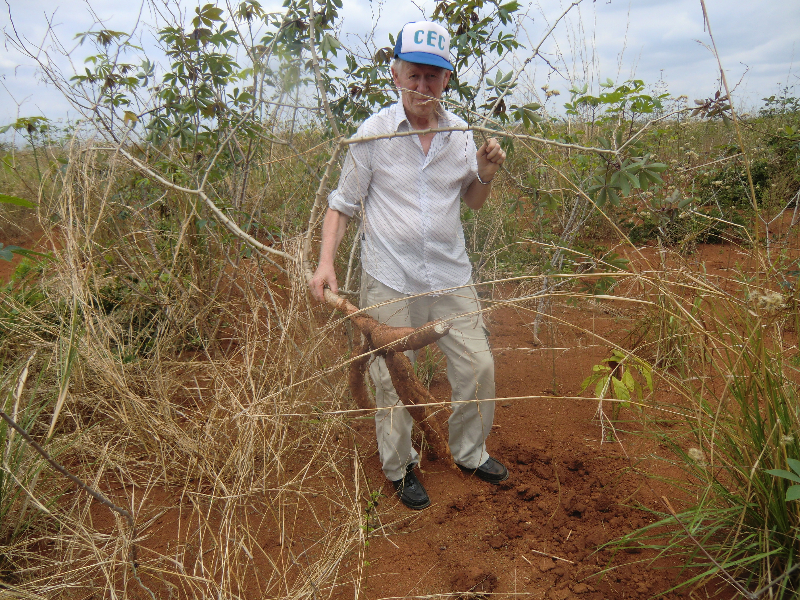
Bernt is harvesting maniok – kassava

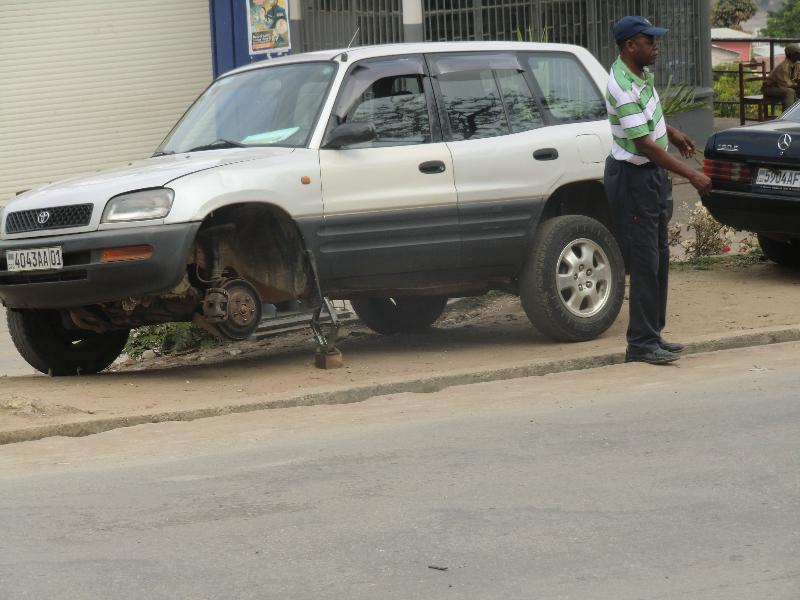
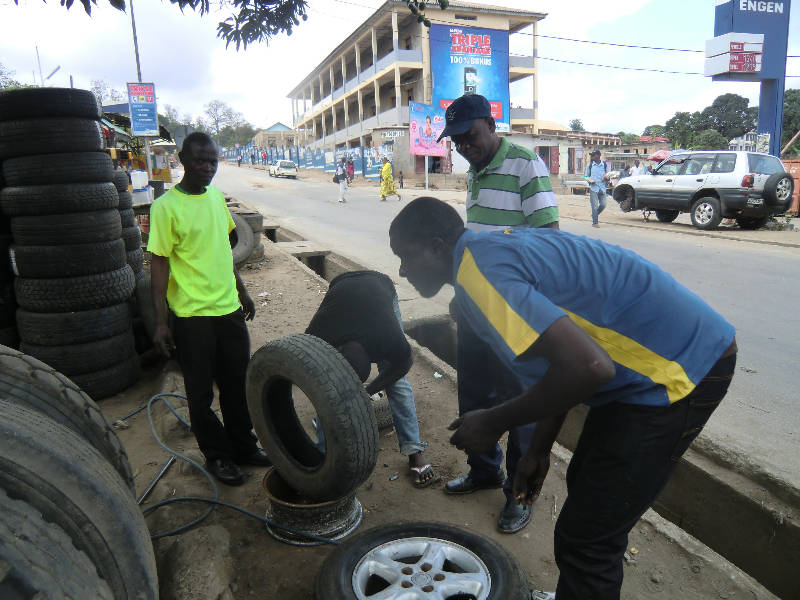
Today, there was a power outage in the morning, and therefore we didn’t get any morning porridge. There was only enough coal to heat water for tea. We had tea, bread and a few glasses of cold water. During breakfast, we saw the recording from the minister’s office yesterday on TV again. It will be broadcasted today too in regular intervals. This day was dedicated to Nsanda. Our first destination was Nsanda village and then we would go to Kvakva, where the farm is located. The distance from Matadi to Nsanda is 30 kilometers. But we did not get any further than the center of Matadi when Yapeco suspected that something was wrong with the left front wheel. It proved to be a puncture and we went to a garage. It would take a while to change tires, so Yapeco drove us up to his office on Lisanga where we would be more comfortable.

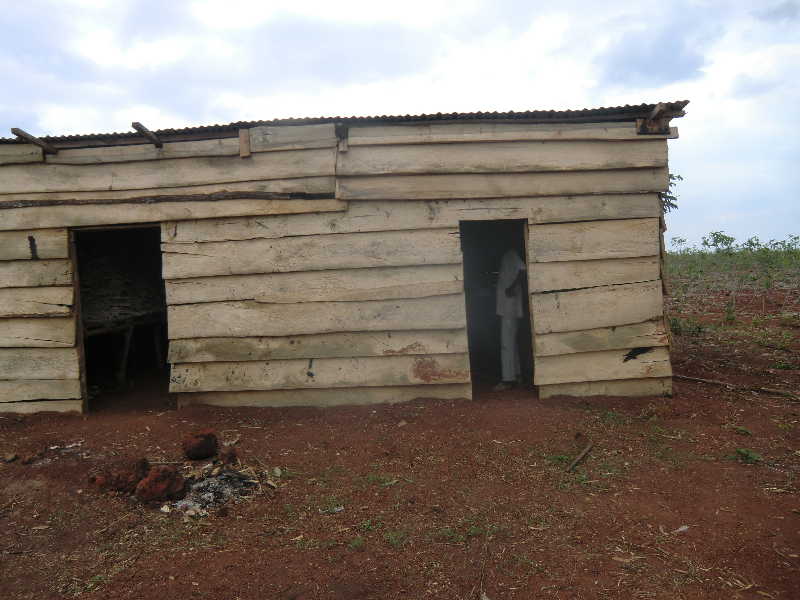
There is a cement foundry right next to the office. We went there and got prices on concrete blocks, sand and Masonry cement, materials we need for our ecological house. When the spontaneous meeting was finished, we had only a short wait before Yapeco was ready to continue the journey. Our first stop was at Nsanda, where we met Clement, Juliennes husband. They have a house in Nsanda where they stay when they work on the fields. The house is more a shed than a dwelling house. It consists of three rooms, and has no windows just hatches. The hatches are opened when light is needed. Part of the house has earth floor. It is an achievement of the Nyambudis to stay in this very humble abode. A better equipped house would be desirable. The plan is to build the ECO House in Nsanda. From Nsanda there is another 6 km by road to the village Kvakva, and from Kvaka there is 8 km into the bush to get to our agricultural fields. It is a very beautiful and open landscape with magnificent views, and the property covers 315 acres.

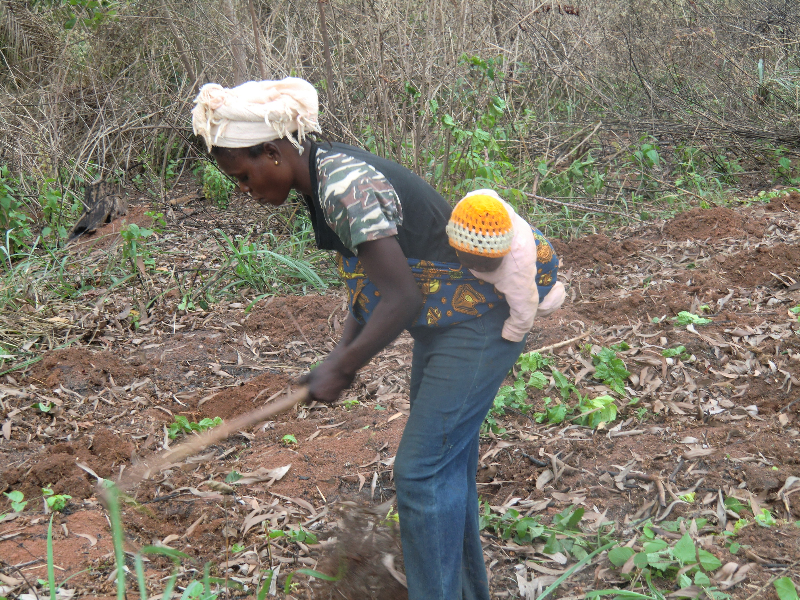
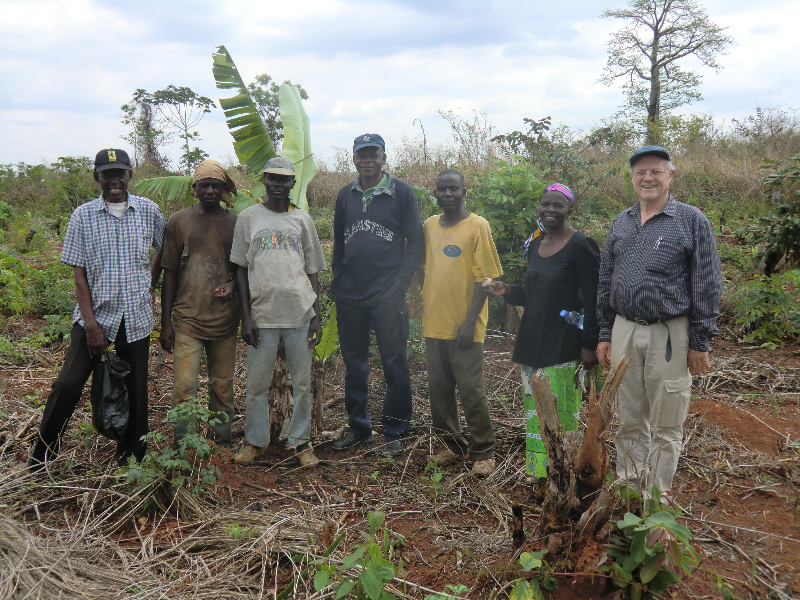
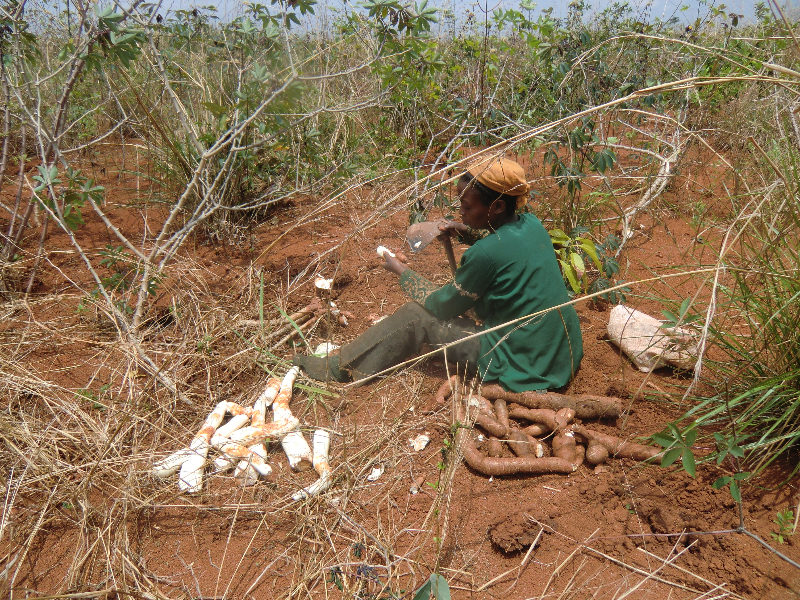
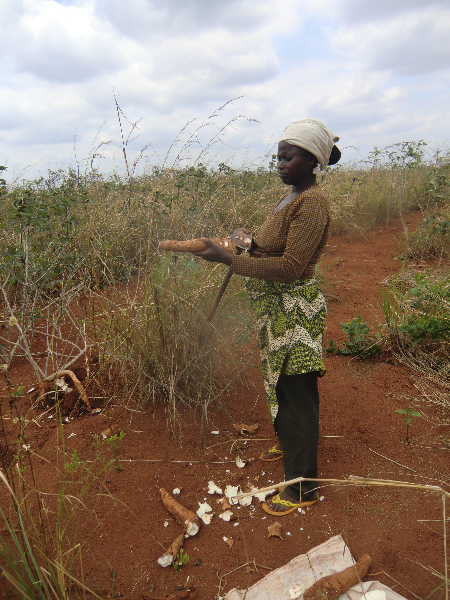
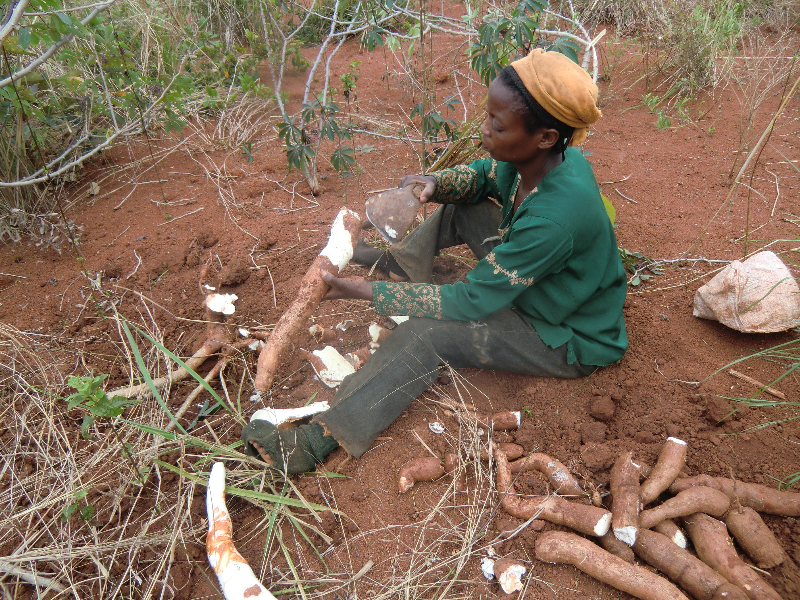
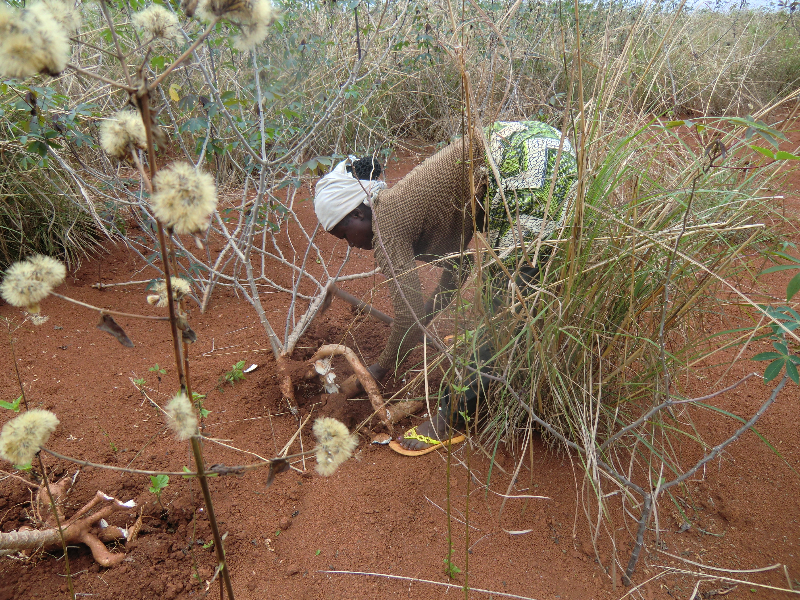
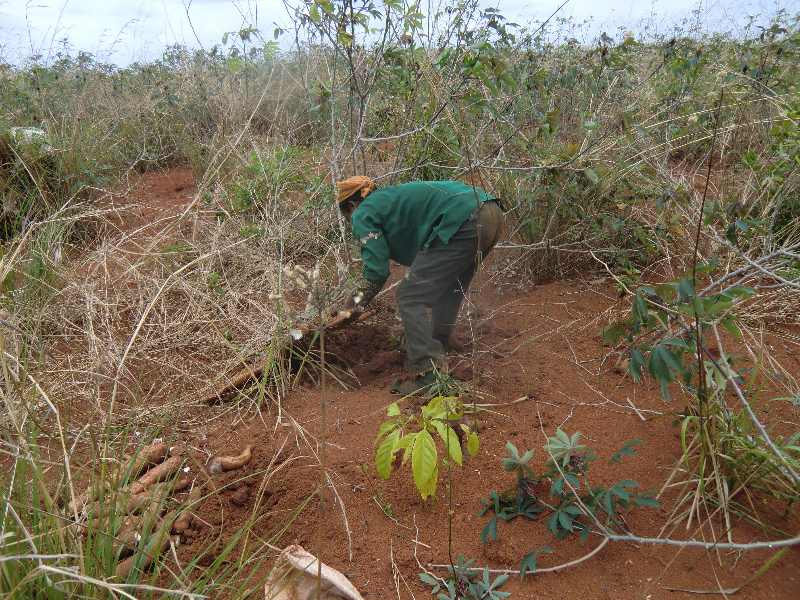
Today Jima, Mitusi, Angéle, Albert and Annie worked on the fields. They are reaping the cassava. Three hectares of eight has been harvested. 20 hectares of the land is cultivated by the Nsanda Group, and another 20 hectares are cultivated by 20 leaseholders and their families. They each have an acre, and they pay the rent by doing a workday a week on the fields of the Nsanda group. We walked around and looked at the manioc. Bernt and I tested to pull up a plant. We checked the 220 pineapple plants, the 330 new banana plants, and the 100 older banana trees. There are also 3000 mature oil palms.

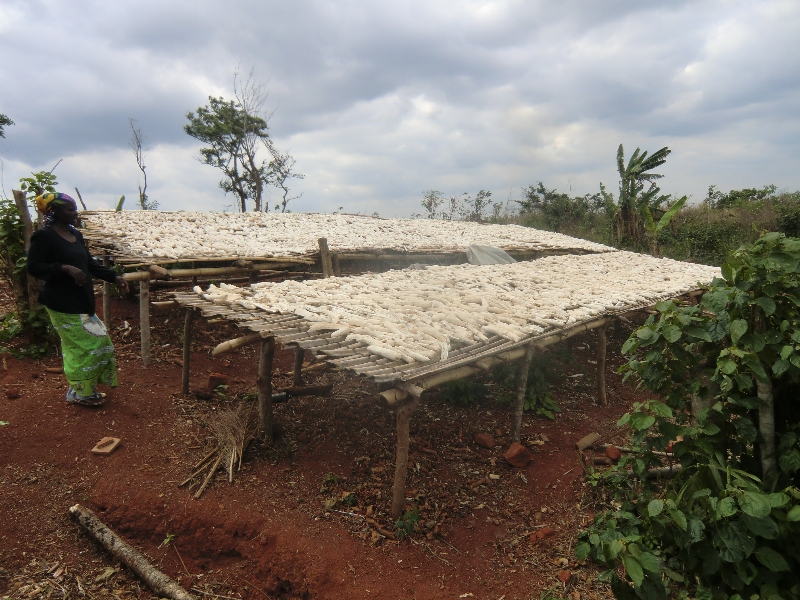
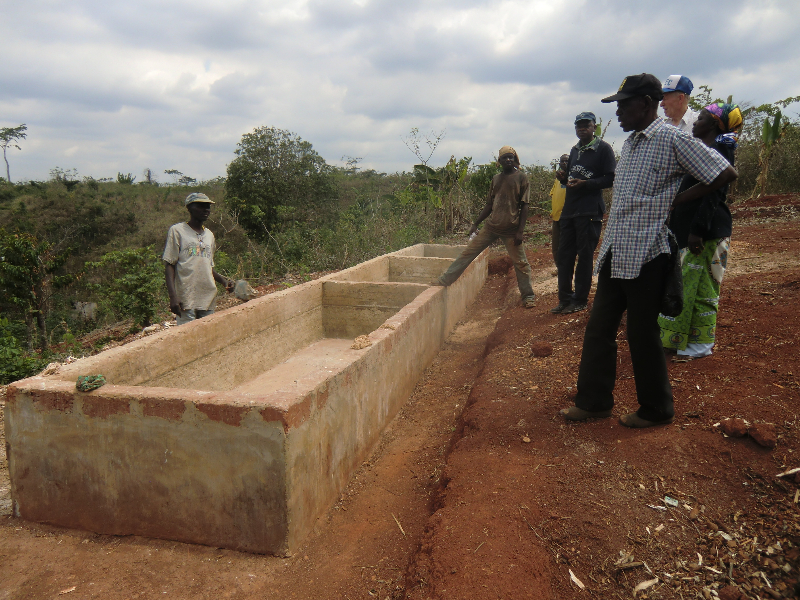
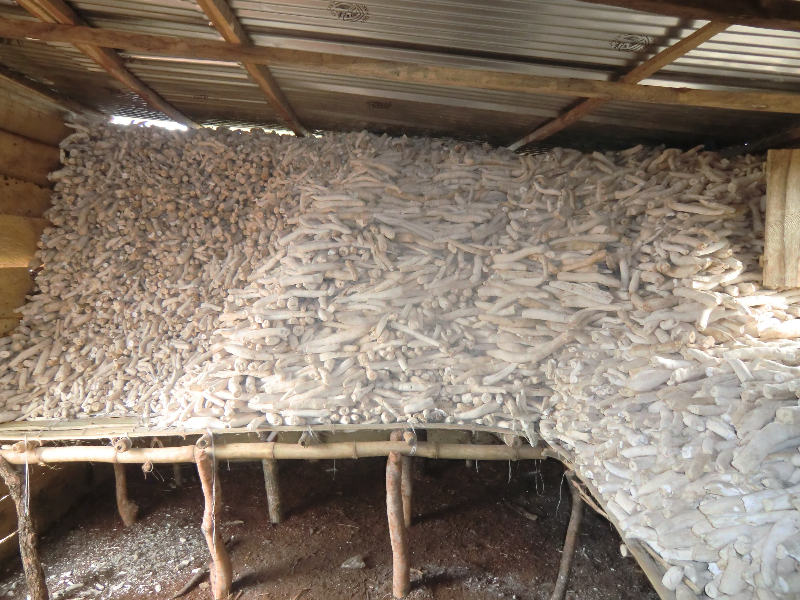
The harvest of palm nuts should begin shortly. They have sown seeds of acacia trees, orange trees and dwarf palm that will grow in plastic bags when it gets bigger. Ginger is also underway. For the processing of the maniok, they have built a basin for retting, a drying rack made of bamboo and a shed where the manioc can be stored. There is a good water source in the valley below the basin. The difference in level between the basin and the water source is about 50 meters. Our water pump can lift the water 30 meters. The rest of the way, the water has to be carried by hand.

We took a break to quench our thirst with a soft drink. We also ate a Mikati and a banana. Then we looked at the bamboo that grows in the area. We believe that it may be interesting building materials for roof trusses. The bamboo expert Ingemar Sävfors will have to teach us how to handle it first. From the Nsanda fields, we brought home manioc, sakasaka and a large bag with sponge to Augustine’s delight. And we bought bananas along the way. When we got home, it was time for a bucket shower, nice after a sweaty day.

Augustine made us an evening snack of citronella tea, peanuts and mankondo. Citronella is a small leaf plant growing in a flowerbed outside the house. The plant is said to be good against malaria. The leaves were put in the Bodum pitcher, which we brought the house last time.

Posted in MSG

Shower with a bucket

Minister Florian Masaki Nzembele

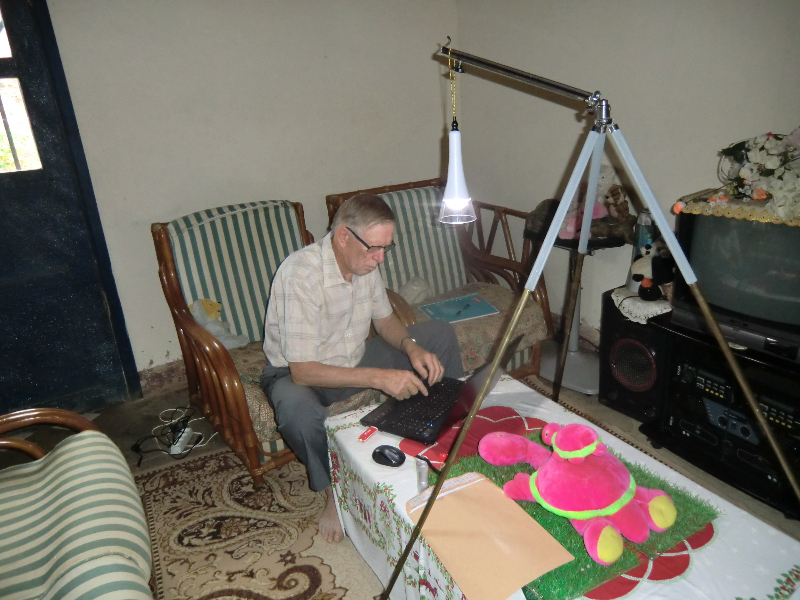
After a sweaty day and warm night, it’s nice to cool off with a shower. A shower was the first of the day’s activities. And the only way to get water above the head in this house is to use a bucket. As you get used to it, it works really well. I went on to publish yesterday’s blog because the power was gone when we got home yesterday afternoon. Luckily, it came back during the night. When the blog had been put together last night, the battery ran out and then it was time to go to bed.

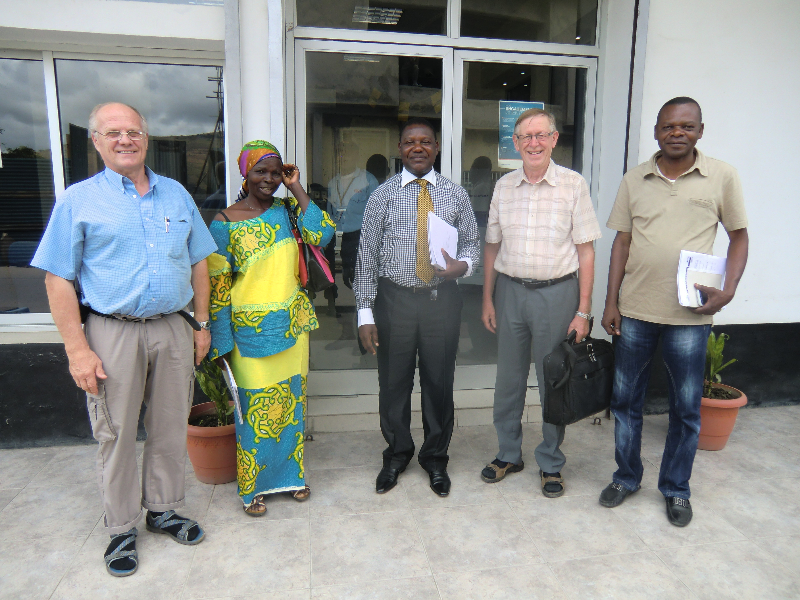
In the morning, we visited the Minister for Environment, Nature Conservation and Tourism here in Bas-Congo, Florian Masaki Nzembele. Yesterday, the mayor had prepared the minister. After the initial welcome we told him about Matadi Support Group. Basically, we talked about the same issues we had discussed with the mayor. Small-scale biogas plants, waste disposal and waste recycling and ecological housing. They listened with great interest to our presentation. One of the minister’s employees claimed that there had been previous waste disposal projects in Matadi. However, they failed. Another employee asked how much money we could invest ourselves. To that question, we have a simple answer. We are not investors or banks. Resources must be raised locally. Maybe it is possible to apply for grants from countries that already has development programs in Kongo.

We agreed on two things. The Minister will send a letter to us and express their needs and interests. Bernt will talk to the College of Borås about an education in waste disposal. We inquired if he would be willing to invest in one ecological house and keep it as a demonstration. We got the impression that it might be possible. The house is completely self-sufficient with energy through a household biogas plant and solar cells.

Julienne presented the agricultural project in Nsanda. The minister promised to send a delegation to visit the activities in Nsanda next week. It is good that we get a visit from the minister’s office. Let’s hope that the visit can produce some concrete actions too. We didn’t get to visit the governor. He was in Kinshasa in the congress along with parliamentarians, diplomats and other dignitaries. The president, Joseph Kabila made ​​a speech to congress and the nation. It was broadcasted on TV.

Local TV was present during our meeting with the minister, and afterwards Julienne gave a longer interview about our work. The recording was broadcasted every hour in the evening until midnight.

The one of Bernt’s bags that was left in Paris arrived yesterday. Now he has both toothbrush and other equipment to care for his appearance. In the bag was also a power steering pump to Yapecos car and he has been all afternoon at the garage to assemble it. Our afternoon consisted of preparations for the coming week in Brazzaville. And we have seen ourselves on TV a few times.

Posted in MSG

Visit to the Mayor

Meeting with a journalist outside the Mayor, s office

After breakfast, we visited the mayor of Matadi, Jean-Marc Nzeyidio Lukombo. This is the fourth time we visit him and we are starting to get to know each other. Today we were let in at once, which was good. Today’s schedule was fully booked. After the customary courtesies and compliments from both sides, we presented some ideas and innovations concerning biogas plants for households, ecological housing and sustainable waste management.

When it comes to garbage disposal, we will check with the University College of Borås what it takes to start higher education in the recycling and waste management, and how to put up a consultancy. The mayor’s proposal is to send one student from each of the three towns Luozi, Kimpese and Matadi to Borås. The city of Borås consider themselves to be world leader in taking care of garbage and converting it to different types of energy. Borås University College, Borås Energy – the municipal energy company – and the Technical Research Institute of Sweden (SP) cooperate and they sell training, expertise and consultancy worldwide. There is definately an interest here in Congo to do something about waste management.

We had a frank conversation, but Jean-Marc also wanted to pass the questions on to the Minister of Agriculture. He arranged a meeting for tomorrow with an advisor at the Department of Agriculture here in Matadi and he arranged a meeting with the governor. Lutelo Myller arrived during the meeting and invited us to his home on Saturday. Today he were going to Kinshasa for a meeting in Parliament. Vice mayor, an impressive woman with aplomb, was also there. After the meeting, there was a newspaper interview. Julienne talked to the journalist about the initiative.

Then, Yapeco brought us home. We had desk work to do, and he went to work at his office. At 4 p.m. we went to the Baobab church for a meeting with Pastor Edi Yavengi Diangitukulu. We presented the program on business ethics that Focus Business School has produced. Edi said: “You have come up with a new gospel.” Even though his words encourages us, entrepreneurship in itself has no saviour and is no magic bullet. Basically everything in entrepreneurship depends on the recipient and how he/she puts it into actions. The miracle can happen only when there is an individual with willpower and direction.

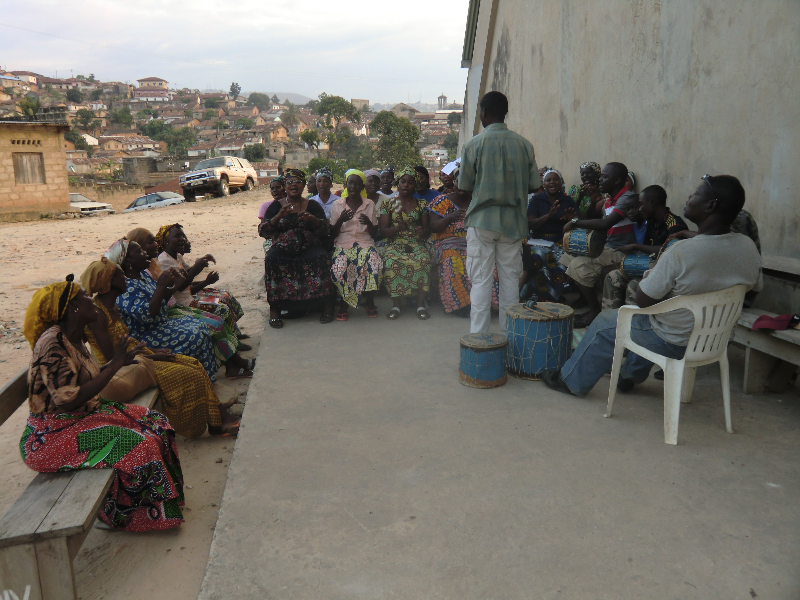
We talked about how to introduce this program to the various churches in Matadi. Edi and Yapeco promised to plan this. FBS’s idea is to reach all the churches. Within a few weeks, the churches should get a French version of the presentation. Hopefully we can arrange a two-week course for trainers in April next year. During the meeting, we were accompanied by two choirs who sat outside, on different sides of the church. Music and singing is ever present in Congolese life.

Then we asked for advise on how to repair the church bell. The clapper of the bell is stuck and can’t be released from the ground. They feel frustrated not being able to ring the bell before the service. The clock hangs 15 meter up in the air, in an impressive concrete structure, and it weighs 250 kg. We suggested them to use a sky lift to free the clapper safely. But they don’t think there is any sky lift in Matadi. Our next suggestion was a mobile crane with a basket hanging from the hook. There ought to be mobile cranes in Matadi and this will probably be the solution.

Posted in MSG

The Youth House

The police officer at his office checking our pass ports

We started the day with an inventory Yapecos stock of solar lights. He keep his stock in three places, in Matadi, in Boma and in Muanda. We reviewed the warehouse in Matadi. It seemed to be alright. We also went through the book-keeping. Everything seems to be in order.

The police station in Matadi wanted us to come and show ourselves. There were no major formalities or ceremonies. The official had an office of about four square meters with a couple of chairs and a table. He received a copy of our passports and we took pictures of him. At least, we completed that formality. Just across the street from the police station is Dialendua’s shop. Today, Dialendua himself was away on a trip while his wife took care of business. They are skilled entrepreneurs. They run the business together and it works well for them. Their store as well as their finances are in good order.

In the afternoon there was desk work to do, and at 5 p.m. Samuel Nkailu came to visit. We gave him the letter from Alice Sandblom and then he gave me an update of the activities in the Youth House and in The Christian support group, abbreviated as GCSL. The chairman of GCSL is now Lutelo Myller, son of Matila, the previous chairman. Lutelo is the manager of a travel company and owns several buses that ply the route Kinshasa – Matadi. He is also a Parliament member in Kinshasa. GCSL has 28 members from different churches.

In November last year, the GSCL started a restaurant on Kinkanda hospital where they serve one meal a day to over 100 patients. They are there six days a week and the meal costs 200 – 300 FC, equivalent to about $0.25. GCSL members cook and serve as volunteers and Lutelo donates $1000 every month to the activity. This fall GSCL will start a similar restaurant in Kiamvu hospital.

The Youth House houses many activities. Right now, 30 boys and coaches are staying in the Youth House. They are footballers from Kinshasa and they are staying in Matadi for a week. Two churches in Matadi have youth leader training on Tuesday evenings. On Wednesdays between 5 to 7 p.m. mothers with young children from all churches gather in the Youth House. The purpose of the meeting is to teach the mothers the importance of proper schooling for their children and that they also take responsibility in their respective churches. I blogged about one of the mothers yesterday. She gave a speech about schooling at the end of the four hour long Sunday service. On Wednesday and Saturday afternoons, five school girls learn to sew. The three Swedish sewing machines from the inauguration has come in handy. Members of GCSL are teachers in the course.

Many also rents the Youth House to various family celebrations, birthdays, graduations and weddings. Samuel explained that the premises are open to every good youth activity for all churches and other nonprofit organizations. “Full Gospel” and “Campus for Christ” has had conferences in the premises. They also have had seminars for newlyweds, meetings, prayer groups and retreats. “We would like to do much more, the need is great. We would need equipment to show films and have access to different musical instruments. There is a great interest in film and playing various instruments. If there is anyone who is interested in donatingt, you are welcome!” greets Samuel Nkailu, a very sprightly 77-year-old who has fighting spirit left for the youth of Matadi.

Posted in MSG

The children´s week

The children in Baobab church

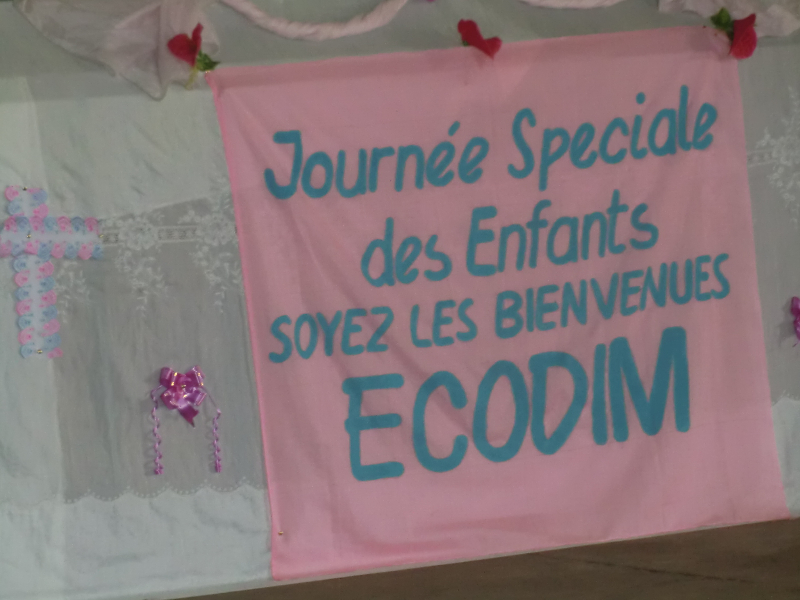
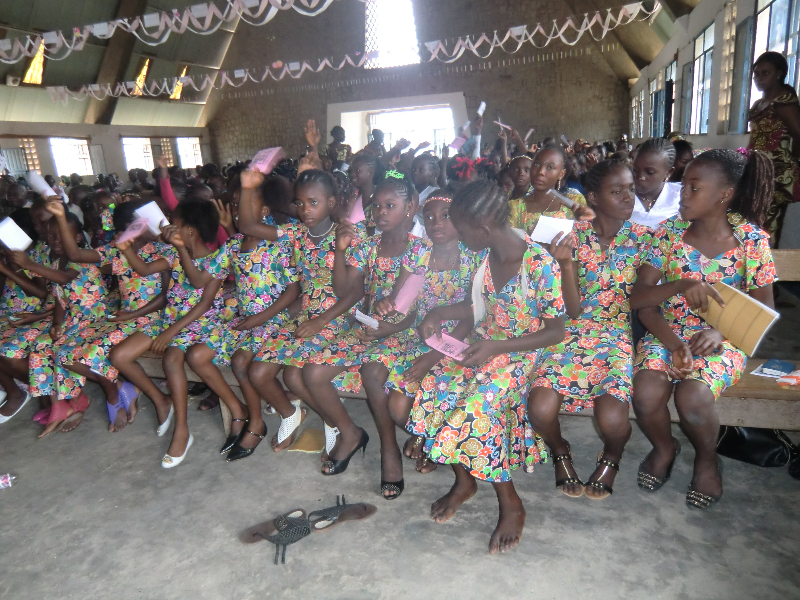
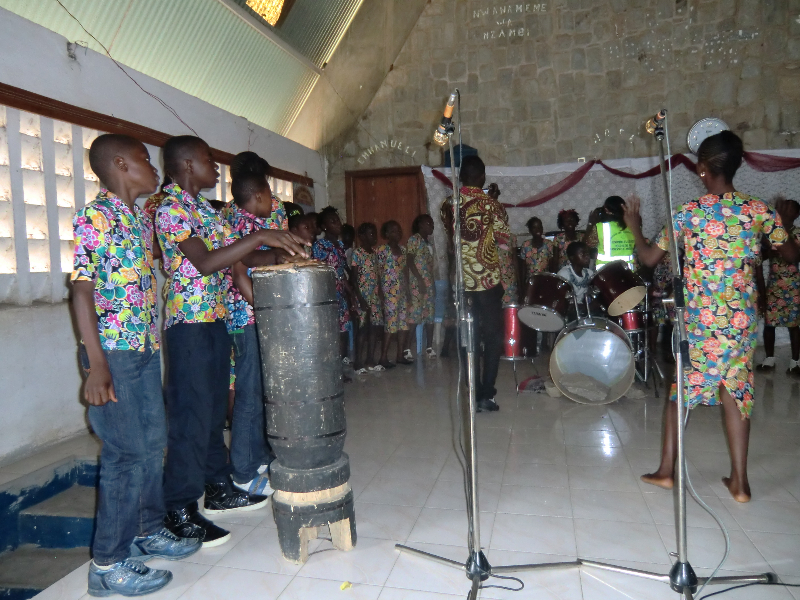
The day started well with oatmeal. Afterwards, we went to the Baobab church. When we got there 9:30 a.m. the French service was still going on. At 10 o’clock the Kikongo service started. The past week has been “The children’s week” and the service was directed to the kids. Today, Sunday School was attended by about a hundred children. The children sang in choirs, led by young girls. They read Bible verses, including the Ten Commandments. By heart, they said the names of all the books of the Bible. Those who knew the most by heart got extra applauses.

As usual, the service contained many elements and each element takes time. Bernt and I step up to the podium and greeted everyone from Sweden. When we left the church by 2 p.m., the service was still not over. In the service, a women talked about the situation of children in the Congo. She stated that there are two million children who receive no schooling. She had so much to say about the kids in Congo that she had to be interrupted. Certainly, she talked on an important subject, but less is more. The Congolese are sometimes very verbal, the words just flowing. Outside the church, people were preparing a meal for the children. It had been a service with a lot of spirit and much contact between the speaker and the audience, which makes the service lively

When we came home, Augustine had dinner ready. We had a tasty meal and rested one hour. Then we had a good conversation with Yapeco and Augustine. She told us about her plans for the poultry farm. She has started again with 150 chickens and intend to build up a new establishment. I think she is better equipped today, considering the experience she has gained from her earlier poultry farm. Together, we will go through the projected profitability of this business. We will do a production cost estimate. Yapeco also reported on his activities. Tomorrow, we will take make an inventory of his stock and continue the review. An open and positive meeting to be continued.

Then, Augustine served citronella tea with mikati, a deep fried bun, and mankondo, a sliced ​​deep fried banana. We were visited by Mituzi and his five-year-son Glody. He works on the Nsanda estate. They had coffee with us. Then Mituzi took 20 cans pili pili, which he placed on his head before leaving us on foot. He will sell them at the market. Nsanda Group has a pili pili stock here at the home of Yapeco and Augustine.

Posted in MSG

To Matadi

Julienne is book keeping

After breakfast we visited Emy Meantezila. First, we gave him a letter from Alice Sandblom and then he got letters that he will pass on to Mukimbungu from Rimforsa and to the children in Kingenge from Asklanda. Then, we talked about the group of entrepreneurs that we have worked with here in Kimpese. We explained to him, just as we have done to the other local representatives, that in the current situation we do not give any loans.

The reason is that it the handling of money and repayment of loans has not worked in an acceptable way. To some contractors the loans have become a problem and they have ended up in a worse situation than before. We have not yet had to recognize losses, but some contractors have not fulfilled their obligations in the way we agreed. On this matter, I would want to point out that there has also been good examples. But before we approve any new loans at all, all the old loans have to be settled. We continue talking with banks here, to get them to take over the management of the financial part. In MSG, we must put our primary focus on providing experience and knowledge.

Ngangas hotel building goes slowly towards completion. Now, it is painted both inside and outside and almost ready to be furnished. The electrical installation is not completed and the third floor will have to wait until later. Nganga told us that both the Japanese and Americans have heard of and want to stay at his hotel. It seems to be a big things happening in Kimpese according to Nganga. He is part of a group conducting negotiations with an American-Japanese mining company that wants to extract minerals and diamonds in the Kimpese area. If this venture starts, it will mean big changes to this small town. It is possible that Kimpese will change its name to Bangu, and that Kimpese and the neighbouring town Lukala will be merged. The name comes from the nearby mountain.

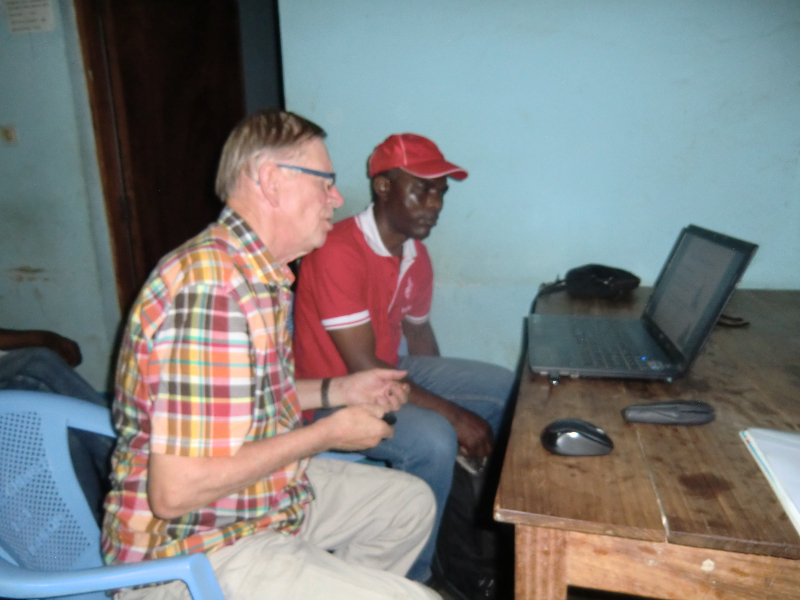
Then we took a taxi to Matadi, 150 kilometers ahead. Yapeco provided us with soft drinks and biscuits, which we had on the roadside, halfway to Matadi. We arrived at three o’clock. After dinner, I went through the accounting of the Nsanda Group with Julienne. The book-keeping has had to be made in retrospect because the software hasn’t been working as it should. Julienne started putting the records in the program after our going through. A little later, Yapeco came home after a meeting and we planned the forthcoming week in Matadi. Augustine offered evening tea and congo buns and afterwards we talked business with Yapeco.

Posted in MSG