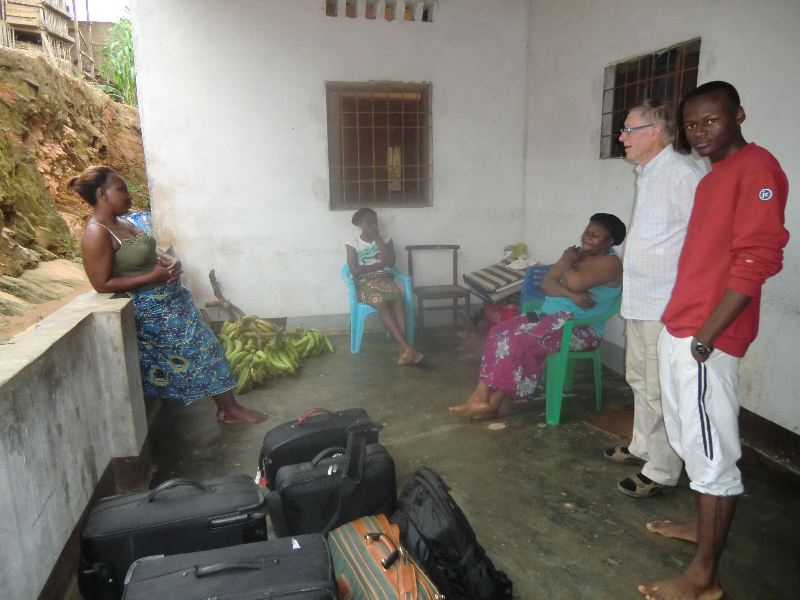
All packed and ready to go

T-light 2

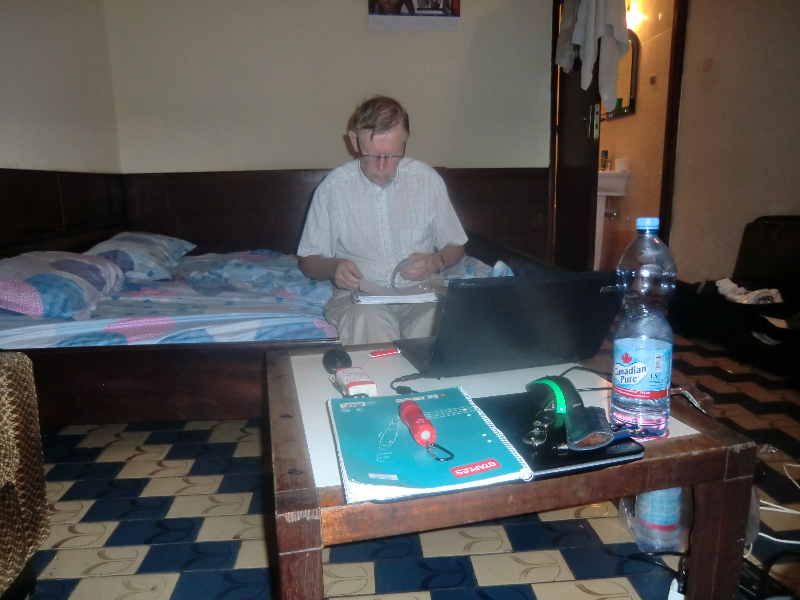
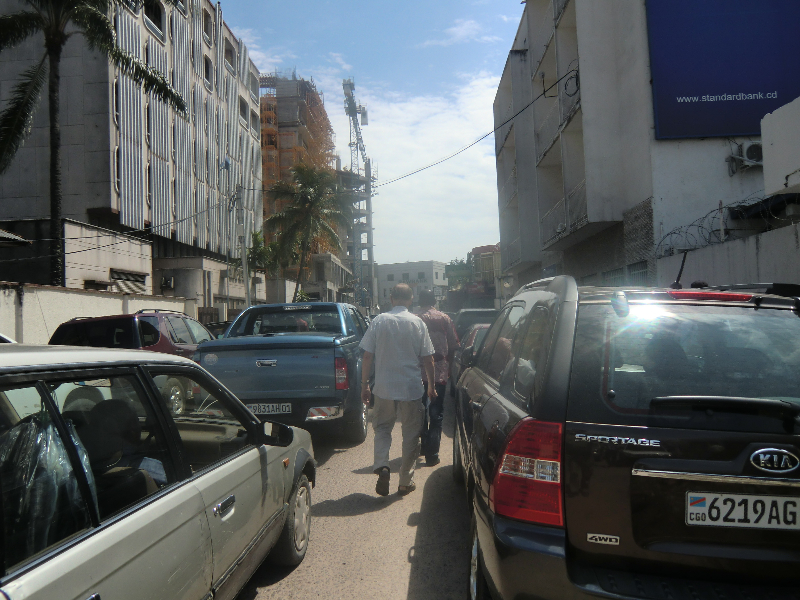
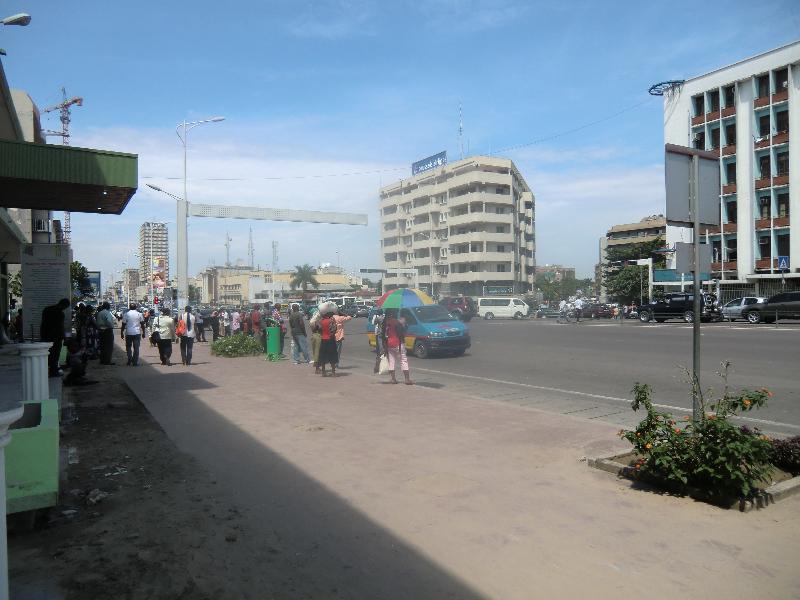
On Monday morning, I am travelling to Congo for the ninth time, accompanied by my wife Kerstin who is going there for the second time. For a few months now, we have been preparing the trip with the help of many people, both in Sweden and in Congo, to get things in place. The meetings we have had with Congo veterans at Uppsala Mission Church, at the Equmenia Church’s Office in Alvik and the Congo Brazzaville Embassy in and Stockholm have been especially valuable.

Congo Brazzaville’s ambassador to Sweden went to Congo a few weeks ago, and he has prepared for us a meeting with some influencial persons during our stay. One of the goals of this trip is to convince prominent Congolese of the importance of entrepreneurship. The second goal is to sell our solar lamps.

Now, I want to take the opportunity to thank everyone who has sponsored solar lamps. So far, the campaign has received 28 800: – SEK. I urge those of you who want to get involved and lit solar lamps in Congo to submit your contribution to our Swish number is 123 515 83 99. Please read the previous blog. Sales of the subsided lamps will start in mid-March. There are two weeks left of the campaign “Light a solar lamp in Congo”.

Kerstin will manage the blog during this trip. As long as we have access to Internet she will blog every evening about the happenings of the day.

Posted in MSG

Light a solar lamp in Congo!

Solar lamp

Since 2007, we have been engaged in several different projects in Congo. Our main project has been to teach entrepreneurship to groups of people. We are convinced that entrepreneurship is one way out of poverty. Entrepreneurship creates resources on a personal level, as well as for families and for society. These resources are needed to build schools and hospitals, provide education and medical care and maintain a social safety net.

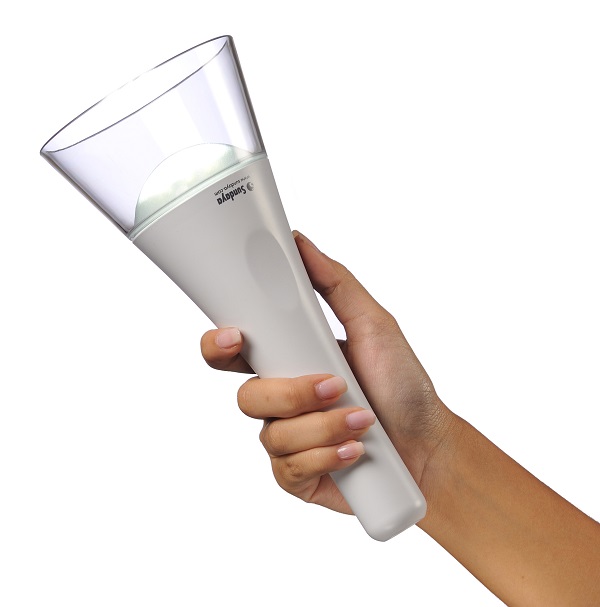
One of our projects is importing solar lamps to Congo. The background is that not all have access to electricity at home and the general power systems are unreliable, with many power outages. In this environment the solar light is able to fill an important role. The kids can do their homework and the parents can use more of the hours of the day to the benefit of their family. The light we import is very practical and can be used as ceiling light or table lamp. It is also excellent to use as a flashlight. (See pictures below). The price of a lamp is 57, – USD which includes the solar cell and various accessories. The dilemma is that few ordinary Congolese people can afford to buy it at that price.

Now we ask you: Would you like to turn on a light in Congo? To make it affordable for the Congolese who have less purchasing power, but still needs electric light in his house, we give you the opportunity to co-finance the purchase. To do this, donate 43, – USD per every lamp you want to support. Then we can sell the lamp at a price that is better suited to the customer’s economy. Maximum price will be 14, – USD. The reason we do not want to convey the lights as gifts is that we have a policy of not giving anything away for free. You put a higher value on things you pay for, and you take better care of them.

For international payment (from outside Sweden), please contacts us for further details.

[contact-form-7 id=”7081″ title=”Simple contact form”]

Posted in MSG

Report From Baobab church

Pastor Matteiu Diangitukulu is teaching by the support of Focus Business School

Our Church in DR Congo, CEC, have decided that in all parishes would the month of May 2014 devoted to tithing. For our part, we chose to teach according to FBS, based on two chapters in the textbook:
1. God’s will when it comes to your finances
2. God’s will for your finances and tithing

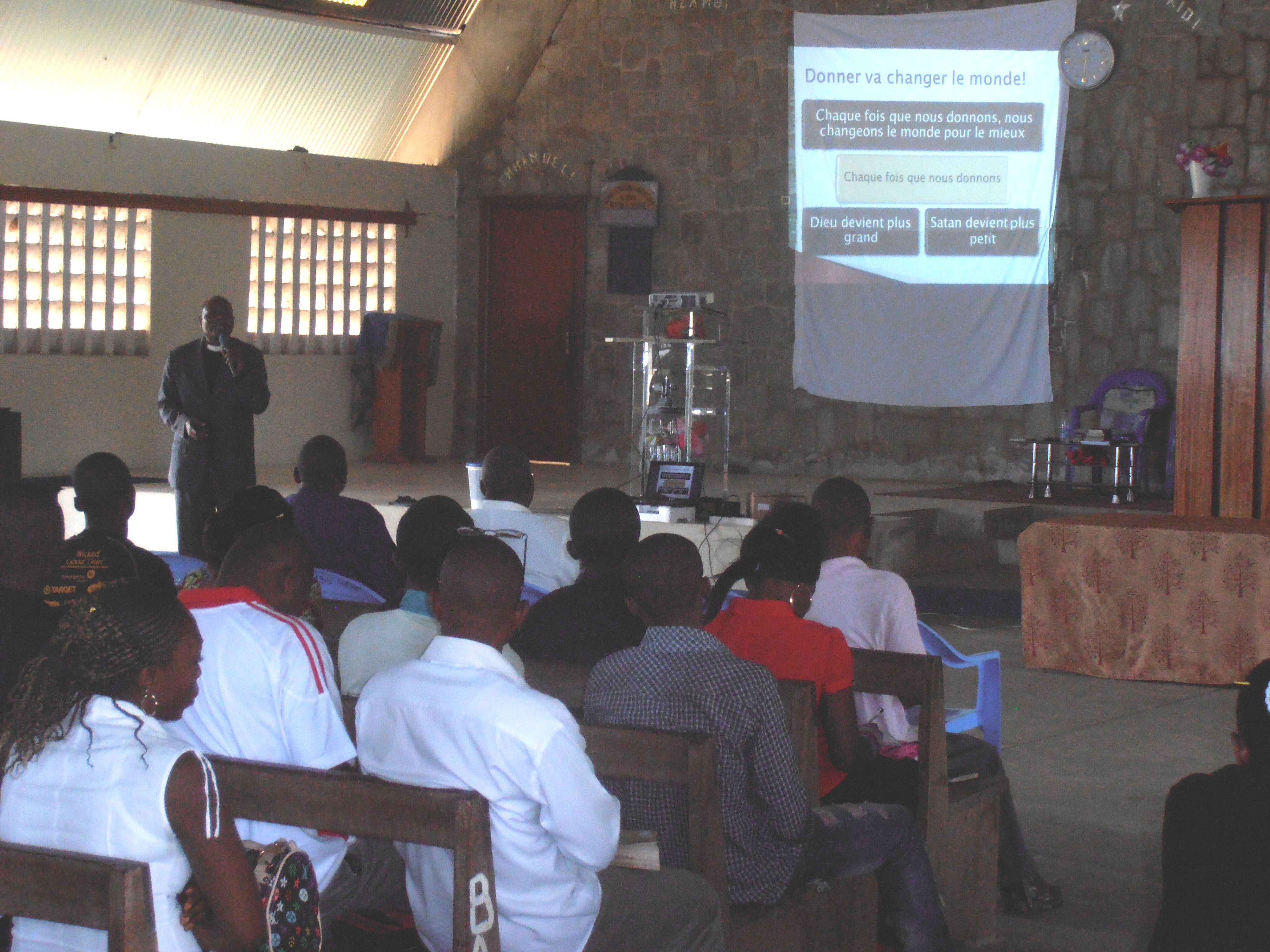
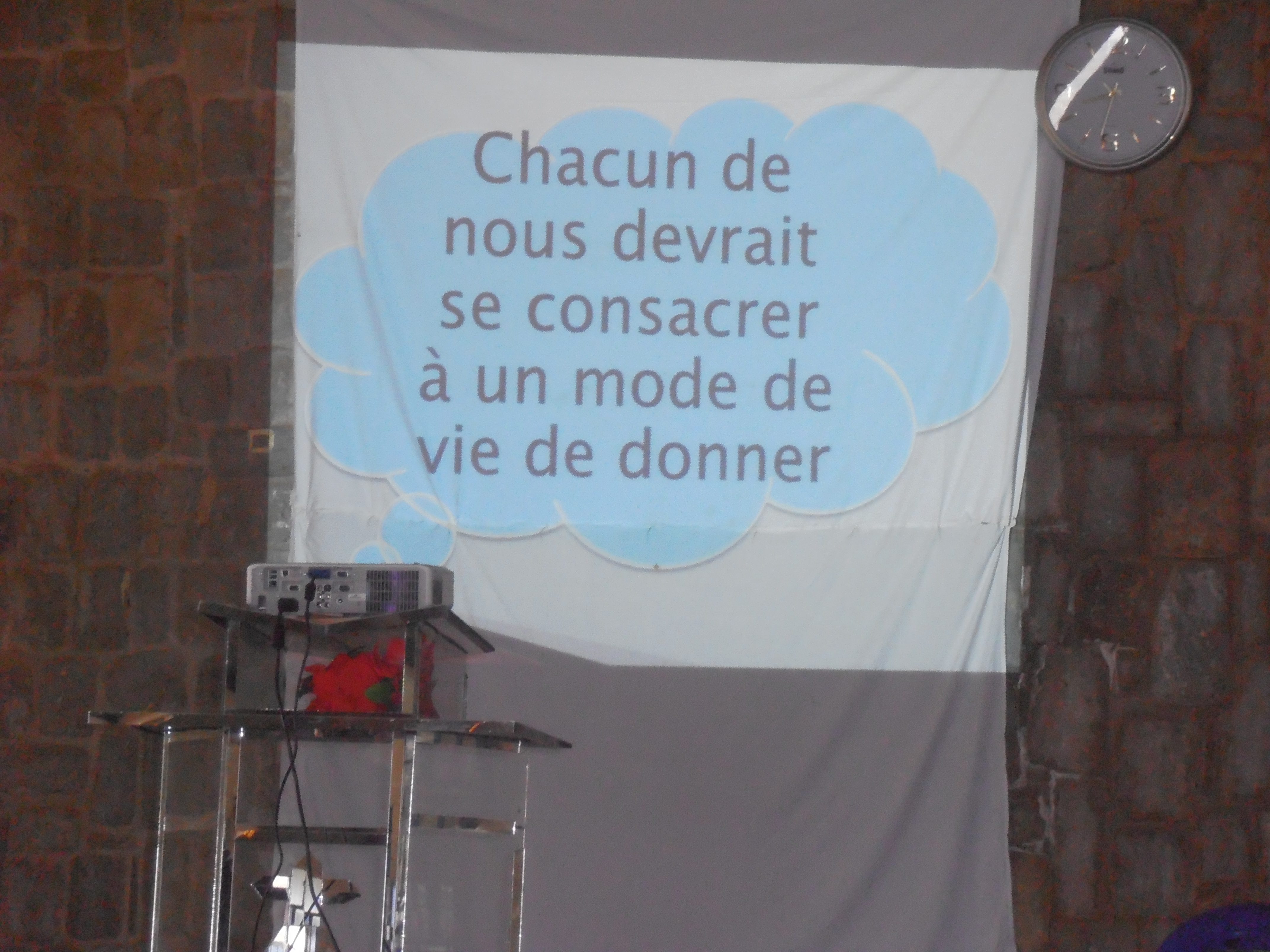
It went really well, yes fantastically well. On Sunday the FBS replaced the sermon. Pastor Matthieu Diangitukulu accounted for introduction from the pulpit, then he went down and I started with Power Point on the back wall of the Baobab church and it went very well. It went on for two hours, but the people was not tired. It came more than four questions and we tried to answer with the help of the Holy Spirit, according to what is in our books.

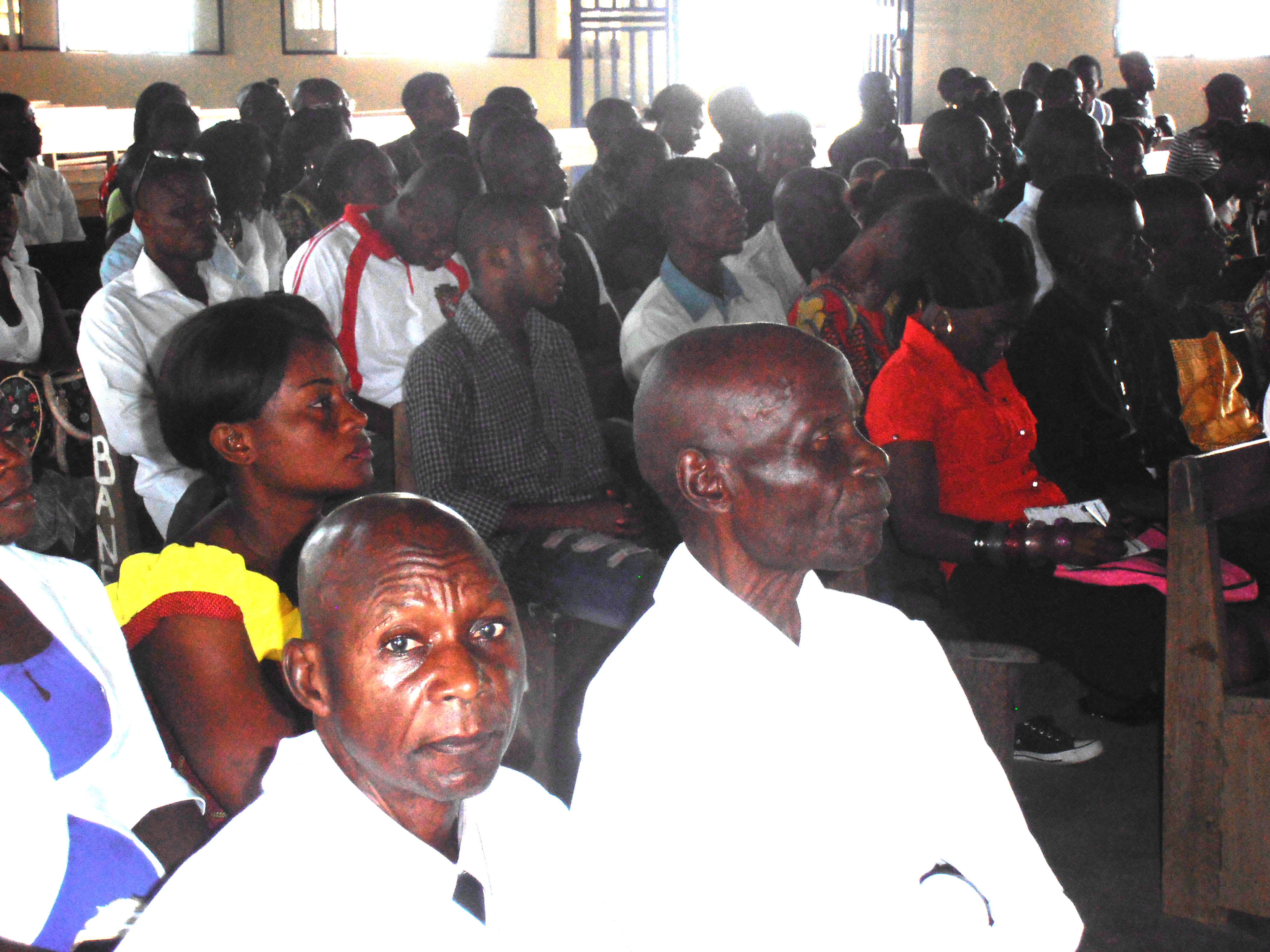
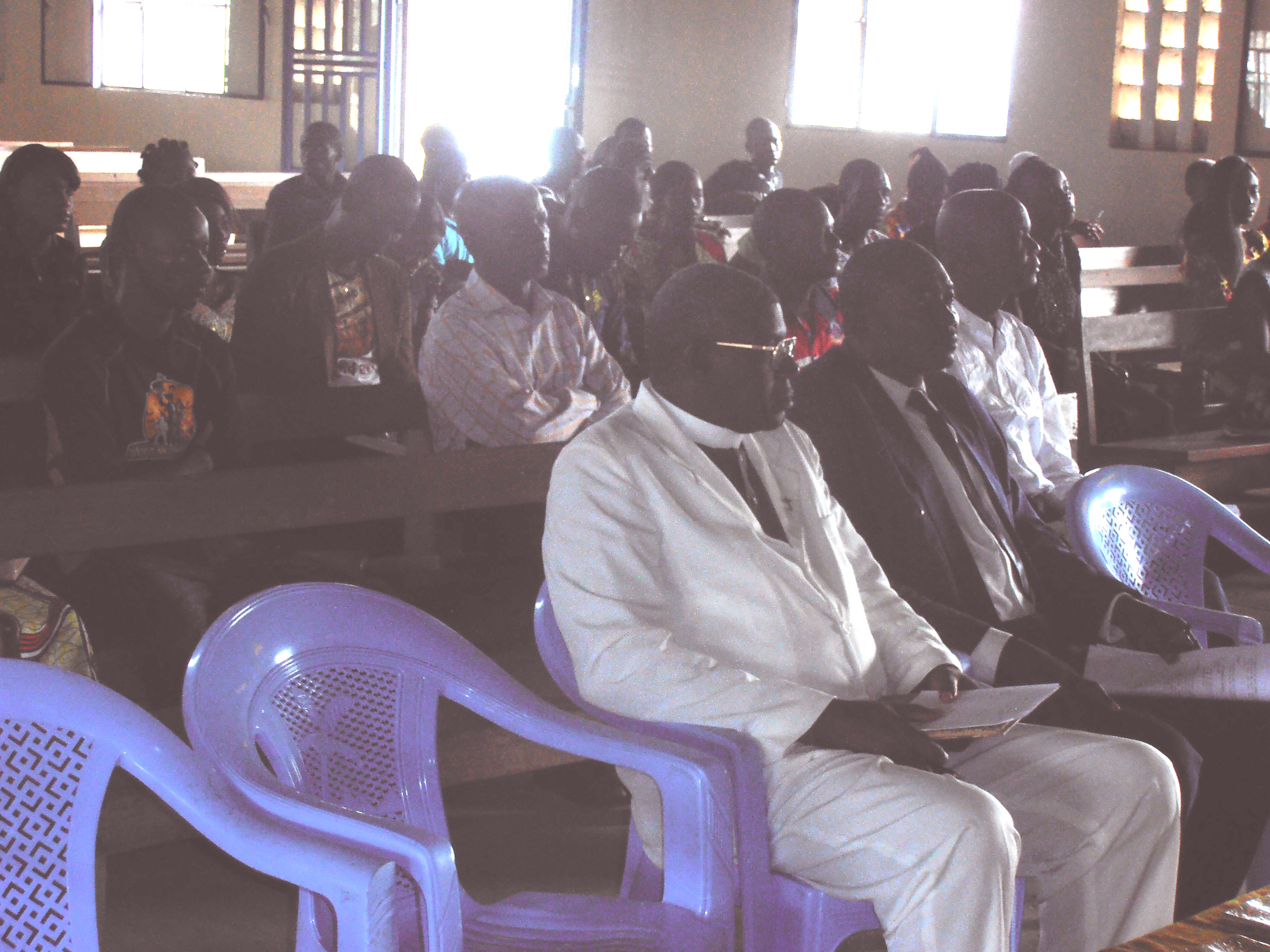
On May 18 joined, 84 men, 102 women and 22 children, and the following Sunday there were 120 men, 180 women and 39 children. At that time, we talked mainly about tithing; how to give their tithes to God. Even then, it lasted longer than two hours and replaced the preachng. It was the second time we used a projector in the church. We received many questions and it was great to be able to see the pictures in the preaching.

In the end, we invited those who had brought their tithes to the Lord. There were many who came forward to give their tithes to God.

Pastor Matthieu praid for them and we all got an opportunity to pray and ask God to forgive us because we had stolen his money, when we have many times had not given our tithes; we had not thought of his barn, which is the Church.

This was a brief report of the sermon by using the projector when it is related to the FBS program, as you have taught us and which we have implemented in Baobab Assembly.

Many regards from
Pastes Matthieu Diangitukulu and Yapeco Bakala Massengo

Posted in MSG

Second part of Focus Business School

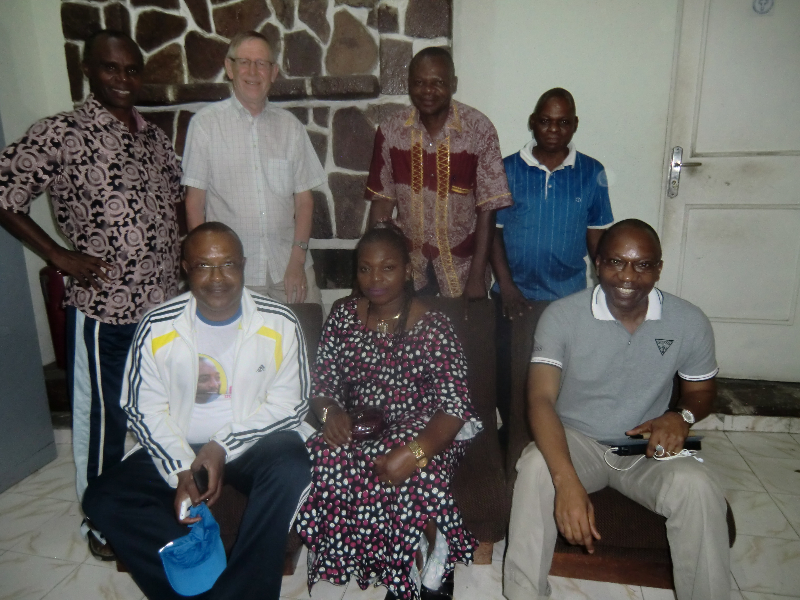
The participants in FBS course in the front of The Youth´s House in Matadi

This is a report from the FBS Committee by Yapeco
We are in the velocity century; that’s right, because it feels like it was yesterday that we began our Focus Business course with Julienne as a lecturer . But today is Saturday and it’s been closing . But it’s just now that we have completed . Everything has gone well, thanks to God’s grace.

We then started on Monday 5 May 2014 at 15.30 , as you can imagine I mean Congolese time .

I began by greeting all participants and encouraged them to remain alert during the course, so that we as a participant in this course forms the core of the FBS. We will therefore direct teachers in our different contexts, to begin with in our homes , workplaces , churches, and so on.

The start was a little modest , because there were only 17 people and we had no projector. The lecturer had only two lessons. The following day, we were 15 people – no projector. Participants came too late. At the end of the collection , I tried to emphasize the importance of arriving on time . The third day on May 7, 2014 , I opened my collection at 15:00 and then we had the projector from the beginning. Everything went well and we had 5 lessons, but participants were not tired – instead it was the speaker who became tired. She had talked a long time and we were a total of 22 people. We continued so until the conclusion today , Saturday, May 10, 2014.

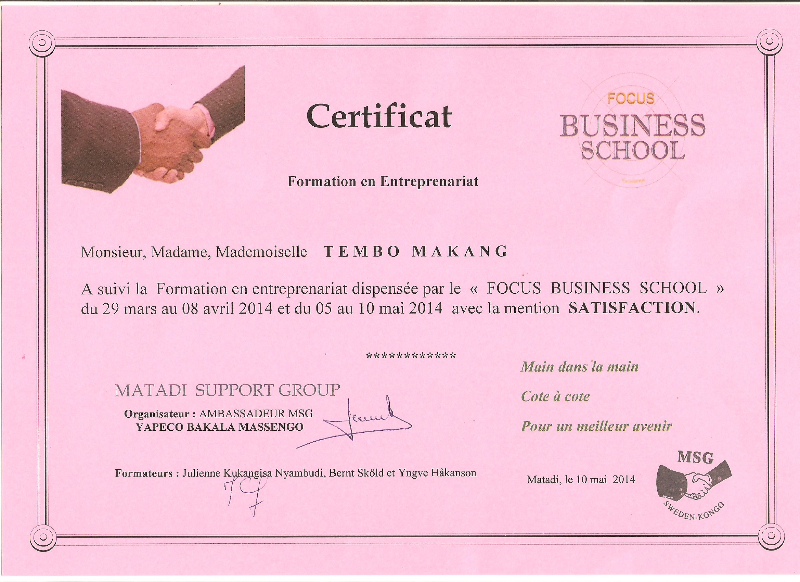
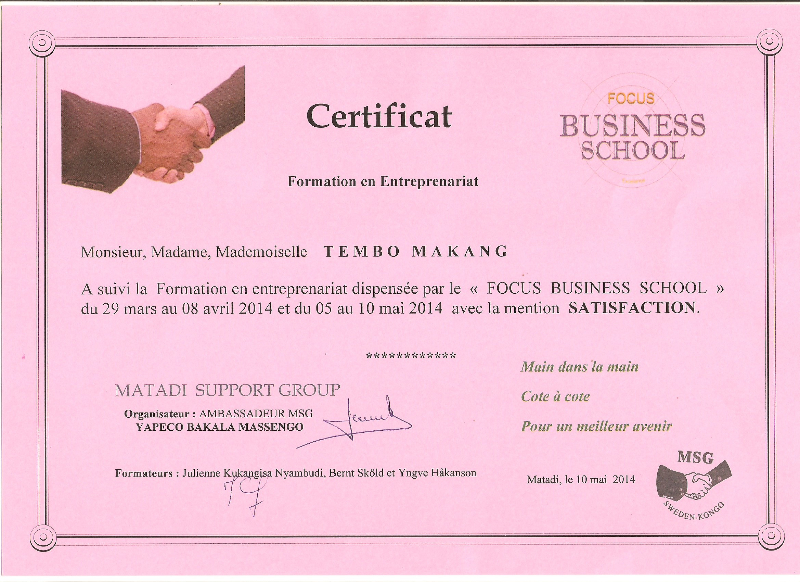
In total there were 32 participants and we handed over 30 certificates to those present ; two were absent , but we have left their certificates . The certificates were on hard paper, with signatures and stamps . One example is in the attachment. Of the 32 received 11 grade commendable and the other passed. We had coffee ; bread with meat , Coca Cola, Fanta and other soft drinks . It was nice and we finished off with coffee break at 18:50 .
We showed some images from Sweden , including from Yngve’s 70th birthday at his home in Sweden.

Among the participants were : two from the Catholic Church , one church Chrisco , 1 CEC / Kiamvu , 1 CEC / Mvuzi , 2 CEC / Nzadi , 13 CEC / Baobab and 12 from CEAC ‘s three parishes.

On the economy , I shall report on Monday, but I ‘m not sure how much we can use to encouragement or compensation. Julienne wonder how much she gets. Please answer , I can only act according to your requests. Thanks for understanding!

Posted in MSG

Returning home

The Presidents Diafuanakana in CEC , N´souami in EEC and pastor Kaya

We had good company for breakfast at Nzo Binati. With us were the Mission Directors Edi Diafuanakana and Patrice N’Souami from Brazzaville, his secretary Reverend Thomas Claude Kaya, Dikens, our former bus driver, Lema, a former participant of our course in Luozi and a lady named Catherine. She is a former political refugee from Brazzaville, now living in Sweden. After her visit to her homeland she was heading back to Sweden and Vårgårda.

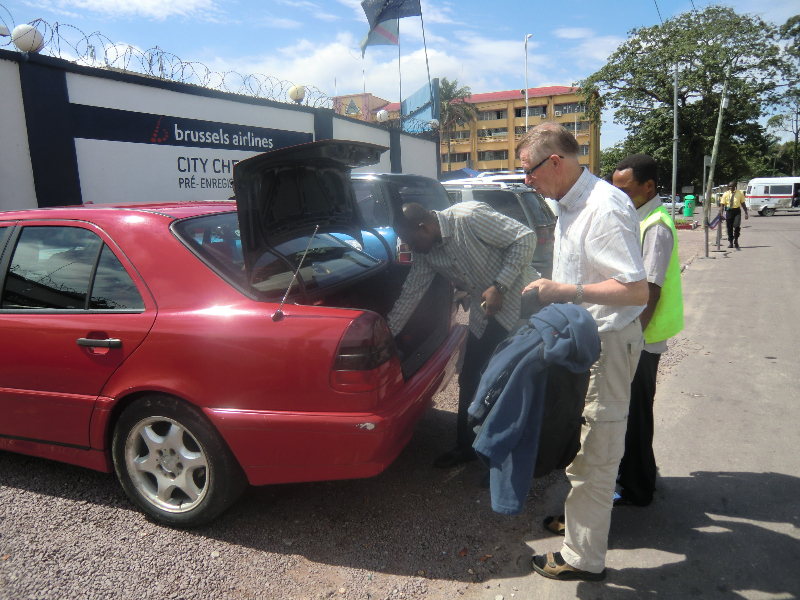
After breakfast, our driver Pascal picked us up in his Mercedes and took us to the office of Air Brussels in Kinshasa center, where we would check in our luggage. It took a while, but we were in no hurry. The night before, we had agreed with Luthelo Muller that he would come and get us at Air Brussel. A women with entrepreneurial skills had made a large box of sandwiches that she sold to hungry travellers at the office, and another one was selling soft drinks. We did businesses with both of them, thus we had secured our dinner while we were waiting.

Gösta Luboyi met us at the Air Brussel office. We had some matters concerning the lamp business to discuss, and we talked about Focus Business School in Kinshasa. He also helped us with the interpretation. Last night he had come back from Sweden after having been to in Karlstad and Stockholm, to visit the National Agency for Safety and Preparedness (MSB). He worked for MSB in Haiti during 3.5 years and he was the last aid worker from MSB to leave Haiti. His task in Sweden was to report on his work there.

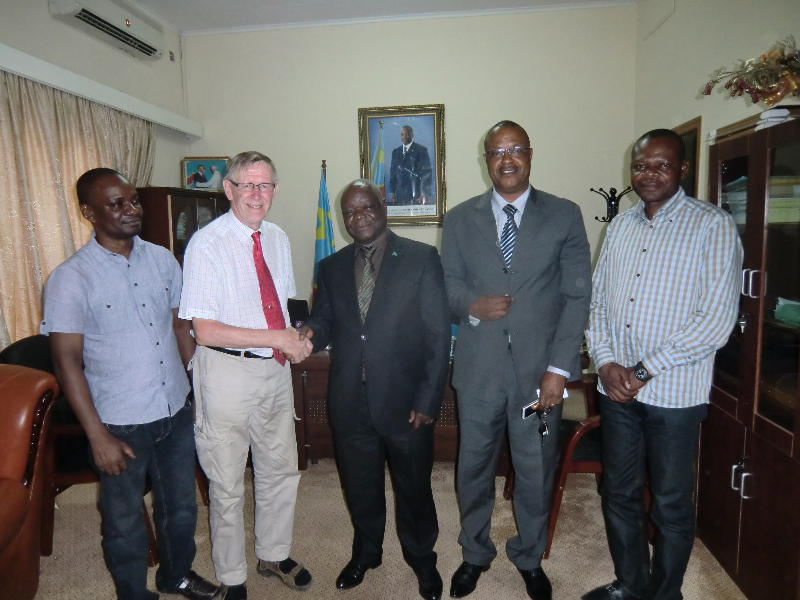
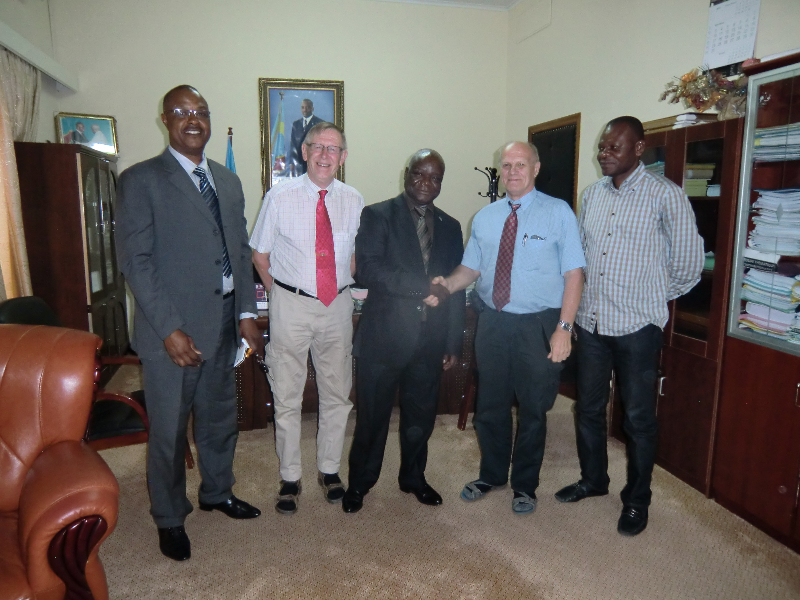
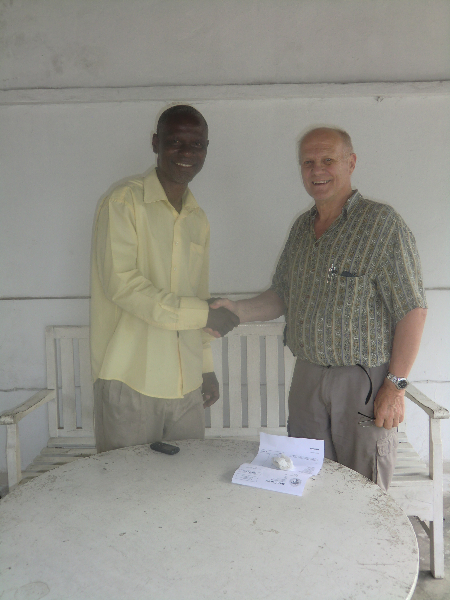
At one o’clock Luthelo Muller came to pick us up. He had arranged a meeting with the Minister of Land, Property Registration and Land Surveying, Professor Mbevinga Bila Robert. We had a nice meeting where we introduced MSG as an organization working with entrepreneurship training and which plans to import innovations. We introduced the ECO-house and we suggested that a demo could be built in Kinshasa or Matadi.

We told him that the funding must be Congolese, and that we must have a Congolese partner who has a strong interest in such a project. He suggested that we put the shovel in the ground in June. We’ll see how it goes. He spoke enthusiastically about forests that must be saved and that the ECO-house fits right into that context. A house that is made energy self-sufficient by solar cells and a biogas plant does not burden the environment. Old-proven innovations can be combined with good results.

We spent the last few hours on Nzo Binati doing paper work before we went out to N’djili Airport. At 8.35 p.m. we left Congo to pass the night over Africa and southern Europe.

Posted in MSG

A day in Kinshasa

Our hotel Lulo

Yapeco and the driver successfully managed to find not one, but two companies that knew how to repair fuel injection pumps. One of the companies was commissioned to renovate and measure the pump. Yapeco chose the company that he thought was most likely to succeed. It is nice not having to bring a 15 kg machine to Sweden. The company promised to fix the pump before Friday when Yapeco goes back to Matadi. With a renovated injection pump, the tractor can then be working again next week.

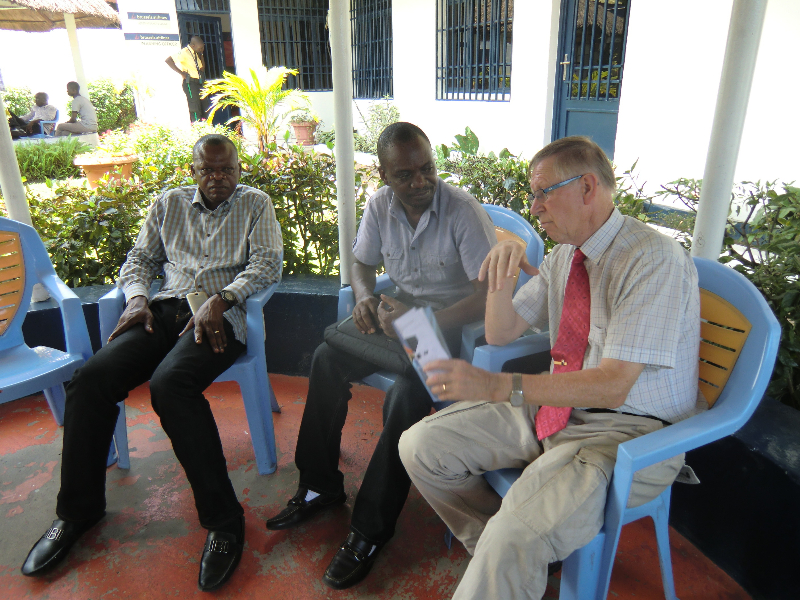
In the morning Yapeco, Bernt and I had a meeting at Nzo Binati with Tutondele. We went through the sales of solar lamps. Tuto explained how he works through a sales site. We discussed some new approaches to selling. Nsimba at Nzo Binati also wants to sell solar lights and he will have some lights at the guest house to advertise them. He will distribute information about them and also sell them directly to customers.

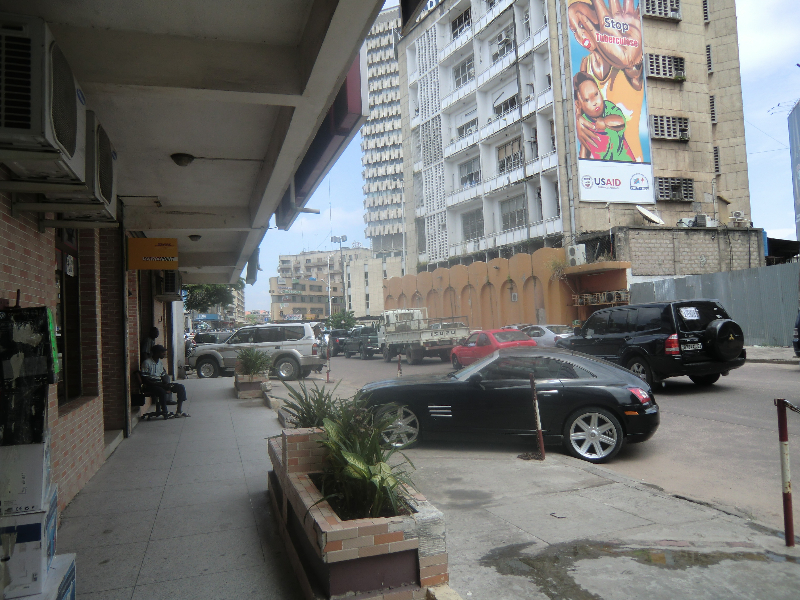
Then, we went into town to see if we could find a suitable data projector to the FBS courses. It turned out that the market for such commodities was practically non-existant in Kinshasa. Instead, we filled our stomachs with soft drinks and Congolese hamburgers. In Congo the burgers are significantly larger than in Europe. We were busy for quite a while to get them down, but they tasted good and that became our dinner.

After that, we went back to Nzo Binati for a meeting with one of our new solar lamp salesmen, Bernard. He has been marketing the lamps during three weeks and he is optimistic about being able to sell. We discussed some of our new ideas about ways of selling.

Our final meeting today was with Luthelo Muller who is from Matadi and is a member of the national parliament in Kinshasa. We discussed three items with him: (1) the ECO House and biogas plants for households, (2) to find a Congolese who are interested to work on a project like this, and (3) the waste disposal in Matadi. Finally, we talked about the contact with the president of the Rotary in Matadi.

Posted in MSG

Day of traveling

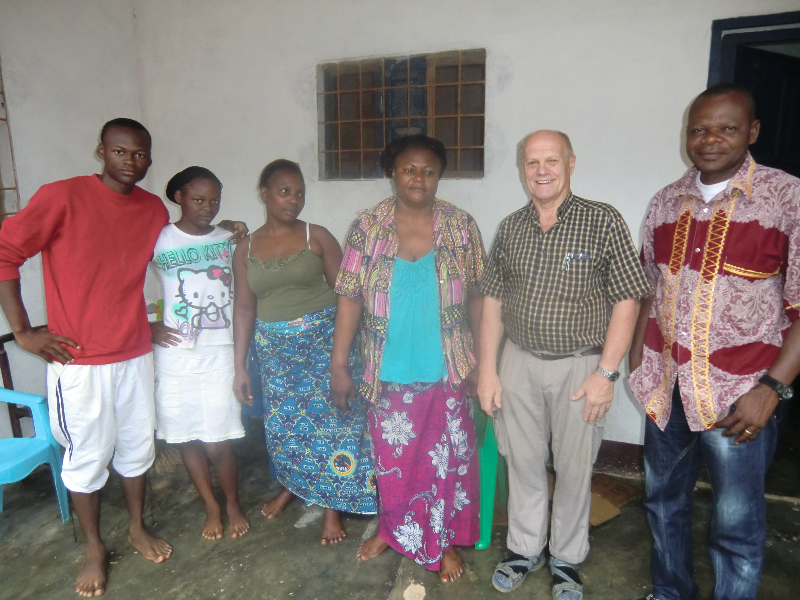
The family Bakala Massengo; Stig, Signe, Rosette living with the family, Agustine and Yapeco

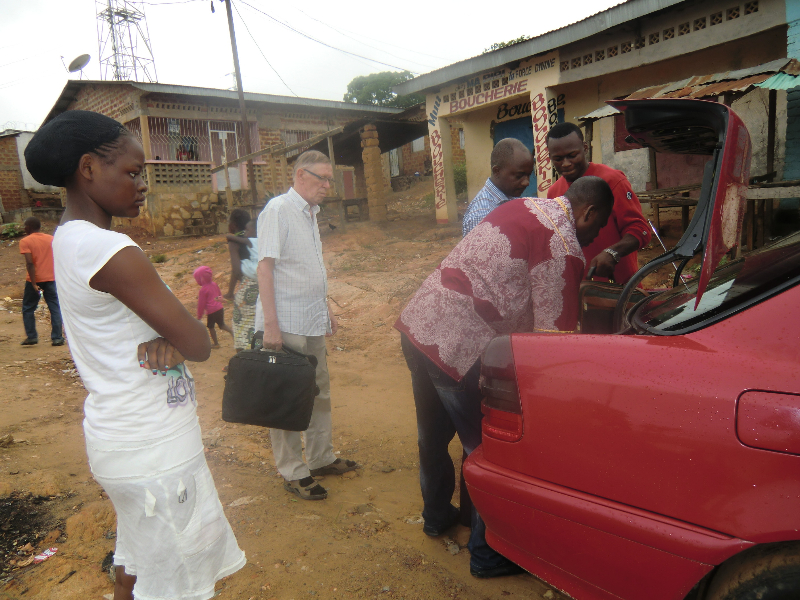
At seven, we were all set to go. By then, everything that was going back to Sweden was neatly packed in the suitcases we take with us back. We’ll leave two suitcases that we don’t need anymore. Hopefully, someone may have a use for them here. We had also had a little chat with the family Bakala Massengo, we thanked them heartily and took photographs. Then we had to wait for our driver for half an hour. He is a lawyer and Yapeco is one of his clients. He were going to Kinshasa on business today and would take us the 380 kilometers to the capital.

Many road transports goes from the port cities of Boma and Matadi to Kinshasa, which is located inland. With a population of 10-12 millions, the capital requires a substantial inflow of goods. The motorway is paved and has a width of 6-8 meters. Parts of the trip is in a hilly landscape. Then, the road contains lots of steep hills and curves. Our driver was good at maneuvering his car, and he kept a high and steady pace as long as there weren’t any lorries ahead. Today, there was an unusual amount of accidents along the road to Kinshasa. The Congolese are good att getting the most out of their cars. On the other hand, they are not the world’s best in taking care of and maintaining their vehicles. The combination of heavy wear / no maintenance is not recommended. The cars sometimes have to take early retirement.

In one place, somewhere between 20 and 30 tons of rice were lying on the road. Some men were salvaging the sacks onto another lorry. Close to Kimpese, a large truck had slipped off the road and slid down to an embankment. A bunch of people were trying to lift it with a large mobile crane. At one point, an overloaded lorry was driving in front of us. On the top of the load ten Congolese were sitting. Suddenly the dual tires on the right side exploded, and yet another accident had occurred.

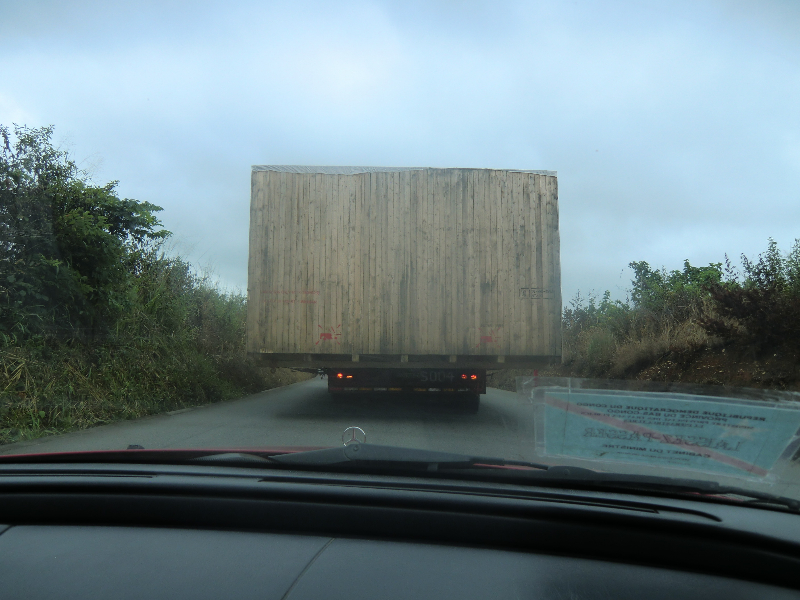
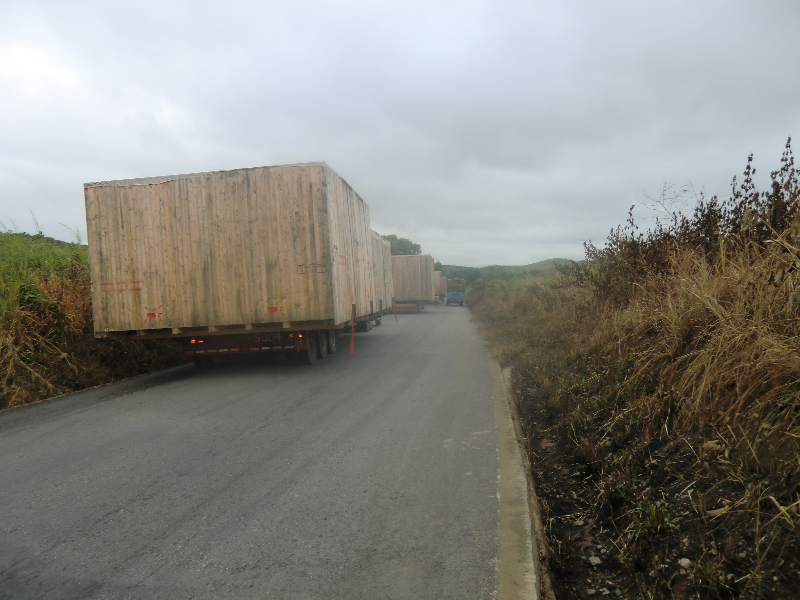
Along the way, we ran up an interesting transport consisting of three trailer trucks. They were carrying large volume elements. The load was between 4-5 m wide and 3-4 m high. In stages, they had to close off the road to let the trucks advance. Oncoming traffic was out of the question. After 7 km, the equipage stopped in a village and we could finally pass them.

Just before three, we arrived at hotel Lulo. The journey took 7 hours. We are grateful that it went well. There had been air conditioning in the car, and interruptions have so far been negligible.

Yapeco and the driver went to find a workshop that can restore and adjust the injection pump to our tractor at Nsanda. We hope that they can find someone reliable. We don’t want to take it to Sweden. Before they went, we agreed that mundele would not join them to the workshop. We have learned that if a mundele is involved, the price will double and more. We didn’t want that effect.

Posted in MSG

Palm Sunday

The egg dealer

In the morning a lady called Antoinette came by and asked if she could send a package with us to friends in Sweden. Our luggage is pretty empty when we go home because most of it’s contents has been left in Congo. In other words, we have plenty of room for deliveries to Sweden. She returned later in the day with the package and the shipping cost was paid with two bags of peanuts, one for me and one for Bernt.

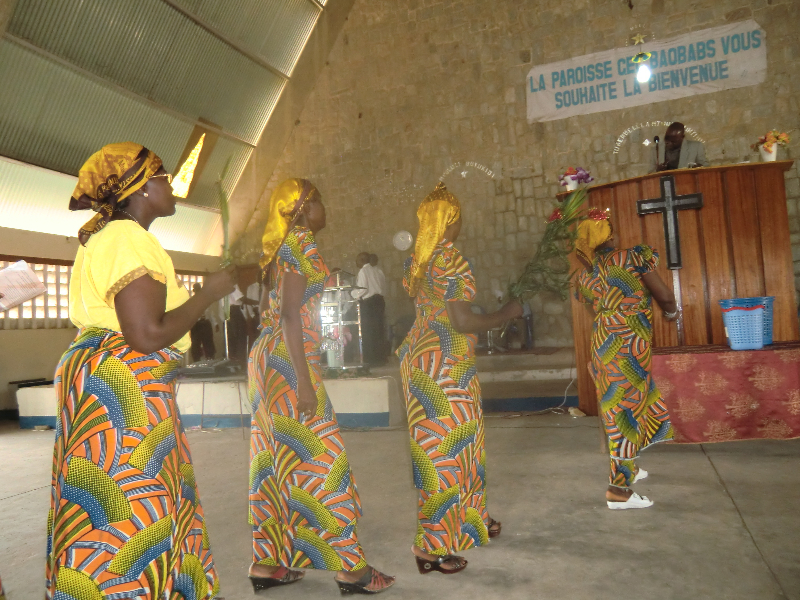
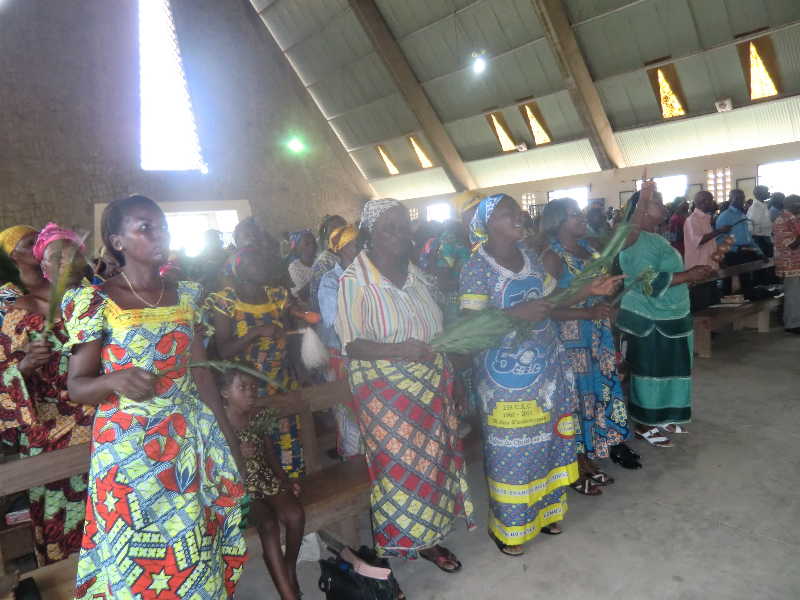
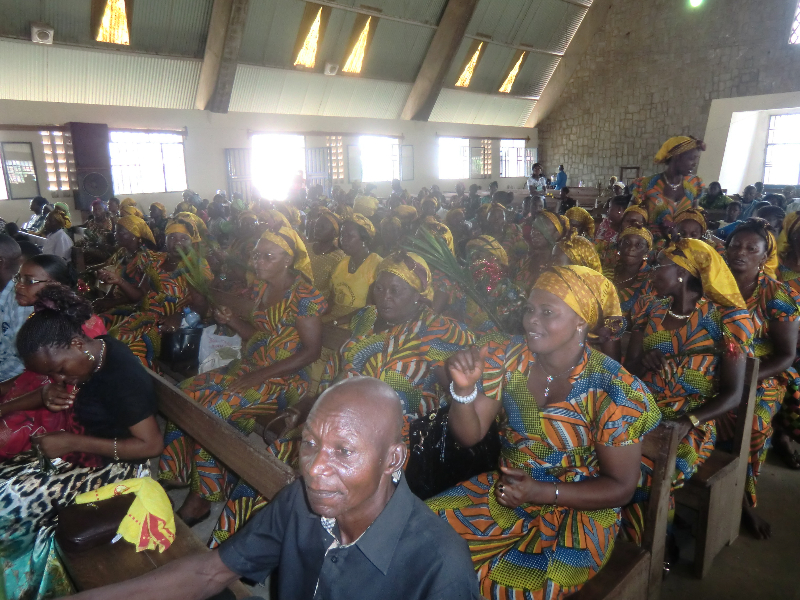
Along with Stig, Bernt and I took a taxi to the Baobab Church. Yapeco had gone earlier to the French Sunday service. At 10 a.m. the Kikongo service began but by then, there were only a few participants in the pews. It takes an hour before most people arrive and by 11 o’clock the church usually gets crowded. It was Palm Sunday today, and many had palm branches in their hands.

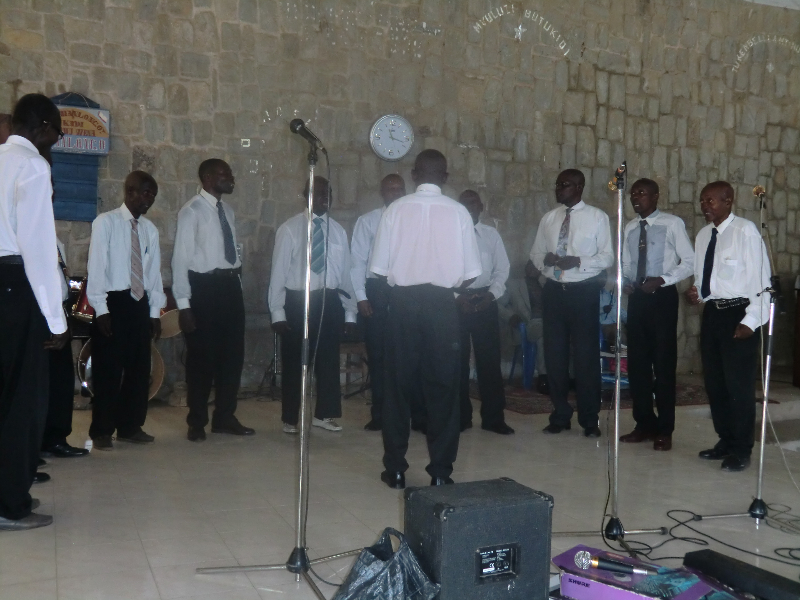
Both hands and arms are used when the congregation sings, and today the palm branches came in handy to accentuate the moves. During the collections when the people are dancing their way to the collections baskets, the palm branches were used to keep the beat. Some even had put colorful decorations in their branch. Today there were two choirs from the neighbouring Kiamvu church and in return, the four choirs of Baobab were at the Kiamvu church service. The Kiamvu choirs consisted of one great women’s choir and a male chorus with slightly fewer singers. The Congolese are truly talented singers and choral singing has a prominent place in the service.

Our interpreter left us last Friday, thus we didn’t understand most of what was said, but the beautiful choral singing, the atmosphere and the warmth, spontaneity and kindness you meet are well worth it. This our fourth Sunday service on this journey, and also the last. We understood that pastor Diangitukulu paid special attention to Bernt and me in a part of his speaking when the congregation suddenly streched their hands towards us. It was an impressive sight to see all those hands. We got their benevolence as well as many greetings to Sweden.

Afterwards there were many handshakes and we said “mbote” and “tundele” to everyone, that is: hello and thank you. We were also offered a soft drink before we went home in the car of a good friend and participant in the FBS course.

In the evening, Samuel Nkailu came for a chat on the patio, and we said goodbye to eachother. None of us thinks that the 60s, when we studied at SVF, is a long time ago. But when we consider all the things that has happened to us and to the world, then we realize that a lot of time has passed. Even so, neither of us feel old, and I think we still have work to do. Then the egg buyer came by and fetched a box of fresh eggs.

Posted in MSG

Everyone helps out

Signe is making morning porridge for us

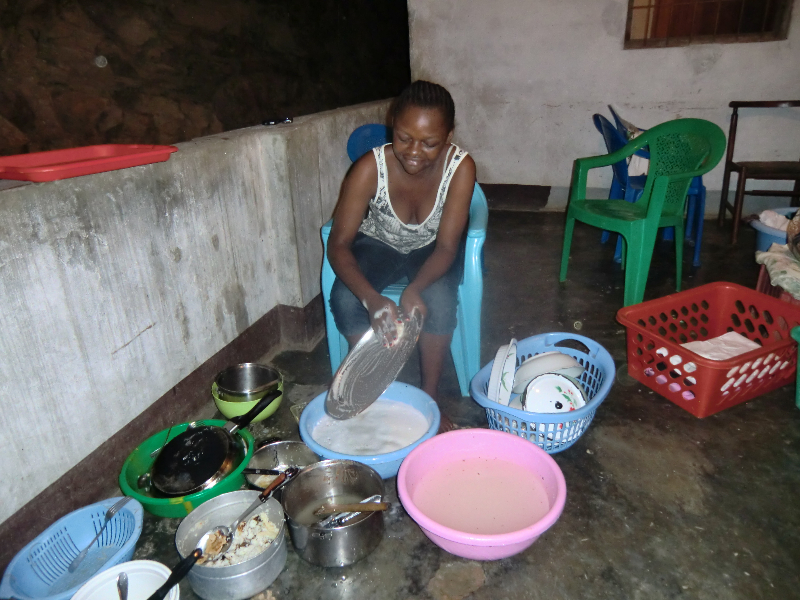
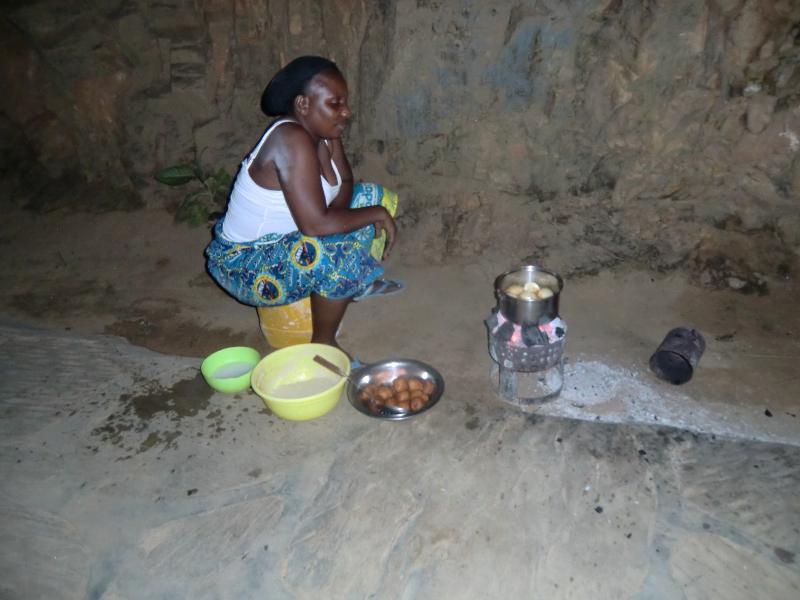
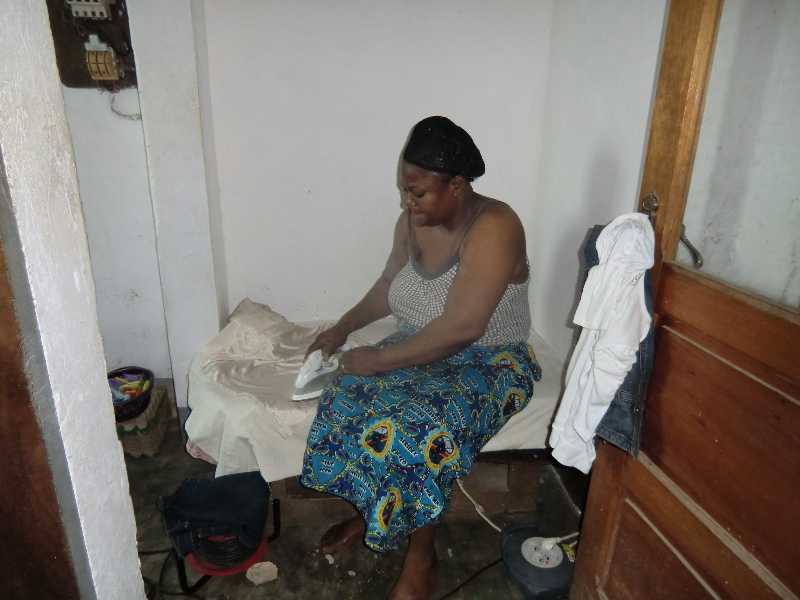
Everyone in the family help out with the daily chores. I have written about the routines around water before. Yapeco and the son, Stig, takes care of bringing the water into the house. The daughter, Signe, is in charge of cleaning, but she also helps out with cooking and doing the dishes. The mother, Augustine, and a resident domestic help, Rosette, share the rest of the chores between them. Five people live permanently in the house and for three weeks now, they have had to put up with three guests: two mundele and a ndombe – our interpreter and lecturer Julienne. Julienne has helped with the household chores. The two mundele have carried water into the house a couple of times, and so far that is our only manual contribution to the household.

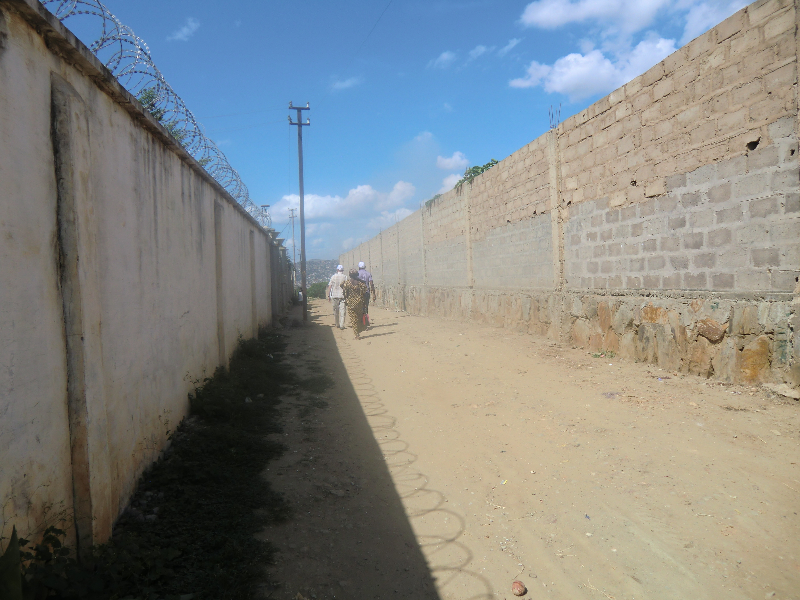
In addition to us three guests, there are currently three cats residing in the house. They were six when we arrived, but two are missing for unknown reasons and one became ill and died. Bernt is a big cat lover and mobilized all his healthcare knowledge from his military service days and gave the kitten all the care he could think of, but nothing helped, and it died after three days. Then there’s the dog who spends his days in his doghouse and his nights patrolling the plot around the house. He makes sure no uninvited guests come over the garden wall, which is 3 meter high wall and partly topped with barbed wire. Another protective measure are the window grills. But all doors are open round the clock, otherwise it would get too hot in the house.

The dog is a good guard. If something happens that he disapproves of, he howls like a wolf. It has happened that he has been standing just outside our window openings when he starts howling in the middle of the night. I can assure you that it is difficult to keep on sleeping when he does that. Luckily, it hasn’t happened often. The household also contains 132 hens.

It’s sad that there has to be high walls between people. The walls and window grills are signs of an unequal society. In an ideal world, everyone would have all that he or she needed, and there would be no need to steal. But of course there are thieves that don’t have to steal for their livelihood, but steal anyway. There, the internal compass has failed them. When the security situation is as it is it feels good to have a wall around the house and a guard who wakes us up if something unusual happens.
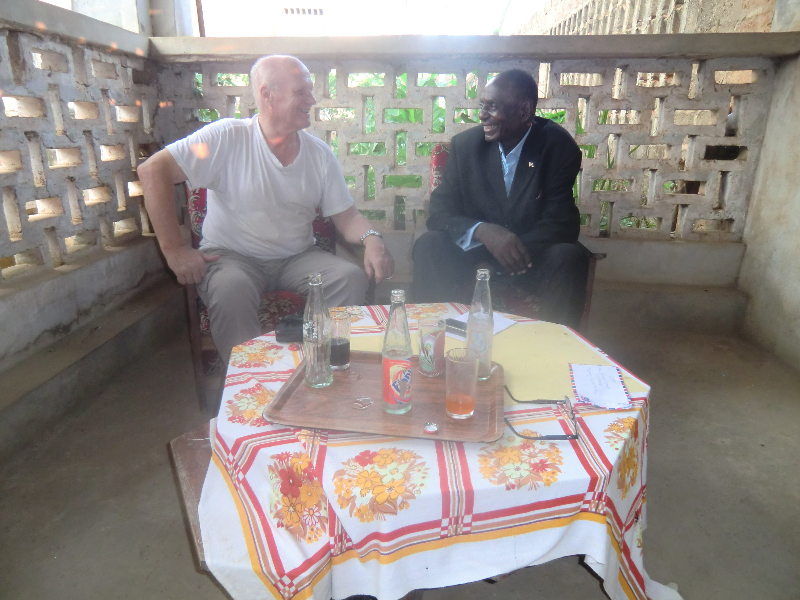
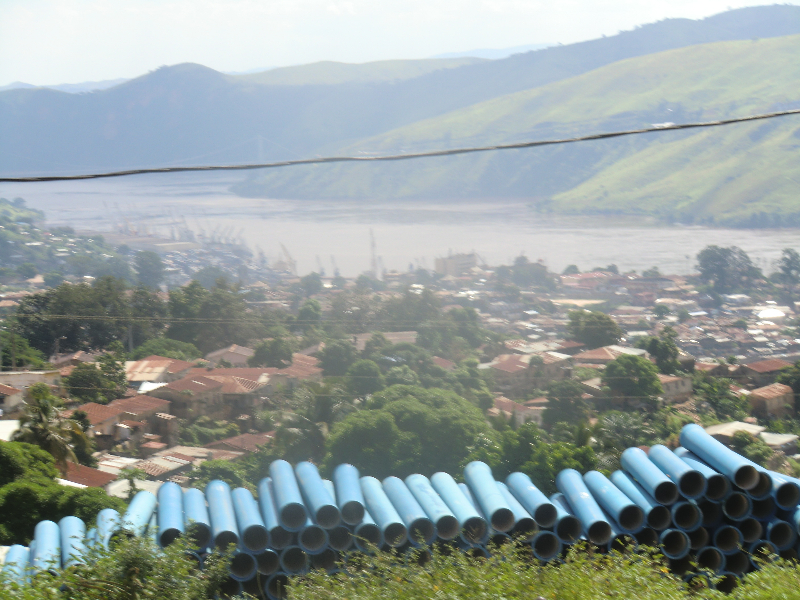
Tonight, we took a walk to a lovely café with outside dining and a magnificent view over large parts of the town. To cool us down, we had Fanta and Coca cola. The wind blew in a pleasant way, and the temperature was about 25 degrees.

Posted in MSG